
REVIEW · KRKA & ŠIBENIK DAY TOURS
Sibenik: Guided Evening Walking Tour
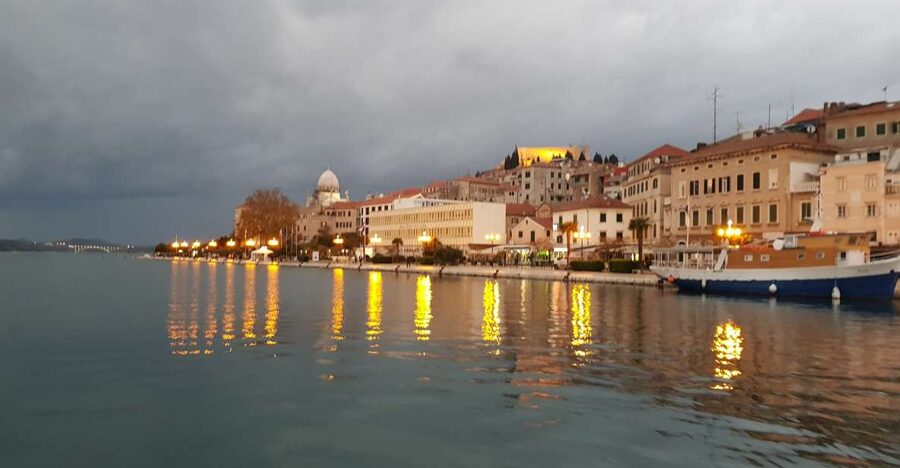
Šibenik feels like a different city after dark. This 90-minute guided evening walk steers you through cobblestone lanes and hidden squares with a local explaining what you’re actually looking at. I love that you get a local guide instead of a generic stop-and-snap route.
My favorite part is how the guide ties the big landmarks to real stories. You’ll hear why King Petar Kresimir matters, why St. Francis is special, and what makes St. Jacob’s Cathedral such a big deal in European architecture. It’s the kind of detail that turns a pretty street into something you can picture clearly.
One consideration: it’s not suitable for people with mobility impairments, and you will want comfortable shoes for evening walking on uneven old-town streets.
Key things to know before you go
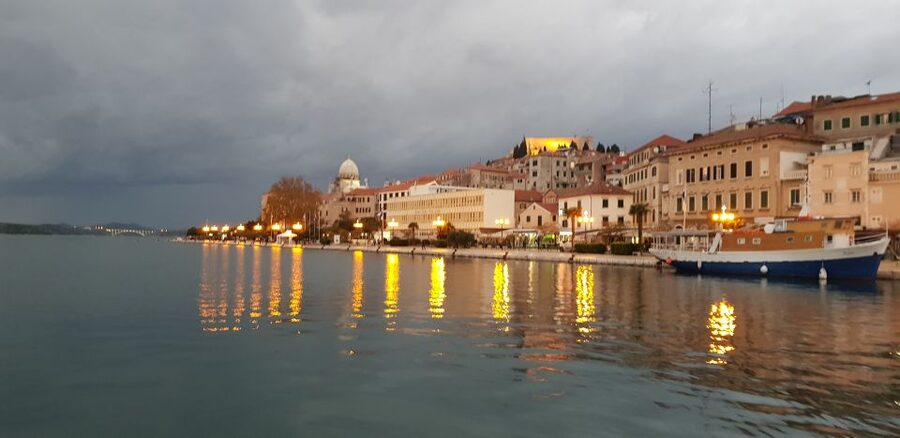
- A 90-minute evening format that helps you see Šibenik after most of the day crowds move on
- Hidden squares and small streets that are easy to miss when you’re on your own
- Churches and civic spots with strong backstories, from King Petar Kresimir to the Four Wells cistern
- St. Jacob’s Cathedral gets special focus, including its stone construction and sculptural portraits
- Practical trivia about the town’s layout, like why the main city square is not where you expect
- Guides who keep it friendly and fun, with humor and room for questions
Why Šibenik at night changes how you see the old town
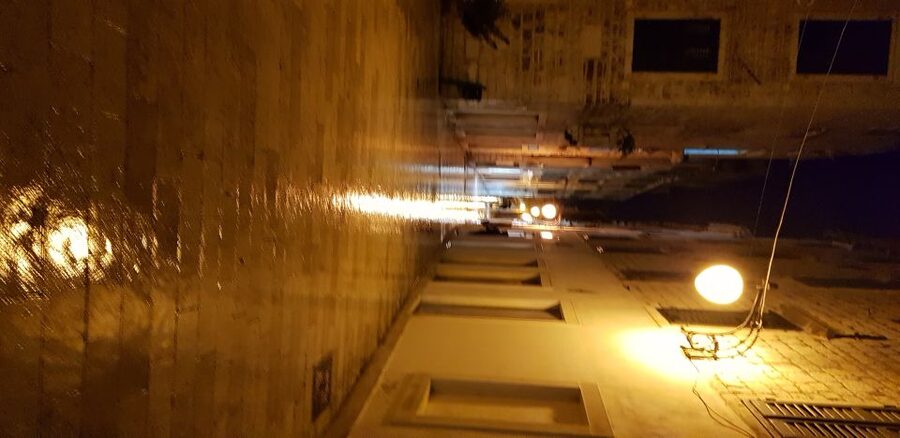
Šibenik is already impressive in daylight, but evening shifts the mood fast. The narrow lanes feel tighter, the stonework looks sharper, and the churches and civic buildings feel more purposeful than they do on a quick daytime stroll. An evening guide helps you slow down at the right spots, so you notice details without needing to be an architecture student.
I also like that this tour is built around stories, not just photos. When you learn who King Petar Kresimir was and why he’s important to local identity, the city stops being a list of sights and becomes a place with memory. And when you hear the town’s little mysteries, like why the main city square isn’t actually in the city, you start looking at urban planning the way locals do.
Finally, you’re not stuck only with the obvious highlights. You’re guided toward smaller squares and less straightforward corners, the kind of places where you can actually feel the Mediterranean pace of old stone and sea air.
You can also read our reviews of more walking tours in Sibenik

Finding your guide: the lantern at gat Krka parking lot
Logistics are simple, which matters for an evening tour. Meet your guide next to the lantern at the gat Krka parking lot. Your guide will be wearing an orange cap, and you should arrive at least 5 minutes early so you can start on time.
English, German, and Croatian are offered. If you’re traveling with mixed language needs, this makes it easier to match your group to the available tour language. Also, you’ll be walking the whole time, so treat this as an evening stroll with guidance, not a “sit and hear” experience.
If you’re prone to rushing on arrival, set a small buffer. Evening light and old-town streets can make it feel like time is moving faster, even when the tour is only 90 minutes.
The cobblestone stroll and the “hidden squares” route that actually works
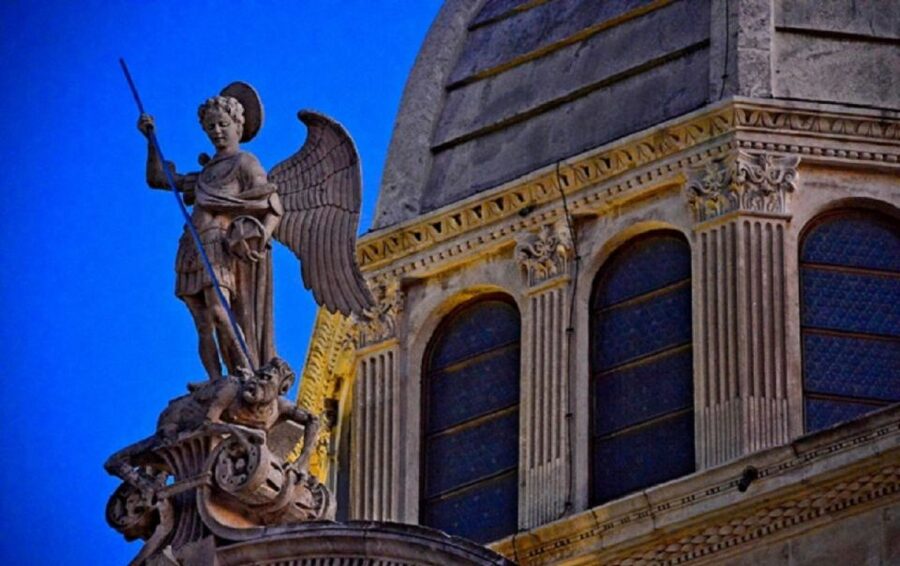
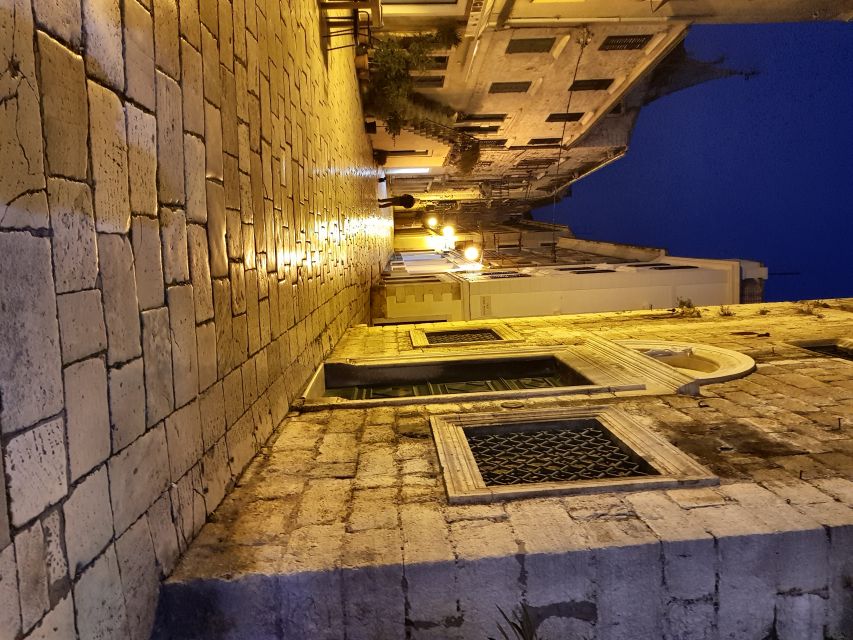
The tour’s structure is built for flow: you move through the historic city center, down cobblestone streets, then pause at attractive squares where the guide can explain what you’re seeing. That rhythm is one of the big reasons this tour works well for first-timers. You get time to take in the architecture, then time to understand it.
The best part is that it’s paced for noticing. Instead of rushing you between famous buildings, you’re guided to side corners and small public spaces that you’d likely walk past on your own. In practice, that’s where the city feels lived-in, not curated.
You’ll also hear plenty of small facts that make the city easier to navigate later. Things like what to remember about an artist connected to a bell tower, or why certain churches changed significance over the Middle Ages. Those details stick because the guide points them out while you’re standing in front of them.
King Petar Kresimir and the civic stories locals still use
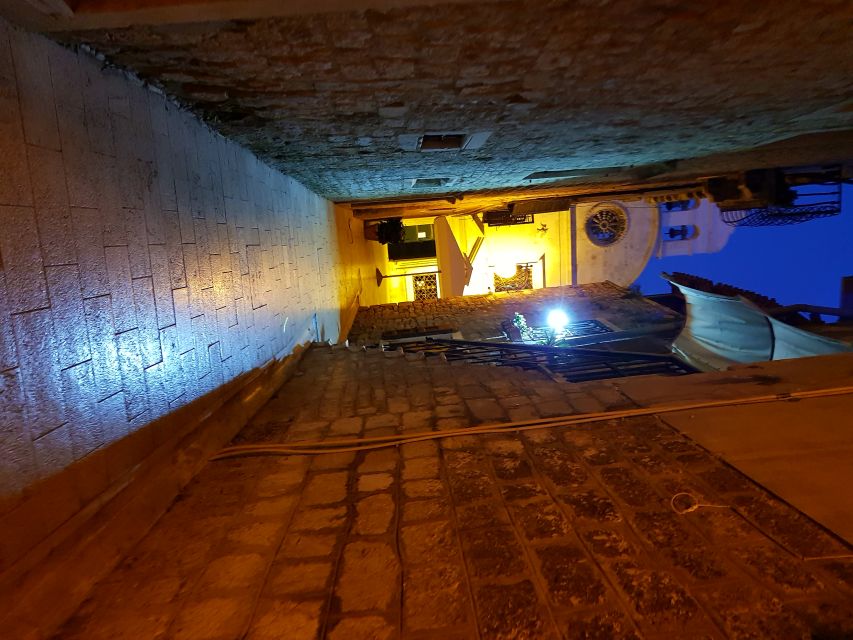
One of the tour’s strongest value points is how it turns Šibenik into a story of people, not just buildings. You’ll learn who King Petar Kresimir was and why he matters to the city and its people. That kind of context is surprisingly useful, especially if you plan to keep exploring after the tour ends.
These civic stories also help you connect separate stops. When you understand how rulers, religious institutions, and city life influenced each other, St. Jacob’s Cathedral and the church stops don’t feel like random architecture. They start feeling like parts of one long conversation.
If you’re the type who usually skips plaques, this is the kind of guided info that can pull you back in. The details are pointed, and they’re meant to make the city make sense quickly.
Churches on the route: St. Francis, St. John the Baptist, and St. Krsevan
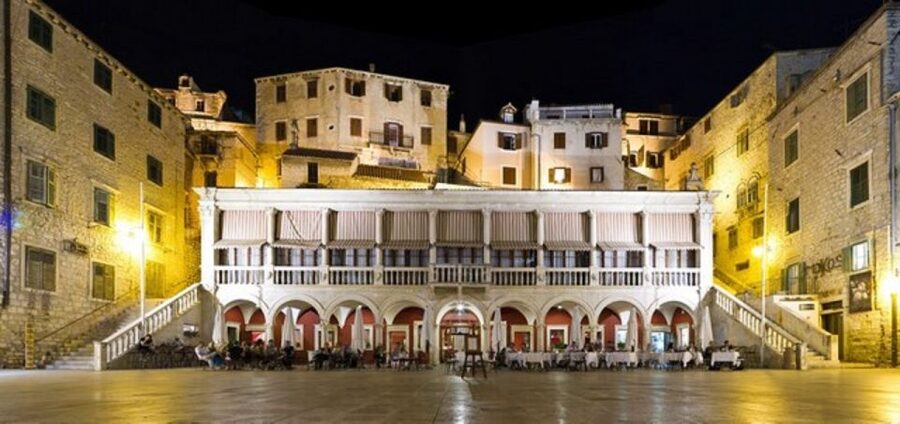
This walk leans heavily into religious architecture, but not in a heavy way. It’s more like the guide is showing you how the town tells its history through churches.
You’ll find out why the church of St. Francis is more special than other churches in the city. You’ll also learn why St. John the Baptist had special significance throughout the Middle Ages, and why its patron saint later changed. Those are the kinds of facts that change how you read the building, because they explain why something would evolve instead of staying frozen.
And then there’s St. Krsevan, described as the oldest church in the town. When you hear that and look at the structure with the guide’s framing, it becomes easier to understand why older parts of old towns feel different. They carry time in a visible way, even when you don’t know the first thing about architectural periods.
You can also read our reviews of more guided tours in Sibenik
The main square twist and the Four Wells cistern stop
Two of the most fun parts of the tour are the “wait, what?” moments. You’ll learn why the main city square is not in the city, which is exactly the sort of quirky detail that makes you pay attention to how Šibenik is laid out. It also sets you up to explore independently afterward because you’ll notice patterns you would have missed.
You’ll also stop for the public town cistern called Four Wells, built during the Middle Ages. Water infrastructure doesn’t sound glamorous, but a guide can make it feel essential. When you understand how a city collected and stored water long ago, you start seeing the Mediterranean city as practical, not just scenic.
These stops add texture to the evening. Instead of only looking up at facades and domes, you briefly get grounded in everyday city life and survival needs.
St. Jacob’s Cathedral: stone construction, trefoil front, and 71 portraits
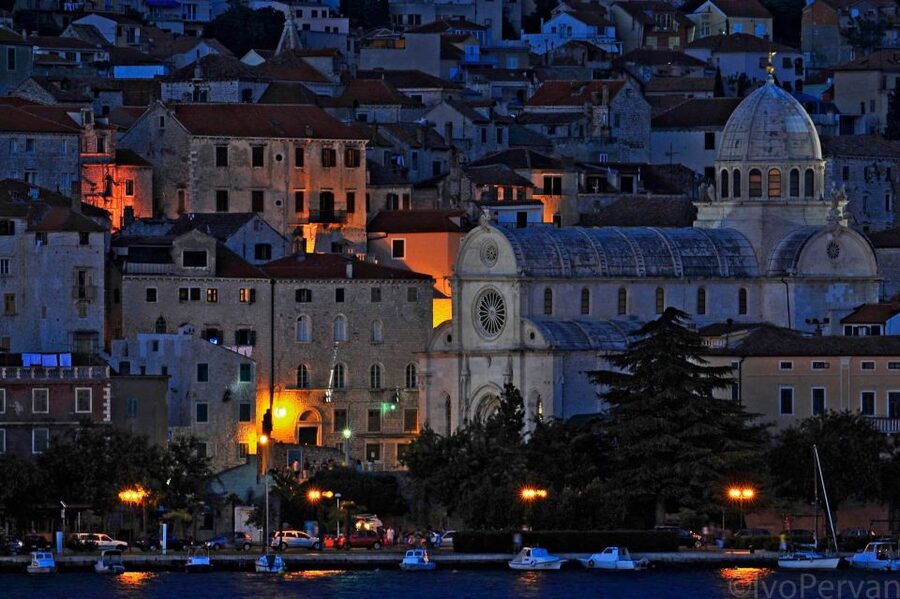
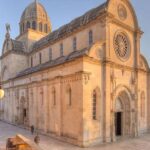
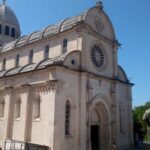
St. Jacob’s Cathedral is one of the tour’s anchor points. You’ll learn what makes it unique not only in Croatian architecture, but in European architecture as well, and the guide focuses on why those claims are more than marketing.
The cathedral is entirely built of stone, and it’s unique for its bold structure with stone slabs and ribs, with no binding material. The front facade is described as trefoil, and the cathedral is also unique among renaissance churches for that feature. Then comes the detail that tends to stop people mid-walk: the row of 71 realistic sculptural portraits around the apses.
That 71-portrait detail matters because it reframes the cathedral. It’s not only about grandeur. It’s also about faces, realism, and how religious spaces can include human identity in a visible way.
If you’re deciding whether to do a guided visit versus wandering alone, this is the advantage. Without a guide, you’d likely notice the building, but miss why the design choices are so distinctive.
The bell tower stories and St. Barbara’s four bells
The tour doesn’t treat churches as one-note stops. You’ll learn who uses the church of the Assumption of the Blessed Virgin Mary and who built the interesting bell tower, plus a secret way to remember the artist’s name. That memory tip is the kind of small teaching method that makes facts feel effortless later.
Then you’ll find out why the church of Saint Barbara has 4 bells and when those bells ring. Even if you’re not a bell person, it turns the evening into something you can anticipate. It also adds a sound element to an experience that’s mostly visual, which helps it stick in your memory.
If you’re the type who likes a city that feels alive, these stops give you a reason to look upward and listen for the cues the guide is expecting you to catch.
Croatian National Theater and the 1896 electric lighting detail
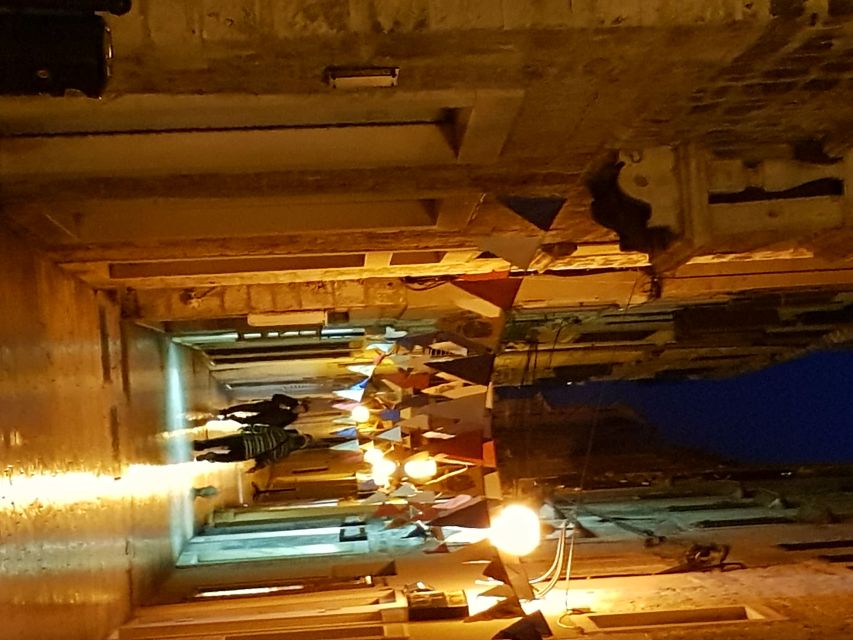
Even if you’re not an arts person, the Croatian National Theater stop is worth it because the guide shares a surprising historical fact: once built, it was the largest and most beautiful theater in South Europe, and in 1896 it received electric lighting as one of the first theaters in the world.
That’s a strong reminder that Šibenik isn’t only medieval. It connects old stone with a moment when technology changed public life. Hearing the 1896 electric lighting detail while you’re standing there helps you feel the timeline instead of just reading it.
It’s also a good mid-tour energy shift. You’ve spent time inside the churches and the medieval city fabric, then you get a civic, cultural landmark that shows how the town grew beyond its older framework.
Price and timing: is $45 worth 90 minutes at night?
At $45 per person for 90 minutes, this tour is priced like a real local-guided experience, not a bargain group walk. Whether it feels worth it comes down to how you travel.
If you like your city with context, and you enjoy learning the meanings behind buildings, you’ll likely see this as good value. The guide covers a lot of ground, including major stops like St. Jacob’s Cathedral and multiple church stories, plus practical trivia like the Four Wells cistern and the square layout oddity.
If you mainly want exercise and a casual stroll, you could replicate part of the route on your own. But you would miss the specific details, like the cathedral’s stone construction without binding material, the trefoil facade note, the 71 portraits, and the theater’s 1896 electric lighting history.
As for timing, it’s an evening tour with a 90-minute duration. That’s a sweet spot. It’s long enough to see multiple neighborhoods of the old town and get meaningful explanations, but short enough that you can still enjoy dinner afterward.
Comfort, pace, and who this tour suits best
This is a walking tour, so it’s best when you come ready for steady steps. Comfortable shoes are a must. It’s not suitable for people with mobility impairments, so plan a different option if mobility is a concern.
The pace is designed for learning while walking. You get frequent points of interest, plus time for the guide to answer questions. Guides on this route are often described as friendly and fun, with a sense of humor, which helps the stops feel lighter even when the subject matter is medieval and detailed.
This suits:
- First-time visitors who want to understand Šibenik fast
- People who love architecture, churches, and city planning trivia
- Couples and small groups who want an easy way to connect stories to sights
- Any traveler who wants to return to the old town afterward and notice more
It may not suit:
- Anyone who wants a silent, self-led wander
- Anyone who needs step-free routes and accommodations
End-of-tour freedom: cafes and restaurants on your own
After the walking portion, you get the chance to discover numerous cafes and restaurants on your own. That’s a nice way to extend the experience without forcing the guide into a food stop.
If you’re choosing where to eat after, pay attention to what the guide pointed out during the walk. Old-town streets can look similar, but landmarks and square locations help you orient fast. When you know why the city square is where it is, you’ll find it easier to pick a place to linger without feeling lost.
Should you book the Šibenik guided evening walk?
I’d book it if you want Šibenik to feel understandable, not just pretty. The standout strength is how much you learn in a short window, plus the way the guide turns specific buildings into stories you can carry with you. The emphasis on St. Jacob’s Cathedral, multiple churches, and civic details like King Petar Kresimir and the Four Wells cistern gives you a full old-town picture.
I would skip it only if you’re traveling with limited mobility or you don’t care about historical context. At $45 for a 90-minute evening walk, it’s a smart spend for people who like guided explanations and enjoy noticing fine details.
If your goal is to leave Šibenik with clear mental images, this tour is a solid choice.
FAQ
Where do I meet my guide for the evening tour?
Meet your guide next to the lantern at the gat Krka parking lot. Your guide will be wearing an orange cap, and it helps to arrive at least 5 minutes early.
How long is the Sibenik evening walking tour?
The tour lasts 90 minutes.
What languages are available for the guided tour?
The tour is offered in English, German, and Croatian.
What should I bring?
Wear comfortable shoes for evening walking in the historic city center.
Is the tour suitable for people with mobility impairments?
No, the tour is not suitable for people with mobility impairments.
Is food or hotel pickup included in the price?
Food and drinks are not included, and there is no hotel pickup or drop-off. The included part is the evening walking tour with a local guide.
More Walking Tours in Sibenik


More Tours in Sibenik



More Tour Reviews in Sibenik
Not for you? Here's more nearby things to do in Sibenik we have reviewed





More Krka & Šibenik Day Tours to consider.
 ★ 4.8Krka Waterfalls Trip with Boat Cruise and SwimmingFrom $3110,519 reviews
 ★ 5.0Krka Waterfalls, Food & Wine Tasting TourFrom $459,326 reviews
★ 4.9Krka Waterfalls, Food & Wine Tasting TourFrom $446,598 reviews
★ 5.0Krka Waterfalls, Food & Wine Tasting TourFrom $459,326 reviews
★ 4.9Krka Waterfalls, Food & Wine Tasting TourFrom $446,598 reviews
 ★ 5.0Krka Waterfalls Tour, Boat Cruise & SwimmingFrom $324,489 reviews
 ★ 4.8Krka Waterfalls Tour, Boat Cruise, and SwimmingFrom $313,118 reviews
 ★ 4.7Krka National Park TourFrom $312,359 reviews
 ★ 5.0Krka Waterfalls Day Tour with Boat Ride from Split and TrogirFrom $322,134 reviews
 ★ 5.0Krka Waterfalls Tour from Split with Boat Ride & SwimmingFrom $301,944 reviews
Explore its other useful categories