
REVIEW · KRKA & ŠIBENIK DAY TOURS
Private walking tour of Sibenik
Šibenik tells its story in stone. On this private walking tour, you get a well-paced route through major landmarks, with UNESCO St. James Cathedral as the big moment, plus the kind of local explanations that make side details click. I like that the guide steers you through real streets and squares, not a rush-through checklist, and I also like that the pace can stay comfortable for mixed groups, even kids. One possible drawback: the walking time is limited, so if you want every alley and church nook, you may have to come back.
This tour works best when you’re curious and want context. You also have the option of pickup, it runs in English, and you use a mobile ticket. Cathedral entry is not included, so plan a little extra time and money for that highlight.
Key highlights worth building your day around
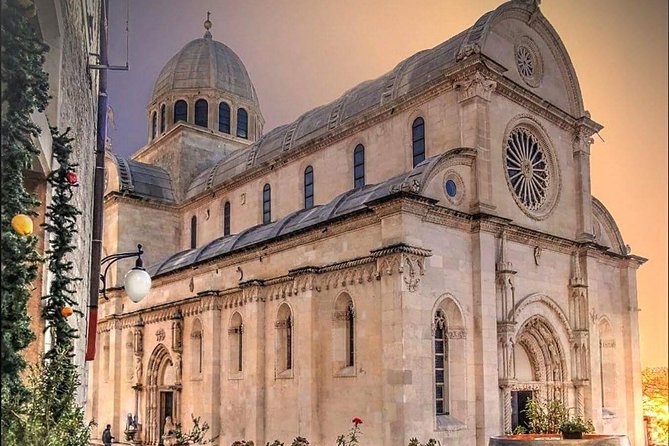
- St. James Cathedral, fully stone construction, including the famous ring of realistic sculptural portraits around the apses
- Private guide attention for up to 10 people, with a pace that can feel tailored
- A tight route that explains power, faith, and civic life, from medieval kings to theaters to church bells
- Many stops are free to enter, so most of what you pay for is the guide and the experience of understanding it
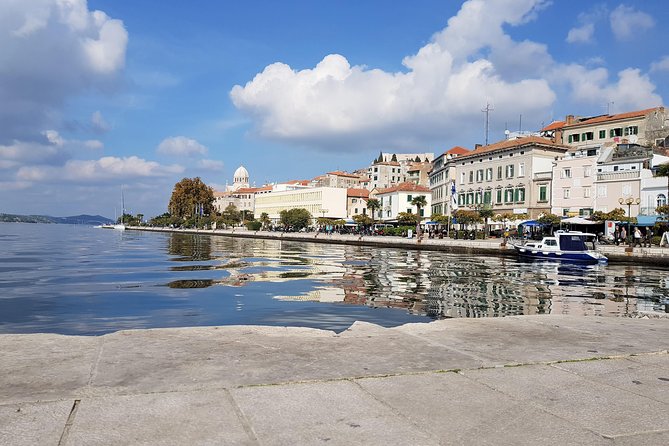
- Adriatic-front walking along the waterfront before you head into the old-town lanes
- Local color can pop up, depending on dates, like patron-saint celebrations that spill into the streets
Why this 2-hour Šibenik walk works so well
Šibenik is one of those Adriatic towns where you can look at the buildings all day, but you still won’t know what you’re seeing. This tour gives you the missing captions. You’ll connect the waterfront, the civic squares, and the churches into one story, so the city stops feeling like random pretty stone.
I like that the experience is intentionally focused. In about 1.5 to 2 hours, you move through the landmarks that matter most for understanding Šibenik’s identity: its medieval civic core, its religious architecture, and its cultural institutions. The private format means you’re not waiting behind a big crowd, and it stays conversational, especially when you ask follow-up questions.
One more practical plus: most stops have no entry fee. So your money goes mostly to the licensed guide and the walk itself, with the one big paid exception being St. James Cathedral.
You can also read our reviews of more walking tours in Sibenik

Price and value: what $192.25 per group really buys
The price is $192.25 per group (up to 10 people). That can be surprisingly good value if you’re traveling as a family, a small group of friends, or even a couple who wants a true private pace. You’re essentially paying for one guide’s time, not per head, so the math gets friendlier as your group grows.
Do factor in what is not included. St. James Cathedral admission is separate, and gratuity is also not included. In other words, the guide experience is the core cost, and the cathedral is the one extra ticket you’ll likely want for the UNESCO anchor.
Also, since the average booking time runs far in advance, this is the sort of tour people plan early. If your dates are fixed, it’s worth booking ahead so you can pick a start time that fits your sightseeing rhythm.
The starting point: Obala hrvatske mornarice and easy orientation
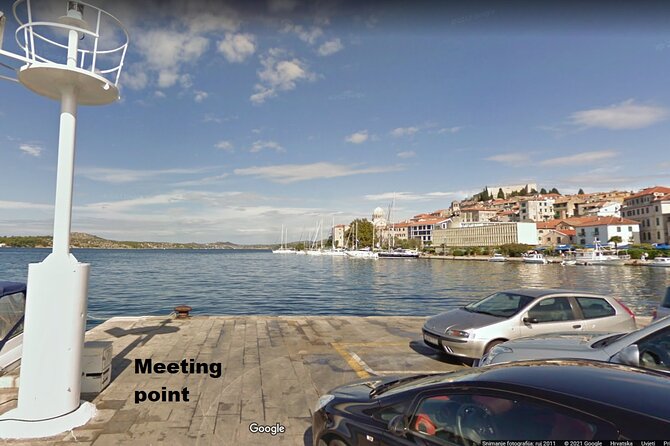
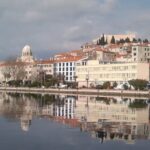
The tour meets at Parking Mulo Krke, Obala hrvatske mornarice 1, Šibenik. This is a smart place to start because it puts you near the waterfront. Before you disappear into narrow old-town streets, you get a quick sense of the setting: Šibenik’s coastal energy and the way the older city clings close to the sea.
From there, you’re guided into the heart of the town at a manageable walking pace. The tour is private, so your group stays together, and you’re not pushed along by strangers with different interests.
If you’re thinking about logistics, here’s what you can count on: the tour uses a mobile ticket, and it is offered in English. Service animals are allowed, and the walking level is listed as moderate, which usually means comfortable for typical vacation walking if you take breaks when needed.
Obala hrvatske mornarice: the medieval lanes begin
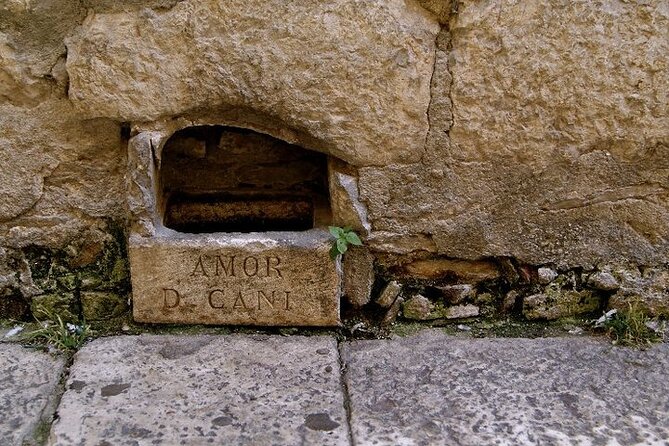
Stop one is along Obala hrvatske mornarice, with the guide setting the tone for the entire trip. You’ll hear why this Gothic-Renaissance waterfront area feels like a lived-in Mediterranean city, and why parts of the old town can make you feel like you stepped back to the 15th or 16th century.
What I find most useful here is the way the guide connects visual details to meaning. You won’t just be told that streets are old. You’ll be pointed toward the tiny architectural and layout cues that explain how the town functioned and why it looks the way it does.
This is also the stage where your guide’s personality really matters. In this experience, guides such as Irena and Sandra are known for being engaging and for keeping the pace comfortable, so kids and teens don’t get lost in a wall of dates.
Petru Kresimiru IV and the power behind the stone
Next comes the Monument to Croatian King Petru Kresimiru IV. Even if you’re not a history buff, you’ll walk away with a clearer sense of who he was and why his name matters to Šibenik’s people.
This kind of stop is important because it gives you a framework. When later you look at churches, squares, and civic buildings, you’ll understand that faith and governance were tightly linked. You’re not just seeing religious architecture. You’re seeing how a community organized itself.
You can also read our reviews of more private tours in Sibenik



Churches as story engines: St. Francis, Uspenie, St. John the Baptist, and St. Krsevan
As you move through the old town, the tour leans into what Šibenik does best: church architecture with personality. The guide highlights several churches, and each one comes with a specific reason it matters.
You’ll first learn why the Church of St. Francis is more special than other churches in the city. Then you’ll move into other stops tied to belief, patrons, and long medieval timelines.
Here are the key church moments you can expect:
- Church Uspenie Mother of God (Crkva Uspenie Bogomatere)
You’ll hear who uses this church and who built its interesting bell tower, along with a memory hook for the artist’s name.
- Crkva sv. Ivana Krstitelja (Church of St. John the Baptist)
You’ll learn why it mattered through the Middle Ages and why its patron saint changed. This is the kind of detail that makes a stone building feel like a living timeline.
- Church of St. Krsevan
You’ll be told why this church is the oldest in the town today, which gives you a baseline for how the city’s spiritual map formed over time.
A small note for your planning: some groups love these church stops, and some people want more waterfront and squares. If you’re more into civic architecture and the big public spaces, tell your guide what you prefer. This is private, so you can often adjust the focus.
The public water memory: Pelegrini and the Four Wells
One of my favorite kinds of stops on a walking tour is the practical one. Here, it’s Pelegrini, centered on the public town cistern known as the Four Wells.
You’ll learn why a cistern like this was built during the Middle Ages. Even if you don’t care about plumbing history, it helps you understand daily life. Cities run on water, and medieval towns had to plan for it. A cistern stop can sound dull on paper, but with the right guide, it becomes a story about survival and community organization.
This is also a good moment to slow down and look around. You’ll be in the old-town rhythm, not just moving from one “photo” spot to another.
Croatian National Theater: culture and electric lighting in 1896
Next, you’ll reach the Croatian National Theater, where the guide connects architecture to cultural ambition. You’ll hear that once built, it was described as the largest and most beautiful theatre in South Europe.
Then comes the fun fact that makes this stop memorable: in 1896, it received electric lighting as one of the first theaters to do so. That’s not trivia for trivia’s sake. It shows how quickly ideas spread and how serious Šibenik was about public life.
If you enjoy historical technology stories, this is a great pause in the walking rhythm, especially before the UNESCO centerpiece.
St. James’ Cathedral: the UNESCO stop that makes everything click
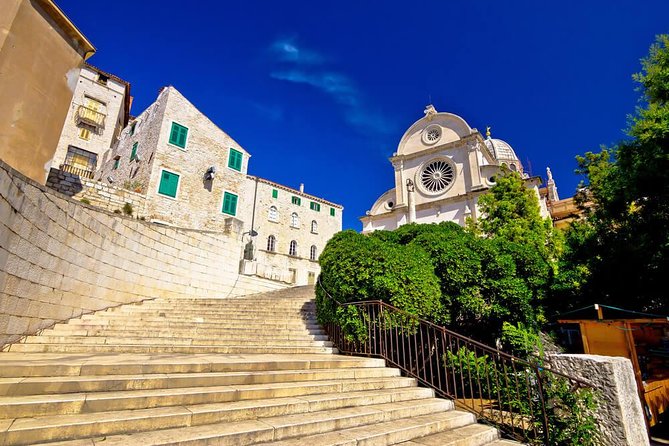
Now for the main event: Saint James’ Cathedral. This is the one you plan your day around, because it’s not just important, it’s unusual in several specific ways.
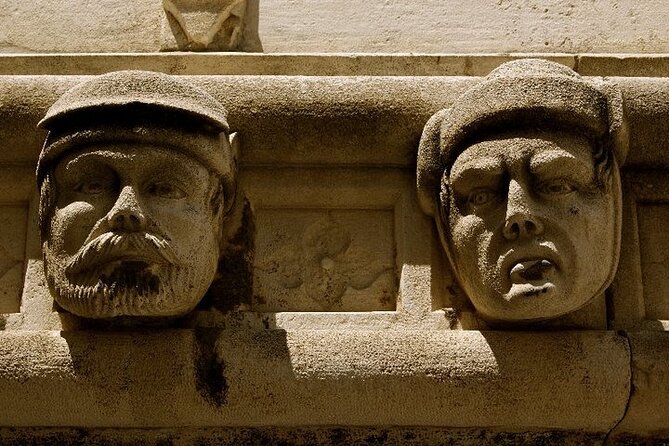
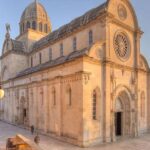
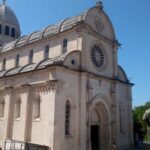
The cathedral is entirely built of stone, using a brave structure of stone slabs and ribs without binding material. The guide will also point out the trefoil front facade, and the famous sculptural detail: 71 realistic sculptural portraits around the apses.
One practical thing: cathedral admission is not included, so you’ll want to budget for the ticket and keep an eye on the timing for entry. The time set aside for this stop is about 20 minutes, which is enough for the highlights if you listen and ask a question or two, but it’s not enough for a long linger unless your guide slows the group down.
If you do one thing that makes the whole tour feel worth it, it’s this. Once you understand how the stone is engineered and how the sculpture wraps the apse area, the churches and civic buildings you saw earlier stop being isolated landmarks. They become pieces of the same identity puzzle.
Squares and smaller church details: Trg Republike Hrvatske, Saint Barbara, and more
After the cathedral, you’ll shift back into civic space and street-level meaning.
At Trg Republike Hrvatske, you’ll learn about what was important for the life of a medieval commune and get context for the surrounding buildings. This is where you start seeing the city as a functional community, not just a series of religious monuments.
Then it’s Church of Saint Barbara, where the guide explains why the church has 4 bells and when those bells ring. It’s a reminder that architecture is meant to be heard as much as seen.
Finally, you’ll pass Trg palih šibenskih boraca, a square where the guide shares unique details before the tour ends.
The end is intentionally flexible. After you return to the meeting point, you’ll have time to wander on your own and pop into cafes and restaurants.
Pacing, comfort, and who this private tour fits best
This experience is listed for moderate physical fitness, which usually means you can expect uneven old-street surfaces and normal walking time without huge elevation challenges. Since the tour is private, the guide can often keep the pace more comfortable than a large group tour.
One of the strongest signals from actual experiences with this style of tour is that guides can make it work for families. The mention of a group with adults plus teenagers and a 10-year-old highlights what you should hope for: explanations that are clear and engaging, not lectures.
That said, there’s one potential mismatch to consider. If your idea of a perfect day is all architecture and maritime views, you might find yourself less thrilled if the guide spends extra time on smaller topics, like plants or fine-grain observations. With a private tour, you can steer the conversation, so just speak up early.
Making the most of your day in Šibenik
If you want the best outcome, plan it like this:
- Pair this walk with a relaxed meal afterward, since it ends near the waterfront dining area vibe.
- Plan for extra time around the cathedral ticket, since it’s the one admission not included.
- If there’s a local holiday or patron-saint celebration on your dates, you may see processions or street music that add energy to the experience. It’s not guaranteed, but it’s the kind of town moment Šibenik is capable of.
For what to wear, stick to comfortable shoes with good grip. Old-town streets are often uneven, and you’ll be walking enough to feel it if you wear the wrong sandals.
And if you want a simple pro move: bring one question you’re genuinely curious about, like why certain churches date back the way they do, or how the city planned water storage. A good guide will turn that into a thread that ties the whole town together.
Should you book this private walking tour of Šibenik?
Book it if you want a guided way to understand Šibenik, not just a quick sightseeing circuit. The biggest payoff is St. James Cathedral plus the surrounding context that helps you read the city like it has a plot.
I’d also book it if you have a mixed group and you care about pace. The private format and the way guides like Irena and Sandra communicate can keep both adults and kids interested.
Skip or adjust your expectations if you want a faster, purely photo-based route, or if you hate any detours into smaller topics. Since the time is limited to about 1.5 to 2 hours, you should go in with the mindset of learning, not checking everything off.
FAQ
How long is the private walking tour of Šibenik?
It runs for about 1.5 to 2 hours.
What is the price for this tour?
The price is $192.25 per group, up to 10 people.
Does the tour include pickup?
Pickup is offered.
Is the tour available in English?
Yes, it is offered in English.
Is St. James Cathedral admission included?
No, admission to Cathedral of St. Jacob is not included.
Are the other stops free to enter?
The stops listed aside from the cathedral show admission as free.
Where does the tour start and end?
It starts at Parking Mulo Krke, Obala hrvatske mornarice 1, 22000 Šibenik, Croatia, and ends back at the same meeting point.
What kind of walking should I expect?
You should have a moderate physical fitness level for the walking involved.
Is this a private tour?
Yes. Only your group participates.
Can I cancel for a full refund?
Yes. You can cancel up to 24 hours in advance for a full refund.
More Walking Tours in Sibenik
More Tours in Sibenik

More Tour Reviews in Sibenik
Not for you? Here's more nearby things to do in Sibenik we have reviewed



More Krka & Šibenik Day Tours to consider.
 ★ 4.8Krka Waterfalls Trip with Boat Cruise and SwimmingFrom $3110,519 reviews
 ★ 5.0Krka Waterfalls, Food & Wine Tasting TourFrom $459,326 reviews
★ 4.9Krka Waterfalls, Food & Wine Tasting TourFrom $446,598 reviews
★ 5.0Krka Waterfalls, Food & Wine Tasting TourFrom $459,326 reviews
★ 4.9Krka Waterfalls, Food & Wine Tasting TourFrom $446,598 reviews
 ★ 5.0Krka Waterfalls Tour, Boat Cruise & SwimmingFrom $324,489 reviews
 ★ 4.8Krka Waterfalls Tour, Boat Cruise, and SwimmingFrom $313,118 reviews
 ★ 4.7Krka National Park TourFrom $312,359 reviews
 ★ 5.0Krka Waterfalls Day Tour with Boat Ride from Split and TrogirFrom $322,134 reviews
 ★ 5.0Krka Waterfalls Tour from Split with Boat Ride & SwimmingFrom $301,944 reviews
Explore its other useful categories