
REVIEW · KRKA & ŠIBENIK DAY TOURS
Daily or night walking tour through Medieval Šibenik
Šibenik hides medieval surprises in plain stone. This 1 hour 30 minutes walk, led in English by Dario Mikulandra, uses a Šibenik city map to connect the big monuments with the small, odd details that made daily life work. You can do it in the day for easier photos, or at night when the stone streets feel more like a lived-in maze.
I love the way the tour treats the Cathedral of St. James as a story. You will hear about Juraj Dalmatinac, why construction took so long, and those memorable interior oddities like the many shells, plus the tale about a presbytery being stolen with fruit and vegetables. I also like the practical side of the route, especially the Square of the 4 Wells cistern, where you can see how the water system functioned, including the filtration setup and openings that brought fresh water in.
One possible drawback: the focus can lean religious and architectural, especially in the church-heavy stretches. If you are hunting for pure medieval street life only, you may want to ask more follow-up questions about how people actually lived between the monuments.
Key highlights you will feel during the walk
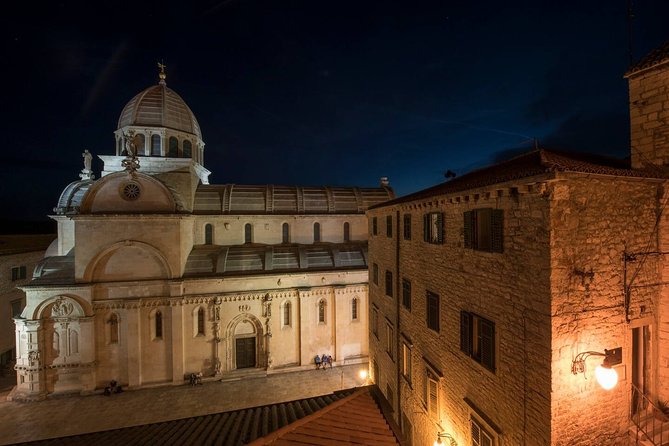
Juraj Dalmatinac connections at St. James Cathedral and the guide’s attention to how theology and building design meet
Shells, stone “signature” details, and odd-but-true stories that make the cathedral easier to remember
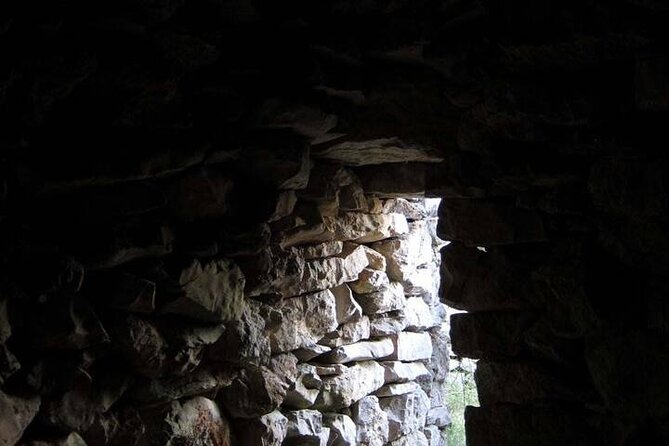
The 4 Wells cistern with a readable water history, plus what the underground complex looks like now
Gothic-Renaissance church stops like St. Barbara and St. Ivan Krstitelja, with sculptural and clock details
St. Frane and the Franciscan complex, including incunabula and manuscript codices
Small group size (max 10), which makes it easier to ask questions and keep your pace
A 90-minute route built for medieval stone, not tourist fluff
This is a compact tour, about 1 hour 30 minutes, so it fits cleanly into a day of beaches, ferry rides, or a Krka National Park plan. The route is designed around walking through the historic center, where the streets can turn, steepen, and funnel you toward surprises.
You will move stop to stop with an expert guide, and the tour style is meant to help you “read” the city. In other words, you are not just looking at buildings, you are learning what to notice next time you walk these streets on your own.
Group size is capped at 10, and that matters. In a small group, you are more likely to get explanations tailored to what you care about, and it is easier for the guide to manage stone steps, narrow passages, and slower walkers.
You can also read our reviews of more walking tours in Sibenik

Starting point and the first “map check” on Ul. Biskupa Fosca
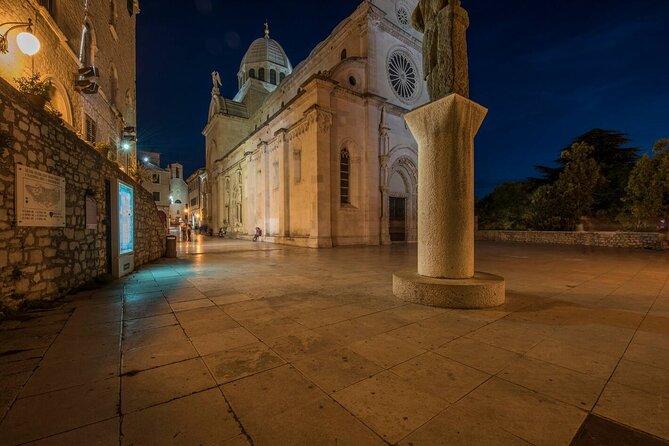
The tour begins at Ul. Biskupa Fosca 9, 22000, Šibenik, and it returns you to the same meeting point at the end. That round-trip structure is practical when you are figuring out where you want to eat after.
A Šibenik city map is part of the experience, and I like that for one simple reason. Medieval towns can feel like they are all the same until you learn how the monuments line up with the streets. The map helps you build that mental grid early, so the walk feels less random.
Also, since this is a day or night option, you can match the timing to your comfort. Day is easier for stairs and close-up reading. Night can feel more atmospheric, and the review notes that the evening version was a standout, especially for people who wanted the mindset of the city to sink in.
St. James Cathedral, UNESCO-level architecture and real storytelling at every corner
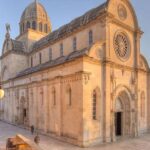
Your first stop is The Cathedral of St. James (St. Jacob’s Cathedral), tied to Croatian culture of the 15th and 16th centuries and listed on UNESCO. The big draw here is that the guide does not treat the cathedral like a single “wow moment.” Instead, you will get a guided explanation of what came before it, how it was designed, and how the construction stretched across 105 years.
This is where you learn how medieval builders thought. The tour connects the theology behind the design to the practical act of building, which helps you understand why certain forms exist beyond pure aesthetics. If you like symbolism, this is a satisfying stop.
Then comes the stuff that makes you stop talking and start looking:
- you will meet Juraj Dalmatinac in the way the guide frames his influence
- you will look for the hidden signature associated with his work
- you will hear why there are many shells in the cathedral
- you will also get the odd story about the presbytery being stolen with fruit and vegetables
- you will hear about the many heads carved into the cathedral
One of the nicest parts of a cathedral visit is when it becomes memorable later. Here, the weird details do exactly that. Even if you only catch fragments of carvings, the guide’s explanations give your brain something to file those carvings under.
One consideration: this is a church, so the tour naturally spends more time on architecture and religious context than on everyday commerce. If you want “how people shopped,” you will get it later, but St. James is the main architectural anchor.
Church of St. Barbara: Gothic lines, a physician vow, and a rare relief focus
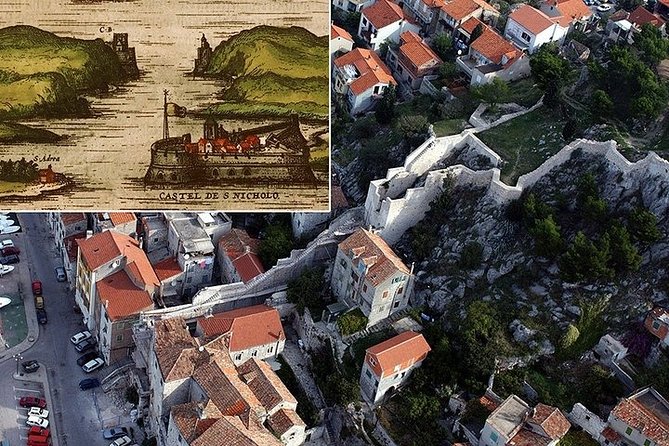
Next up is Church of St. Barbara, a single-nave Gothic church whose construction began around 1400. This stop is shorter, around 10 minutes, but it is packed with specific points to notice.
The tour highlights the Gothic niche above the main entrance, with a sculpture of St. Nikola. You will also hear that the work is by the Italian master Bonino from Milan, which gives you a direct historical link rather than vague description.
The real conversation piece, though, is the church’s sculptural vow on the north wall. You will learn about a Gothic window detail where there is a sculptural work made as a vow in 1419 by the Šibenik doctor Marko.
What makes this stop stand out for me is that it ties religion to a particular profession and a specific moment in time. The tour frames it as a unique medieval relief depiction of physicians on the eastern Adriatic coast, which is the kind of detail you cannot easily find just by walking past.
The Square of the 4 Wells cistern: how people survived drought and sieges

A short walk brings you to Trg 4 bunara i srednjevjekovna cisterna, the Square of the 4 Wells and its underground cistern. It is only a few dozen meters from St. James Cathedral, which makes the whole water story feel even more connected to the city’s daily reality.
The guide explains why this cistern existed: frequent droughts and frequent military sieges. It was built by the people of Šibenik, with a construction contract signed in 1446 and supervised by Juraj Dalmatinac. The storage capacity is described as 28,000 barrels of water, and there was even a special tax introduced to fund it.
On the surface, you can see the plateau and the four wells where water could be pumped. The complex has been renovated in recent years, and that renovation is part of why it works as a viewpoint today, not just a museum-like ruin.
Then, the underground portion gives you the “how it worked” lesson. The cistern includes a cafe and wine bar, and the tour notes that you can see:
- what the cistern looked like
- the water filtration system
- the four openings (crowns) where fresh water was taken from
Practical tip: when you are underground or inside shaded areas, let your eyes adjust before you rush to take photos. This place is more understandable if you slow down just a bit.
Time-wise, you spend about 15 minutes here, and that is enough to connect the engineering to the bigger medieval problem solving. If you like cities that feel smart because of systems, not just monuments, this stop is a big win.
You can also read our reviews of more evening experiences in Sibenik
St. Ivan Krstitelja: Gothic-Renaissance details, a Turkish clock, and fruit-and-vegetable windows
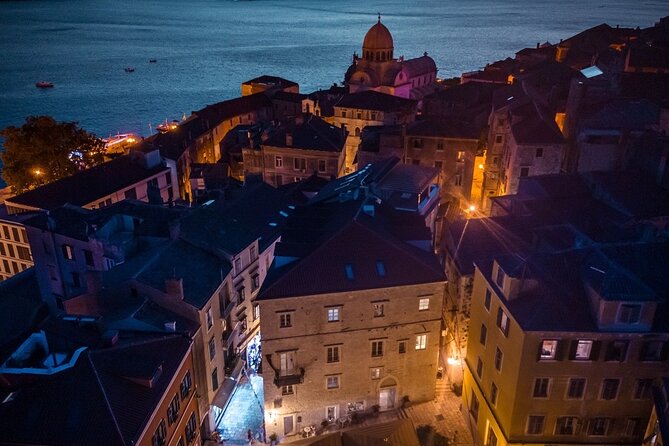
Stop four is Crkva sv. Ivana Krstitelja (Church of St. Ivan), described as a Gothic-Renaissance building erected in the 15th century. The tour starts by clarifying that it was erected under the name of the church of St. Trinity, which is a handy way to remember the building’s identity beyond the current dedication.
You will notice the staircase along the south side, linked to the Šibenik builder Ivan Pribislavić, and decorated with bas-relief. The tour also points you to Renaissance windows, including one attributed to Nicholas of Florence.
The detail I find most unusual here is the bell tower’s Turkish clock with one hand, brought from Drniš after the Turks abandoned it in the 18th century. It is the kind of object that instantly turns a church stop into a wider story about how regions changed hands and what was reused.
Other features the guide calls out include:
- a relief with a lamb and a winged angel
- Renaissance windows decorated with fruits and vegetables by Nikola Firentinac
- mysterious iron hoops on the north wall, explained as having functions from the early 17th century
You will also likely feel the texture of Šibenik through these short observations. The town is not only about grand cathedrals. It is also about how different styles, workshops, and materials got stitched together.
If you dislike “too many churches,” this is still manageable because each stop is relatively short. The total church time is dense, but the guide keeps it from turning into repetition by focusing on different crafts and different stories at each site.
Church of St. Frane and the Franciscan complex: incunabula and the Vrančić family link
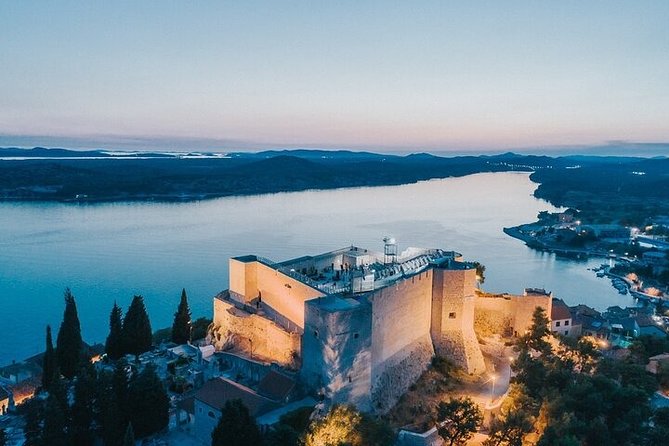
One of the most interesting parts of the walk is the stop at Church of St. Frane, built in the second half of the 14th century. It is a spacious single-nave Gothic building, intentionally described as without decorative architectural elements, so you should expect a more stripped-down exterior feel.
The tour focuses on the front entrance with its Gothic stone frame and then leads you to the chapel of St. Cross. Here, the highlight is the organ from 762, made by the instrument maker Petar Nakić. That kind of detail makes older religious spaces feel grounded in craft, not just in faith.
On the south side, you will also see the Šibenik Franciscans complex, including a monastery dating from the 14th century. The monastery library is a major draw: it includes a collection of 151 incunabula and manuscript codices.
The tour also mentions the Šibenik Prayer, described as one of the oldest Croatian linguistic and literary monuments, written in Latin around 1375. If you care about language and texts, this is the stop that can make the tour feel bigger than buildings. It connects the medieval world to writing, not only to stone.
Finally, next to the monastery, you will see the remains of the eastern city walls and the Vrančić Palace, where Antun and Faust Vrančić were born. That family link gives you a clear thread from medieval institutions to later Croatian figures.
Potential drawback to keep in mind: this stop leans into institutional and cultural details. If you wanted more open-air city movement only, you might feel you are spending more time in a tighter architectural complex. Still, the variety of organ history, library materials, and city-wall remains keeps it from becoming one-note.
St. Duha on Dinko Zavorović Square and the “bells on Dec 17-18” tradition
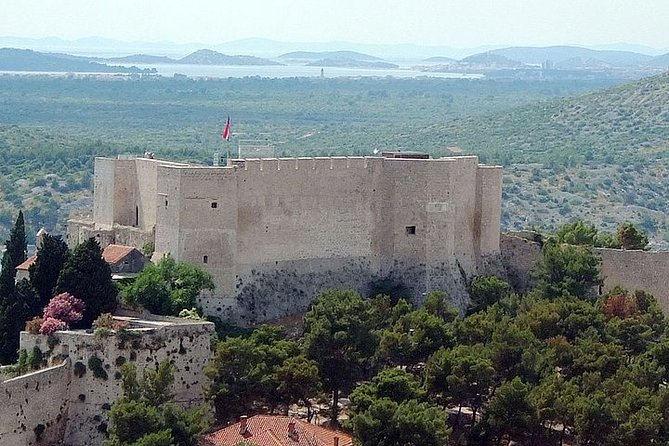
Next is Crkva Svetog Duha on Dinko Zavorović Square. This church was built in the 17th century, according to a project by Antun Nogulović. The tour also frames this stop as part of a pattern: it is the third church at a distance of 100 meters, and all three belonged to the three most important medieval fraternities.
The quick stop is about 5 minutes, but it still carries meaning. You will learn who the fraternities were and how they functioned in society, which helps you understand why these church locations are not random dots on a map.
Then comes a charming tradition the guide shares about medieval communal ritual. The tour explains the custom of “celebration,” when on the night of December 17 to 18, the bells of Šibenik churches ring to announce the arrival of Christmas.
Even if you are visiting outside December, I like hearing traditions like this because it changes how you interpret a bell tower when you pass it later.
Medulić Square: measuring units, electricity in 1895, and AMOR D. CANI
The final stretch centers on Medulić Palace Rooms & Apartments and stories around Medulić Square. Here, the tour shifts from stone crafting to everyday commerce and even technology.
In the Middle Ages, Medulić Square is described as the seat of a small trading lodge. The guide connects the story to how merchants dealt with the problem of measurement, including what a meter meant in medieval terms. On the palace wall at Medulić Square, you can find official measuring units tied to the Venetian Republic and the city of Šibenik.
A few steps away, the tour points you to another attraction linked to electricity. At the Divnić Palace on the nearby square of the same name, there is a copy of a lamp that shone in 1895. The point is that Šibenik was described as the first city in Europe to receive alternating electricity and lighting from the hydroelectric power plant on the river Krka.
That might sound like a curveball at the end of a medieval tour, but it works. It reminds you that the city is not stuck in the past. It keeps adopting new ideas.
The walk also finishes by mentioning AMOR D. CANI, a stone pet bowl. It is not the type of ending every history tour offers, and that light touch can help if the earlier stops have been heavy on churches and engineering.
One more theme the tour promises in its highlights is the Medieval Mediterranean Garden and Medici Square. Even if you are mostly absorbing details in motion, that promise is really about variety. You are not trapped in one era. You get the medieval core, then small connectors into later life around the same streets.
Price, group size, and whether this is good value for 29.79
At $29.79 per person for about 1 hour 30 minutes, this feels like solid value if you like guided context. You are paying for a single specialist guide, not a long bus ride, and the pace stays walkable.
A practical reason this price holds up: the stops listed are shown with Admission Ticket Free at the sites described in the route. That means your money is largely going to interpretation and time, not to separate site entrances.
The group size cap at 10 also protects the experience. If you do not want a crowded herd walking through churches, this format is more comfortable, and it is easier to keep up with the guide’s many named details like Juraj Dalmatinac, Bonino from Milan, Ivan Pribislavić, and Nikola Firentinac.
Who should book:
- You care about architecture details and want to know what to look for, not just where things are
- You like stories that connect art, engineering, and daily survival, like the cistern’s drought and siege history
- You enjoy smaller, guided walks where you can ask questions
Who might want to adjust expectations:
- If you want mostly secular street life only, be aware the route includes multiple churches and the guide will naturally lean into religious architecture and meaning
Should you book the Medieval Šibenik day or night walking tour?
I would book it if you want your first real understanding of Šibenik’s medieval core. The tour gives you a set of anchors, like St. James Cathedral and the 4 Wells cistern, and then it builds around them with other craft-driven stops. You will leave with enough context to enjoy your own next walks, because the city will feel more like a connected puzzle and less like isolated monuments.
I would skip or pair it with something else if you are allergic to church-focused sightseeing. This walk is not a pure market-and-streets tour. It is a medieval architecture and urban systems tour, with plenty of religious content.
If you can, consider the night option if you like atmosphere and you have decent comfort with stone steps. The tour is designed to include the same key sites in either format, and an evening walk can make the storytelling feel more immediate.
FAQ
How long is the medieval Šibenik walking tour?
It lasts about 1 hour 30 minutes.
Is the tour offered in English, and can I choose day or night?
Yes. The tour is offered in English, and it is available as a day or night walking tour.
Where does the tour start?
The tour starts at Ul. Biskupa Fosca 9, 22000, Šibenik, Croatia and ends back at the same meeting point.
How many people are in a group?
The tour has a maximum of 10 travelers.
Are service animals allowed?
Yes, service animals are allowed.
Which sites does the tour include?
The walk includes stops at The Cathedral of St. James, Church of St. Barbara, Square of the 4 Wells (underground cistern), Crkva sv. Ivana Krstitelja, Church of St. Frane and the Franciscan complex, Crkva Svetog Duha, and stories and sights around Medulić Square.
Can I cancel for free?
Yes. You have free cancellation, and you can cancel up to 24 hours in advance for a full refund.
More Walking Tours in Sibenik


More Tours in Sibenik




More Tour Reviews in Sibenik
Not for you? Here's more nearby things to do in Sibenik we have reviewed





More Krka & Šibenik Day Tours to consider.
 ★ 4.8Krka Waterfalls Trip with Boat Cruise and SwimmingFrom $3110,519 reviews
 ★ 5.0Krka Waterfalls, Food & Wine Tasting TourFrom $459,326 reviews
★ 4.9Krka Waterfalls, Food & Wine Tasting TourFrom $446,598 reviews
★ 5.0Krka Waterfalls, Food & Wine Tasting TourFrom $459,326 reviews
★ 4.9Krka Waterfalls, Food & Wine Tasting TourFrom $446,598 reviews
 ★ 5.0Krka Waterfalls Tour, Boat Cruise & SwimmingFrom $324,489 reviews
 ★ 4.8Krka Waterfalls Tour, Boat Cruise, and SwimmingFrom $313,118 reviews
 ★ 4.7Krka National Park TourFrom $312,359 reviews
 ★ 5.0Krka Waterfalls Day Tour with Boat Ride from Split and TrogirFrom $322,134 reviews
 ★ 5.0Krka Waterfalls Tour from Split with Boat Ride & SwimmingFrom $301,944 reviews
Explore its other useful categories