
REVIEW · SPLIT CITY & DAY TOURS
Walking Tour of Split with a ‘Magister’ of History
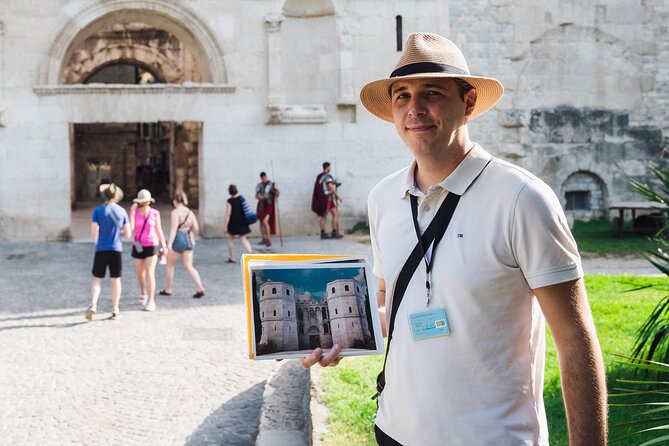
Split can feel like a maze until someone turns the maze into a map. This walk is built for that moment, with Diocletian’s Palace as your classroom and 3D reconstructions that help you picture what stood here in Roman glory. I especially like the mix of Roman, medieval, Renaissance, and even early modern details, so you stop treating Split like one-era wallpaper, and Toni Šare explains the city like he lives there (because he does). One thing to consider, it is a walking tour, so if you are short on stamina, you may want to pace yourself or choose a time of day with cooler weather.
What makes this tour work is the structure: you start at the harbor, build context with the palace’s layout, then move entrance to entrance, square to square, and landmark to landmark. You also avoid the time sink of sitting through museum tickets, since the emphasis stays outside and in the spaces you can see.
Key highlights before you lace up
- Small group size (max 18) means easier questions and less crowd pressure around the tight palace corners.
- Toni Šare, owner of DiocleSpot Tours, brings a local historian’s voice to the Roman-to-modern story.
- Stop-by-stop orientation helps you recognize what you are looking at without needing a screen all day.
- Exterior-only viewing keeps the pacing smooth, with stories told right where the architecture is.
- Game of Thrones filming locations can be added if the group is interested, with a quick pass by the fan shop.
Meet Toni Šare at Porta Aenea, then get oriented fast
You meet at the Brass Gate (Porta Aenea) near Obala Hrvatskog narodnog preporoda 22, and you end at Narodni trg (Pjaca), the main city square. That start and finish pair matters more than it sounds. Porta Aenea helps you understand the palace as a system, not a random set of ruins, and Narodni trg is an easy point to regroup, grab water, and plan your next stop.
The tour lasts about 1 hour 40 minutes to 1 hour 50 minutes. That is long enough to connect the dots, but short enough that you still have energy to explore the Old Town after. It runs in English, uses a mobile ticket, and has a maximum group size of 18, which helps keep the walk moving and your view lines clear when you stop.
One practical plus: you are near public transportation, and the route is designed so most people can participate. If you need to plan around weather, keep an eye on it, because the experience is weather dependent.
You can also read our reviews of more walking tours in Split
Riva Harbor: the southern wall view that makes the palace click
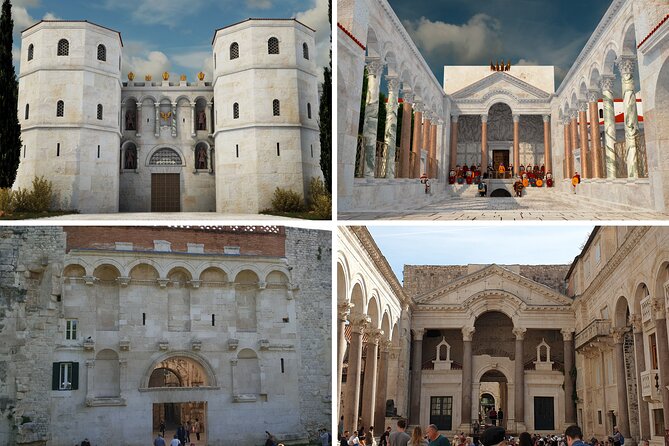
The first stop is Riva Harbor, Split’s Riviera, and it sets the tone with a simple goal: explain what you are about to see when you enter Diocletian’s Palace. From here you get a beautifully framed look at the southern wall of the palace, plus visual aids, including graphic and model representations, that preview the palace interior.
This is a smart opening, because Split’s Roman buildings can look like they belong to a different city than the one you are walking in. Starting at the harbor gives you a sense of how the palace relates to the living city outside it.
If you are the kind of traveler who likes to understand context before details, you will appreciate how Toni uses this spot as an introduction. You will also get a better feeling for the palace’s scale before you hit the tighter streets and courtyards.
Peristyle of Diocletian’s Palace: the central square, built to impress
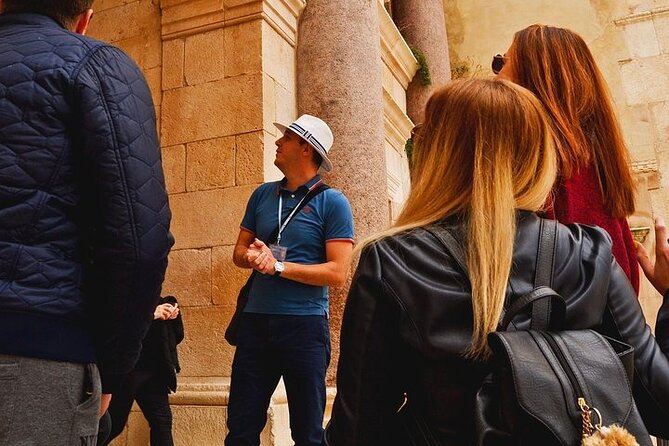
Next up is the Peristyle, the central square of Diocletian’s Palace and one of the city’s key public spaces today. This is where Roman engineering meets daily life, because people move through this area like it is just another plaza, while the architecture underneath tells a much older story.
Here is where the 3D reconstructions really help. You do not just hear dates and names. You get visual structure, so you can picture where decorations and building elements were originally positioned, and how much still feels original versus what has been altered over centuries.
A big value of this stop is orientation. Once you can imagine the palace layout, the rest of the walking tour becomes easier. You start seeing connections instead of isolated sights.
Cathedral of Saint Domnius: the mausoleum that kept its job
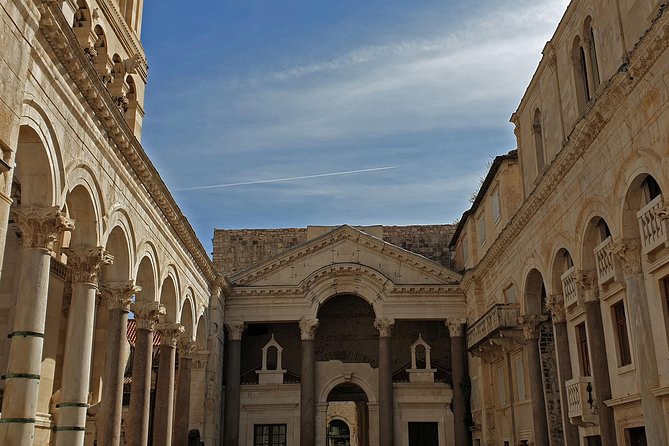
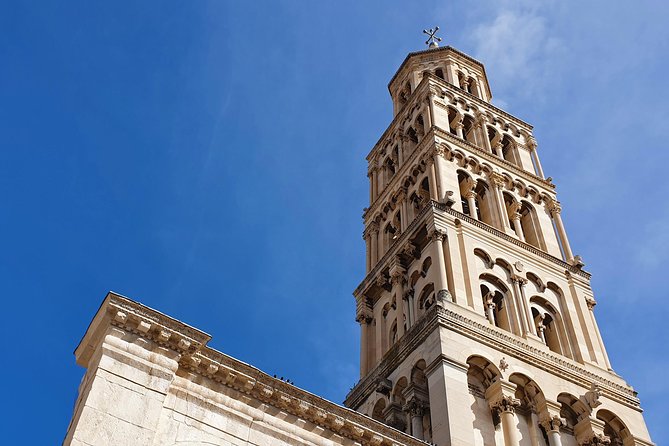
The walk then moves to the Cathedral of Saint Domnius, tied to the mausoleum of Emperor Diocletian. Even if you are not entering inside, you will learn what matters: why this building is considered one of the best-preserved Roman structures in Split, how the bell tower fits into the story, and how it was converted from a grave to a cathedral by Christians.
The outside-only approach can feel limiting at first, but it is actually efficient. You get the narrative without paying time and entry logistics, and you still get to ask questions in the exact place where the building’s shape does the storytelling.
For travelers who like architecture, this stop offers a clear takeaway: Roman structures in Split were not only admired, they were actively reused and repurposed, which is a big theme throughout the city.
Temple of Jupiter: late Roman perfection, plus the human errors
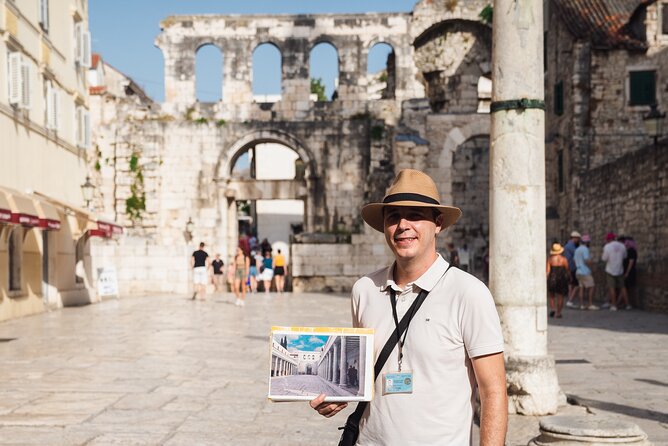
At the Temple of Jupiter (as people call it), you get a close look at one of the best-preserved late-Roman temples in the world, at least from the perspective of what you can see outside. Toni also points out anomalies and mistakes made during construction.
That angle is one of the reasons this tour feels different from a standard sightseeing loop. You are not only hunting for beauty. You are learning how real building projects worked, what likely went wrong, and how those quirks show up in what you can observe today.
You will not enter the temple, but you will still come away knowing what to watch for. If you like explanations that make you look harder, this stop delivers.
You can also read our reviews of more historical tours in Split
Eastern (Silver) Gate: a postcard view with an old road beneath
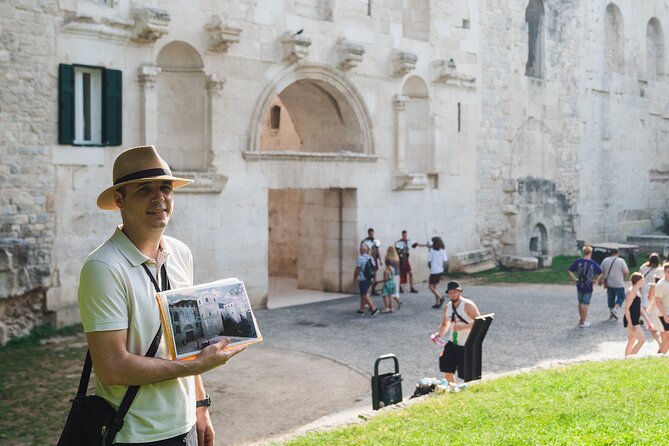
At the Eastern (Silver) Gate, you get one of the best viewpoints of the palace. You can look across the scene with the cathedral (mausoleum) on one side, the Silver Gate on the other, and beneath you a preserved portion of the original road.
This is a classic “zoom out, then zoom in” moment. From a single vantage, you understand spacing, sightlines, and how the palace edges met circulation. It is the kind of view that helps you stop memorizing and start recognizing.
Grgur Ninski statue: why an old figure matters to language
Next you will reach the Grgur Ninski statue, one of Split’s most recognizable landmarks. Toni explains what the statue represents and what it meant for Croatian language and early medieval culture.
This is where the tour’s scope widens beyond stone. It becomes political and cultural, not just architectural. If you have been thinking of Croatia as Roman ruins plus a coast, this stop is the correction, reminding you that history here is about identity and debate as much as buildings.
It is also a quick stop, which helps keep the pace from dragging.
Vestibulum and private residence remains: the emperor’s side of the story
Then you move to the Vestibulum of Diocletian’s Palace, the ancient entrance to Diocletian’s private residence. From there, Toni walks you around remains connected to the emperor’s private areas.
This part works well because it does not treat the palace as one giant public monument. You start to understand there were zones, rules, and boundaries. Even without entering, you can grasp the idea that this was designed for control, privacy, and power.
If you like tours that explain how space affects behavior, you will likely find this section especially useful.
Noble family palaces and the little details you miss alone
As you continue through the palace, you will pass various palaces of noble families, and Toni points out the little details along the way. The key value here is the tour’s timeline. Split is known for Roman-era highlights, but it also carries medieval, Renaissance, and early modern heritage, and you get that added context without it turning into a lecture.
You also may get a bonus segment if the group is interested: Toni can share Game of Thrones filming locations in Split, and the route passes by a fan shop. This part is fun, but also useful, because it gives you a reason to pay attention to street corners and facades that you might otherwise ignore.
Golden Gate: the most memorable entrance and the defensive logic behind it
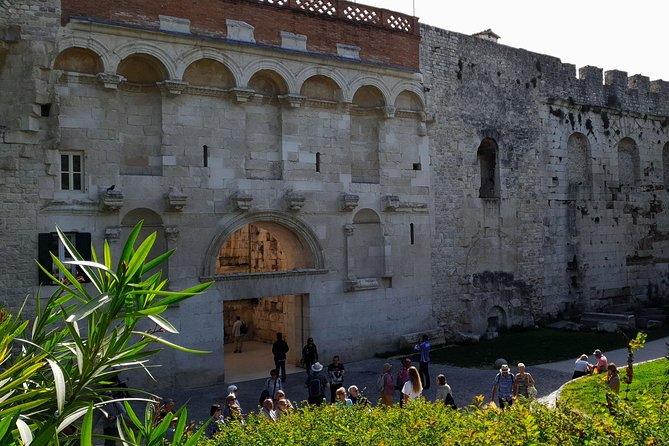
The tour’s next anchor is the Golden Gate, described as the most preserved of the four palace entrances and the most decorated. This stop is visual and practical. You can see the northern wall from here and understand how the medieval city still used Roman-made structures for defense, while removing what was no longer needed.
This is the kind of explanation that makes you look smarter, even after the tour ends. You start spotting defensive adaptations as you wander on your own, like why certain walls look reinforced or why some elements seem reused in a different era.
If you are taking photos, this is also the moment most likely to reward it, because you get a clear line of sight to major structures in one glance.
Renaissance courtyard time, plus Venetian influence
From there, you will look toward the City Museum of Split, located inside a preserved Renaissance noble palace. You do not enter the museum itself. Instead, you see a courtyard and get the architectural and historical context from outside.
Toni also adds the Venetian connection here, explaining how palaces like this began to appear during Venetian times. Even if you are not a museum person, this courtyard stop helps you appreciate why the city’s center looks the way it does.
This is also a good break from constant walking focus, because a courtyard gives you a breather and a visual reset.
Old Town Hall on Pjaca: ending where you can actually use it
The tour closes at Old Town Hall on Pjaca (Piazza Square), where you can see the 14th century town hall and other interesting structures. This is a smart ending point because it is an easy way to orient yourself. After 1 hour 40 minutes to 1 hour 50 minutes, you likely want to pick a direction and keep exploring, and Pjaca is the perfect launchpad.
From here, it is also simpler to navigate back to transit, find a snack, and connect your next activity to the history you just learned.
Value check: why $34.83 feels fair for what you get
At $34.83 per person, this is priced for a short, high-impact city history experience. What you are paying for is not just access to landmarks. You are paying for:
- clear explanations tied to specific places
- 3D reconstructions that help you visualize lost parts of the palace
- a guide who can connect Roman, medieval, and Renaissance layers into one walk
The fact that it is limited to 18 people matters for value too. Smaller groups often mean fewer interruptions and more time at each stop for questions.
Also, because the tour does not enter museums or paid sites, you avoid the common problem where a “quick history tour” quietly turns into a spendy one after tickets. You still learn enough to make those places you later choose to enter more meaningful.
Who this tour fits best
I think this tour is a strong fit if you:
- want a fast, organized introduction to Diocletian’s Palace
- like architecture explanations that include how buildings changed over time
- enjoy a local historian’s style, with humor and follow-up questions
- want to beat the day’s heat with a walk that is about the right length
If you prefer long museum sessions or hands-on indoor exhibits, you might feel the pacing is too outdoor-focused. But if your goal is to understand what you are seeing while you wander the Old Town, this approach is ideal.
What to expect from Toni Šare, based on what stands out
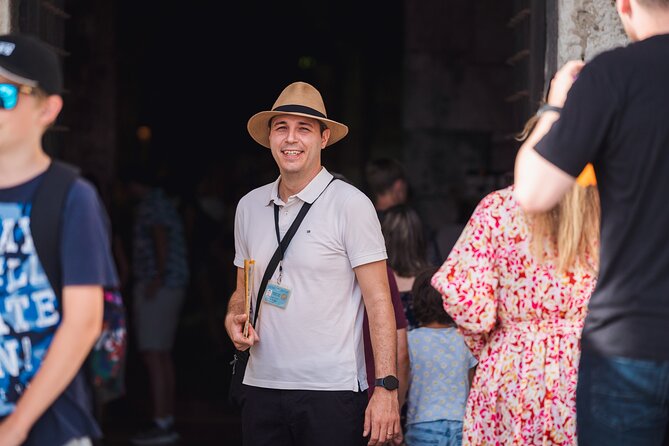
Toni Šare, the owner of DiocleSpot Tours, leads with energy and structure. The strongest theme I see in the feedback is how clearly he connects what you see to what you learn. People repeatedly point to his vivid 3D renderings, his ability to answer questions, and the fact that he treats Split like a living place, not a dusty set of facts.
Another detail that pops up: the timing of added touches, like music from a traditional singing quartet. Even without turning it into a performance, it adds a local flavor at the right time, which is exactly what you want when you are standing in centuries-old stone.
Should you book this Split history walk?
Book it if you want the quickest path to understanding Split’s big picture while still enjoying the fine details. This tour is a great “first day in Split” move because it gives you a framework, so later, when you wander the Old Town, you know what you are looking at and why it matters.
Skip it or consider a different style if you dislike walking, want mostly indoor time, or already know Diocletian’s Palace inside out and are looking for something more offbeat than Roman architecture and palace entrances.
If you are deciding between a basic guidebook walk and a guided history route, I would choose this one for the balance. You get structure, visuals, and a local historian voice, and you finish in the right place to keep exploring.
FAQ
How long is the Walking Tour of Split with a Magister of History?
It runs about 1 hour 40 minutes to 1 hour 50 minutes.
Where does the tour start and end?
It starts at the Brass Gate (Porta Aenea) on Obala Hrvatskog narodnog preporoda 22, Split, and ends at Narodni trg (Pjaca) in Split.
Is the tour offered in English?
Yes, it is offered in English.
Do we enter museums or paid attractions?
No. You do not enter museums or paid sites. The stops for places like the Cathedral of Saint Domnius and the Temple of Jupiter are described as viewing and explanation from outside.
Are tickets included?
Some stops are free, and admission for certain sites is not included. The tour content focuses on explanations and exterior viewing rather than paid entry.
How big is the group?
The tour has a maximum of 18 travelers.
Can I cancel for a full refund?
Yes. You can cancel up to 24 hours in advance for a full refund.
Is good weather required?
Yes. The experience requires good weather, and if it is canceled due to poor weather, you will be offered a different date or a full refund.
More Walking Tours in Split

More Tours in Split

More Tour Reviews in Split

Not for you? Here's more nearby things to do in Split we have reviewed




More Split City & Day Tours to consider.
 ★ 4.8Krka Waterfalls Trip with Boat Cruise and SwimmingFrom $3110,519 reviews
 ★ 5.0Krka Waterfalls, Food & Wine Tasting TourFrom $459,326 reviews
★ 4.9Krka Waterfalls, Food & Wine Tasting TourFrom $446,598 reviews
★ 5.0Krka Waterfalls, Food & Wine Tasting TourFrom $459,326 reviews
★ 4.9Krka Waterfalls, Food & Wine Tasting TourFrom $446,598 reviews
 ★ 4.6Split/Trogir: Blue Cave, Mamma Mia, Hvar and 5 Island TourFrom $1096,320 reviews
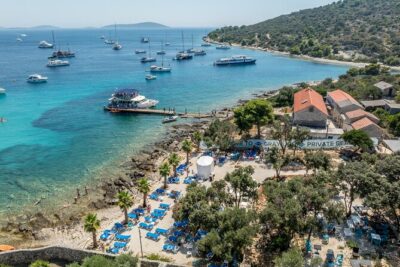 ★ 4.5Blue Lagoon & 3 Islands Cruise with Lunch from SplitFrom $785,756 reviews
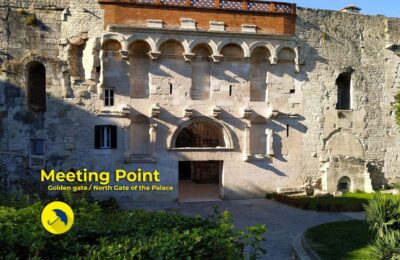 ★ 4.9Old Town and Diocletian Palace Walking TourFrom $174,727 reviews
 ★ 4.9Blue Lagoon Boat Party with DJs, Shots & After PartyFrom $474,610 reviews
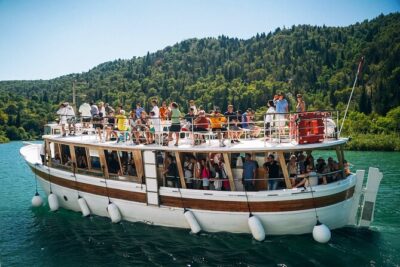 ★ 5.0Krka Waterfalls Tour, Boat Cruise & SwimmingFrom $324,489 reviews
Explore its other useful categories