
REVIEW · TROGIR & BLUE LAGOON TOURS
Trogir walking tour with a local guide
Trogir feels like a small town that packs a big story into one tight loop. This walking tour links Roman-era details to Venetian-era architecture, so you get the why behind what you’re seeing, not just the what. I love the way the route keeps you moving through key squares and churches without wasting time.
The second thing I like is the local-guided storytelling. Guides such as Daniela, Kristina, and Christina bring personal memories alongside the monuments, which helps the Old Town feel real instead of like a museum set. One thing to keep in mind, though, is pacing: the tour is listed at about 1 hour 30 minutes, but some groups can finish closer to an hour if the schedule runs tight.
Quick highlights I’d plan around
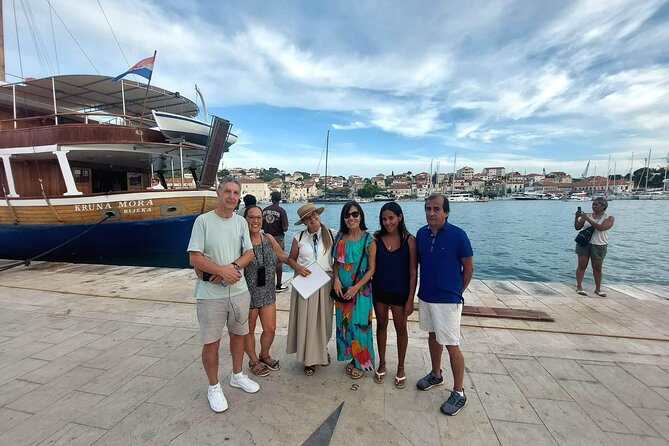
- Radovan’s Portal (13th century): fine stonework you can actually study up close.
- St. Lawrence Cathedral viewpoints: the bell tower offers classic Trogir and Adriatic views.
- John Paul II Square: an easy mid-walk reset with cafes and a relaxed rhythm.
- Venetian-style civic buildings: Town Hall steps, Town Loggia, and the Clock Tower area.
- Waterfront payoff: Riva promenade, then Kamerlengo Castle at the end.
Entering Trogir Old Town Through the North Gate
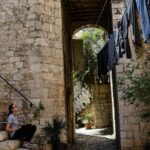
You start at Ul. Gradska vrata 5, then work your way into the walled Old Town. Even before the walking really begins, you’ll notice how Trogir’s street plan rewards slow looking: narrow passages, sudden open views, and small squares where daily life still happens.
A helpful trick I’d use on day one in town: keep your eyes up. Much of the “wow” here is on façades, archways, and doorways, not only in the big landmarks. A good local guide will point out the details that most people walk past, like carved portals, coats of arms, and how buildings reflect different eras of power.
You can also read our reviews of more walking tours in Trogir
Cathedral of St. Lawrence and Radovan’s Portal up close
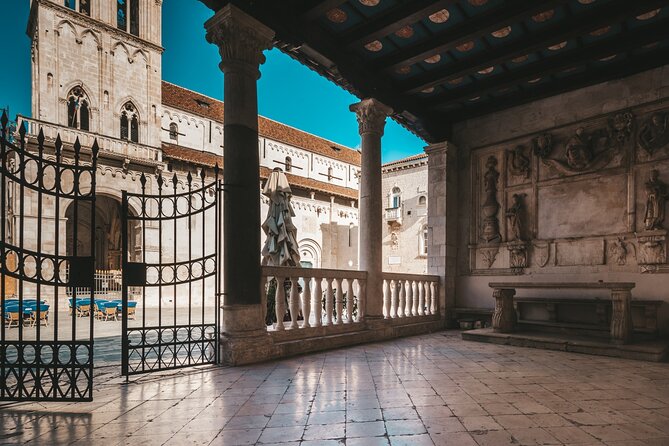
The main anchor is the Cathedral of St. Lawrence. Construction started in 1213 and took an astonishing five centuries, so you’ll see a blend of Romanesque and Gothic influences in one monumental footprint.
The stop’s biggest win is Radovan’s Portal, the cathedral’s main entrance, carved by Master Radovan in the first half of the 13th century. It’s the kind of artwork where the guide can explain what you’re looking at, and suddenly your brain stops treating it like random decoration. Instead, you start recognizing it as a signature of medieval craft in medieval Trogir.
If you’re into views, don’t miss the bell tower angle. The payoff is panoramic: Trogir, the island of Čiovo, the mainland, and the Adriatic. On a clear day, you’ll get a map-in-your-mind view that makes the rest of the town easier to navigate later.
What to watch for
The cathedral and surrounding areas can be crowded in peak hours. If you want photos without fighting people, be ready to move when your guide nudges you forward.
John Paul II Square, the cafe stop that feels like part of the tour
After stone and sculpture, you’ll land in John Paul II Square (Trg Ivana Pavla II). This is one of the most beautiful historic piazzas in town, and it functions like an outdoor living room. Cafes take over the square with tables and umbrellas, so the space naturally slows down.
I like this stop because it’s not just a break. It’s a chance to reset your senses and actually absorb the architecture around you. When your legs need a breather, this is where it makes sense to sit for a coffee or an ice cream and look back at the streets you just walked.
Why this matters
Trogir is small, but it’s a maze. A square like this acts as an orientation point. You’ll feel more confident about where everything connects once you’ve sat here for a bit.
You can also read our reviews of more guided tours in Trogir
Town Hall, Venetian stair drama, and the civic heart

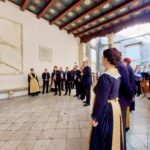
Next comes the Town Hall area, built in the 15th century. The stonework and the courtyard details hint at why Venetian-era civic architecture still looks elegant: it’s built for people to gather, discuss, and conduct business.
The outside staircase is one of the striking Venetian features here. It’s not “just stairs.” It’s a statement, and a guide can help you notice how architecture guided movement and social life in the past.
If you like architecture that reflects real public life, this stop is worth paying attention to even if you’re not a formal-history person.
St. Sebastian’s Church and the Clock Tower moment
Then you’ll reach St. Sebastian’s Church and Clock Tower. The church was built in 1476 by Trogir’s citizens who were grateful after surviving the plague. That context changes how you see religious buildings: they aren’t only sacred spaces, they’re also community memory.
The church’s architect is Niccolò di Giovanni Fiorentino, also known in English as Nicolas of Florence. A good guide will often connect the “big name” to the local result, so it feels less like trivia and more like cause and effect.
You’ll also get the Clock Tower vibe, which is a reminder that timekeeping and civic life were tightly linked.
Town Loggia: where everyday decisions used to happen
Just nearby is the Town Loggia, dating back to the 13th century. It’s a covered space beside the Clock Tower, used historically for community conversation and civic proceedings. In other words, this wasn’t just a pretty hallway. It was where people met to talk through issues of the day, and where the local court could meet on certain occasions.
What I love about including the Loggia in the route is the way it balances the “religious wow” with “civil life.” One stop helps you understand faith in the city. This one helps you understand how the city governed itself and how public space worked.
Palace Cipiko and the Venetian Renaissance makeover
Palace Cipiko, also called the Great Cipiko Palace, is next. The building is a group of Romanesque structures that later took on a Venetian Renaissance look between the 15th and 17th centuries when it was extensively remodeled.
Another name shows up again: Niccolò di Giovanni Fiorentino worked on the project too, including carving the south portal. When a guide points out where his work fits, the whole walking route starts to feel connected, like one person’s style echoed through multiple sites.
A practical note
Because this is a short, concentrated tour, you won’t linger forever in any one doorway or façade. If you’re the type who loves detail photos, ask your guide where the best angle is before you start snapping.
Garagnin-Fonfogna palaces and the North Gate area
As the tour continues, you’ll notice the museum area housed in a series of palaces once owned by the Venetian family of Garagnin-Fonfogna. You’ll likely see it early as you step through the North Gate, which is one of the two main entrances into the walled Old Town.
This stop helps you understand why Trogir reads like a patchwork of eras. Old Town buildings weren’t frozen in time. Wealth changed hands. Architectural styles shifted. The city evolved while keeping a tight footprint.
Even if you do not enter a museum (ticketing inside isn’t specified here), the outside viewing plus the guide’s explanations still gives context, especially if you’re trying to connect the dots between “palace power” and “church importance.”
Church of Our Lady of Mount Carmel and the fishermen connection
One of my favorite “human-scale” stops on this kind of walk is the Church of Our Lady of Mount Carmel. It’s historically the church of Trogir’s fishermen, craftsmen, and laborers, which makes it feel grounded in everyday work rather than only grand patrons and officials.
You’ll find it just off the waterfront promenade in the western part of the Old Town. If your timing lines up with 16th July, there’s a traditional evening procession with the statue of Our Lady. Even if you’re not in town on that date, it’s good to know the church still ties to local identity, not only past architecture.
A small detail that sticks
The tour also includes a bas-relief with a strong message about seizing the moment. A young man stands on tiptoe with arms outstretched, holding scales, with hair falling over his forehead and a bald crown. The theme is basically Kairos, the moment when the right opportunity appears, and the message is don’t let it fly away.
You’ll probably never forget a symbol like that after a guide connects it to the idea of timing and chance.
Waterfront Promenade (Riva) and sea views to Čiovo
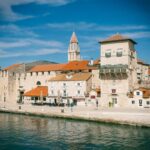
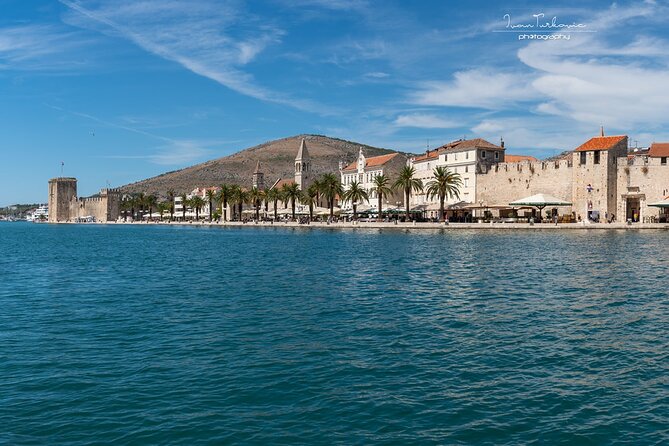
Now you shift from stone streets to the waterline. Riva is what locals call Trogir’s palm-fringed promenade. It’s wide, flat, and straight, running along the water edge with splendid views across the sea channel to Čiovo.
This is where you get the “easy-to-breathe” part of the tour. You can relax your legs, look outward, and compare what you saw earlier to what’s in front of you. With the old town behind you and islands ahead, Trogir stops being a cluster of buildings and starts becoming a coastal system.
If you’re traveling in hot weather, this section also helps. You still walk, but at least the open air and water views make it less punishing.
Kamerlengo Castle at the end, a strong finish
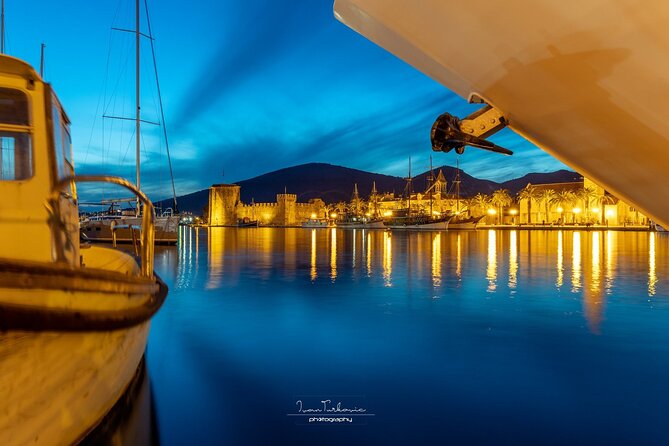
At the far end of the promenade is Kamerlengo Castle, an early 15th-century fortress. It stands at the corner of the tiny island that hosts the Old Town, so it naturally frames the area like a final chapter.
Right next to it, you’ll see everyday town life mixed in with historic walls: a local football pitch, a small playground, and stalls for local tour operators. That mix is part of what makes this tour feel authentic. You’re not only looking at monuments. You’re seeing how the town still uses its space.
If you want a final photo that includes water and skyline together, this is often where you can do it most easily without backtracking.
Price and value: why about $18 can be a smart buy
At $18.14 per person, this tour is priced for a first-timer’s best move: get local context fast. The value is not only the landmarks, it’s the guide doing the translation work.
Several stops are noted as admission ticket free, which matters because you’re not forced into extra costs at each location. You’re also paying for time efficiency. Trogir’s Old Town is compact, but it can be confusing. A route with a guide helps you avoid wandering in circles and lets you spend more time looking closely.
The small-group size also supports value. With a maximum of 15 travelers, you get a better chance of hearing details and asking questions, rather than being shuffled through like a queue.
Best for first-time visitors, history lovers, and anyone who wants orientation
I think this tour suits you if:
- You want a tight introduction to Trogir in a short window.
- You like architecture but also want the human story behind it.
- You’d rather learn from someone who grew up there than rely on plaques.
- You’re traveling with mixed interests, because the route covers churches, civic buildings, and waterfront scenery.
In the style of guides who lead this tour, personal storytelling seems to be a big part of the magic. Guides like Daniela and Christina are praised for calm pacing and connecting history to real life. Others, like Kristina, bring energy and context that helps the town’s layered past make sense. People also mention guides sharing perspectives tied to events in Croatia’s modern history, which adds an extra layer beyond medieval and Venetian eras.
A small realism check
One drawback that can matter for planning is time variance. The tour is listed around 1 hour 30 minutes, but some groups report finishing closer to an hour. If you have a strict next appointment, schedule a little buffer.
Should you book this Trogir walking tour?
If you’re only spending a day or two in Trogir, I’d book it early. This is the kind of tour that helps your next hour in town feel smoother because you understand how the pieces connect.
Go for it if your priority is orientation plus standout monuments: Radovan’s Portal, the Cathedral viewpoint, civic buildings near the Clock Tower, and the Riva to Kamerlengo waterfront finish. It’s also a good value choice because much of what you see is free to view and the guide helps you make sense of what’s otherwise easy to overlook.
Skip it only if you hate walking, want long indoor time, or need a super strict schedule. Weather also matters since the experience requires good conditions, and it’s best to have a plan B date if rain or strong wind shows up.
FAQ
How long is the Trogir walking tour with a local guide?
It runs for about 1 hour 30 minutes.
What language is the tour offered in?
The tour is offered in English.
How much does the tour cost per person?
The price is $18.14 per person.
Do I need to print a ticket?
No, you’ll use a mobile ticket.
How early should I book?
On average, it gets booked about 16 days in advance.
Where does the tour start and end?
The tour starts at Ul. Gradska vrata 5, 21220, Trogir, Croatia, and ends at Obala bana Berislavića, 21218, Trogir.
What is the group size limit?
The tour has a maximum of 15 travelers.
Is this tour suitable for most people?
Most travelers can participate.
What happens if the weather is bad?
If it’s canceled due to poor weather, you’ll be offered a different date or a full refund.
Can I get a refund if I cancel?
No. The experience is non-refundable and cannot be changed for any reason.
More Walking Tours in Trogir

More Tours in Trogir



More Tour Reviews in Trogir
Not for you? Here's more nearby things to do in Trogir we have reviewed


More Trogir & Blue Lagoon Tours to consider.
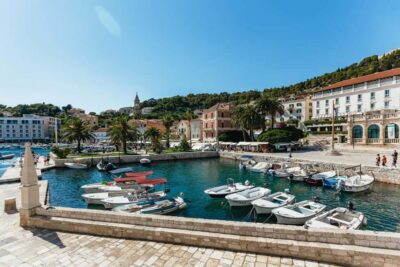 ★ 4.6Split/Trogir: Blue Cave, Mamma Mia, Hvar and 5 Island TourFrom $1096,320 reviews
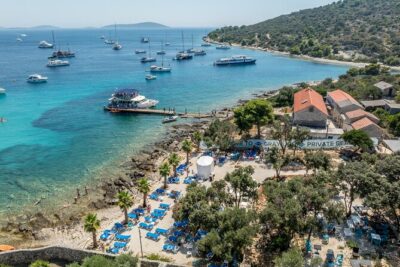 ★ 4.5Blue Lagoon & 3 Islands Cruise with Lunch from SplitFrom $785,756 reviews
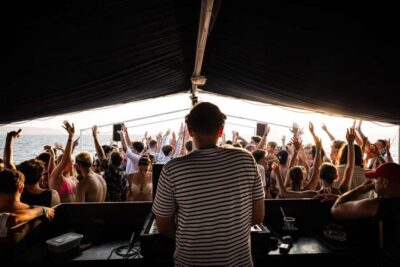 ★ 4.9Blue Lagoon Boat Party with DJs, Shots & After PartyFrom $474,610 reviews
 ★ 4.8Blue Lagoon and 3 Islands Speedboat TourFrom $703,406 reviews
 ★ 5.0Blue Lagoon & 3 Islands Small-Group Speedboat TourFrom $842,932 reviews
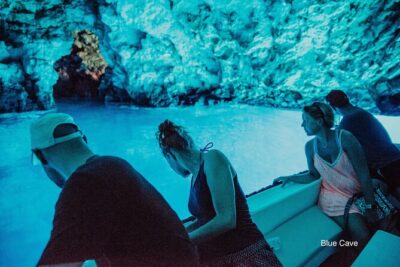 ★ 5.0Blue cave, Mama Mia and Hvar, 5 island speedboat tour from TrogirFrom $1112,861 reviews
 ★ 4.5Blue Lagoon, Borkko Beach & Šolta from Split with LUNCH & DRINKSFrom $782,504 reviews
 ★ 5.0Krka Waterfalls Day Tour with Boat Ride from Split and TrogirFrom $322,134 reviews
Explore its other useful categories