
REVIEW · SPLIT CITY & DAY TOURS
Split and Salona Cultural Heritage Day Tour from Trogir
Split opens like a Roman stage, then Salona follows. This tour strings together Diocletian Palace and Salona so you see how power, trade, and daily life collided in Roman Dalmatia.
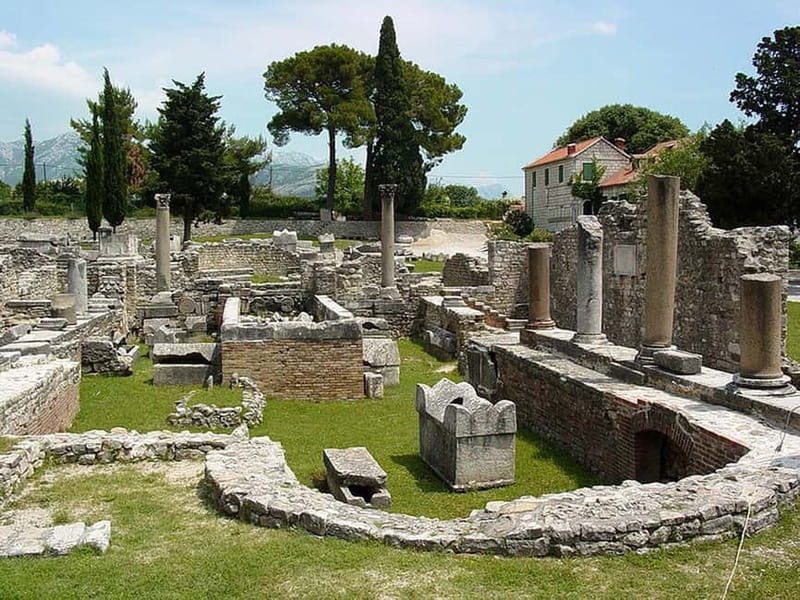
I love that your time in Split is guided, on foot, and focused on landmark after landmark, from the big palace complex to the city’s most recognizable corners. I also love that Salona is treated like a full chapter, with Roman basilica views, marble sarcophagi, and the amphitheater and coliseum scale that makes ancient ruins feel real.
One possible drawback: the free time after the Split walking portion can feel tight, so if you want a long lunch, serious shopping, or lots of follow-up questions, plan to prioritize what matters most to you.
Key things that make this tour worth your time
- Diocletian Palace walkthrough that hits the palace core, not just the walls
- Major Split icons on one route, including St. Duje Cathedral, Peristil, and the Golden Gate
- A Salona stop often compared to Croatia’s Pompeii, with big Roman monuments front and center
- Admission tickets for Salona included, plus a skip-the-line approach
- Air-conditioned transport with a driver, so you spend less time stressed and more time seeing
- A live English guide who can adjust to how comfortable your group is
Diocletian Palace First Stop: Why Split Starts With Roman Power
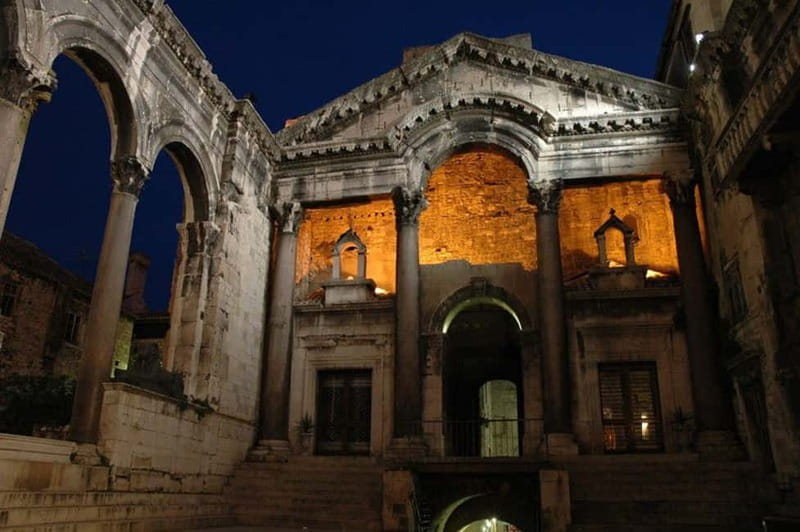
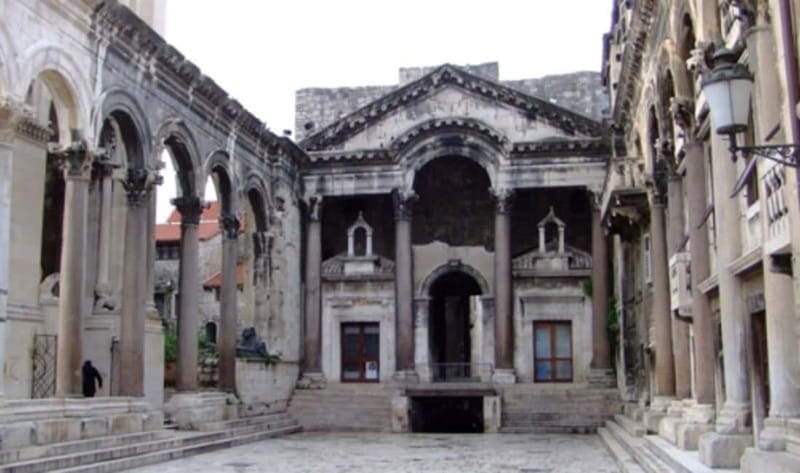
Split is one of those cities where the old world is not behind glass. It is part of the streets you walk every day. What I like about this tour is that it respects that fact from the first moment. You start with a guided walk through Split’s historic center, built around the 4th-century Diocletian Palace. Instead of treating it like a background, the guide frames it as the engine that shaped the city’s layout.
The palace is still all around you. You can see how architecture can act like a city plan. As you move from area to area, you get the logic of what once was a fortified palace, and what became the heart of a living town.
And because you’re on foot, you get the best kind of context. You notice doorways, thresholds, and the way streets “fit” inside a former monumental complex. Even if you only know Split as a cruise-port name, the tour makes the place feel understandable fast, which is a big deal when you have limited time.
You can also read our reviews of more historical tours in Trogir

Key Landmarks Walked: Cathedral, Peristil, Gregory of Nin, and the Golden Gate
The walking portion covers virtually every major site you would hope to see in the city center. That is a practical advantage, especially if it’s your first time here. You do not spend your precious morning figuring out what goes where.
Here are the highlights you’ll be looking for as your guide takes you along the classic Split sights:
- St. Duje Cathedral: You get a sense of how later religious power layered over the Roman world.
- Peristil: This is where the palace’s interior rhythm comes to life, with open space that helps you picture court life and movement.
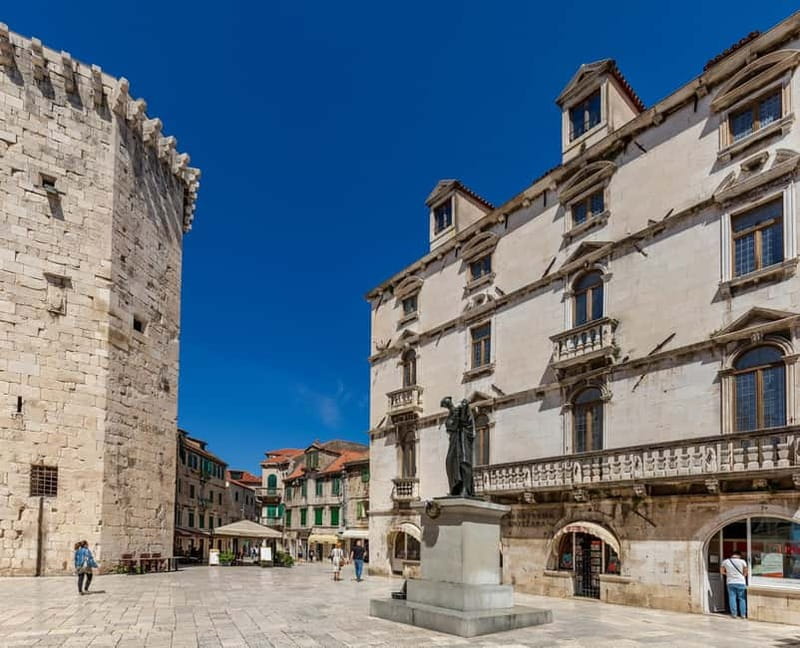
- The statue of Gregory of Nin: It is one of Split’s most recognizable figures. The guide’s explanation gives it meaning beyond the quick photo.
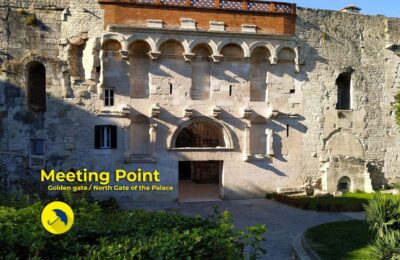
- The Golden Gate: A named, memorable architectural landmark that is easy to spot and easy to anchor in your memory.
- Vestibul and other palace structures: The tour is built so you understand that the palace was not a single building, but a whole system.
- Riva and the city’s promenade energy: You get a feel for how modern life works alongside the historic fabric.
- The statue of Marko Marulić and the city clock: These stops help you connect the Roman core to the human scale of the city.
What I especially like is the balance of big and small. You get major “must see” architecture, but you also hit civic landmarks that make Split feel like a real town, not a museum set. One practical tip: when you hear a name like Gregory of Nin or Marko Marulić, try to picture why a city would honor that person. It turns a statue stop into a story stop.
How the Tour Gets You Free Time Without Losing the Day
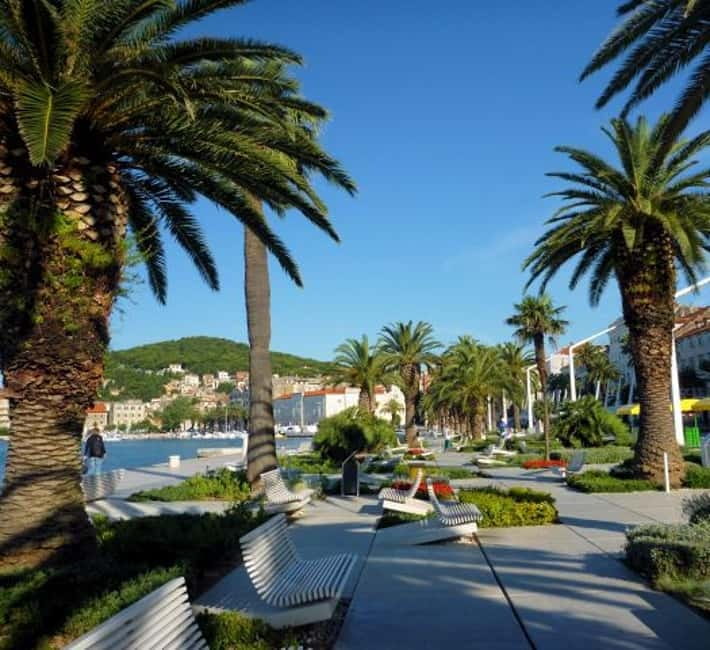
After the guided walk through Split, you get some free time. The idea is simple: relax, have lunch, and do some shopping in the old town.
That said, this is also where you should manage expectations. One concern that comes up is that the downtime can feel limited, especially if you were expecting a longer lunch break or extra shopping time. If you’re the kind of traveler who needs time to browse slowly, I’d treat the free time as more of a reset than a long leisure block.
Here’s the best way to think about it so you do not end up disappointed:
- Use the free window for one clear mission. Either lunch, or shopping for specific items.
- If you want snacks, plan to buy before you feel hungry. Waiting can cut into your time fast.
- Bring some cash or a card that works well locally, so you are not stuck mid-walk.
On the upside, the guided portion is so full that you’ll likely feel your bearings are set. So even with limited free time, you can still move confidently through the old town rather than wandering in circles.
Salona Like Croatia’s Pompeii: Basilicas, Sarcophagi, and the Coliseum Scale
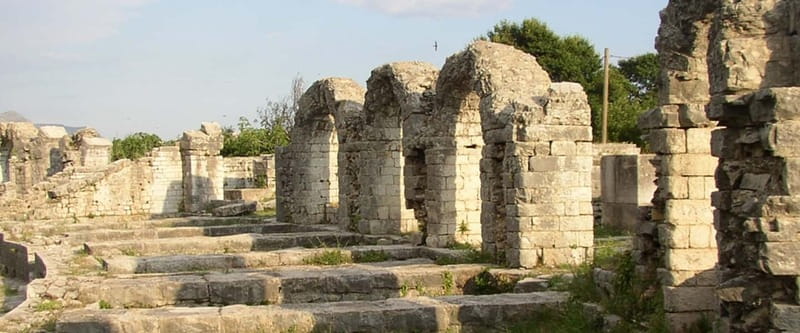
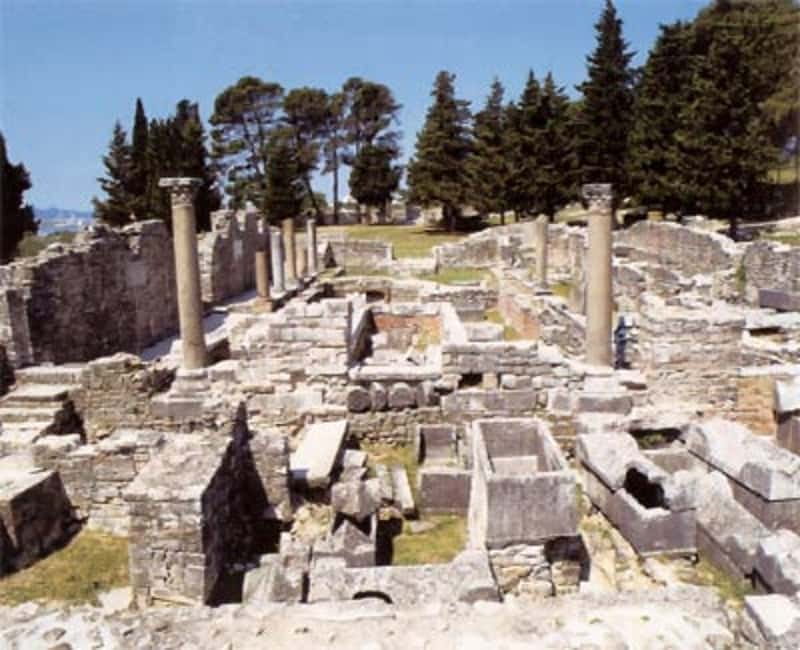
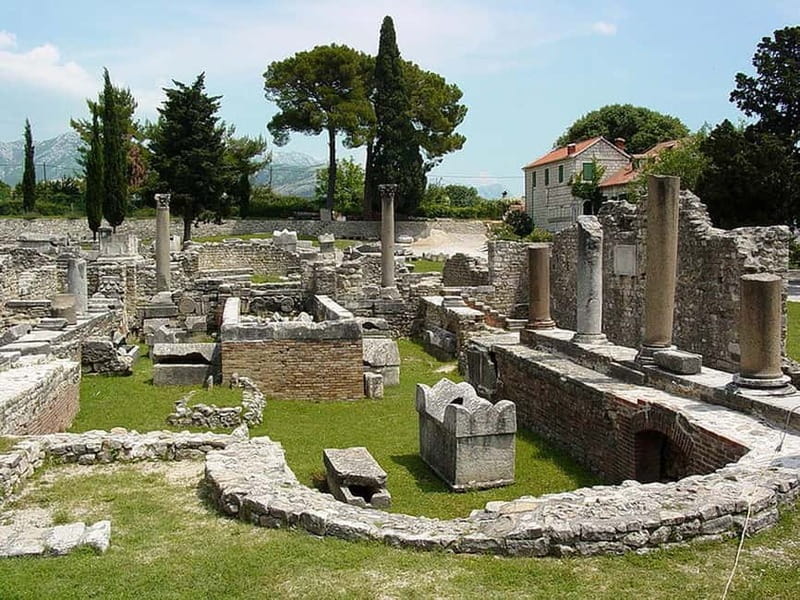
Then comes the real change of pace, and it is a good one. You continue on to Salona, described as the largest antiquity-era monument site in Croatia, often compared to Croatia’s Pompeii. That comparison matters because Salona is not just one stand-alone building. It’s a whole environment where you can understand ancient urban life by the size and layout of the ruins.
What you’ll see is classic Roman grandeur in multiple forms:
- A Roman basilica that helps you grasp how public gatherings and religious life were organized.
- Marble sarcophagi highlighted at the Archaeological Museum of Split, which adds an artifact layer to what you’re seeing outside.
- An Roman amphitheater and the coliseum scale structures, which are the kind of views that make your brain go from travel mode to history mode instantly.
This is one of the best values in the tour structure. Split can occupy you visually with palace walls and promenade streets. Salona gives you the “scale” feeling. You come away with a sense of what Roman entertainment and public architecture were built to handle: crowds, ceremonies, status, and repetition.
And because you’re going with a live guide, the ruins are not just random piles of stone. You get help connecting the monuments to how Roman towns functioned.
Archaeological Museum of Split Sarcophagi Stop: What Artifacts Add to the Ruins
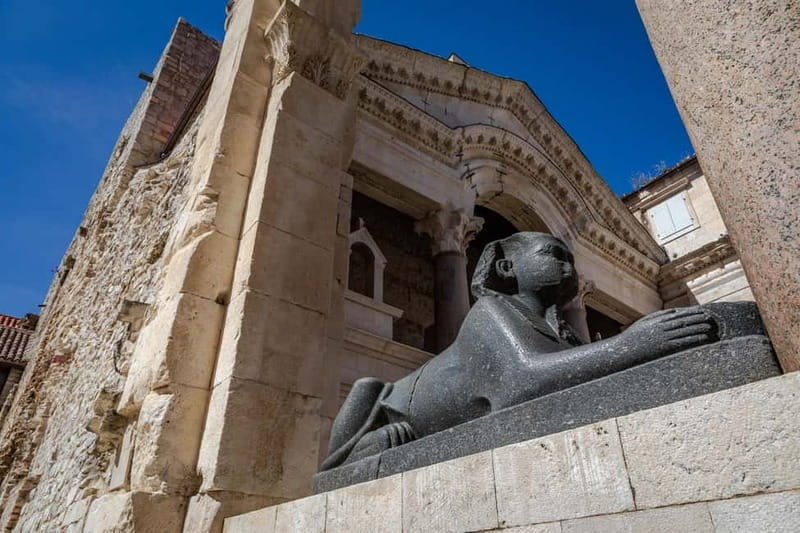
Roman ruins are easier to interpret when you can also see what people made, used, and honored. That’s where the museum stop can help your understanding, especially when you’re staring at ancient building remains and wondering what the people actually valued.
The tour specifically points you toward marble sarcophagi at the Archaeological Museum of Split. Even if you do not consider yourself a museum person, I think this is a smart add-on. Ruins tell one story through architecture. Sarcophagi tell another through craftsmanship, funerary customs, and the visual language of commemoration.
One practical caution: the tour details clearly list admission tickets for Salona, but they do not explicitly say museum admission is included as well. So if the museum visit is a key part of your plan, check the day’s exact inclusions when you book, so you are not surprised by any extra ticket request.


Price and Logistics: Is $170 Worth It for Split Plus Salona?
At $170 per person, this tour is not a budget half-day. But it can still be good value, because it bundles several things that cost money or time when you do them yourself.
Here’s what you’re paying for, based on what’s included:
- An air-conditioned vehicle with a driver, so you get transport to the ancient site without doing route planning
- An experienced tour leader, which is the difference between wandering ruins and understanding them
- Admission tickets for Salona
- A skip-the-ticket-line approach
- Live English guiding
If you tried to DIY this, you’d likely spend time stitching together transit, figuring out entry points, and cobbling together a route that covers palace highlights in Split and then makes sense for Salona. The guided structure is the “time insurance” you’re buying here.
Still, because the walking portion is concentrated and the free time can feel limited, I think the value works best when your expectations match the style: see the major sights with a guide, then use your free time for the one thing you care about most.
If you are traveling with someone who needs a slow pace, or you want extended time inside shops, you may want to consider whether a private group option makes more sense for your day.
What You’ll Notice About the Guide: Patience, Pace, and Q&A Style
The tour lives or dies by the guide. This is not just a cliché. Split’s palace area plus Salona’s ruins is a lot of material, and you feel it in the pace.
The strongest praise connected to this experience is about how the guide handles group communication. One account highlights patience when English was not very clear, and that matters more than you’d think. A tour in historic cities can lose people quickly if the guide’s pace is fixed and the group is struggling.
On the other hand, there’s also a style consideration. In one case, the guide ran through building explanations and history-focused commentary, but did not really answer additional questions. That doesn’t make the tour bad, but it does mean you should be ready to ask specific questions rather than expecting a free-form discussion.
My advice if you want more interaction:
- Ask for clarity early, at the start of the Split walk.
- If there is something you care about, like what a specific architectural element was used for, ask while you’re standing in front of it.
- If your group is sensitive to slow explanations, a private group can help because the guide can tailor pacing to you.
Who This Tour Suits Best (And Who Should Think Twice)
This tour is a good fit if you:
- Want a guided overview of Split’s classic monuments without getting lost
- Like ancient sites and want Salona to be more than a passing stop
- Appreciate efficient, landmark-to-landmark touring
- Are happy with lunch and shopping that happens in a shorter free window
It might be less ideal if you:
- Need long downtime for meals and browsing
- Want deep conversation and lots of back-and-forth Q&A
- Plan to spend lots of time in shops as your main activity
Because you can choose private group availability and hotel pickup is possible, you can also shape the experience to match your group. That matters for comfort and for how much freedom you feel you have during the day.
Also note: duration is described as 4 hours in one place, while the narrative sometimes references a longer outing. That could be due to different options or departure patterns. When you book, confirm the exact day length so you can plan meals and timing confidently.
Should You Book the Split and Salona Cultural Heritage Day Tour?
Book this tour if you want a smart, structured way to see Split’s Roman palace heart and then travel to Salona for major Roman monuments, with Salona entry included and a guide to connect the dots. The $170 price feels most justified when you value time savings and guidance over self-planning.
I’d hold off or choose a more tailored format if your top priority is a leisurely lunch, long shopping time, or lots of interactive Q&A. This tour is designed to cover a lot, so if you expect a slow day, you’ll feel it.
Provider to note: the experience is run by south-tours.com, so you’ll want to verify the exact starting time and which stops are definitely included for your booked option.
FAQ
How long is the Split and Salona tour?
The duration is listed as 4 hours. Starting times depend on availability, so check the specific option you choose.
What does the tour include besides the guide?
It includes an air-conditioned vehicle with a driver, an experienced tour leader, and admission tickets for Salona.
Is Salona admission included?
Yes. Admission tickets for Salona are included, and you also get skip-the-ticket-line assistance.
Does this tour include meals?
No. Meals and drinks are not included.
Is hotel pickup available?
Pickup is optional, and pick-up at your hotel is possible depending on the option booked.
What language is the tour guide?
The live tour guide is available in English.
Where does the tour start and end?
The meeting point may vary depending on the option booked, and the tour ends back at the meeting point.
Is there free cancellation?
Yes. You can cancel up to 24 hours in advance for a full refund.
Is a private group option available?
Yes. Private group availability is offered.
More Historical Tours in Trogir
More Tours in Trogir

More Tour Reviews in Trogir
Not for you? Here's more nearby things to do in Trogir we have reviewed
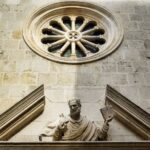

More Split City & Day Tours to consider.
 ★ 4.8Krka Waterfalls Trip with Boat Cruise and SwimmingFrom $3110,519 reviews
 ★ 5.0Krka Waterfalls, Food & Wine Tasting TourFrom $459,326 reviews
★ 4.9Krka Waterfalls, Food & Wine Tasting TourFrom $446,598 reviews
★ 5.0Krka Waterfalls, Food & Wine Tasting TourFrom $459,326 reviews
★ 4.9Krka Waterfalls, Food & Wine Tasting TourFrom $446,598 reviews
 ★ 4.6Split/Trogir: Blue Cave, Mamma Mia, Hvar and 5 Island TourFrom $1096,320 reviews
 ★ 4.5Blue Lagoon & 3 Islands Cruise with Lunch from SplitFrom $785,756 reviews
 ★ 4.9Old Town and Diocletian Palace Walking TourFrom $174,727 reviews
 ★ 4.9Blue Lagoon Boat Party with DJs, Shots & After PartyFrom $474,610 reviews
 ★ 5.0Krka Waterfalls Tour, Boat Cruise & SwimmingFrom $324,489 reviews
Explore its other useful categories