
REVIEW · TROGIR & BLUE LAGOON TOURS
Experience Trogir with a Local Guide
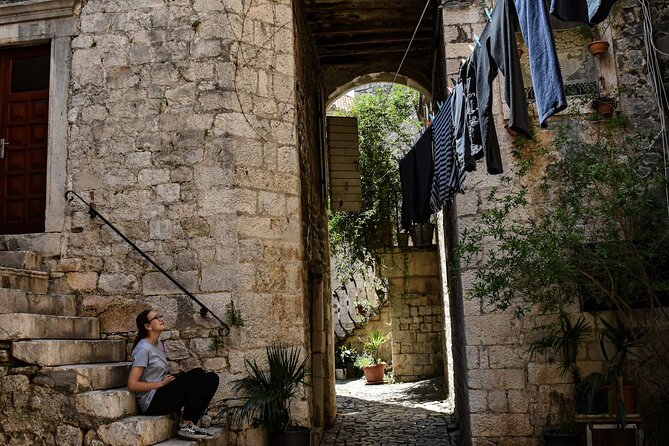
Trogir feels like a living museum. With licensed local guide Sandra, you walk straight through the historic core and learn how people actually lived there, from fortified gates to today’s street life.
I especially like the mix of headline sights and curveballs. At Igralište Batarija, you get the UNESCO connection to football, and the tour also points out nearby landmark details like the tower of St Mark.
One thing to consider: Saint Lawrence’s Cathedral entry is optional, and if you want inside access (including the parts offered there), it costs 6 EUR per person.
Key highlights at a glance

- North Gate start, with city wall context and stories tied to local identity
- Bells in daily life, plus the birth house of Croatian nobleman Petar Berislavić
- Kula Karmelengo outside visit, plus why it was called the fort of chains
- UNESCO-protected Igralište Batarija, connected to French rule and key views
- South Gate photo frame timing, because the colors shift with the day
- Saint Lawrence’s Cathedral option, including the Radovan portal and the bell-tower viewpoints
Why Trogir clicks most with a local guide
Trogir is small enough to feel walkable, but old enough that you can easily miss the meaning behind the stones. What makes this tour work is the way Sandra connects places to people, and people to how the town functioned.
You also get a guide who seems to know more than just dates. Sandra’s style shows in the way locals greet her along the route, and in the practical recommendations you pick up for getting the most out of your time in town.
It is also a smooth length for a half-day plan. You get around the key sights without turning it into a marathon, and the pacing gives you room to look up, not just forward.
You can also read our reviews of more guided tours in Trogir
Starting at the North Gate, the medieval rules of entry
The walk begins at Ul. Gradska vrata 6, right by one of Trogir’s main medieval entrances. In medieval times, the town was fortified, so you could not enter wherever you wanted. That one idea alone helps you understand why the old layout feels the way it does.
Sandra explains the town’s name and who the first settlers were, and then you move into narrow streets where the life of the 3rd century BC is not just a slogan. You get the sense of how the town’s layout shaped daily routines, where movement was controlled and community spaces mattered.
A standout detail here is the patron saint connection, and the role bells played in past life. It sounds simple until your guide ties it to how people coordinated routines, marked events, and stayed connected as a community.
You also stop in front of the birth house of Petar Berislavić, an important Croatian figure tied to the town’s story. It is the kind of stop that makes Trogir feel personal, not generic.
The noble palace museum stop, where social life hides
Right after the gate and street wandering, you reach a spot that many people might notice only as a building. But Sandra points out that a museum here was once a noble palace, and that matters because noble residences were part of the town’s social machine.
Instead of treating the town as a set of monuments, you start seeing it as spaces where decisions were made, guests were hosted, and status shaped daily routines. That framing makes the rest of the walk easier to follow.
This is also a good place to slow down. If you like reading small clues in architecture, this stop gives you that chance without making the tour feel like a lecture.
Kula Karmelengo and the fort of chains story
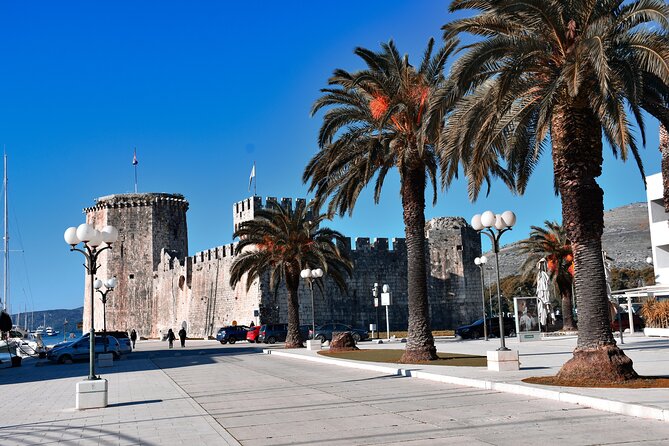
Next up is Kula Karmelengo, a fortress with serious context. Sandra explains that during the Ottoman invasions, the fortress was meant to shelter the town’s rector, which gives the place a practical function, not just a dramatic silhouette.
You visit the fortress area from the outside, and the entrance is optional. If you are not in the mood to add extra time or cost, you still get the main visual payoff and the story behind why it was called the fort of chains.
Today, the fortress is also linked to summer culture, including concerts in that striking setting. That is a nice contrast to the defensive purpose, and it helps you see how Trogir reuses its historic structures instead of freezing them in time.
If you care about photos, stand where Sandra directs you. Even without going in, the angles here help you capture the fortress against the town fabric.
Igralište Batarija, UNESCO football, plus French-era clues
One of the tour’s most interesting surprises is that Trogir has a UNESCO-protected football field at Igralište Batarija. You might expect UNESCO to show up in temples and cathedrals, not a playing field. But the tour shows you how sports, public space, and heritage can be connected.
From here, you also get views toward other landmarks, including the tower of St Mark. Sandra layers in more context too, including a gloriette dedicated to French rule, which helps explain how different powers left their fingerprints on everyday spaces.
This stop is short, but it punches above its weight. If you want proof that a guided walk can change what you notice, this is where it happens.
Practical tip: treat this section like a lookout pause. Look around before you move on, because the nearby sight lines are part of what makes it special.


Trogir promenade, where locals actually spend time
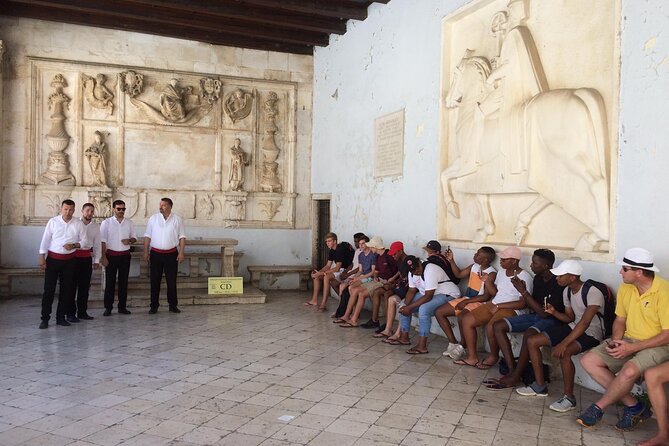
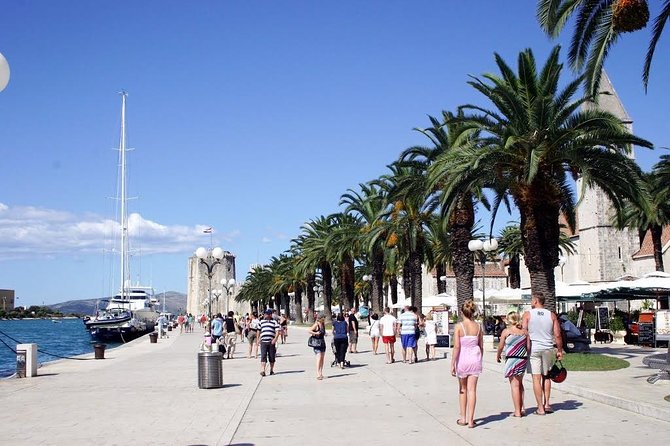
The tour then shifts to Trogir Promenade, the town’s everyday-life center. This is the point where you stop studying the medieval walls and start watching the town breathe.
Sandra keeps it grounded. You are not just told where tourists go. You learn why locals also show up here for time off, coffee, and a slower rhythm that feels very Dalmatian.
This is a good moment to take a breather, check your bearings, and decide how you want to spend any extra time after the tour. Even if you already know the sights in theory, the promenade gives you the feel.
If you are traveling in warm months, this is also where you will notice shade and the flow of people more than at the gates and squares.
South Gate and the photo frame effect
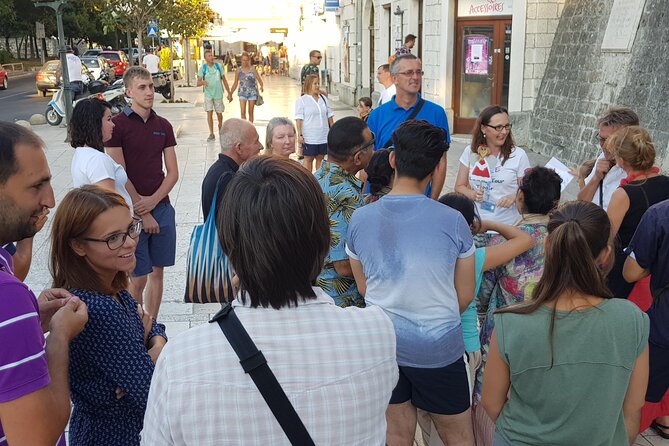
Next is Juzna gradska vrata (South Gate), another classic fortified entrance. Sandra explains that the original doors were designed to close in the evening, so the gate was part of the town’s daily security routine.
Beside the gate you see the small lodge, a shelter linked to overnight life. And then comes the practical photographer note: this area gives you a great picture frame, and the colors shift depending on the time of day.
If you can, choose your photos based on light. Late afternoon can give you that color change Sandra talks about, but even overcast skies can look dramatic here because the gate shape is strong.
After the gate, the story continues behind it with the church and the Benedictine Monastery of St Nicholas. Sandra ties this place to Trogir as the town of the happy moment, so the area stops feeling purely defensive.
Central Square, power buildings, and the stories in between
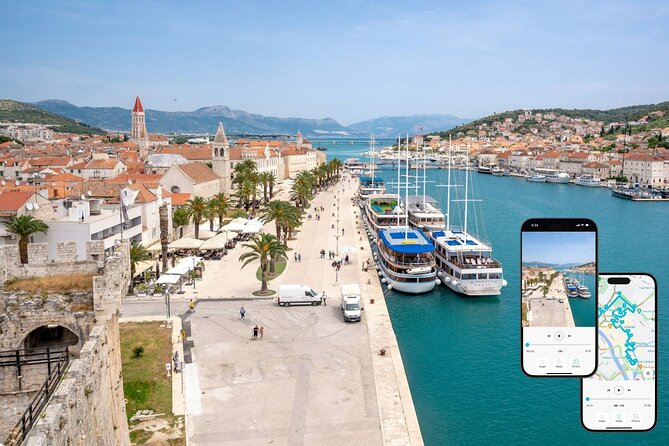
At the central square, you see why Trogir mattered. The square houses key buildings like the court, the Rector’s Palace, noble palaces, and the cathedral. It is basically the town’s administrative and ceremonial heart.
Sandra brings it to life with details that go beyond names. You hear about Venetian lions, trials, and the theatre that once sat in the center of town. Even if you just catch fragments, it is enough to make the square feel like it hosted real decisions and real drama.
You also learn how rich families and their spaces shaped life here, which helps connect the grand buildings to the everyday people moving through the streets.
This is another smart pause in the walk. If you want to rest your legs for a few minutes, the square gives you space without breaking the flow.
Saint Lawrence’s Cathedral, Radovan’s portal and optional access
The tour ends with Saint Lawrence’s Cathedral, the main attraction people come to see, and for good reason. Sandra points out the Radovan’s portal and the magnificent bell tower, and she also mentions a drawing on the wall that still amazes people.
The key practical detail is that cathedral entry is optional. If you pay the 6 EUR per person, you can visit areas described as the chapel of St John, the Baptistery, and you can climb the bell tower for views over the town.
That optional cost is not a dealbreaker, but it is worth deciding before you arrive. If you love interior details and views, the upgrade makes sense. If you’d rather spend time afterward strolling or eating, you can appreciate the cathedral from the outside and keep your day flexible.
Either way, the cathedral is a strong closing note. It ties together everything you learned on the walk, because it reflects how Trogir balanced identity, faith, and power.
Price and value: what $82.80 buys you
The tour is priced at $82.80 per person, running about 1 hour 20 minutes to 2 hours. What you are really paying for is time with a licensed local guide who can explain the why behind the what.
Entry costs are mostly not included, with the cathedral entrance being the clearest optional add-on at 6 EUR per person. Other access is also described as optional, like the fortress entrance, which helps you control your total spend.
Is it expensive? Compared to a self-guided walk, yes. Compared to paying for multiple paid entries, plus paying for context, it can feel like a good value. For me, the best argument for the guide is the specificity, like the stories about bells, the chain-fort concept, and the way French and other periods are interpreted in a balanced way.
Sandra also shares the nuance that France damaged the city walls, but she frames it as part of a hygiene effort when the town lacked sewage and waste was handled differently. That kind of layered interpretation is hard to get from a signboard.
You do not just see Trogir. You start understanding how the town functioned.
What to expect on the ground (and how to plan your day)
This is a walk through the historic core, so you should expect mostly outdoor time and steady movement between stops. The tour is described as most travelers can participate, and it is pushchair accessible, which suggests surfaces are manageable for many visitors.
It is also a private tour, meaning it is only your group. That matters because you can ask questions without feeling rushed, and Sandra can adjust pacing around what you want to focus on.
Since the South Gate colors can shift by time of day, I like the idea of scheduling this when you can still take a few photos comfortably. If you prefer quieter streets, you might aim earlier rather than later, but the tour runs Monday to Saturday from 9:00 AM to 7:00 PM.
If you plan to climb the cathedral bell tower, leave a little extra time so you do not feel hurried.
Who should book, and who might skip
This tour is a great fit if you want a guided walk that connects architecture to daily life. It works especially well if you care about UNESCO sites but also want the smaller, human details that make heritage feel lived-in.
It is also a smart choice for first-time visitors because it gives you a clean route through the key highlights, including gates, promenade life, central square power buildings, and the cathedral.
You might skip it if you are purely interested in ticking off big sights with minimal talking. In that case, you could walk the town on your own and use printed materials. But if you want the bells story, the fort of chains explanation, and a balanced view of historical changes, a guide is what makes it click.
Should you book this Trogir local-guided walk?
If you like guided walking tours that explain how a town works, book it. This one is strong on both the big monuments and the details that help you read Trogir like a place, not a photo set.
Choose it if you want English commentary, a licensed guide, and a route that blends fortified medieval entry points with UNESCO-linked public space. Just decide in advance whether you want to pay the 6 EUR cathedral entry so the finish feels exactly right.
In short: for Trogir, a local guide pays off fast.
FAQ
How long is the Trogir with a Local Guide experience?
The tour lasts about 1 hour 20 minutes to 2 hours.
Is the tour private, and is it offered in English?
Yes, it is a private tour/activity, and it is offered in English.
What’s included in the price?
The tour includes a licensed guide. It also uses a mobile ticket, and group discounts are listed.
How much does Saint Lawrence’s Cathedral cost, if I want to go inside?
Cathedral entrance is optional and costs 6 EUR per person.
Where does the tour meet, and where does it end?
The meeting point is Ul. Gradska vrata 6, 21220, Trogir, Croatia, and the tour ends back at the same meeting point.
Is the tour stroller accessible, and are service animals allowed?
Yes. The tour is pushchair accessible, and service animals are allowed.
Can I cancel for free?
Yes. You can cancel up to 24 hours in advance for a full refund.
More Guided Tours in Trogir
More Tour Reviews in Trogir

Not for you? Here's more nearby things to do in Trogir we have reviewed


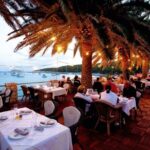
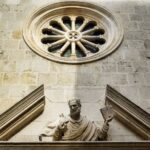

More Trogir & Blue Lagoon Tours to consider.
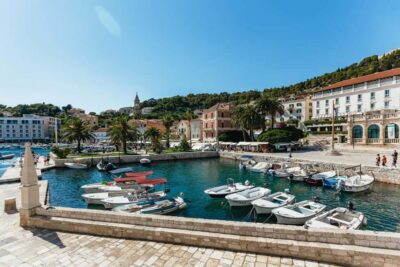 ★ 4.6Split/Trogir: Blue Cave, Mamma Mia, Hvar and 5 Island TourFrom $1096,320 reviews
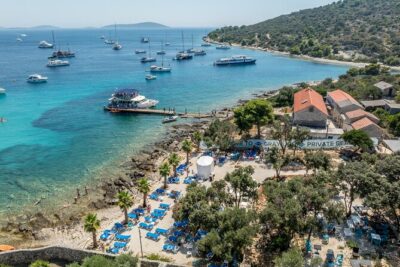 ★ 4.5Blue Lagoon & 3 Islands Cruise with Lunch from SplitFrom $785,756 reviews
 ★ 4.9Blue Lagoon Boat Party with DJs, Shots & After PartyFrom $474,610 reviews
 ★ 4.8Blue Lagoon and 3 Islands Speedboat TourFrom $703,406 reviews
 ★ 5.0Blue Lagoon & 3 Islands Small-Group Speedboat TourFrom $842,932 reviews
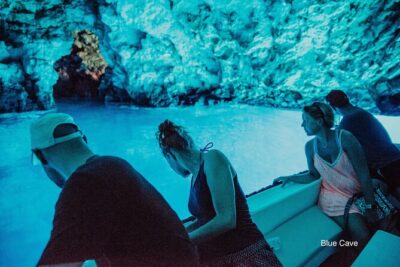 ★ 5.0Blue cave, Mama Mia and Hvar, 5 island speedboat tour from TrogirFrom $1112,861 reviews
 ★ 4.5Blue Lagoon, Borkko Beach & Šolta from Split with LUNCH & DRINKSFrom $782,504 reviews
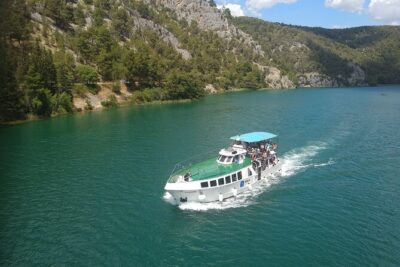 ★ 5.0Krka Waterfalls Day Tour with Boat Ride from Split and TrogirFrom $322,134 reviews
Explore its other useful categories