
REVIEW · SPLIT CITY & DAY TOURS
Split Walking Tour: History, Legends & Tales
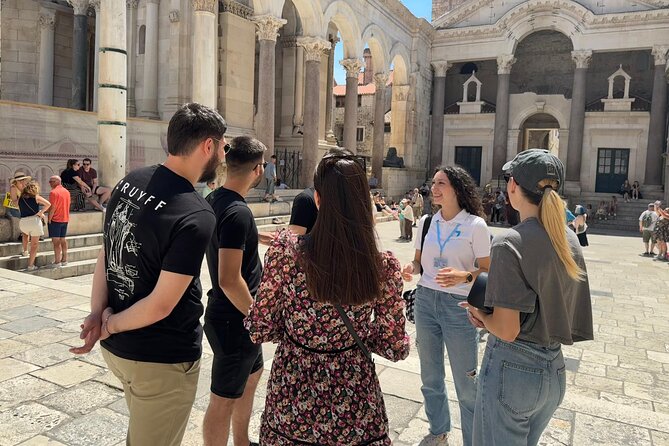
Diocletian’s Palace hits different on foot. This 1.5 hour walk through Split strings together the palace from above and below ground, then finishes with local myths you can actually spot in the streets, like the Peristyle sphinx and the Gregory of Nin toe-rub luck story.
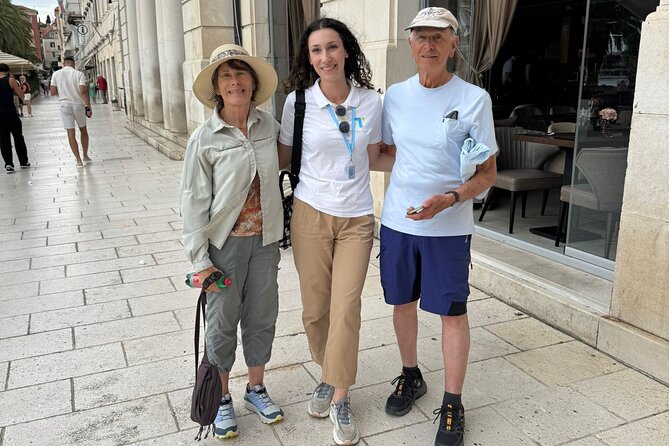
I especially love how the tour gives you instant orientation, starting at the Riva Harbor promenade with an overview of Diocletian and a model of Split so you know what you’re looking at. I also really like the way the guide, often Lucija, works in humor and clear explanations, plus practical food and gelato suggestions (yes, pasticada comes up) that make the rest of your day easier.
One possible drawback: this is an outdoor walking format that depends on good weather, so if conditions are poor you’ll need to roll with a change of date, and you should wear shoes that handle old stone and tight spaces in the palace areas.
Key things you should know before you go
- Small group size (up to 12): you get more time for questions without feeling rushed.
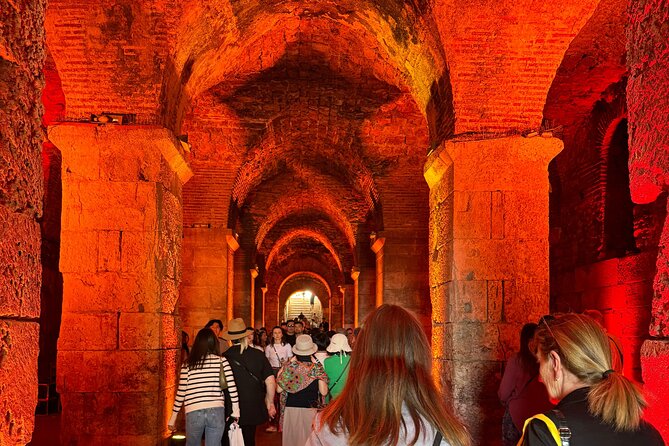
- Underground palace substructures: you see how the palace worked below street level.
- Peristyle details you might miss on your own: the sphinx and the Roman and Egyptian story threads.
- Legends placed in real locations: the Gregory of Nin statue and its toe-rub custom.
- Split growth beyond the palace walls: People’s Square (Pjaca) and Fruit’s Square show what came next.
- No museum ticket needed: the route focuses on walking and viewing, not paid entry sites.
Riva Harbor start: the fastest way to understand old Split
You meet at Obala Hrvatskog narodnog preporoda 22, on the main promenade near Riva Harbor. The start matters. Split can feel like a maze of stone lanes, but this tour begins by setting the map in your head: you get an introduction to Diocletian, his palace, and how that palace shaped the city you’re standing in.
A nice little touch is the model of Split. It’s a simple tool, but it helps you connect street corners with palace scale. Instead of just seeing walls, you start seeing structure: where the palace sits, how big it is, and why later streets and squares formed around it.
If you’re arriving by cruise ship or you’re only in town for a short window, this opening also helps you get your bearings quickly. You’ll be walking in the right direction almost immediately, not wandering to figure out what to prioritize.
You can also read our reviews of more walking tours in Split



Diocletian’s substructures: walking in the palace foundation
The route then heads into Diocletian Palace Substructures, described as a labyrinth of underground corridors and rooms that once served as the foundation of Diocletian’s palace. Even if you’ve read the basics, it’s different in person. Underground spaces make the palace feel practical and engineered, not just scenic.
This stop is short, about 10 minutes, so don’t expect a slow museum-style experience. Instead, you get a guided look that helps you understand what you’re seeing: how ancient Roman construction supported the palace above, and why these underground areas would have mattered to daily life and palace operations.
Practical consideration: substructures can mean tighter passages and uneven stone. Wear closed-toe shoes and plan to move steadily. If you’re traveling with kids, this can still work, but go in expecting a quick, focused explanation rather than long time inside.
Vestibulum and the palace entrance hall: where the story moves from stone to rooms
From the substructures, you continue toward the Vestibulum, the grand entrance hall of Diocletian’s Palace. This stop is another “think while you walk” section. You’re moving through the southern parts of the palace and orienting yourself to places connected to Diocletian’s Apartments, plus the Triklinium (the dining hall) and the gardens.
The value here is interpretation. On your own, it’s easy to see stone corridors and entrances and assume they’re just walls and doorways. With a guide, those features turn into a timeline of how authority and luxury were arranged in the palace.
The stop lasts about 10 minutes, so again it stays focused. You’re getting the big ideas and the key names, not trying to memorize everything. That’s a good pace for a 90-minute tour.
Peristyle: the sphinx, Roman power, and an Egyptian twist
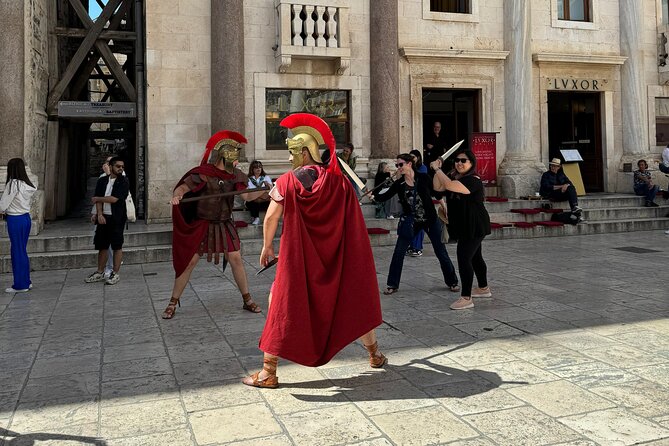
Next comes the Peristyle. This is the moment where the tour’s “you are here in the palace” lesson clicks. The Peristyle is often considered one of the best surviving meeting points between ancient architecture and modern daily life, because it sits right in the middle of what feels like a living city street scene.
What makes this stop stand out is the story detail: the Peristyle area is associated with both Roman and Egyptian elements, and you’ll spot a 3500-year-old, well-preserved sphinx that’s watched over in the space. That kind of specific detail is hard to pick up without guidance, and it’s the sort of clue that makes the palace feel layered rather than repetitive.
This stop is about 20 minutes, meaning you’ll have time to look around and absorb more than just a single fact. It’s also a great place for photos, because you can frame the palace spaces in context instead of only capturing one wall or corridor.
If you enjoy ruins that still feel connected to modern life, this is the highlight area for many people.
Golden Gate and Gregory of Nin: legends you can actually test
After the Peristyle, the tour moves to the Golden Gate, a magnificent entranceway that once welcomed visitors into Diocletian’s Palace with real grandeur. This is one of those spots where the shape and placement of the doorway tells you how important arrival and processions were.
Then you head toward the statue of Gregory of Nin. Here the tour pivots from architecture to folklore in a playful way. Legend has it that rubbing the statue’s big toe brings good luck and grants wishes, so it’s hard not to participate, if only to match the local tradition.
This stop is about 15 minutes, and it works because it balances tone. You get the serious palace story, then a lighter city custom. It’s the kind of moment that helps you remember the tour beyond dates and dimensions.
You can also read our reviews of more historical tours in Split



People’s Square (Pjaca) and Fruit’s Square: how Split expanded
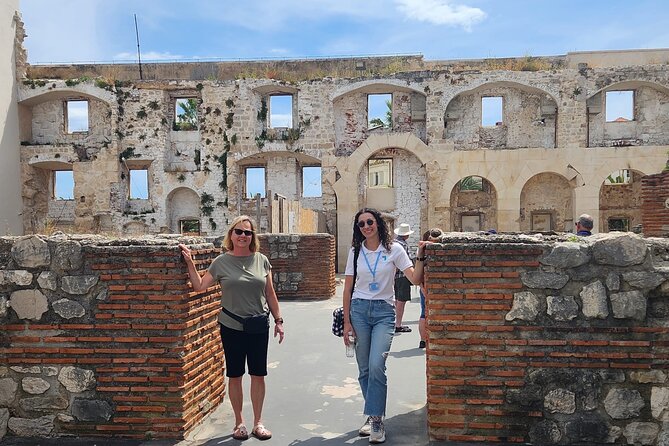
At Narodni Trg, also known as Pjaca or People’s Square, you’re outside the walls of Diocletian’s Palace. That shift is key. The tour is not only about the Roman origin. It also shows how the city grew outward once the palace no longer fit everything.
Pjaca is described as the first developed area beyond the walls in the 14th century as the population grew. You’ll also hear about its civic past, including the former 15th-century city hall, and you’ll understand why this square became a gathering spot that still makes sense for a coffee pause or an evening walk.
Next comes Fruit’s Square, officially Trg Brace Radic, which is known as a lively small square with bars, restaurants, and exclusive shops, and it can also host fairs. The main landmark here is the octagonal Venetian tower, a leftover from a former fortress built in the 15th century for defending what was, at the time, a small town.
Opposite the tower sits the Milesi Palace from the 17th century, known for its spectacular Baroque facade. This is one of the places where the tour becomes more than a palace lesson. You start seeing how different eras stacked on top of each other, and you can spot the change in styles.
The pacing makes sense: each square stop is short, about 10 minutes. You get the meaning of the buildings and landmarks without turning the walk into a long slog.
Time, pace, and group size that actually feels comfortable
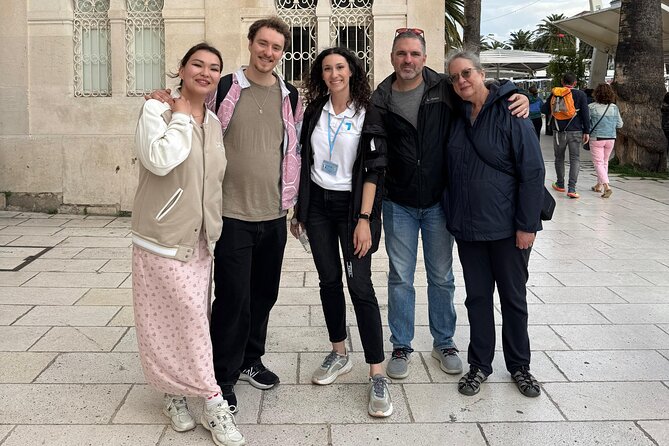
The tour runs about 1 hour 30 minutes. That’s a sweet spot for a history walk in a city where you’re also going to want time to wander on your own. The route loops back to Riva Harbor, so you’re not finishing in a random spot.
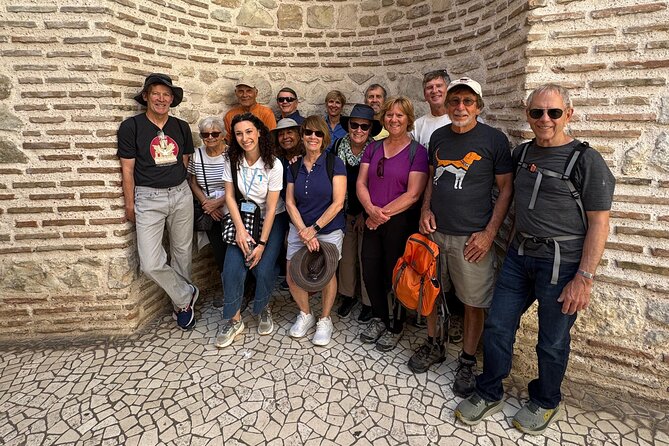
You’ll be with a maximum of 12 travelers, which is small enough that a guide can tailor the flow. Many people love tours like this specifically because they do not feel like a cattle line. You’ll likely have time to ask questions and get answers in an informal way, especially with guides who keep the tone conversational.
Language is English, and the tour includes a licensed guide. You’ll receive a mobile ticket, so you won’t be scrambling for printed vouchers.
Also, you are not doing a museum slog. There are no admission tickets included, and the tour is not about entering museums or paid sites. Instead, it uses free-to-view palace areas and key public landmarks.
Price and value: paying about $30 for orientation plus legends

At $30.17 per person, this tour can be a smart use of money if you want the palace story stitched together fast. You’re not paying for museum entry, and you’re not spending time in queues or buying separate tickets. You’re paying for interpretation and flow, meaning you get names, legends, and context tied to real places.
Value usually comes down to two things: (1) can you understand what you see without spending all day reading on your own, and (2) do you end up with a plan for the rest of your trip. This tour leans hard into both.
The best sign of value is how people describe the guide experience. When Lucija leads, the reviews repeatedly point to a guide style that is friendly, patient, and full of small details, including food recommendations like pasticada and plenty of practical suggestions after the walk.
One thing to consider: if you already know the Diocletian palace story well and you prefer total independence, the tour may feel too fast. But for most first-time Split visitors, the structure saves time and helps you stop guessing what’s important.
Practical tips for enjoying the walk in Split
A few things make this tour smoother.
First, wear good walking shoes. Split old town surfaces can be uneven, and the palace areas include tighter passages. Closed shoes also help if you end up moving from bright promenade light to darker substructure spaces.
Second, bring a little water and plan for sun. This is a walk, and the tour depends on good weather. If conditions are poor, you’ll be offered a different date or a full refund, so keep an eye on the forecast.
Third, arrive on time for the Riva Harbor meeting point. Since the total time is around 90 minutes, late arrival can cut into the guided stops.
If you’re visiting in the cooler part of the day, you can often make the walk more pleasant. One reason people like a morning start is simple, fewer crowds and more comfortable temperatures.
Finally, treat the guide recommendations as a bonus not a command. The food tips and gelato suggestions are useful because they come from someone who knows what’s nearby and what fits the vibe of your day.
Should you book this Split walking tour?
Book it if you want a fast, organized way to understand Diocletian’s Palace and then keep moving through the city’s later layers at Pjaca and Fruit’s Square. It’s especially worth it when you’ll benefit from a guide like Lucija, since her explanations tend to be clear, relaxed, and packed with both palace names and local legends.
Skip it or consider a different option if you already feel confident reading the palace on your own and you’d rather spend the full 90 minutes roaming without a set route. Also, if you hate walking and you’re worried about narrow, stone-heavy spaces in the substructures, you might want a more open, surface-only experience.
If you’re doing Split as a first stop in Croatia, this is a strong way to get oriented. You’ll finish with a better eye for what matters, and you’ll know where to go next.
FAQ
How long is the Split walking tour?
It runs for about 1 hour 30 minutes.
What language is the tour offered in?
The tour is offered in English.
Where does the tour start and where does it end?
It starts at Obala Hrvatskog narodnog preporoda 22, 21000, Split, Croatia, and it ends back at the same meeting point.
Do I need to buy museum or attraction tickets?
No. There are no admission tickets included, and the tour does not enter museums or other paid sites.
How large is the group?
The tour has a maximum of 12 travelers.
What happens if the weather is poor?
This experience requires good weather. If it is canceled due to poor weather, you will be offered a different date or a full refund.
Can I cancel for a refund?
Yes, you can cancel for a full refund if you cancel at least 24 hours in advance. If you cancel less than 24 hours before the start time, the amount paid is not refunded.
More Walking Tours in Split

More Tours in Split

More Tour Reviews in Split


Not for you? Here's more nearby things to do in Split we have reviewed








More Split City & Day Tours to consider.
 ★ 4.8Krka Waterfalls Trip with Boat Cruise and SwimmingFrom $3110,519 reviews
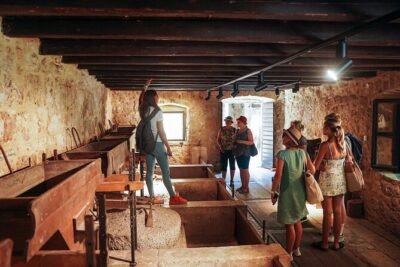 ★ 5.0Krka Waterfalls, Food & Wine Tasting TourFrom $459,326 reviews
★ 4.9Krka Waterfalls, Food & Wine Tasting TourFrom $446,598 reviews
★ 5.0Krka Waterfalls, Food & Wine Tasting TourFrom $459,326 reviews
★ 4.9Krka Waterfalls, Food & Wine Tasting TourFrom $446,598 reviews
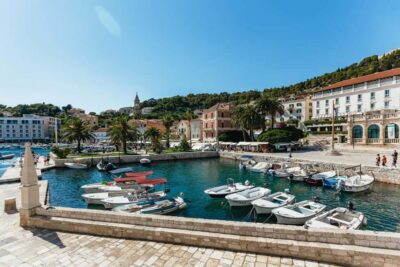 ★ 4.6Split/Trogir: Blue Cave, Mamma Mia, Hvar and 5 Island TourFrom $1096,320 reviews
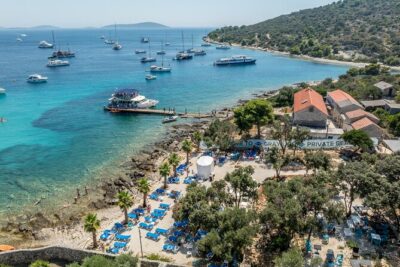 ★ 4.5Blue Lagoon & 3 Islands Cruise with Lunch from SplitFrom $785,756 reviews
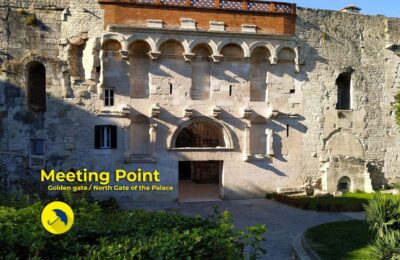 ★ 4.9Old Town and Diocletian Palace Walking TourFrom $174,727 reviews
 ★ 4.9Blue Lagoon Boat Party with DJs, Shots & After PartyFrom $474,610 reviews
 ★ 5.0Krka Waterfalls Tour, Boat Cruise & SwimmingFrom $324,489 reviews
Explore its other useful categories