
REVIEW · SPLIT DIOCLETIAN'S PALACE & HERITAGE TOURS
SPLIT-PRIVATE Walking Tour of Diocletian’s Palace & Old Town
Roman Split starts at street level.
This private Diocletian’s Palace + Old Town walk is built around the same walls, gates, squares, and underground spaces that shaped Split for nearly 1,700 years. You get a tight route, clear explanations, and an easy pace that helps you understand what you’re looking at, fast, without feeling like you need a history degree.
I especially like two things here. First, you spend real time inside the palace complex, so the city stops being confusing and starts making sense. Second, the guide approach is built for clarity, with stops that connect Roman design to what you see today.
One drawback to plan for: several optional entries cost extra, including the Cathedral of Saint Domnius interior (3.5 EUR) and the Temple of Jupiter interior (1.5 EUR), plus the Museum of Diocletian’s Cellars is not included (€10 per person).
Key highlights before you go
- UNESCO focus, not a checklist: you’ll see the palace core and the Old Town layout that grew around it
- Private, licensed English guide for only your group (ideal for questions and pacing)
- Short stops with big payoffs: gates, squares, and statues that explain how Split works
- Underground history may cost extra: the cellars museum entry is separate (€10)
- A logical route for first-timers that helps you navigate the center afterward
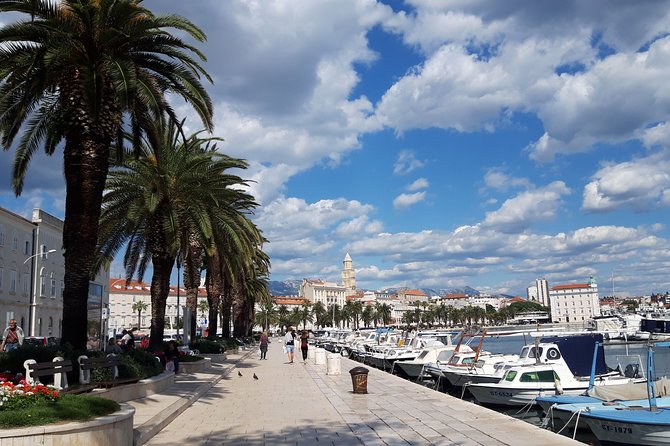
Meeting on the Main Riva Promenade and easing into a 2-hour route
The tour meets at Obala Hrvatskog narodnog preporoda 22 in Split, then it runs through the old center and returns to the same meeting point. Expect about 2 hours total, with lots of short segments, not long theater-style listening. That matters because Split’s stone streets can get hot and uneven, and a tight route keeps the experience feeling lively.
You’ll also want to note the tour’s format: it’s private, so it’s not a big moving crowd. That makes it easier to stop and look closely at details like doorways, column shapes, and the way squares sit exactly where Roman planning left space.
If you’re trying to choose a “first Split tour,” this one tends to work well because it hits the city’s origin story first, then connects it to everyday life in the medieval streets.
You can also read our reviews of more walking tours in Split

Palazzo di Diocleziano: the UNESCO core and why it matters
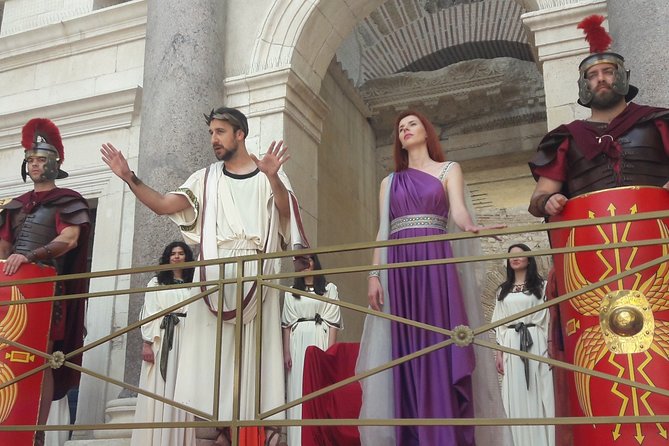
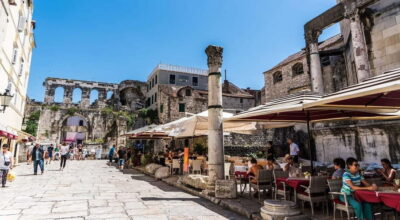
Stop 1 is the Palazzo di Diocleziano, the emperor’s palace built in AD 305. This is the heart of what you came for. The key thing to understand before you arrive is that you’re not touring ruins in the usual sense. You’re walking through a palace complex that became part of everyday Split life, layer after layer.
Your guide leads you through the palace with an eye for what the site is telling you. Even if you only remember a few facts, this stop helps you start seeing the city as one long, evolving build project: Roman walls, later medieval reuse, and then modern Split fitting itself inside that shell.
The admission for this stop is listed as free on the tour pricing, which is a real value point. You’re paying mainly for the guide time and the route that makes the site readable.
Tip for your comfort: wear shoes you trust. The stone can be slick, and you’ll be switching between palace interiors and open squares.
Old Split after the palace walls: getting your bearings fast
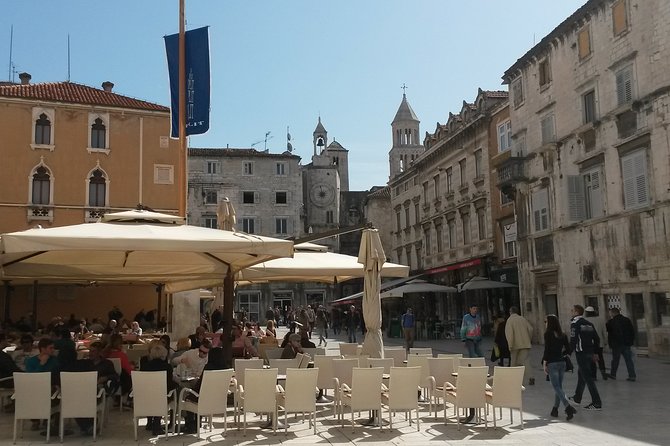
After the palace, you shift into Old Split. This is your second big conceptual step: you go from the emperor’s planned space to the medieval town that grew inside and around it.
This stop is short, about 25 minutes, but it’s the kind of time that pays off later. Once you’ve seen the relationship between palace spaces and street openings, you can walk around the center on your own with less guessing. That’s the practical value you want from a guided introduction.
If you’re traveling with kids or you’re battling jet lag, this is one of the best parts to lean on. Short, structured segments help everyone stay engaged, and the route naturally breaks up walking and explanation.
Saint Domnius, Peristyle, and the Cathedral view from outside
The itinerary includes Cathedral of Saint Domnius as a quick orientation stop. You’ll see it from outside, with an optional visit inside for 3.5 EUR per person.
Even if you skip the interior, the outside view matters because it anchors the medieval layer of Split. The palace tells the Roman story; the cathedral shows you what came next and how the city’s spiritual center gained importance.
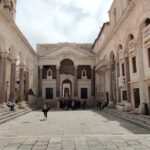
Right after that, you’ll also hit several palace-linked landmarks that act like reference points: the Peristyle (Emperor’s Square, the heart and soul of Split town) and spots around the palace spine where daily life still happens in spaces that were built for power and ceremony.
The Peristyle stop is only about 5 minutes, but don’t underestimate it. A square this central becomes part of your mental map. Later, when you’re eating nearby or crossing to the harbor, you’ll recognize where you are because you saw it with context.
Golden Gate to the substructures: what you see above ground, and what’s underneath
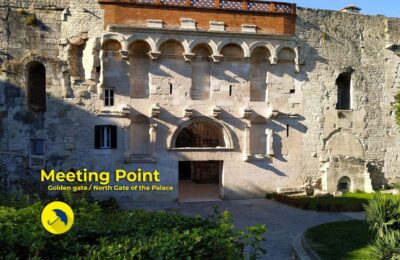
The Golden Gate is one of the iconic visuals on the list, and it’s scheduled for a brief 5 minutes. Still, this isn’t just for photos. It’s your “main entrance” moment into the palace complex, so the guide can connect the architecture to how the place functioned.
Then you move to the Diocletian Palace Substructures, described as the best-preserved part of the palace, with a 20-minute slot. This is where the tour starts to feel more like historical architecture than sightseeing.
Important value detail: the substructures admission is not included on the tour price. And there’s an extra item called out explicitly: the Museum of Diocletian’s Cellars entry fee is €10 per person and not included.
Some people love this underground focus because it helps explain why Roman building choices still matter. Others might prefer more street-level wandering. If you’re the second type, plan your expectations: this tour’s spine is the palace itself, including what’s preserved below.
You can also read our reviews of more private tours in Split


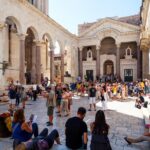

The Roman power story in small stops: Jupiter Temple, city clock, Grgur Ninski, and the squares
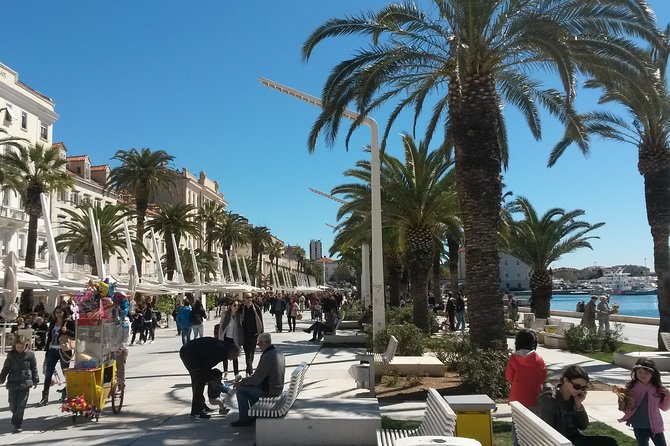
A walk through this part of Split is basically a set of “Roman callbacks” that show up in medieval and modern life.
Here are the key stops, and what they mean for you:
- Grgur Ninski statue: you’ll learn about one of Croatia’s most important historical figures. It’s a short 5-minute stop, but it gives the human story layer that complements the emperor story.
- Fruit’s Square (Trg Brace Radic): former Green Market and a landmark statue of Marul, often described as the father of Croatian literature. A market square is always more than a view, it’s a place where people gathered, bought, argued, and lived.
- Narodni Trg (People’s Square): the itinerary calls it the biggest and liveliest piazza in Old Town. This is your “energy check” stop, where the town’s daily rhythm shows up after all the Roman planning.
- Temple of Jupiter: you’ll see it from outside, with an optional interior entry for 1.5 EUR per person. Even outside, it helps you connect the religious symbolism that sat beside political power.
- City Clock: you’ll see a 500-year-old 24-hour clock. This type of detail is why guided tours work. One small artifact can explain how time and daily life were organized centuries ago.
These stops are mostly five minutes each, which is perfect for two reasons. One, you don’t overheat or lose the thread. Two, each marker is placed so it reinforces the tour’s main idea: this city is a stack of eras built on the same skeleton.
Riva Harbor finish and vestibulum entry: ending where Split feels most alive
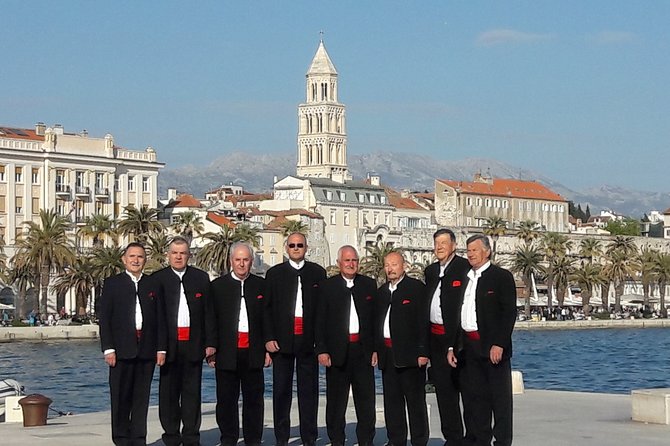
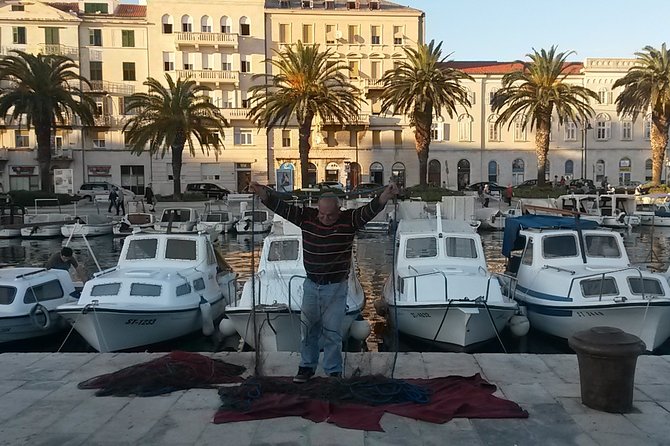
Your tour starts and finishes around Main Riva Promenade, with a quick return at the end. That ending matters. You’re not just marching out into a random street afterward. You come back to one of the most natural places to reset, grab a drink, and point at landmarks you just learned.
Stop 13 is the Vestibulum of Diocletian’s Palace, described as the main entrance to the emperor’s private residence, with this stop listed as free for the tour. That’s a nice final beat because it connects the tour’s earlier grandeur to something more human: private spaces, access, and how power moved through doors and thresholds.
Price and value: what $240 per private group really buys
The price is $240 per group for up to 12 people, for roughly 2 hours, in English. That number can look high until you run the math.
If you’re a full group of 12, it’s about $20 per person, which is strong value for a licensed local guide in one of Croatia’s most important heritage sites. If you’re only two people, it’s closer to $120 per person, so it becomes a premium decision.
Here’s how I’d judge whether it’s worth it for you:
- You should book if you care about understanding what you’re seeing in Diocletian’s Palace, not just taking pictures.
- You should book if you want a private setup for questions, pace, and better focus in tight historic spaces.
- You might think twice if you mostly want wandering and you plan to do the palace without a guide. In that case, the added cost may not pay back.
Also remember the tour includes the guide service and custom itinerary organization, and you get a mobile ticket. That removes some friction and lets you just show up and go.
Finally, it’s often booked about 39 days in advance, which is a hint of popularity. If your dates are fixed, booking earlier can help.
Weather, walking comfort, and the “optional fees” checklist
This experience requires good weather. If the day turns gray, you might be offered a different date or a full refund, depending on what’s arranged.
In terms of money planning, the base tour includes the palace and several stops with free admission. But you should budget for optional entries if you want them:
- Cathedral of Saint Domnius interior: 3.5 EUR per person
- Temple of Jupiter interior: 1.5 EUR per person
- Museum of Diocletian’s Cellars: €10 per person (not included)
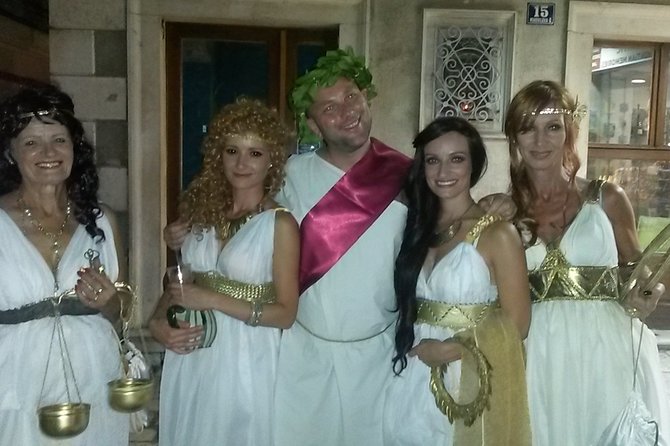
One more small consideration: the tour does not include a costumed theater show or similar appearance. If you were hoping for a dramatic, performance-heavy experience, this is more of a guided history walk.
Who should book this tour (and who might want something else)
This tour is a great match for:
- First-time visitors who want a fast, organized introduction to Split’s center
- Families who want explanations that keep kids engaged, without long waits
- Travelers who like Roman history and also want to see how it connects to today’s squares and street life
You might choose a different option if:
- You prefer lots of free time for self-guided wandering
- You only want the highlights for photos and don’t care about architectural or historical context
- You’d rather avoid extra paid entries in interiors and cellars
If you’re in the middle, this is still a good choice because the route is structured, but the optional pieces let you shape how deep you go.
Should you book Split’s Diocletian’s Palace and Old Town private walk?
If you want a tour that turns Split from a pile of impressive buildings into a clear story, I’d book it. The palace-focused route, the short stops at key landmarks, and the private guide setup are the reasons this works so well.
I’d especially recommend it if you’re only in Split for a short time. With about two hours, you can leave with a stronger sense of where you are, what you’re looking at, and how the city’s layers connect.
Just go in knowing two things: there are optional interior fees, and the underground portion can be a big part of the experience. If that sounds good to you, you’ll likely love how the city clicks into place.
FAQ
FAQ
How long is the SPLIT private walking tour?
It lasts about 2 hours (approx.).
Is this a private tour?
Yes. It is private, so only your group participates.
Where do we meet for the tour?
The meeting point is Obala Hrvatskog narodnog preporoda 22, 21000, Split, Croatia, and the tour ends back at the meeting point.
What does the tour cost?
It costs $240.00 per group (up to 12 people).
What’s included in the price?
Included: service of a private licensed resident guide and custom-designed itinerary and tour organization. You also receive a mobile ticket.
What is not included, and are there optional fees?
Not included: gratuities for the guide. Also not included are admission fees for optional interiors like the Cathedral of Saint Domnius (3.5 EUR per person), Temple of Jupiter (1.5 EUR per person), and the Museum of Diocletian’s Cellars (€10 per person).
What language is the tour offered in?
The tour is offered in English.
What happens if the weather is bad?
This experience requires good weather. If it’s canceled due to poor weather, you’ll be offered a different date or a full refund. You can also cancel up to 24 hours in advance for a full refund.
More Walking Tours in Split


More Tours in Split

More Tour Reviews in Split

Not for you? Here's more nearby things to do in Split we have reviewed




More Split Diocletian's Palace & Heritage Tours to consider.
 ★ 4.9Old Town and Diocletian Palace Walking TourFrom $174,727 reviews
 ★ 5.0Walking Tour of Split and Diocletian’s PalaceFrom $482,588 reviews
 ★ 5.0Split & Diocletian’s Palace Walking TourFrom $211,125 reviews
 ★ 4.7Diocletian Palace & Old Town Guided Walking TourFrom $17882 reviews
 ★ 4.8Game of Thrones Tour with Diocletian’s Palace CellarFrom $41545 reviews
 ★ 5.0Diocletian’s Palace and Old Town SMALL GROUP Walking TourFrom $16502 reviews
 ★ 5.090-min Diocletian Palace Walking TourFrom $21323 reviews
 ★ 4.4Diocletian’s Palace Virtual Reality ExperienceFrom $15308 reviews
Explore its other useful categories