
REVIEW · SPLIT CITY & DAY TOURS
Split: Private Walking Tour in the Historical Town Center
Split clicks into place fast, with smart context.
This private walking tour is a time-saver: you cover the must-see core in just 105 minutes, without wandering aimlessly. I also like how Sanja, a licensed local guide with a master’s degree, explains what you are seeing in plain language, and she’s comfortable answering questions on the spot.
You get real highlights, not just photo stops. You’ll walk the Roman core of Diocletian’s Palace, then move outside it to the medieval streets and squares, with quick guidance on what different rulers left behind. One possible consideration: the Diocletian Palace substructures (basements) have an entrance fee, and the tour is not suitable for wheelchair users.
You start at the Riva promenade, walk through the palace’s key spaces like Peristil and the cathedral area, then end back by the sea. It is also flexible on language, with live guiding available in English, Italian, French, and Spanish.
Key highlights worth planning for
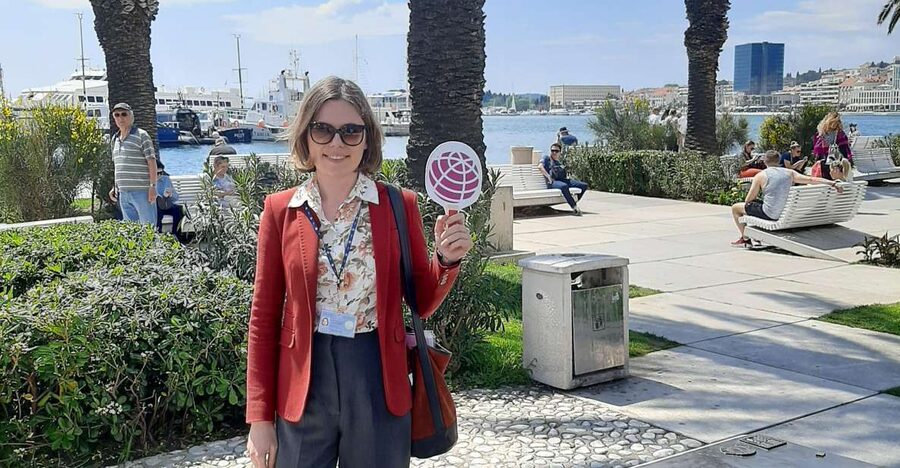
- Private guide, best use of your time across Diocletian’s Palace and the surrounding medieval town
- Diocletian’s Palace layers: Roman foundation plus medieval neighborhood inside the walls
- Substructures stop inside the palace grounds, with an added entrance fee
- Iconic town spaces like Peristil, People’s Square, Fruit Square, and Prokurative
- Seasoned storytelling from Sanja using clear explanations and strong communication (including French)
Where you meet, and how to start the walk without stress
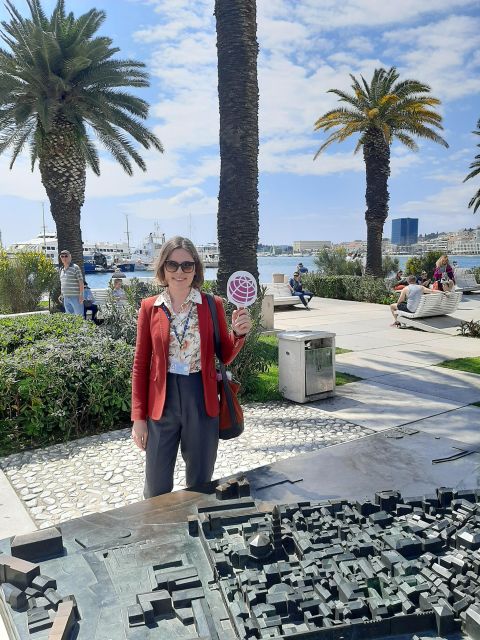
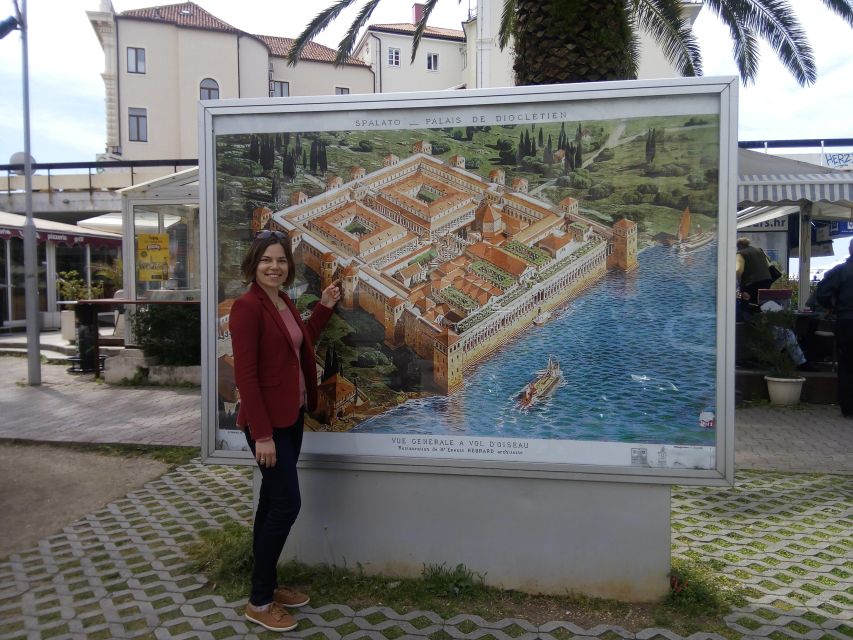
You meet on the Riva promenade by the bronze model of the historical core of Split, in front of the south entrance to Diocletian’s Palace. That matters more than it sounds. The bronze model gives you a quick mental map before you step into the maze of streets.
From there, you will walk in streets and squares around the old town for about 1 hour 45 minutes. The pace feels built for orientation, not a marathon. You will spend most of your time in the palace area first, then transition to the medieval town outside it, and finish again on the seafront.
If you like tours that help you come back later and explore on your own, this setup works well. You are not just seeing sights, you are learning how the town is organized so you can navigate after the tour.
You can also read our reviews of more walking tours in Split


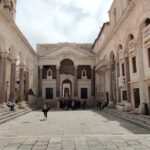
Diocletian’s Palace, the Roman core you can actually walk
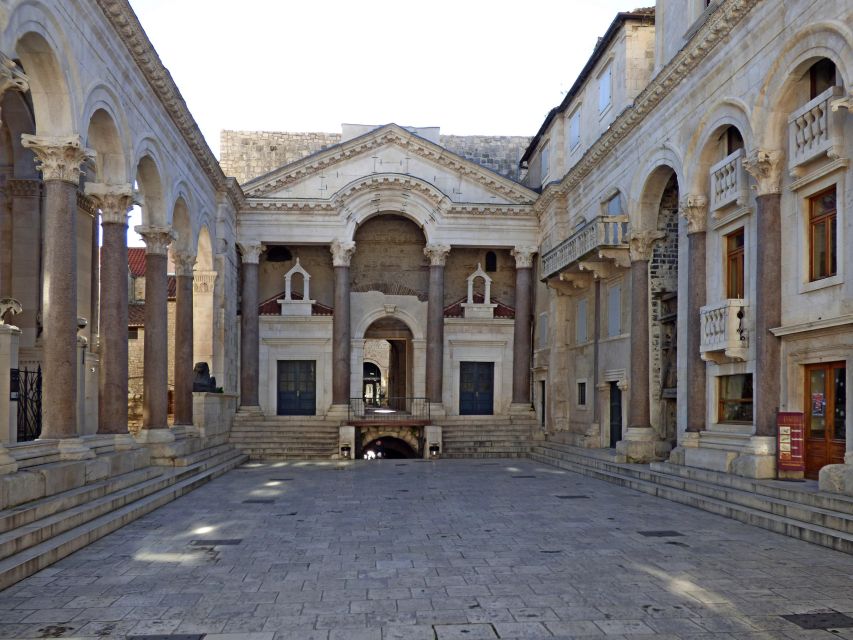
Diocletian’s Palace is the oldest part of Split, built in the 4th century. Even if you are not a Roman-history fanatic, it is one of those places where architecture does the teaching. You will see how the palace layout shaped daily life long after the empire era.
A smart feature here is that you do not only look at the palace as a monument. You also visit the small medieval neighborhood that grew inside it, which creates a fascinating mix of styles in the same walls and corridors. That contrast is exactly what makes Split feel different from other Adriatic cities. You are standing in layered time.
Within the palace area, you will go to key spaces such as:
- Peristil, the main square inside the palace walls
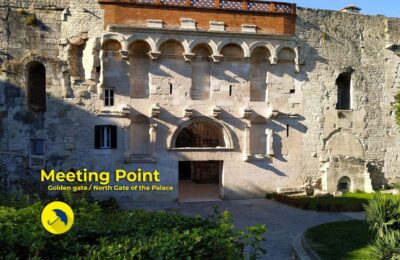
- the palace walls and gates (including the Golden Gate)
- Mausoleum space and St. Domnius’s Cathedral area
- Jupiter’s Temple, viewed from outside (no entrance fee)
This first part gives you the framework for everything else you will see later. After Peristil and the palace streets, the outdoor squares and streets feel like the palace’s natural extension, not a separate place.
The substructures (basements): worth it, but plan for the extra fee
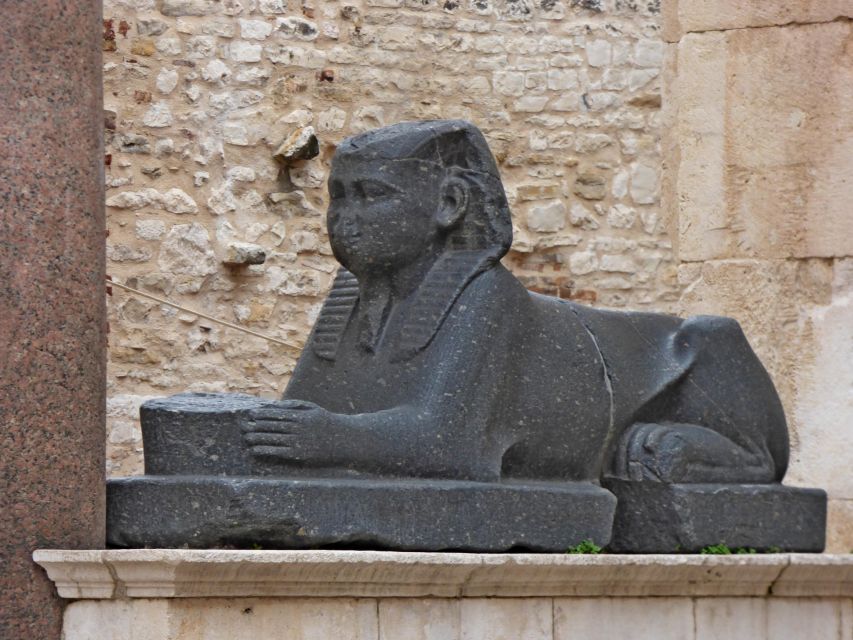
One of the highlights is the visit to the Diocletian Palace Substructures, sometimes called the basements. These are inside the palace complex, but the entrance fee is not included in the tour price.
That is the one cost detail you should keep in mind. If you want maximum value from your time in Split, I think the substructures are a strong add-on stop. They help you understand how the palace functioned, including the practical spaces under the main levels.
If you are budget tight, you can choose to treat this as optional, depending on how your schedule and energy feel. But since the tour specifically includes it in the flow, many visitors end up being glad they went.
Peristil and the palace walls: where the geometry becomes history
Peristil is the main square inside the palace. It is not just a big open space for photos. You can feel why it became a central gathering point. When you stand there with a guide explaining what you are looking at, the palace stops feeling like random stones and starts feeling like a designed system.
From Peristil, you will also see the palace walls with four gates and learn how entry points mattered. The gates explain how movement worked, who controlled access, and how later residents adapted the Roman structure to their own needs.
Golden Gate is one of those features that connects the palace to the later streets outside it. You may pass it as you transition through the historic core. It is a small detail in the walking sequence, but it helps you build a coherent picture of Split instead of collecting disconnected stops.
St. Domnius’s Cathedral and Jupiter’s Temple: old faiths in close quarters
This tour places special emphasis on the religious landmarks that became part of everyday Split life. You will visit the Cathedral of Saint Domnius area with guided context and time to see it properly.
Saint Domnius is tied to the palace world, which is part of why it feels so integrated. You are not trekking across town to reach a standalone cathedral. You are stepping through the same old power-and-community setting that shaped the city around it.
You will also see Jupiter’s Temple / Baptistery from outside. The key point is that this stop is external and does not require an entrance fee. That can be a good thing. It means you can keep moving and still get the visual and historical context.
If you want to get the most from your visit, pay attention to the way these sites reflect how buildings got repurposed across centuries. In Split, change did not mean starting over from scratch. It often meant reusing what was already there.
You can also read our reviews of more private tours in Split



The small former Jewish ghetto: a quiet but important stop
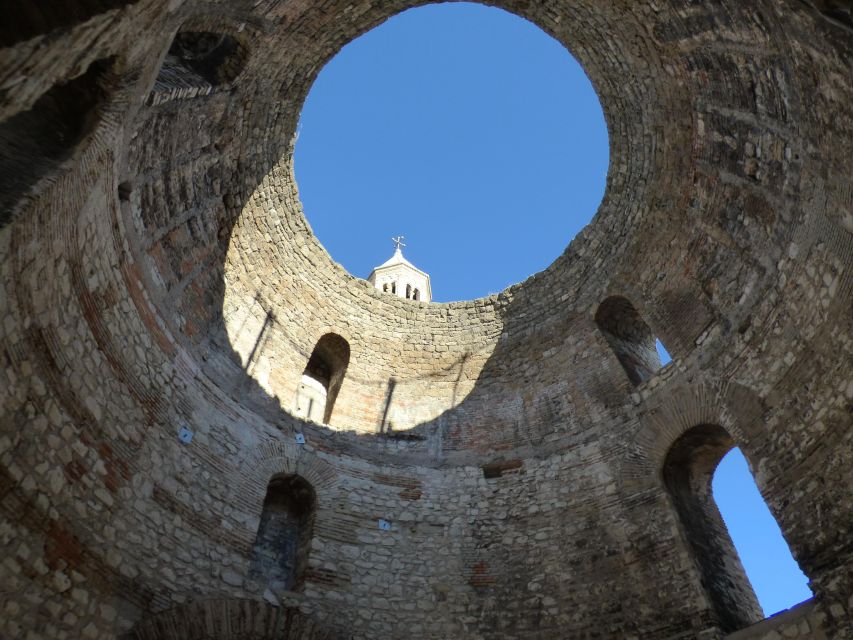
One stop I appreciate for its balance is the mention of a small former Jewish ghetto, with a synagogue that is still active. Even though this is a brief segment inside a walking tour, it carries real weight.
A good guide keeps it respectful and grounded. The value here is that you learn Split is not only about Roman walls and Venetian-era squares. It also includes community history and the way different groups lived side by side over time.
If you are the kind of traveler who likes to understand how a city’s identity was formed, this part gives you a fuller picture without turning the tour into a lecture.
People’s Square, Fruit Square, and Prokurative: where different rulers left fingerprints
After the palace core, you shift to the medieval neighborhood built outside it. This is where the squares start to feel like stages for civic life.
You will cover:
- People’s Square
- Fruit Square
- Prokurative
These stops come with context about socio-political life under different powers. You will learn how Split was shaped during periods of Venetian, French, Austro-Hungarian, and Yugoslavian rule. Even if you already know the broad outlines of European history, hearing it tied directly to street layout and public spaces helps it stick.
Here is the practical value: once you learn what those squares represented, you will recognize them faster on your own later. You will see where to look for signs of power, trade, and governance.
This section also breaks up the walking rhythm. Squares give your legs a brief reset, and they give your brain room to connect the palace story to the wider city.
Ending on the Riva promenade by the sea: turn the walk into your plan
The tour ends back on the Riva promenade by the sea. That final location is more than a scenic finish. It is a natural launch point for your next moves.
At this stage, you will be oriented enough to ask yourself simple questions like:
- Which area should I revisit with slower pacing?
- Where should I start a self-guided walk tomorrow?
- Do I want to go deeper on palace architecture or focus on squares and side streets?
If your day in Split is limited, this tour can be an efficient first act. You get the historical map, the key landmarks, and the feeling of how the city is put together. Then you can follow your curiosity, not your guesswork.
Price and value for a private 105-minute Split tour
The price is listed as $153 per group up to 15, for a duration of 105 minutes. That might sound steep if you are comparing it to group tours. But for a private walking tour, the real question is: do you want a guide focused on your questions and your pacing?
This tour makes that argument well. You are getting a professional licensed local guide with a master’s degree, and you are not stuck with the typical slow-and-fast mismatch that happens in larger groups. With a private group, your guide can steer the narrative to what you care about most, whether it is architecture, history, or the way multiple cultures shaped the city.
Also, the tour includes most major stops, while only one of the big internal components has an extra fee, the substructures entrance. Jupiter’s Temple is external, so you do not keep paying ticket costs at every stop.
If you are traveling with a small group, the cost per person typically feels more reasonable. If you are solo, it can still be worth it if you value a fast orientation and dislike big crowds.
Who this tour suits best in Split
This is a great fit if you:
- want a first-day orientation so you can explore the rest of your trip smarter
- like architecture and how buildings change over time
- prefer private pacing and real Q and A
- want a clear guide with strong communication (Sanja is the named guide here, and the feedback highlights her clarity)
It may not be ideal if you:
- rely on wheelchair access, since the tour is not suitable for wheelchair users
- hate extra costs, because the Diocletian substructures have an entrance fee
Should you book this private Split walking tour?
I think you should book it if your priority is getting your bearings quickly and understanding what you are seeing in Split’s most important areas. The mix of Roman, medieval, and later rule context helps you make sense of the city instead of treating it like a checklist.
If your schedule is tight, the 105-minute length is exactly the sweet spot for a history and architecture sampler. If you want a deeper, slower day, you can still pair this with follow-up self-guided exploring.
Final thought: with Sanja leading and a strong 5 out of 5 record from 25 reviews, this is the kind of tour where the payoff is immediate. You finish with a mental map, and Split stops being confusing.
FAQ
Where is the meeting point for the Split historical town center tour?
The meeting point is by the bronze model of the historical core of the city of Split on the Riva promenade by the sea, in front of the south entrance to Diocletian’s Palace.
How long does the tour last?
The tour duration is 105 minutes.
Is this tour private?
Yes. It is a private group tour.
What languages are the live guides available in?
The live tour guide is available in English, Italian, French, and Spanish.
What is included in the tour price?
The tour includes a professional licensed local guide with a master’s degree, and it is a private tour. It also includes commission.
What is not included in the tour price?
Entrance fees to the Diocletian Palace substructures, also referred to as basements, are not included.
Is the tour suitable for wheelchair users?
No. The tour is not suitable for wheelchair users.
What is the cancellation policy?
There is free cancellation up to 24 hours in advance for a full refund.
Can I reserve now and pay later?
Yes. You can reserve now and pay later, keeping your travel plans flexible.
More Walking Tours in Split


More Tours in Split

More Tour Reviews in Split

Not for you? Here's more nearby things to do in Split we have reviewed





More Split City & Day Tours to consider.
 ★ 4.8Krka Waterfalls Trip with Boat Cruise and SwimmingFrom $3110,519 reviews
 ★ 5.0Krka Waterfalls, Food & Wine Tasting TourFrom $459,326 reviews
★ 4.9Krka Waterfalls, Food & Wine Tasting TourFrom $446,598 reviews
★ 5.0Krka Waterfalls, Food & Wine Tasting TourFrom $459,326 reviews
★ 4.9Krka Waterfalls, Food & Wine Tasting TourFrom $446,598 reviews
 ★ 4.6Split/Trogir: Blue Cave, Mamma Mia, Hvar and 5 Island TourFrom $1096,320 reviews
 ★ 4.5Blue Lagoon & 3 Islands Cruise with Lunch from SplitFrom $785,756 reviews
 ★ 4.9Old Town and Diocletian Palace Walking TourFrom $174,727 reviews
 ★ 4.9Blue Lagoon Boat Party with DJs, Shots & After PartyFrom $474,610 reviews
 ★ 5.0Krka Waterfalls Tour, Boat Cruise & SwimmingFrom $324,489 reviews
Explore its other useful categories