
REVIEW · SPLIT DIOCLETIAN'S PALACE & HERITAGE TOURS
Split: Private Walking Tour and Diocletian’s Palace
Split’s Roman heart fits in 90 minutes. This private walking tour threads Diocletian’s Palace and the cellars into Split’s UNESCO old town, with a guide who turns landmark hopping into an actual story.
I like that it mixes big-set-piece sights with real street-level details, so you get context, not just photos. I also like the pacing: it’s long enough to feel satisfying, but short enough that you do not end up huffing across the whole city.
One possible drawback is the walking surface. You are on cobbles and through historic streets, so wear comfortable shoes, and know it is not suitable for people with mobility impairments.
Key highlights to care about
- A private group pace: less waiting, more time to ask questions and adjust your pace.
- Golden Gate to the Riva: you start by orienting yourself, then walk straight into the old town core.
- Diocletian’s cellars with an entry ticket: you actually go inside, not just look from the outside.
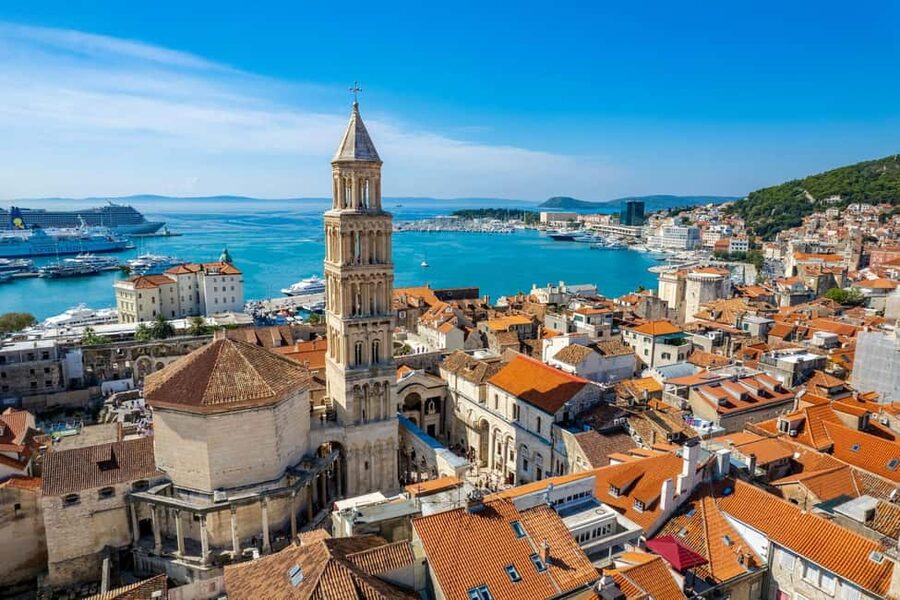
- Peristil and palace spaces: you see the courtyard that made the palace feel like a world of its own.
- Saint Domnius area: Roman-era setting meets later religious history.
- Spanish or English live guide plus audio: helpful if you want extra support between explanations.
Split’s old town reads best with a guide in your ear
Split is one of those places where the buildings are famous, but the meaning hides in plain sight. A short guided walk helps you connect the dots fast, from old gates and market squares to the palace walls that basically shaped where people built, worshipped, traded, and lived.
I like tours like this because they focus on the essentials: the main landmarks you came for, plus the smaller details that make them click. You do not have to be a Roman history buff to enjoy it either. You just need curiosity and decent walking shoes.
Best part for value: you get a real entry component with the cellars. That turns the tour from a photo walk into an experience that costs real money and real time on site, and you should feel that difference.
You can also read our reviews of more walking tours in Split


Starting at South Tours (Mrčelina 1) and getting your bearings
You meet at the South Tours Travel Agency at Mrčelina 1, Split. Plan to arrive 15 minutes early so you can check in, meet your guide, and settle before you start moving.
This tour is designed as a tight loop, so your first few stops matter. You start near the old town gate area, which helps you orient quickly before you go deeper into palace spaces and landmarks like the Peristil and Saint Domnius.
If you like clarity, you will appreciate the dual support. There is a live guide in Spanish or English, and there is also an audio guide included in the same languages. That means you can keep following along even if a sentence gets lost under street noise.
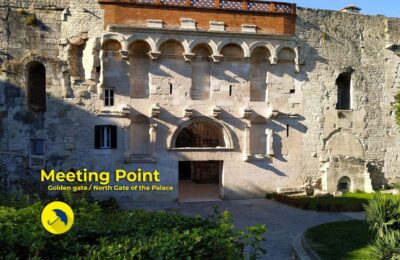
Golden Gate: your first clue that Split was built to defend itself
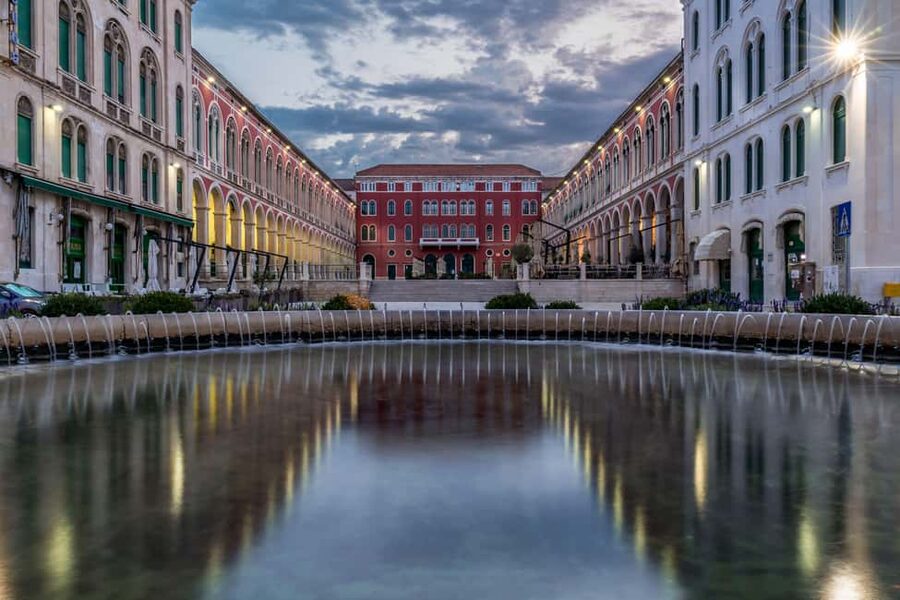
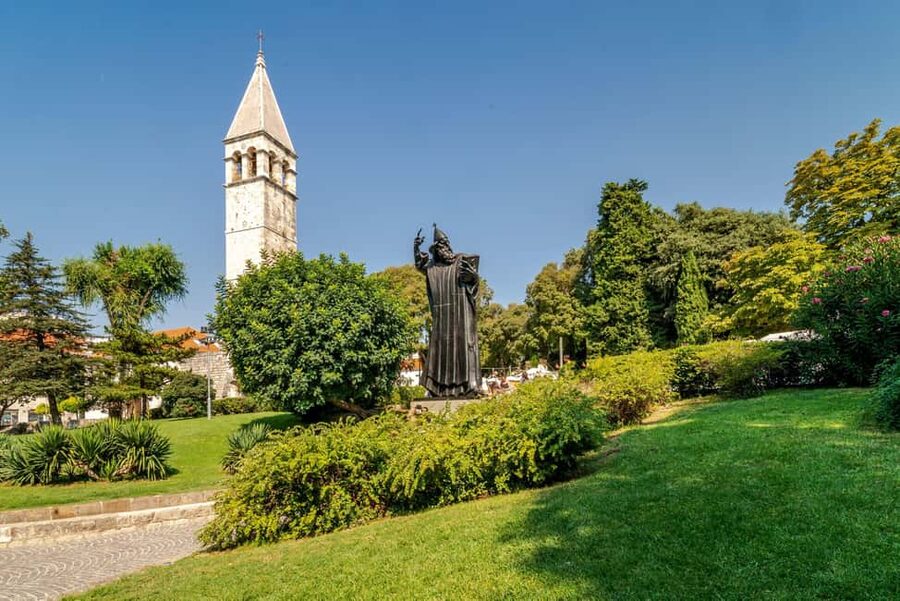
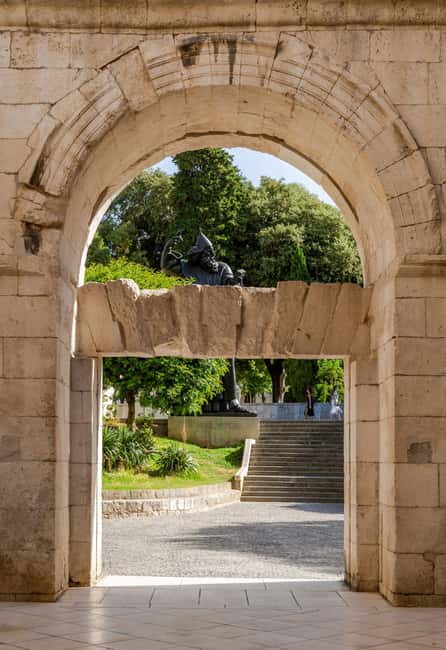
Your walk begins at Golden Gate. Even if you have no interest in military architecture, a gate like this is useful. It tells you where the city wanted control, where movement was guided, and how Split’s urban layout grew around key access points.
When you see it first, you understand later stops better. You will notice how the old town feels enclosed, like stone corridors designed for people to move through the space in the same way for centuries.
What I like here is the mental setup. You walk in knowing you are entering a compact historic machine. Then, every square and passage feels less random.
Game of Thrones Museum: pop culture stop, real urban texture
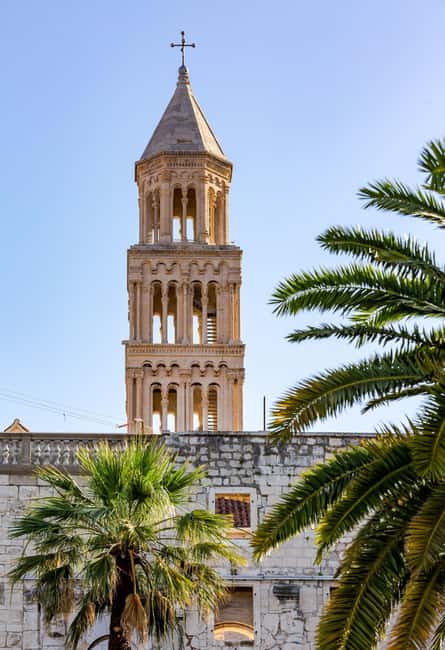
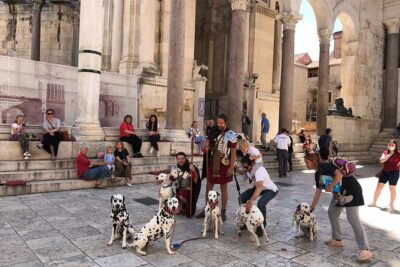
Next you pass the Game of Thrones Museum area. Even if your interest level in TV costumes is low, this stop can be handy because it gives you a modern layer sitting on top of ancient streets.
It is also a reminder that Split stays in the conversation. People come for the show, but they end up learning the city itself. You are not just being entertained. You are being guided into the real location story behind the landmarks.
One consideration: if you are not curious about that pop culture connection, you might treat this as a quick waypoint. The tour does not hang here long, so you will not lose the main focus.
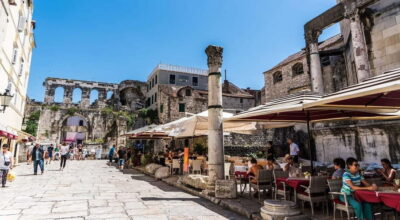
People’s Square, Fruit Square, and the logic of daily life
You then move through two classic square settings: People’s Square and Fruit Square. Squares are where cities show their personality, and Split’s squares help you understand how everyday life fits around the big-ticket Roman remains.
At Fruit Square, think market rhythm. Streets that lead into squares were made for movement, bargaining, and social contact. That matters in Split because the palace and old town do not feel like museum pieces. They feel like a working city built on top of earlier power.
At People’s Square, you get a sense of civic space. It’s a good contrast to the palace, because it shows another kind of authority: the kind that governs public life rather than emperors.
If you like places with layers, these stops are worth your attention. They are short, but they give you the “how people used this city” angle.
You can also read our reviews of more private tours in Split



Riva promenade walk: sea air, big views, and a reset from stone
After the squares, you hit the Riva. This promenade is where Split opens up to the water, and it helps break the walk into human scale. You go from compact historic corners to a linear waterfront space that feels easy to breathe in.
Why it matters: when you later enter palace interiors like the cellars and courtyard, you want that visual reset. The Riva also makes your route feel like a real stroll, not a museum checklist.
Practical note: the Riva is photo-friendly, but it is also where you will likely see more foot traffic. Keep your pace, listen to the guide, and use stops for quick angles instead of getting stuck in one spot.
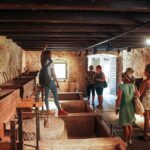
Diocletian’s Cellars: the payoff stop with an actual entry ticket
Now for the main interior win: Diocletian’s Cellars. You get entry ticket included, which is important. Going inside is what turns this from trivia into atmosphere. You are in the palace’s underworld spaces, and the preserved structure helps you imagine the palace as a functional complex, not just an exterior monument.
Cellars also change your body experience. It is cooler, quieter, and more enclosed. That difference makes the guide’s explanations easier to absorb because you are not constantly being distracted by open sky and crowds.
If you like practical history, this is a smart stop. You are seeing a part of the palace meant for storage, operations, and day-to-day support. It is a reminder that empires run on logistics as much as spectacle.
What to expect: plan for a bit of standing and moving through paths that feel ancient by design. Not difficult, but it is not a flat, stadium walkway.
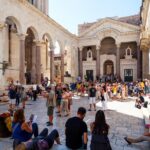
Peristil: the palace courtyard that makes the whole complex click

From the cellars, you move into the Peristil. This is the palace courtyard, and it is the place where you start understanding how Diocletian’s design shaped movement and sightlines.
A courtyard is more than a pretty open space. In a palace, it’s a stage. People could gather, look in, and feel the order of the complex. When you stand in spaces like this, you understand why the palace became such an enduring anchor for Split’s identity.
I like Peristil for this reason: it pulls the whole route together. You stop seeing isolated sights and start seeing a designed system. Streets, arches, and entrances start to feel connected in your head.
If you want one “wow, I get it now” moment, this is often it.
Cathedral of Saint Domnius and the Vestibul photo stop
Your next major stop is the Cathedral of Saint Domnius. Even if you are not religious, this area is valuable because it shows how later generations built meaning onto older foundations. The setting makes it clear that Split did not replace its past. It reused it.
This part of the tour is also where you will appreciate the guide’s explanations most. Cathedral areas can feel repetitive if you just glance at stone. With a guide, you catch the timeline in the architecture and the way the location evolved.
Finally, there is the Vestibul with a photo stop. It’s a brief moment, but it works as a visual bookmark. Use it to grab your “palace complex” shots before you finish. Then step back and look at the broader surroundings, not just your camera frame.
Price and value for a private tour at $117 per person
The price is $117 per person for about 90 minutes. For many people, that sounds steep until you map what’s actually included.
You get:
- a live guide (Spanish or English),
- sightseeing across Split’s key historic areas,
- and entry included to the Diocletian’s cellars.
You also do not get food or drinks included. That is normal for walking tours. Bring a plan to buy a simple snack or save meals for later, so you do not feel stressed during the walk.
So is it good value? I think it is, if you care about context and you want the cellars included. If you were only going to take a self-guided stroll through the old town, you might pay less. But you would also miss the “why it’s here” connections that make the palace feel understandable, not just impressive.
Private group matters too. You are not sharing your questions with a crowd. That can be worth real money when a place has lots of details.
Tips for comfortable walking, plus who should book
This is a walking tour, with historic surfaces and tight spaces. Bring comfortable shoes. That is not a generic suggestion. It changes how much you enjoy the cellars and how relaxed you feel in the old town streets.
It is also listed as not suitable for people with mobility impairments. If mobility is a concern, it’s better to choose an option with fewer steps and smoother access, rather than trying to “push through.”
Who it suits best:
- You want a focused overview of Split in a short window.
- You like architecture and city layout, not just scenic stops.
- You want a private group feel with live explanations.
- You prefer guides in English or Spanish, with audio support if needed.
Who might skip it:
- If you already know Split well and plan to spend your time exploring on your own without interpretation, you might feel the time constraint.
Should you book this Split private walking tour?
I would book it if you want the best mix of structure and spontaneity: starting at Golden Gate, passing through People’s Square and Fruit Square, getting the waterfront reset on the Riva, and then going into the palace spaces that many people only see from outside.
The deciding factor for me is the combination of guided storytelling plus included cellar entry. That’s the kind of value that turns your money into time well spent.
If you are traveling with someone who wants a clear plan, or you want a high-impact “first day in Split” experience, this is a smart pick. Just show up with good shoes and realistic expectations: it is compact, busy, and designed for walking, not lingering.
FAQ
What is the meeting point for the Split private walking tour?
You meet at the South Tours office at Mrčelina 1, Split.
How early should I arrive before the tour starts?
Please arrive 15 minutes before your tour starts.
How long is the tour?
The duration is 90 minutes.
What languages are available for the live guide and audio guide?
The live tour guide and audio guide are available in Spanish and English.
What is included in the ticket price?
The tour includes a guide, sightseeing of Split, and an entry ticket to the cellars of Diocletian’s Palace.
Is the tour suitable for people with mobility impairments?
No, it is not suitable for people with mobility impairments.
More Walking Tours in Split



More Tours in Split

More Tour Reviews in Split


Not for you? Here's more nearby things to do in Split we have reviewed







More Split Diocletian's Palace & Heritage Tours to consider.
 ★ 4.9Old Town and Diocletian Palace Walking TourFrom $174,727 reviews
 ★ 5.0Walking Tour of Split and Diocletian’s PalaceFrom $482,588 reviews
 ★ 5.0Split & Diocletian’s Palace Walking TourFrom $211,125 reviews
 ★ 4.7Diocletian Palace & Old Town Guided Walking TourFrom $17882 reviews
 ★ 4.8Game of Thrones Tour with Diocletian’s Palace CellarFrom $41545 reviews
 ★ 5.0Diocletian’s Palace and Old Town SMALL GROUP Walking TourFrom $16502 reviews
 ★ 5.0SPLIT-PRIVATE Walking Tour of Diocletian’s Palace & Old TownFrom $240467 reviews
 ★ 5.090-min Diocletian Palace Walking TourFrom $21323 reviews
Explore its other useful categories