
REVIEW · SPLIT CITY & DAY TOURS
Split: History Walking Tour of the Old Town
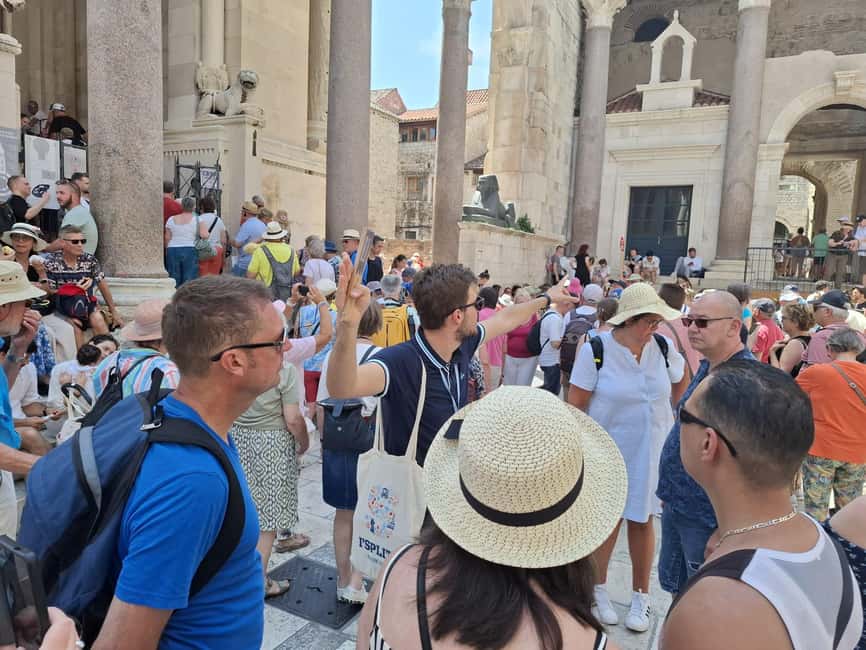
Split rewrites your sense of time fast. In 90 minutes, this guided Old Town walk takes you through Diocletian’s Palace and the UNESCO-protected core of Split, with Roman sights explained clearly and backed by playful storytelling. You also get the famous cellars, where pop-culture references meet real architecture.
I especially love how the tour makes the stops feel connected, not like a list. You hit big-name landmarks like the Golden Gate and Peristyle, then the pace shifts into darker, cooler palace spaces, including the cellars with the dragon-chain story. I also like how the guide ends at the Riva with practical ideas for the rest of your day, like what local food to chase and which nearby islands are worth your time.
One drawback to plan for: it is a walking tour with a tight timeline, so comfortable shoes and water matter. If you are visiting in high heat, you will still want a hat and sunscreen, even if the cellars provide a break.
Key things you’ll notice on this Split Old Town walk
- Licensed local guidance that answers the big why, not just the what
- Golden Gate, Peristyle, Jupiter’s Temple, and the Vestibule in one logical route
- Diocletian’s cellars, with the drama of chained dragons and story-driven details
- Riddles and playful bits that keep you engaged, even during indoor stops
- People’s Square (Pjaca) and Fruit Square (Voćni trg) to ground the Roman story in today
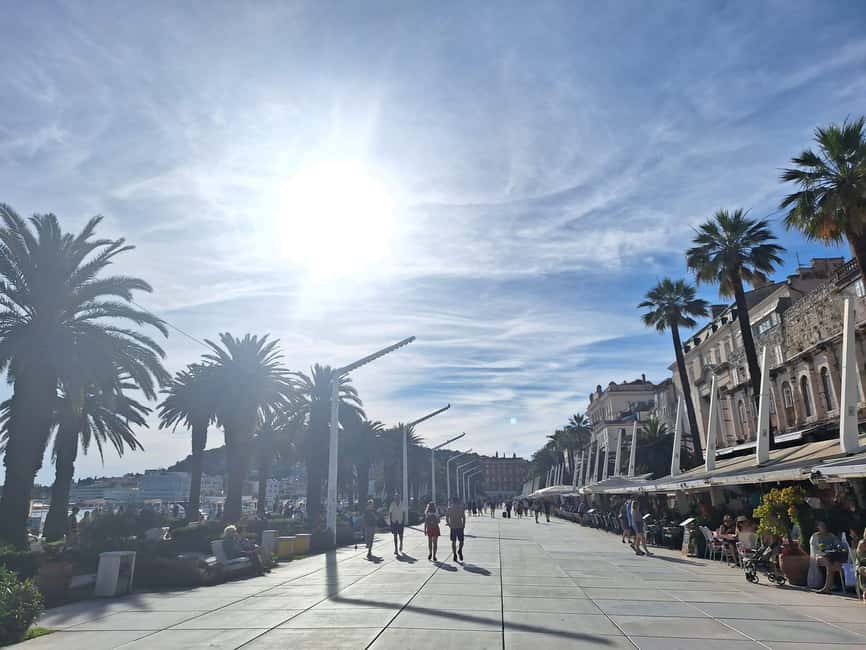
- A finish on the Riva, lined with tall palm trees, plus food and island recommendations
Why this 90-minute Old Town walk feels like the smartest first step
Split is a city where the past is not behind glass. It is built into streets, doorways, and stairways you walk through while dodging gelato lines and cruise crowds. This tour is short enough to fit your arrival day, yet focused enough to give you a true framework for what you are seeing.
The value here is the combination of timing and context. For about $41 per person you get a licensed English or Spanish live guide, a route through the key parts of the old core, and lots of interpretation about the people and politics behind the stones. The tour also includes suggestions for local food habits and discounts, plus help planning what to do after the walk.
If your goal is to orient yourself, this is a good match. You will finish with a mental map, a sense of how Diocletian’s palace became a living neighborhood, and enough local pointers to make your remaining time feel organized instead of random.
You can also read our reviews of more walking tours in Split



Golden Gate to Peristyle, where Diocletian’s plan shows up in real scale
Your walk starts at Golden Gate. Even if you have seen photos, standing near it changes how you read Split. It is one of those “this was meant to control movement” points in the city fabric, and the guide uses that idea to explain the bigger Roman logic behind the palace complex.
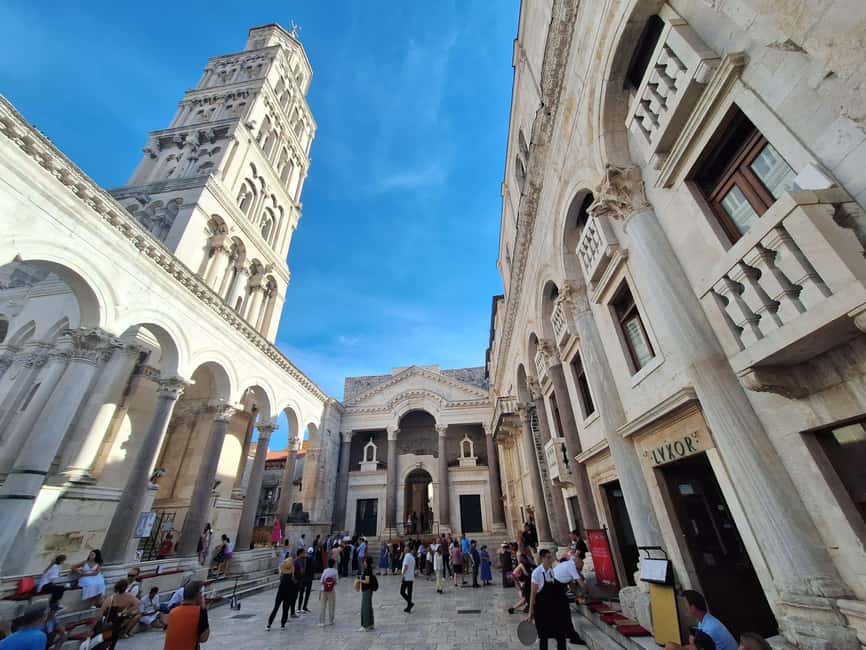
Next comes the Peristyle, the open heart space of the palace. This is where the tour becomes easier to follow because you can actually see how the palace worked as a city-palace, not just a ruler’s home. The guide highlights what to pay attention to as you look around, and you get short stops to keep things from dragging.
I like that the tour does not treat these places like museum props. You are not just hearing dates. You are getting a feel for daily life in and around the palace, plus the way later powers layered new meaning on top.
Jupiter’s Temple and the Vestibule: the details you’d miss on your own
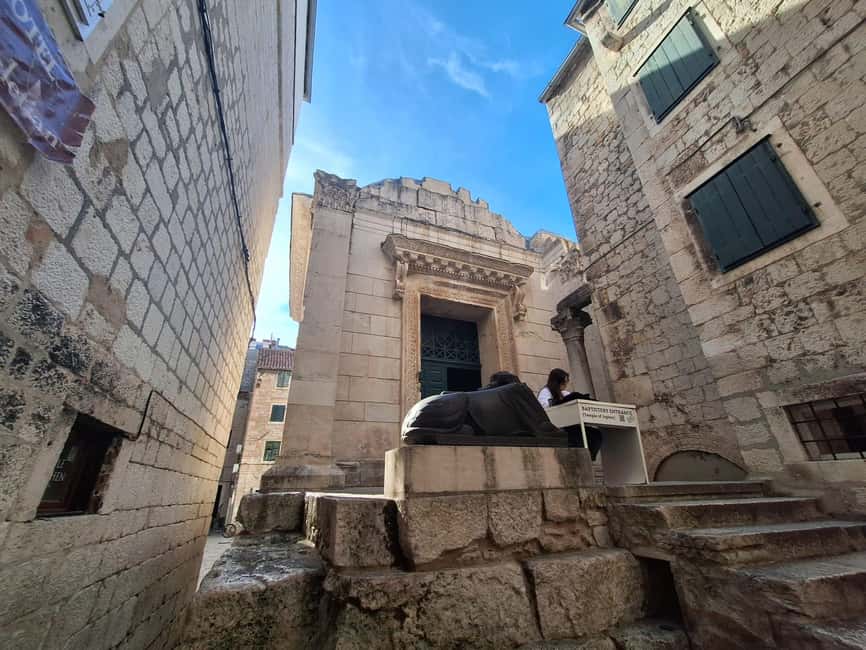
After Peristyle, the route moves toward Jupiter’s Temple. The guide keeps the explanation tight, so even a fast stop makes sense. One of the memorable story elements is the headless Sphinx that guards the entrance, which becomes a fun clue into how symbolism survived across centuries.
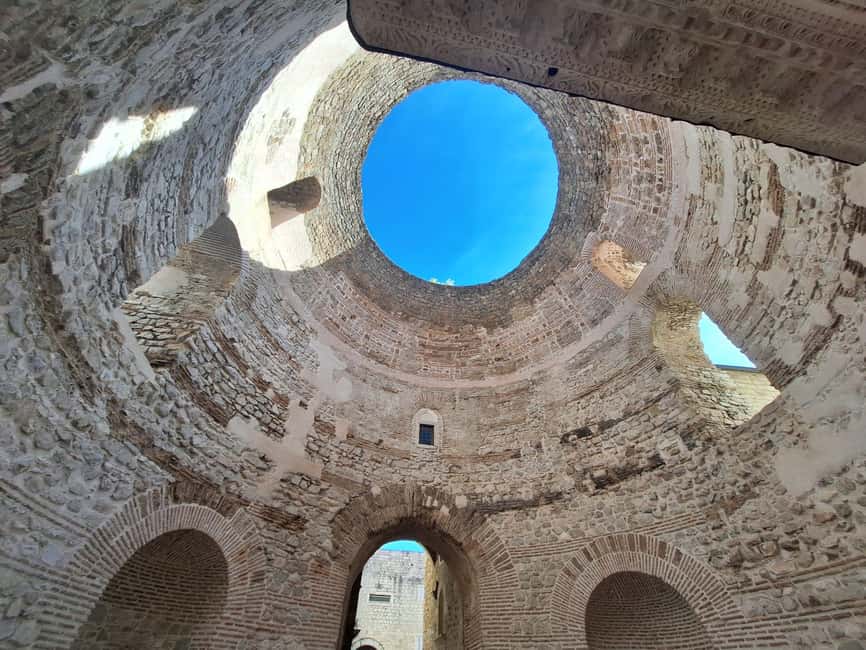
Then you move on to the Vestibule, where the vibe shifts. This is still part of the palace story, but it feels more like you are walking through transitions, thresholds, and “in-between” spaces that matter in ancient architecture. It also helps break up the walking so you can look, listen, and reset.
The tour’s pacing also works well for mixed comfort levels. Even if you are not the type to love every Roman detail, the guide’s mix of humor and focused explanations makes these short segments feel worth your time. I have seen guides like Nina and Marc praised for keeping information clear, fun, and easy to absorb, and that style is exactly what you want here.
Diocletian’s cellars: the cool part of the palace and the loudest stories
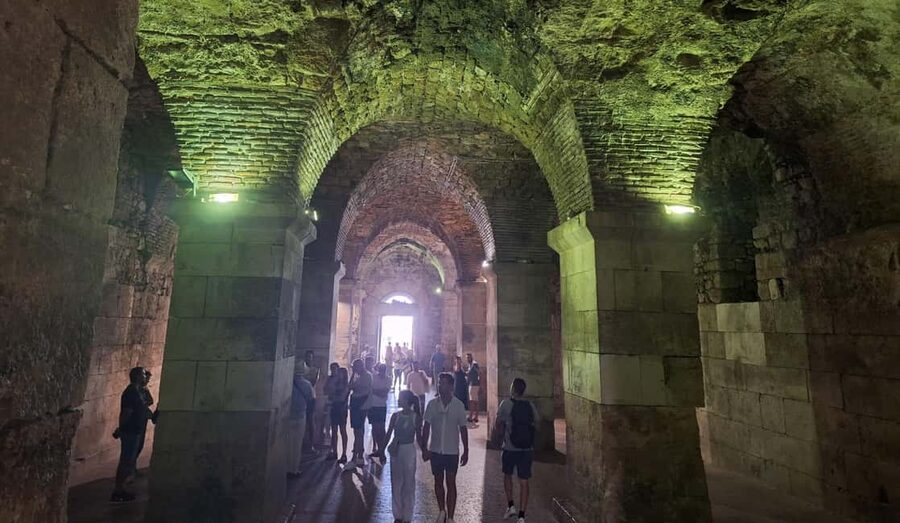
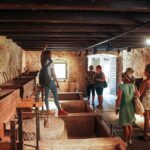
The most dramatic stop is Diocletian’s Cellars. This is where your tour stops being just history and starts becoming atmosphere. The spaces are cooler and darker, and the guide uses that setting to tell stories that connect the palace’s real function with modern pop-culture imagery.
You get a big dose of the palace underground world, including the story of the dragons chained in the cellars and references like the Unsullied fighting the Sons of the Harpy. Even if you are not deep into TV lore, the key value is how the guide turns architecture into narrative. You learn why these spaces were built, how they connected to the palace above, and why the layout still reads as intentional, not random.
One practical benefit: these cellars can be a relief from summer heat. People mention how guides led them through the cellars and how the time seemed to fly, which tracks with the way the tour uses short, well-timed explanations rather than long lectures. If it is a hot day, think of this as your built-in temperature break.
People’s Square and Fruit Square, where the Roman world meets today’s street life

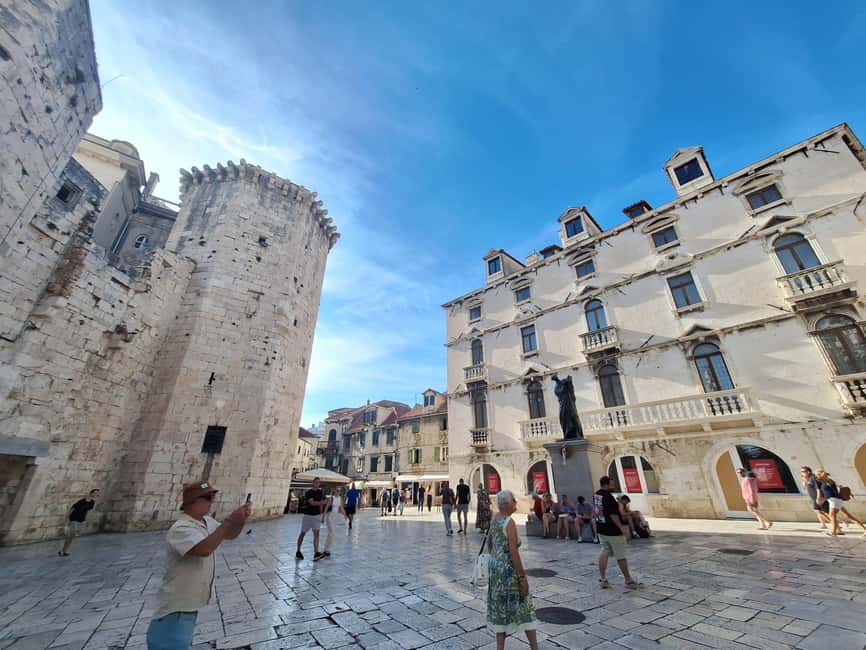
After you come back up from the cellars, the tour shifts to spaces that feel more civic and everyday. You visit People’s Square (Pjaca) and Fruit Square (Voćni trg). These stops are not just scenic. They help you understand how the palace became part of an active urban life.
This is where the guide typically adds context about Split’s bigger historical layers, including how later regional powers shaped the city. You also hear about Emperor Diocletian and the darker side of his reputation, with some memorable anecdote-style storytelling thrown in to keep it moving. The guide’s humor is part of the method, not just entertainment.
These square stops also make the tour more useful for planning. Once you understand where the public spaces sit inside the old core, it becomes easier to decide where to wander next on your own. And because the tour includes recommendations for local foods and specialties, you start noticing what people are actually eating and where it might be worth your time to look.
You can also read our reviews of more historical tours in Split



A quick stop for real-world wonders, like water you can actually see
One of the nice surprises you can catch on this kind of walking route is the “how did they do that” infrastructure. A standout detail from past tours involves discovering a hidden fountain fresh water supplied via an aqueduct about 2000 years old. You might not spot every infrastructure detail on your own without the guide pointing it out, so treat those moments as part of the value.
This is also why a licensed guide helps more than you might think. The Old Town is packed with stone and symbols, but the point is learning what was functional, what was ceremonial, and what got repurposed over time. Even small finds like water sources make the whole city feel less like a set and more like a living system.
Finishing at the Riva: palm trees, sea views, and a better next-day plan
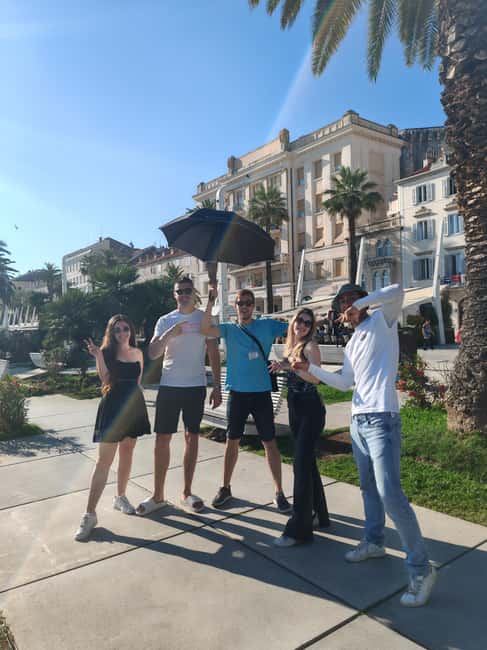
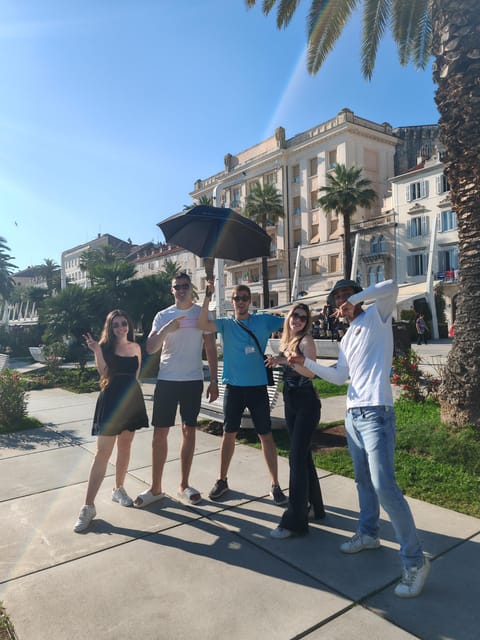
The tour ends at the Riva, Split’s famous seafront promenade lined with tall palm trees. This is a smart finish point because it gives you an immediate reward: you have your bearings, you have sea air, and you can look back toward the old core with new context.
More than that, the guide uses this moment to set you up for the rest of your trip. You get recommendations on how to spend the remaining hours, including which nearby islands to visit. You also get practical guidance about where to find Dalmatian specialties, plus ideas for what to try next so you are not guessing.
I like ending here for one more reason. The Riva is where Split’s daily rhythm is obvious. You can keep walking on your own after the tour, but you also have a natural place to pause, grab a drink, and decide what your next move should be.
Price and logistics for planning your day in Split
This is priced at $41 per person for a 90-minute guided walk. That is a fair spend if you want the key sights explained without stress. If you are on a tight schedule, the time limit matters: it prevents the tour from turning into a half-day marathon while still hitting the major highlights.
Tours run in English and Spanish, and there is a private group option if you want the route and pacing to feel more personal. Pickup is also listed as optional, with the guide able to meet you by hotel name and street, or you can provide cruise details if you are arriving by ship. If you have mobility limits or you hate fast walking, you should still use your judgment, because the whole concept depends on keeping you moving through multiple stops.
What to bring is simple and practical:
- Comfortable shoes
- Hat
- Sunscreen
- Water
Should you book this Split Old Town history walking tour?
Yes, if you want a first-rate orientation to Split’s Old Town in a short amount of time, this is a strong choice. You get the major Diocletian landmarks, the palace cellars with their high-impact atmosphere, and a guide who can turn stone and politics into something you actually remember.
It is also a good pick if you like your history with humor and a human touch. Guides such as Maya, Nina, Marc, and Marko have been singled out for clear explanations, jokes, riddles, and helpful tips that make the walk feel lively instead of school-like.
Skip it only if you hate walking tours or you are expecting long, slow stops with lots of free time inside each building. This experience is built for motion and context. If that sounds like your travel style, book it and use the ending at the Riva to guide the rest of your day.
FAQ
How long is the Split Old Town history walking tour?
It runs for 90 minutes.
Where does the tour start and where does it end?
Your exact starting meeting point may vary depending on the option you book, but the route includes stops beginning at Golden Gate. The tour ends at the Riva seafront promenade. There are also two drop-off locations listed: a model of the historical core and Split Riva.
What are the main sights included on the walk?
Key stops include Golden Gate, Peristyle, Mausoleum, Temple of Jupiter, Vestibule, Diocletian’s Cellars, plus People’s Square (Pjaca) and Fruit Square (Voćni trg).
What languages are the live guides available in?
The live tour guide offers English and Spanish.
Is pickup available?
Pickup is listed as optional. You can provide your hotel and street, or if you are on a boat, you can write that detail for the guide.
What should I bring with me?
Bring comfortable shoes, a hat, sunscreen, and water.
More Walking Tours in Split

More Tours in Split

More Tour Reviews in Split


Not for you? Here's more nearby things to do in Split we have reviewed








More Split City & Day Tours to consider.
 ★ 4.8Krka Waterfalls Trip with Boat Cruise and SwimmingFrom $3110,519 reviews
 ★ 5.0Krka Waterfalls, Food & Wine Tasting TourFrom $459,326 reviews
★ 4.9Krka Waterfalls, Food & Wine Tasting TourFrom $446,598 reviews
★ 5.0Krka Waterfalls, Food & Wine Tasting TourFrom $459,326 reviews
★ 4.9Krka Waterfalls, Food & Wine Tasting TourFrom $446,598 reviews
 ★ 4.6Split/Trogir: Blue Cave, Mamma Mia, Hvar and 5 Island TourFrom $1096,320 reviews
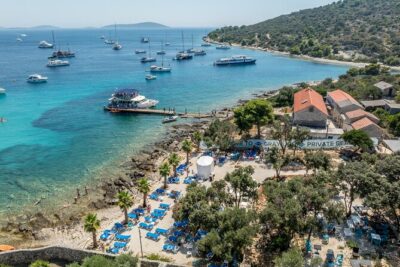 ★ 4.5Blue Lagoon & 3 Islands Cruise with Lunch from SplitFrom $785,756 reviews
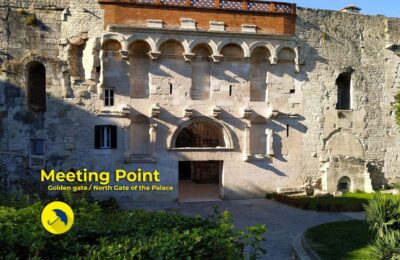 ★ 4.9Old Town and Diocletian Palace Walking TourFrom $174,727 reviews
 ★ 4.9Blue Lagoon Boat Party with DJs, Shots & After PartyFrom $474,610 reviews
 ★ 5.0Krka Waterfalls Tour, Boat Cruise & SwimmingFrom $324,489 reviews
Explore its other useful categories