
REVIEW · SPLIT DIOCLETIAN'S PALACE & HERITAGE TOURS
Split: Diocletian’s Palace Private walking tour
Roman walls in Split still feel alive. This private walk inside Diocletian’s Palace turns an ancient complex into a place you can actually picture, since it is still home to residents today. I especially like how the guide builds a clear story around the palace’s major power-spaces, not just stone-by-stone facts.
What I liked most is that you get the “big moments” close together: the Peristyle and worship space, then the transformation of the Split Cathedral, and finally the emperor’s grand entrance areas. One watch-out: a couple sights can shift if there are events or church services, and the site is only partially wheelchair accessible, though the tour can be adapted if you tell them ahead of time.
Key highlights to look for
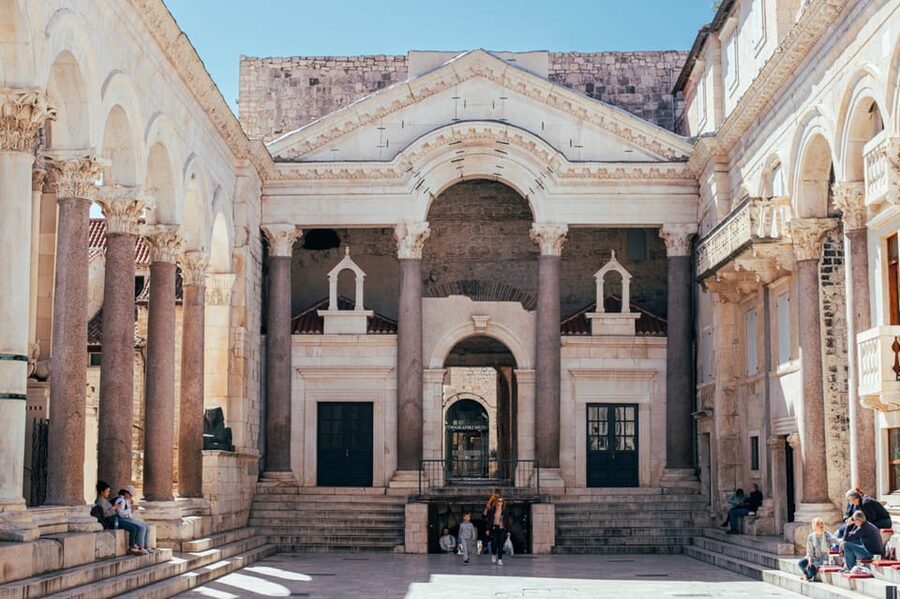
- Peristyle for imperial worship, where Diocletian was linked to Jupiter’s son role
- Split Cathedral’s origin story, a pagan mausoleum turned into a cathedral
- The Vestibule at the private-chamber entrance, your chance to understand how power was staged
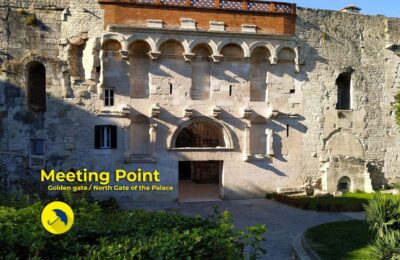
- North Gate, Porta Aurea (Golden Gate), the most important Roman-era city gate
- Church of St. Martin inside the former guard corridor, the small stop that feels like a secret
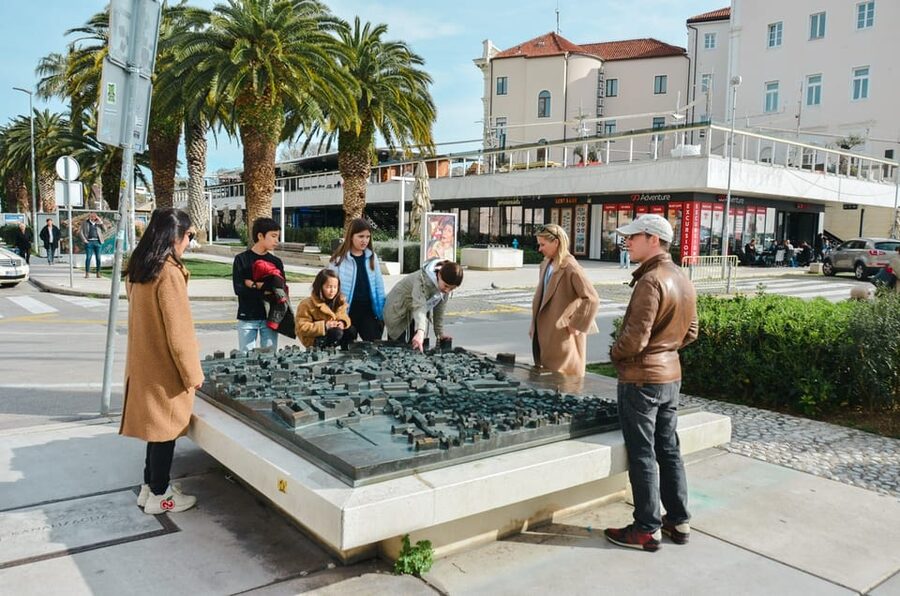
Getting oriented at the Riva bronze model start
Your tour begins at a helpful visual landmark, the bronze model of the city of Split at the eastern end of the promenade Riva. If you are new to Split, this matters more than it sounds. It gives your brain a reference point before you start weaving through the palace streets.
From there, you walk into Diocletian’s Palace proper, and the setting instantly changes from coastal promenade to Roman walls. The palace is about 1700 years old and was both built and inhabited by Emperor Diocletian, so you are not touring an empty ruin. You are moving through an old framework that still holds daily life, which gives the experience a grounded feel.
A good private guide also uses the first stretch to set expectations: where the palace’s public spaces were, where the emperor’s private spaces begin, and why that layout shapes what you see. You can think of this tour as a fast way to learn how to read the complex.
You can also read our reviews of more walking tours in Split


Walking the Peristyle, where the emperor meets the gods
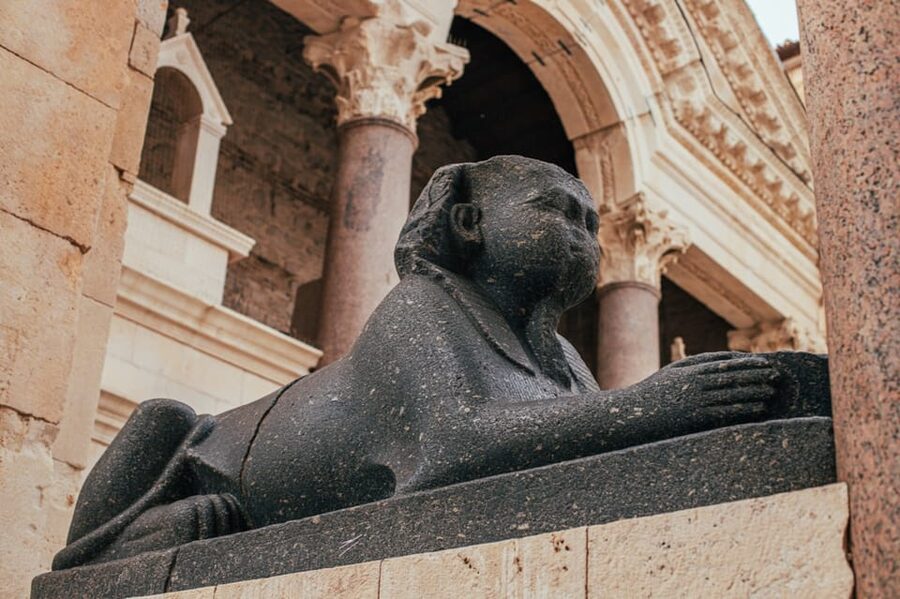
One of the most memorable stops is the Peristyle, described as a key meeting place in Diocletian’s era. This is where Diocletian was worshipped as Jupiter’s son, and that religious framing is essential to understanding the palace. It was not just a residence, it was a stage for authority.
In practical terms, you will want to slow down here and look at the space like an audience. Worship and power were linked, so the guide’s explanation helps you see why this wasn’t a random courtyard. It was a political tool, built to turn the emperor into something more than a ruler.
This stop also sets up the rest of the tour. Once you grasp what the Peristyle represented, the cathedral conversion and the gate hierarchy make more sense. The palace becomes a system, not a collection of cool buildings.
Split Cathedral, a mausoleum that became a cathedral
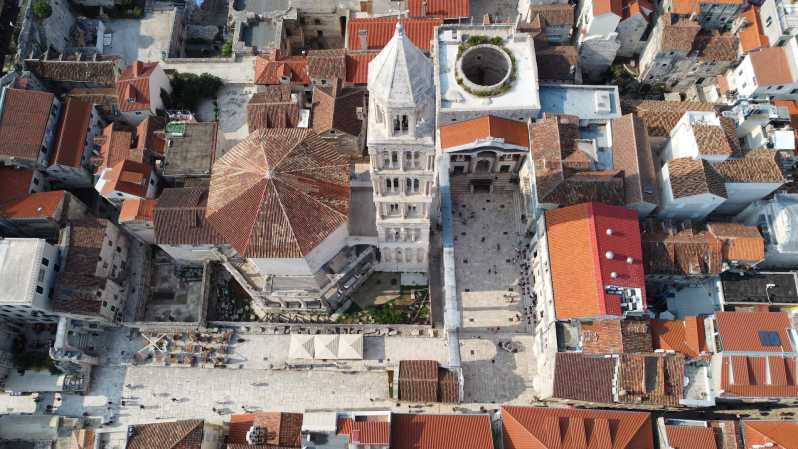
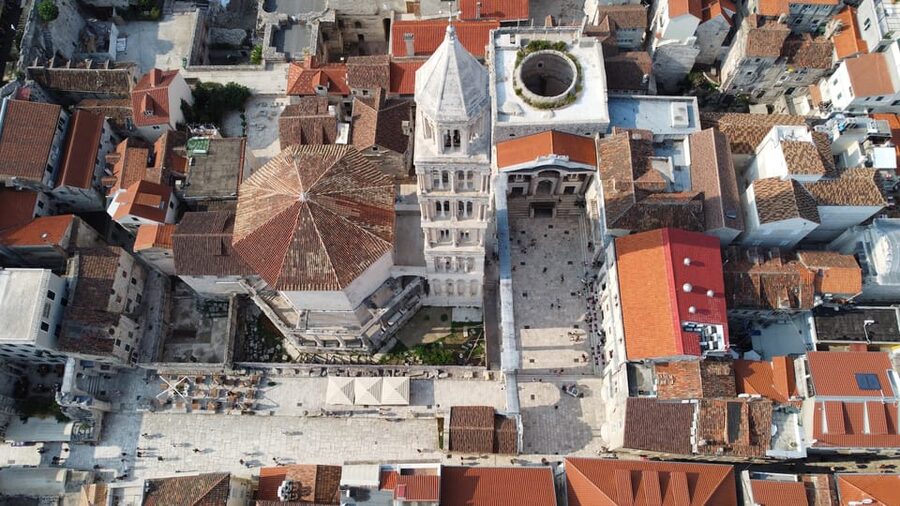
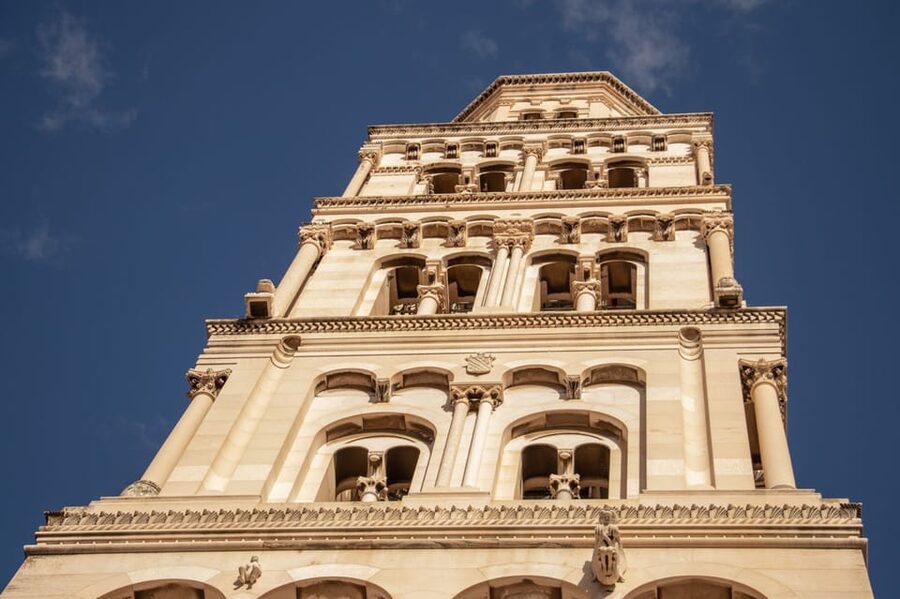
Next you uncover the history behind Split Cathedral, which began as the mausoleum of Emperor Diocletian. Later, with Christianization, the remains vanished and the structure was transformed into a cathedral. That shift is not a small detail, it is the whole point of this stop.
What I like about this part is the contrast. You are standing in a building that carries two different belief systems across centuries. The guide helps you connect the dots so you are not just admiring walls, you are tracking meaning.
You will also get the chance to explore the cathedral and admire its exterior as part of the tour. Even if you are not the type who wants to read every inscription, the cathedral’s look and position within the palace complex helps you understand the palace’s long afterlife.
If you are a first-timer in Split, this stop alone is worth the walk. It is one of the clearest examples of how power and religion can reuse the same space with a totally different message.
Stepping into the Vestibule at the emperor’s entrance
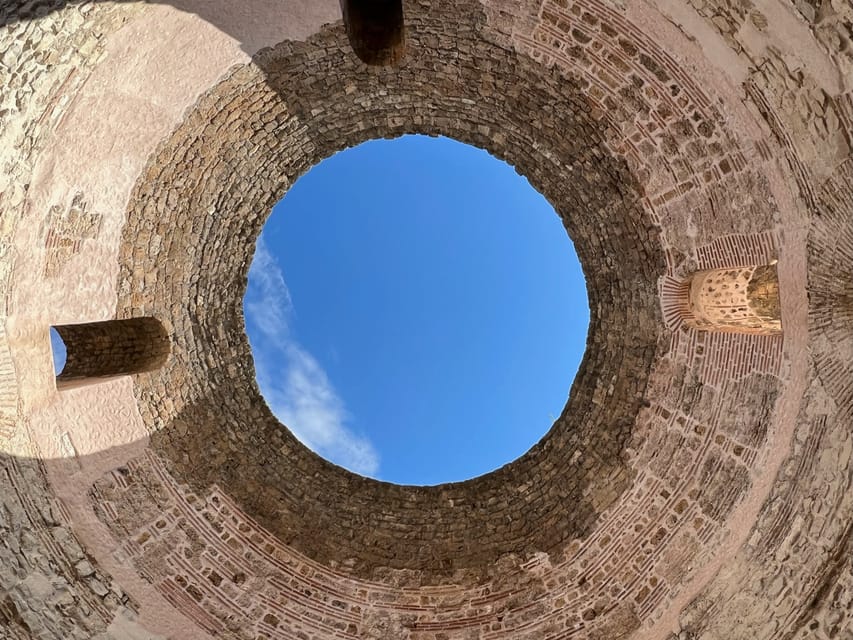
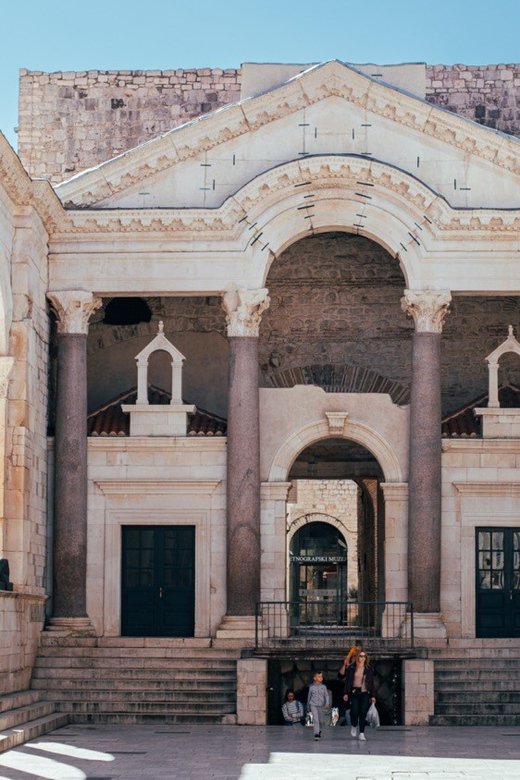
Then comes the Vestibule, the grand entrance to Diocletian’s private chambers. This is a smart inclusion because it helps you understand how the palace worked socially. Public spaces welcomed people and movement. Private spaces controlled access.
The Vestibule is also a reminder that Roman luxury was engineered. The guide explains its purpose as a gateway to the emperor’s personal quarters, including how dignitaries from all over the world were welcomed here. That detail helps you picture arrivals and rituals, not just architecture.
For you as a visitor, this is one of the best places to ask your own questions. Where would you stand if you were waiting to be received? How would the approach feel? The layout encourages that mental walk-through, and with a guide, you will get answers that go beyond guesswork.
Even if you move quickly through the palace elsewhere, slow down for the Vestibule. It is the stop that explains why some spaces feel ceremonial.
North Gate and Porta Aurea, plus St. Martin in the guard corridor
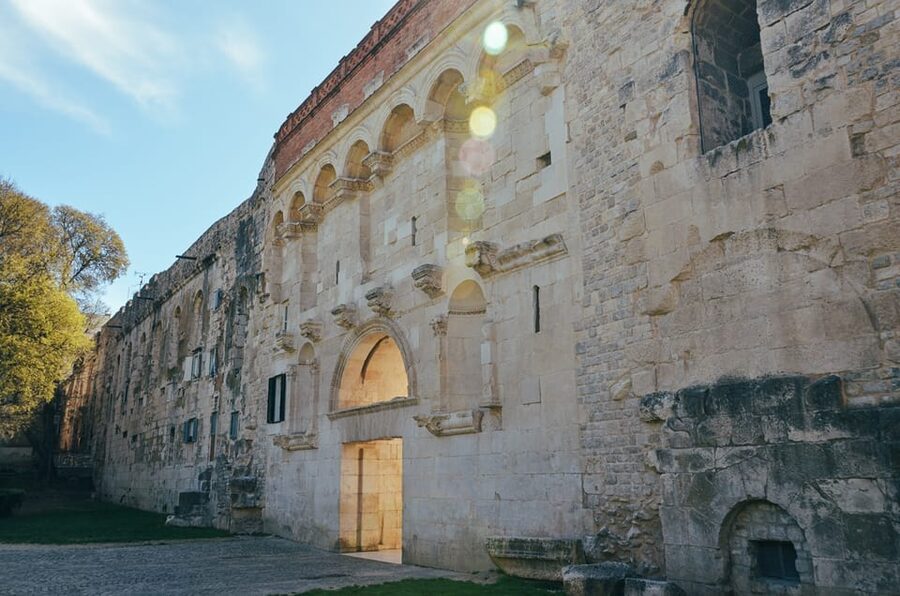
The tour’s gate stop is the North Gate, described as the most important city gate during the Roman era. It is also known as the Golden Gate or Porta Aurea. Once you hear those names, you start noticing how “important gate” shows up in the drama of an entrance.
Gates are never just for traffic. In Roman planning, a major gate signals hierarchy, control, and status. The guide’s explanation of the North Gate’s architectural and cultural significance helps you see it as a statement, not just a passageway.
Inside the former guard corridor, you will also spot the Church of St. Martin, noted as the city’s smallest church. This is the kind of detail that makes a private walk feel richer. It gives you one of those small, human-scale moments that breaks up the larger palace storytelling.
If you like architecture, this pairing works well. You get the big-picture meaning of Porta Aurea, then the small-scale reality of St. Martin tucked into the former guard area.
You can also read our reviews of more private tours in Split




What a small private group actually does for you
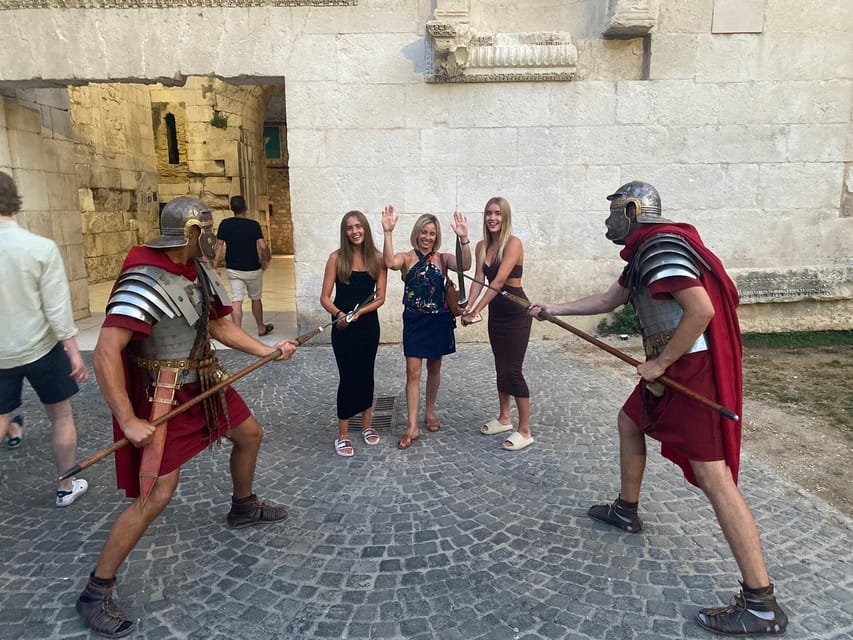
This tour is designed for a group of maximum 10 participants, and it is described as private and individually customizable. That combination matters. In a big group, the story often becomes a list. In a small group, the guide can pace the walk around your questions and your interests.
I like that you can shift the focus a bit rather than getting a one-size-fits-all checklist. Maybe you care more about how the palace layout created power, or maybe you want extra time on the cathedral transformation. A small group setup makes those choices feel possible.
You also get a better sense of timing for where to stand. With Roman architecture, one wrong angle can hide the point. A good guide helps you orient yourself fast so you can actually see what the building is telling you.
And if you are visiting in a language other than English, the tour supports French, German, and English, which helps you feel fully included instead of getting partial meaning.
Price and value: is $135 per person worth it?
At $135 per person, this is not a budget add-on. So here is how I think about value, using what you actually get.
You are paying for three things bundled together:
- A private guide who interprets the key palace spaces for you
- A concentrated route hitting the Peristyle, Split Cathedral, the Vestibule, and the North Gate areas
- The ability to see Diocletian’s Palace as a lived-in site, not only as a museum display
If you are short on time in Split, this structure helps. You walk away with the main highlights and the logic connecting them. Without a guide, you might still appreciate the scale, but you could miss why the Peristyle worship idea matters, how the cathedral transformation works as a historical message, or why Porta Aurea was treated as a top-tier gate.
If you are traveling with someone who enjoys history but does not want a lecture, this style is a good fit. You get context as you move, which keeps it from turning into passive reading.
If you are a total architecture hunter who wants hours of deep study at each stop, you might find you want more time than this route allows. But for most people, the payoff is fast understanding.
Meeting point, route end, and practical walking tips
The meeting point is the bronze model of the city of Split at the eastern end of the promenade Riva, and the tour ends back at the same meeting point. That round-trip setup is helpful. You do not have to worry about changing transport or figuring out where you will land afterward.
Because the tour is a walking experience inside an ancient site, I suggest you wear shoes you trust. Roman stone and uneven surfaces can be a lot over time, and the palace is partially not wheelchair accessible.
If you need accessibility support, the tour can be adapted if you inform them in advance. That is the best move. Do not wait until you arrive, since changes may be needed to match your mobility and the parts that are reachable.
Also keep in mind that some sights cannot be visited due to events or church services. If that happens, the program can be slightly changed. This is normal for active places of worship and community spaces, and a good guide should handle it without scrambling your day.
For your best experience, bring a calm mindset. When a cathedral or ceremonial area is closed, you still benefit if the guide explains the connection and points out what you can still see.
Languages, tailoring, and how to get the most out of your guide
This tour supports English, French, and German, which is a big deal if you want your questions answered in a comfortable language. If you are using a translator app or are shaky in a second language, choosing your strongest option can make the difference between hearing facts and understanding the story.
The tour is also described as individually customizable. That means you should show up with even a basic idea of what you want. Here are a few prompts that fit what the tour covers:
- Do you want more focus on Roman imperial power, or the shift to Christianity?
- Are you more interested in gates and entrances, or the religious spaces like the Peristyle and cathedral?
- Do you prefer photos at landmarks, or do you want time to listen and frame the story?
A guide can only tailor what you steer toward. If you come with one clear preference, your tour time feels more personal and less like a standard highlight package.
Who should book this Diocletian’s Palace walking tour?
This tour is especially worth it if:
- You are seeing Split for the first time and want the palace highlights in a logical order
- You like your history explained in plain language, while you are walking
- You want a small-group experience that lets you ask questions
- You care about how Diocletian’s palace evolved over time, from Roman rule to Christian use
If you dislike walking, or if you want long, slow museum-style stays, you may want a different pace or a longer stay plan. Also, if accessibility needs are a major factor, confirm what can be adapted in advance since parts of the site are only partially wheelchair accessible.
Should you book this private walk inside Diocletian’s Palace?
Yes, I would book this if your goal is to leave Split with a real understanding of how the palace functioned, not just a stack of photos. The route hits the highest-impact places: Peristyle, Split Cathedral, the Vestibule, and the North Gate/Porta Aurea area, including the Church of St. Martin.
It is also a strong choice for value if you price it as “one guide covering the palace’s key story beats.” At $135 per person, you are paying for interpretation, organization, and a small-group experience that helps you connect the dots quickly.
The only reason I would hesitate is if you have tight access needs without advance planning, or if you absolutely must see every exact stop regardless of service interruptions. If your trip dates are flexible and you are okay with a small program adjustment, this tour is a smart way to get oriented and actually understand the site you are standing in.
FAQ
What does the Split Diocletian’s Palace private walking tour include?
It includes a private guided walking tour focused on Diocletian’s Palace highlights, such as the Peristyle, Split Cathedral, the Vestibule, and the North Gate (Porta Aurea), including the Church of St. Martin inside the former guard corridor.
How much does the tour cost?
The price is $135 per person.
What group size should I expect?
The tour is designed for a group of maximum 10 participants.
Where does the tour start?
It starts at the bronze model of the city of Split at the eastern end of the promenade Riva.
Where does the tour end?
The tour ends back at the meeting point.
Can the guide adjust what we see during the tour?
Yes. The tour is described as individually customizable, and the program may be slightly changed if some sights cannot be visited due to events or church services.
Is the tour wheelchair accessible?
The site is partially not wheelchair accessible, but the tour can be adapted to special needs. Inform the provider in advance.
What languages are available?
Languages listed are French, German, and English.
What is the cancellation policy?
Cancellation is allowed up to 24 hours in advance for a full refund.
More Walking Tours in Split


More Tours in Split

More Tour Reviews in Split


Not for you? Here's more nearby things to do in Split we have reviewed








More Split Diocletian's Palace & Heritage Tours to consider.
 ★ 4.9Old Town and Diocletian Palace Walking TourFrom $174,727 reviews
 ★ 5.0Walking Tour of Split and Diocletian’s PalaceFrom $482,588 reviews
 ★ 5.0Split & Diocletian’s Palace Walking TourFrom $211,125 reviews
 ★ 4.7Diocletian Palace & Old Town Guided Walking TourFrom $17882 reviews
 ★ 4.8Game of Thrones Tour with Diocletian’s Palace CellarFrom $41545 reviews
 ★ 5.0Diocletian’s Palace and Old Town SMALL GROUP Walking TourFrom $16502 reviews
 ★ 5.0SPLIT-PRIVATE Walking Tour of Diocletian’s Palace & Old TownFrom $240467 reviews
 ★ 5.090-min Diocletian Palace Walking TourFrom $21323 reviews
Explore its other useful categories