
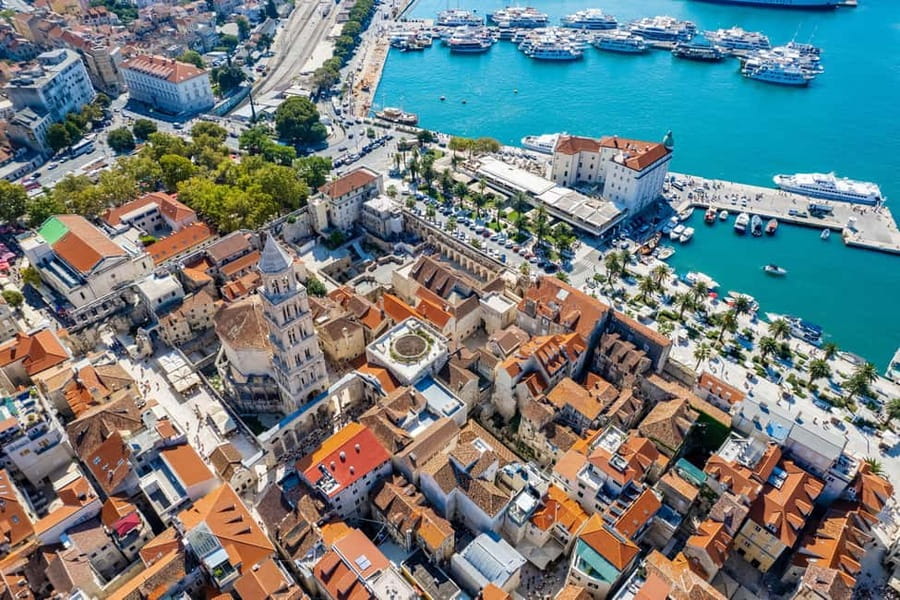
REVIEW · SPLIT DIOCLETIAN'S PALACE & HERITAGE TOURS
Split: 1.5-Hour Walking Tour and Diocletian’s Palace
Step into Rome under Split. I love the Roman-era palace cellars and the way guides like Sandra, Anna, Ivan, and Jelena turn ordinary streets into stories about Split local life. You get a fast, friendly route through major sights without feeling lost in the maze.
One consideration: this is real walking on uneven old-town streets. It is not recommended for people with limited mobility, so plan on comfortable shoes and a steady pace.
For $41 per person, you are really buying guided time. The tour runs 90 minutes to 2 hours with a live English or Spanish guide, but entrance fees and food are on you.
Key things to know before you go
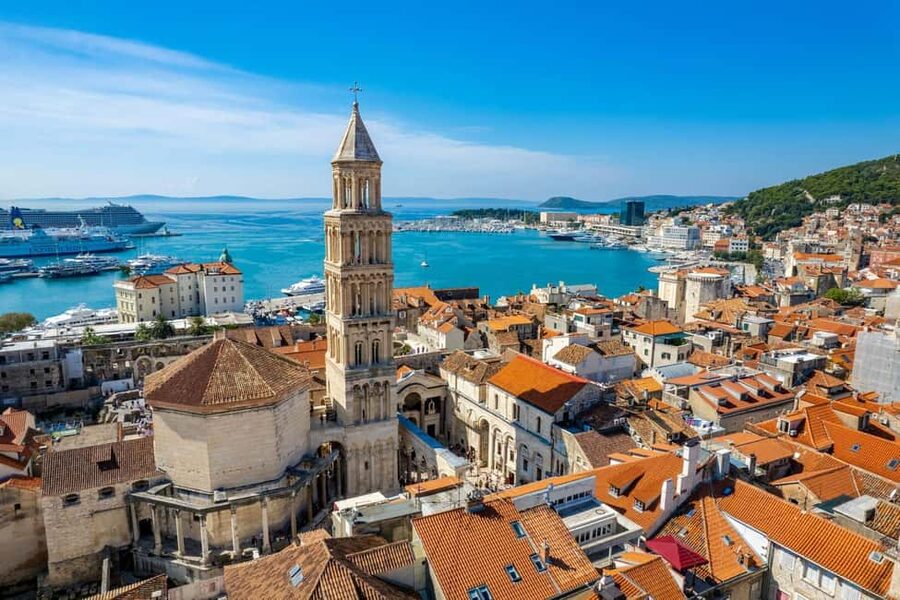
- Diocletian’s palace cellars: go underground and see a less-photographed side of Split’s Roman core
- Saint Domnius Cathedral: built from a Roman mausoleum, it is the oldest Catholic church in the world
- A mix of centuries: Roman bones, plus later building styles up through the 20th century
- Fast orientation: you come away knowing shortcuts, not just sightseeing
- Waterfront payoff: you finish with views from the Riva promenade toward Marjan Hill
Why Diocletian’s Palace is more than one landmark
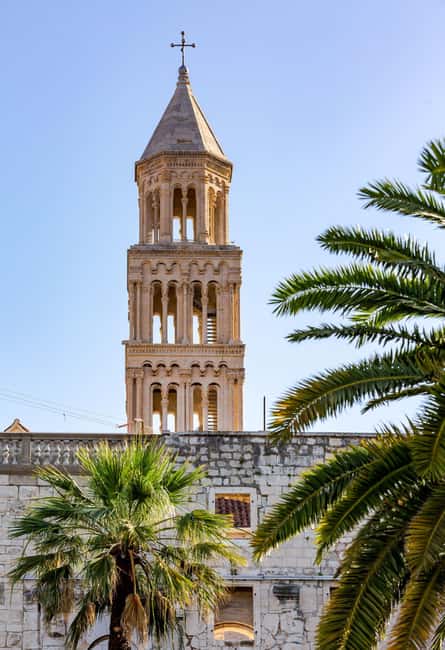
Diocletian’s Palace is the reason Split works as a city instead of just a museum. A palace built for an emperor at the turn of the 4th century AD has been repurposed again and again, and you feel that layering as you walk.
What I like about this tour style is the focus. You do not just point at walls, you move through the palace grounds in the order that helps the story click. Roman architecture shows up in the structure, later centuries show up in the details, and the whole place feels inhabited, not frozen.
If you are short on time, that matters. Split’s old town is beautiful, but it can also be a puzzle. A guided loop gives you the big picture, then hands you the map in your head so you can explore on your own afterward.
You can also read our reviews of more walking tours in Split



Getting started near Golden Gate and the Game of Thrones Museum
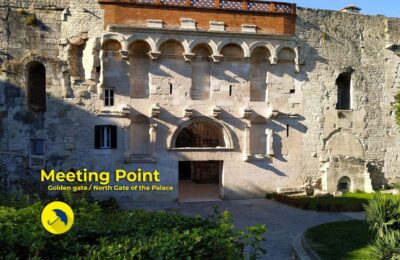
The tour starts in one of two places depending on your option. You might meet at South Tours Travel Agency, or you might start at Golden Gate. From there, the walk quickly orients you to the old town’s layout.
Along the way, you pass by key squares and landmarks that help you understand where you are. There is a stop near the Game of Thrones Museum (yes, Split has that pop-culture angle), plus time around People’s Square and the Fruit Square (Voćni Trg).
This part is not just busy sightseeing. It sets up the rest of the tour by showing how movement through Split historically depended on gates, markets, and public gathering spots. When you later enter the palace, the streets will feel less random.
Fruit Square, People’s Square, and how locals use the streets
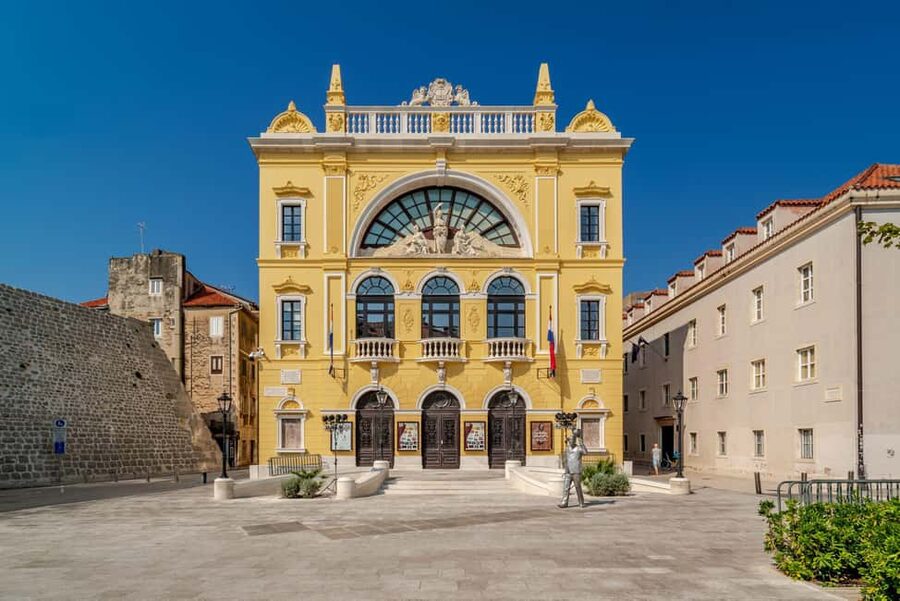
A big part of the appeal here is the shift from Roman stone to everyday Mediterranean life. Fruit Square (Voćni Trg) is the kind of place where the past is present, but people still treat it like a meeting point.
As you walk, your guide connects the dots between what you see and how the city has worked. That includes references to daily rhythms around the palace and the port area, plus why certain spaces became hubs over time.
Even if you are not a history nerd, this is the useful stuff. It helps you stop treating Split as a list of attractions and start seeing it as a lived-in city.
The gates and palace walls: South Gate to the main courtyard
When the route reaches Diocletian’s Palace, you enter the heart of Split’s Roman story. You start at the palace grounds and move through the key points that frame the layout, including the South Gate, then onward toward the central palace areas.
The palace is designed with gates and big internal spaces that guide foot traffic. Seeing those transitions with a guide matters, because the palace can feel like a maze once you are inside.
This is also where the architectural mix becomes obvious. You are not walking through one era only. You will notice Roman elements, then later building styles from the 20th century showing up in the same overall environment. That contrast is one of the best reasons to take a guided walk instead of wandering randomly.
Entering the Diocletian’s Palace cellars
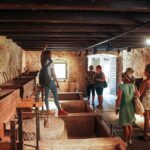
The standout moment for many people is the time in the palace cellars. Going underground changes the way you feel the palace. Instead of the bright open streets, you get the heavier, cooler Roman side of the complex.
These cellars are part of what makes Diocletian’s Palace feel real. They remind you the palace was built to function, not just to impress. You see how the Roman power center had practical space below ground, and that makes the emperor-era story feel grounded.
Also, this is a smarter use of your 90 minutes to 2 hours. If you only look at the obvious exteriors, you miss the depth. The cellars give you that extra layer without adding a long detour.



Peristil: the courtyard where multiple eras sit side by side
After the cellars, you move toward the palace’s main ceremonial spaces, including the Peristil (Peristyle courtyard). This is where the guide’s narrative helps a lot, because the Peristil is not only pretty. It is legible once you know what to look for.
One detail that tends to catch people’s attention is the Peristil’s link to ancient display pieces, including the mention of the last remaining Egyptian sphinx in black granite found at Split. You might not know why that matters until your guide places it in the broader Roman habit of importing and showcasing objects.
The Peristil also gives you a visual map of how people used the palace over time. The space reads as Roman, but the surrounding environment shows later chapters. That combination is exactly what makes Split unusual: it is not a ruin you admire from a distance. It is architecture you share with daily life.
From the Peristil to Saint Domnius Cathedral
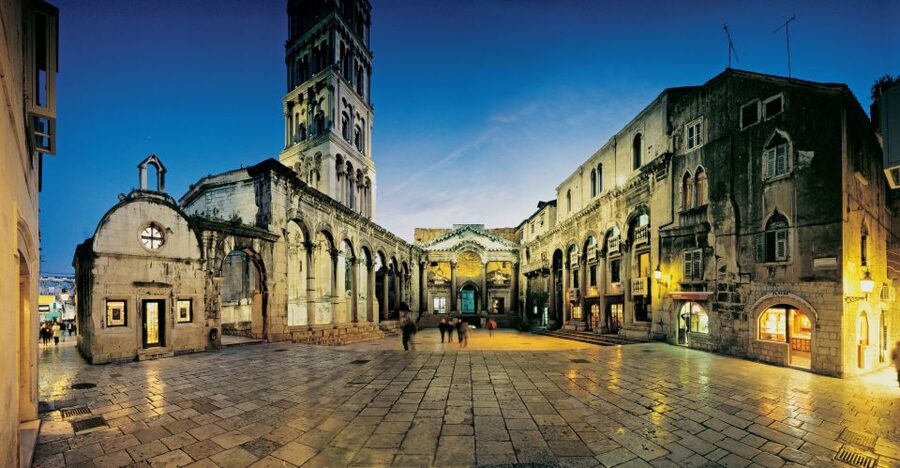
The tour then shifts from Roman palace spaces to sacred Split history with the Cathedral of Saint Domnius. It is described as formed from an Imperial Roman mausoleum, which is a key clue to what you are looking at.
The cathedral is also famous for being the oldest Catholic church in the world, so it is a natural anchor stop. Even if you do not go deep on theology, you get the bigger point: this is one of those places where one civilization’s structure becomes another civilization’s landmark.
In practical terms, the guided visit keeps you from spending your time guessing what is important. You learn how the building’s Roman origins connect to the later church identity, and you can then look at details with purpose instead of just taking photos.
North Gate, West Gate, and the Vestibul photo stop

As you continue, you will see more of the palace perimeter, including the North Gate and West Gate. Gates matter here because they explain how the palace connected to the city outside it. When you see gates with context, you start to understand the palace as a system, not isolated walls.
There is also a Vestibul stop, which includes a photo moment plus time to learn what that space means in the palace layout. Think of it as a brief pause where you can capture the setting while your guide ties it back to the overall story.
This section is also where the tour’s pacing becomes clear. It keeps moving, but it does not bulldoze. You get enough stops to build understanding, then enough walking to keep your momentum.
Riva waterfront and Marjan Hill panoramas
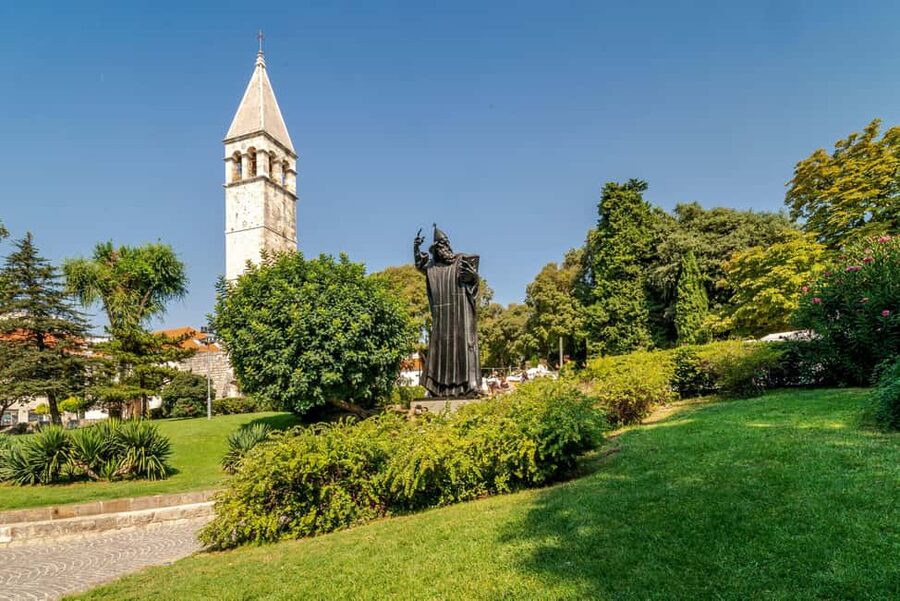
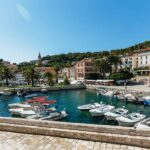
Toward the end, you drop down to the Riva waterfront. This is where Split opens up visually. You get a change of scenery from stone corridors to a promenade that feels designed for lingering.
Your guide also points you toward panoramas of Marjan Hill from the waterfront. That viewpoint is a smart “wrap” because it helps you connect the palace core to the rest of Split’s geography.
If you love cities where the old center links to views and sea air, this finish hits the mark. It also sets you up well for the rest of your day, because you will know how to move between palace areas, squares, and the waterfront without second-guessing.
The right length: 90 minutes to 2 hours that does not drag
A big reason this tour earns high scores is that it feels timed well. People often say the 1.5-hour option hits the sweet spot for attention and energy, especially in warmer months when you are mixing sun, stone streets, and sightseeing.
It also helps that guides tend to be story-driven. Guests mention guides who keep things lively with anecdotes, not just dates. Names you may encounter include Sandra, Anna, Ivan, Jelena, Ana, and Elena, and the common thread is that the guide treats the city as a living place, not a quiz.
Group experience can vary, but the overall vibe is that you get enough talking time to make the sights click, without feeling trapped in a long lecture. If you want your Split history lesson in a manageable package, this format fits.
Price and value: what $41 gets you (and what it does not)
At $41 per person, this tour is priced for guided access to the palace core and the walking circuit that ties it together. You are paying for a live guide for about 90 minutes to 2 hours, not for a long entrance-heavy day.
Entrance fees are not included, and food and beverages are not included. That sounds simple, but it affects how you budget. If you plan to add any paid indoor stops beyond what is included, you will want to carry cash or card for those extras.
Value-wise, I think this is a good deal if you:
- want a route that covers both Roman and church-era highlights
- want orientation so you can explore the rest of Split confidently
- prefer learning from a local guide rather than building your own history story line by line
If you already know Split deeply and you only need quiet time in a single place, you might not feel the value as strongly. But for most first-time visitors, this is a practical way to see the essential without wasting precious hours wandering.
Who this tour suits best
This tour suits you if you want a structured walking overview that still feels personal. I especially think it works for:
- first-timers in Split who want a strong sense of the city center
- people who like history but do not want a full-day commitment
- couples and small groups who want easy navigation afterward
- Game of Thrones fans who want that context without turning the day into a theme park
It is not recommended for people with limited mobility. The walking is the point, and the old town streets can be tough underfoot. If mobility is a factor, you would be better off planning a different format.
Practical tips for comfort and better timing
Split in summer can get hot fast, and even in shoulder seasons, you are walking on stone. I recommend:
- wear comfortable walking shoes that handle uneven streets
- bring water, especially if you choose midday
- consider an earlier or later time slot if you have the choice, since guides and guests often describe morning and early evening as easier for heat and crowds
One more tip: lean into the route your guide gives you. Several guests mention that the best payoff is not only what you see during the tour, but the shortcuts and direction you remember right after. When you leave, you should feel like you can find your way around.
Should you book this Split walking tour?
I would book it if you are aiming for a high-impact Split introduction in under two hours. The combination of Diocletian’s Palace cellars, the gates and courtyard spaces, and the Cathedral of Saint Domnius is exactly the kind of “core sights plus context” mix that makes a first visit feel complete.
Skip it or rethink it if you cannot do moderate walking, or if you want a longer, more expansive itinerary that includes extra stops beyond the palace circuit and the cathedral.
If you like learning while you walk, and you want your time to feel efficient, this one is a strong choice. You finish with the palace story in your head and the waterfront views at your feet, which is about as good as it gets for a half-day plan in Split.
FAQ
How long is the Split walking tour?
It lasts about 90 minutes to 2 hours.
What does the tour include?
You get a live guide for the walking tour.
Are entrance fees included?
No, entrance fees are not included.
Are food and drinks included?
No, food and beverages are not included.
Where does the tour start?
Meeting point can vary based on the option booked. Possible start points include South Tours Travel Agency or Golden Gate.
What languages are offered?
The guide is available in English and Spanish.
Is this tour suitable for people with mobility impairments?
No, it is not recommended for people with limited mobility.
What should I wear?
Comfortable walking shoes are recommended.
Is there free cancellation?
Yes, you can cancel up to 24 hours in advance for a full refund.
How is payment handled?
You can reserve now and pay later, depending on the booking option shown.
More Walking Tours in Split



More Tours in Split
More Tour Reviews in Split

Not for you? Here's more nearby things to do in Split we have reviewed








More Split Diocletian's Palace & Heritage Tours to consider.
 ★ 4.9Old Town and Diocletian Palace Walking TourFrom $174,727 reviews
 ★ 5.0Walking Tour of Split and Diocletian’s PalaceFrom $482,588 reviews
 ★ 5.0Split & Diocletian’s Palace Walking TourFrom $211,125 reviews
 ★ 4.7Diocletian Palace & Old Town Guided Walking TourFrom $17882 reviews
 ★ 4.8Game of Thrones Tour with Diocletian’s Palace CellarFrom $41545 reviews
 ★ 5.0Diocletian’s Palace and Old Town SMALL GROUP Walking TourFrom $16502 reviews
 ★ 5.0SPLIT-PRIVATE Walking Tour of Diocletian’s Palace & Old TownFrom $240467 reviews
 ★ 5.090-min Diocletian Palace Walking TourFrom $21323 reviews
Explore its other useful categories