
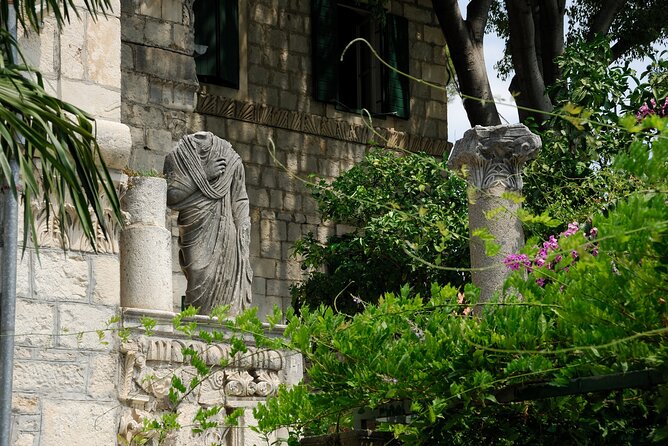
REVIEW · KLIS FORTRESS & SALONA HERITAGE TOURS
Salona & Amphitheater – Private guided tour – Admission incl.
Roman roots, then Christian layers.
This private guided tour around Salona and the amphitheater is interesting because it follows the city’s big timeline in a small area, with quick stops that keep the story moving. I like the clear structure, you get a human pace through multiple sites instead of wandering alone. I also like that the tour is private, so your guide can match the tempo to your questions, and it runs about 2 hours 30 minutes at a relaxed walking pace. One possible drawback: part of this is an outdoor archaeological zone, so it really does depend on good weather.
You meet at the Salona main entrance area, then the route flows site to site, mostly on foot, with the amphitheater as the finale. If you want history you can actually see with your own eyes, this is a strong option. The guide I saw referenced most often by past guests is Ivan, and what matters is the combination of calm explanations and pleasant company, especially when you are stepping from one ruin type to another.
The stop sequence matters, too. You start with the scale of Roman Salona, then you shift into necropolis and early Christian burial grounds, then you end with the amphitheater that still shapes how people understand this region’s darker chapters.
Key highlights you will feel on this tour
- Private, English-guided pacing that helps you connect the dots fast, without rushing.
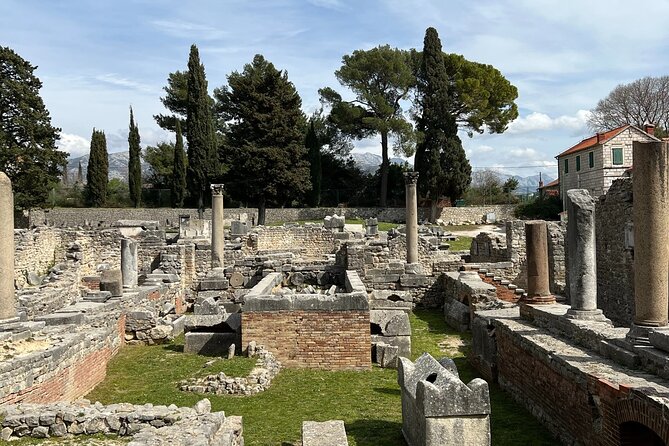
- Roman Salona to early Christianity, shown through graves, churches, and civic spaces in one circuit.
- Pet mostova and Porta Caesarea details, including five-bridge remains and the visible ruts of Roman chariots.
- Amphitheatre Salona gets the longest time on the tour, around 30 minutes, so you actually get to look.
- A guide named Ivan comes up frequently, and that is a good sign for a smooth, friendly experience.
- Weather-dependent outdoor ruins, so plan around it and be ready to reschedule if needed.
Why Salona still matters when you are in Split
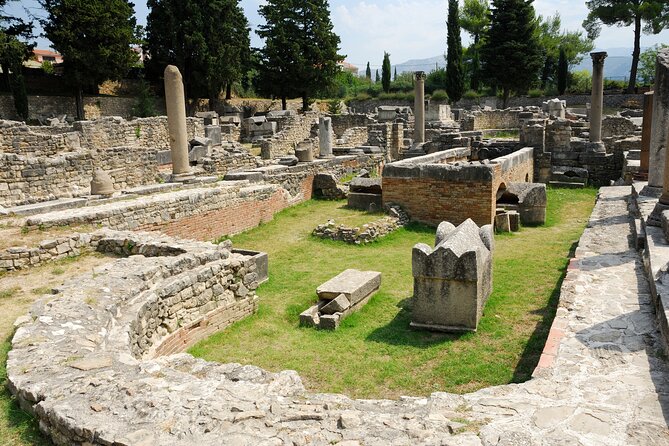
Split is famous for its harbor life and old-town energy, but Salona is where you see the region’s “before Split” story with real physical evidence. This tour gives you a focused way to understand why people settled here, built big civic spaces, and later adapted the area as Christianity took hold.
What I like is the way the tour treats history like a sequence you can walk through, not a list of names. You are guided through a Roman metropolis with huge population claims, then you step into necropoleis, then you watch how religious buildings and burial traditions change what you see on the ground.
Even if you think Roman ruins are all the same, this route helps you notice differences. The cemeteries feel different from the civic gate space. The amphitheater feels different from the bath complex. That contrast is the point.
You can also read our reviews of more guided tours in Split


Where you start at Salona, and how the time stays usable
You begin at the Salona main entrance in Solin (Ul. don Frane Bulića 58). The tour ends back at the same meeting point, which is practical if you plan lunch or an easy return to Split after.
The whole thing runs about 2 hours 30 minutes. Most stops are short, around 10 to 15 minutes, and the amphitheater takes about 30 minutes. That ratio matters. You get enough time to absorb the big picture without turning the day into a long slog of stone and labels.
Because it is private, your guide can slow down for photos or questions. If you are the type who likes context, that helps. If you just want to get the highlights, the pacing still works because the route is designed as a sequence rather than a single long site.
Also, it is an English tour with a mobile ticket. Service animals are allowed, and it is near public transportation. If you are trying to keep your logistics simple, this is the kind of tour where you do not have to think too hard once you arrive.
Ancient Salona: a Roman metropolis, then a city that vanished
The tour kicks off with Ancient Salona, a Roman-era metropolis that reached roughly 60,000 inhabitants. Then you are told a key turning point: the city was completely destroyed by the Avars in the 6th century.
Walking through Salona with that framing changes how you look at the ground. Instead of thinking, I am seeing scattered remains, you start thinking, this was once urban scale. That makes even partial ruins feel meaningful.
At the entrance, your guide provides general information, and you will learn how this open-air museum setting fits the overall archaeology of the site. There is an open-air museum entrance fee around 10 euros for adults, and the exact coverage can matter. The tour is listed as including admission, so when you book, double-check what is covered for you so you do not get surprised on arrival.
Manastirine necropolis and St. Dominius, where burial tells the story
Next comes Manastirine, which is described as a necropolis in Roman times and later became a Christian cemetery. This is one of the most powerful stop types on the route because it connects changing belief to changing burial practice.
Here is the anchor figure: St. Dominius, the martyr and city patron of Split. Seeing how a Roman burial landscape transitions into Christian use helps you understand how continuity and change can coexist in the same location.
This stop is short, about 15 minutes, but it is the kind of place where you get the most if you let the guide do the explaining. The names and dates stick better when someone connects them to why the burial site mattered to the city.
Tusculum and the Don Frane Bulić connection
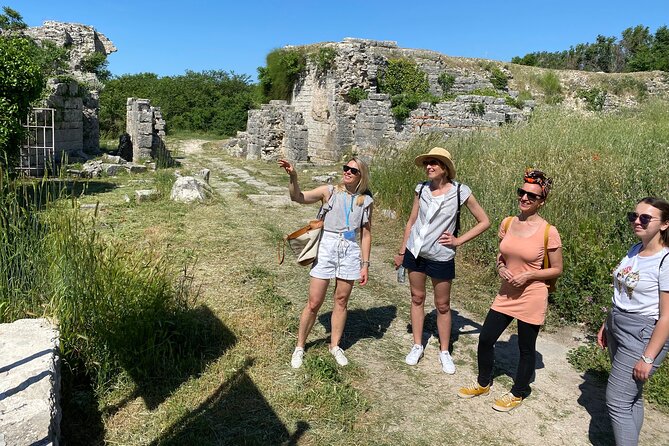
Then you head to Tusculum, built by Don Frane Bulić, a famous clergyman and archaeologist from Split. Some rooms can be visited, which makes it more than just an external view.
This is a useful pause in the tour because it shifts from ancient life to modern discovery. You are still in an archaeological landscape, but you are also learning about the people who helped uncover it and interpret it.
The practical takeaway is simple: if you enjoy how ruins get studied, this stop adds the human layer of scholarship to the day. If you just want ancient stone, it still works because Bulić is part of the story of how you are able to visit these remains today.
You can also read our reviews of more private tours in Split

The bishop’s palace area, and what foundations can teach
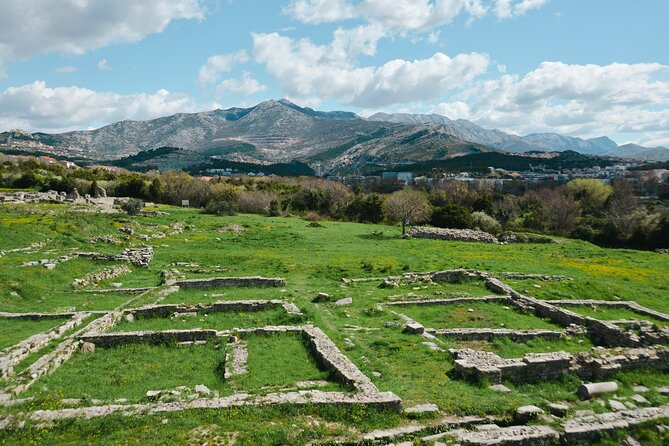
At Biskupska palača (also called Palatium episcopi), you see the bishop’s palace and the remains of two cathedrals from the era when Christians could practice more openly. Today you mostly see foundation walls.
Foundations can feel underwhelming if you expect full buildings, but this stop helps you read space. When the walls are gone, you start thinking about scale and layout. Your guide’s framing matters here, because it turns empty-looking stone outlines into a sense of where power and religious life were centered.
Admission is free for this stop, so you can spend the time focusing on interpretation, not ticket math.
Roman baths as the social center
The next stop is the large urban spa. These are Roman baths that were used for several hundred years and served as the social and cultural center of Roman life.
Even if you have seen Roman bath remains elsewhere, the value here is the story order. You just moved from burial and church-adjacent themes, and now you get the civic daily-life angle again.
This stop lasts about 10 minutes. That is enough time to grasp the function of the space and connect it to how a metropolis worked. If you want longer, you will not be able to do that on this tour, but the goal is to keep the flow through the whole Salona complex.
Pet mostova and the five bridges concept
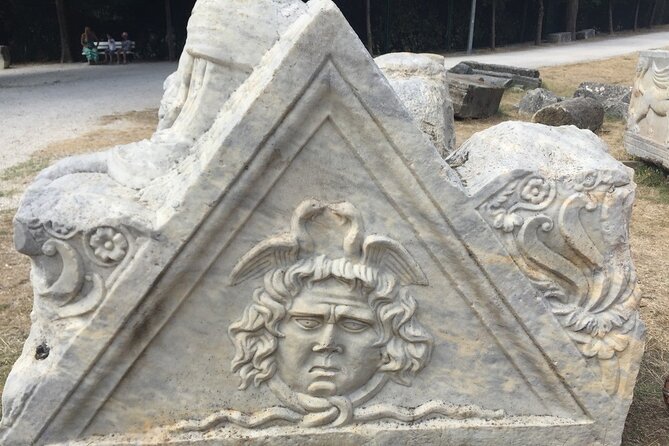
Then you reach Pet mostova, the area tied to what is described as five bridges. The bridges belonged to a kind of industrial zone outside the old city center.
This is another place where a short stop works well. You are learning about the edge of the urban world, not just the ceremonial core. That is what makes this tour feel more complete than a one-note ruin walk.
Also, the “outside the old city center” framing helps you imagine daily movement and work around the city, which adds texture to the larger Roman setting.
Town Gate, Porta Caesarea, and the ruts you can still see
Now you get to Porta Caesarea, the capital gate in Roman times. The most memorable detail here is that you can still see ruts from old Roman chariots.
This is exactly the kind of detail that makes a guided tour worth it. A loose ruin might look random until you know what to look for. The ruts turn the gateway from a generic entrance into a record of movement and traffic.
This stop is about 10 minutes, and it is free to visit. You will likely spend part of your time looking down, which is a good change of pace after looking up at building outlines.
The oldest city center: forum, temple, and theater remains
At the Hram area, you are told that the oldest part of the city includes remains of the forum, a temple, and an ancient Roman theater.
This is one of those stops where the archaeology sets the emotional tone of the day. A forum and temple area ties to governance and belief. An adjacent theater ties to public entertainment and crowd life.
Because the stop is about 10 minutes and includes multiple elements, you will get best value if you ask one or two questions. Ask what the spaces were used for and how the layout likely worked. Your guide can connect those dots quickly.
The necropolis by Ul. don Frane Bulića: the Cemetery of 16 Sarcophagi
As you move toward the amphitheater, you pass Ul. don Frane Bulića 91 and the “Cemetery of the 16 Sarcophagi.” This is another Roman cemetery concept: built outside city walls at the time.
Even though it is a brief stop of about 10 minutes, it helps you understand how far burial zones could sit from the urban core. When you see it in sequence, you start getting a map in your head: city inside, cemeteries outside, movement between them.
Admission here is free, so it is mostly about attention and interpretation.
Kapljuc and martyr history tied to the amphitheater
Next is Kapljuc, another basilica and necropolis on the way to the amphitheater. Here are buried five martyrs who died in the amphitheater of Salona in the early 4th century during persecution of Christians by Diocletian.
This stop is about 10 minutes, but it is narratively important. It means your final amphitheater visit is not just about architecture and crowds. You are being pointed toward the religious persecution chapter tied directly to this place.
If you prefer history without heavy moral weight, this is the moment where you might feel the atmosphere shift. I think it still belongs on the tour, because the amphitheater’s story is incomplete without it.
Amphitheatre Salona: the highlight, with time to actually look
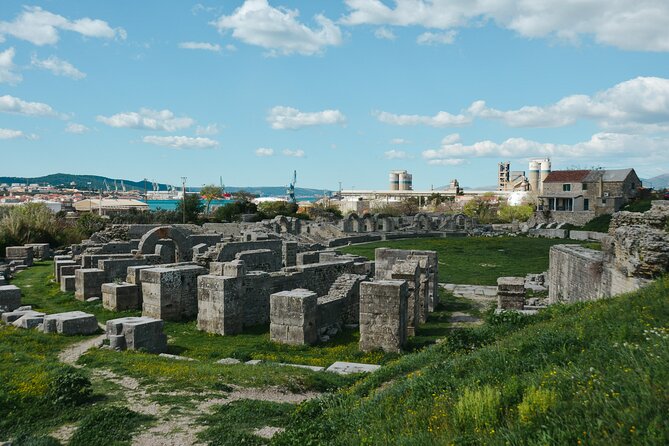
Finally, you reach the Amphitheatre Salona, the highlight and the longest portion of the tour at about 30 minutes.
The amphitheater is described as relatively well preserved. You are also told why it ended up that way: Venetians removed most of the stones to build churches in Venice.
That detail matters for how you see the ruins. When something is missing, you start imagining what was taken and why. It also helps you understand the layers of reuse that shape European monuments.
When you stand in a preserved amphitheater structure, you can feel the geometry of a crowd space. Seats, sightlines, and the sense of scale become obvious fast. With time set aside here, you are not just passing through. You get to stop, look around, and let the guide connect what you are seeing to what happened here.
This is where the private format pays off. If you want to linger for photos or a specific explanation, your guide can adjust without the stress of a large group sprinting ahead.
Price and value: what you are paying for at $203.50 per person
At $203.50 per person for about 2.5 hours, you are not buying a cheap bus ride. You are buying a private guided experience in a place that can be harder to read without context.
Here is how I think about value for a tour like this:
- Private pacing, which matters in archaeology because your attention is the real currency.
- English interpretation that helps you connect inscriptions, burial sites, gate details, and civic spaces.
- A route that uses time efficiently, especially with the amphitheater getting the longest look.
- Admission included in the tour description, though you should still confirm how any open-air museum fee around 10 euros for adults fits your booking.
One more value signal: this experience is commonly booked about 84 days in advance. That usually means limited availability for the guide schedule. If this is on your must-do list, it is smart to lock it in earlier rather than closer to your dates.
The real-world logistics that make this easier
This is a private tour, so only your group participates. That usually means less waiting, fewer interruptions, and more flexible discussion.
You also get a mobile ticket, which simplifies check-in. Confirmation is received at booking time, and the experience requires good weather. If it is canceled due to poor weather, you are offered another date or a full refund, depending on what you choose.
As for your comfort, you will be walking between multiple outdoor stops. Wear shoes that handle uneven ground and take a hat if the sun is strong. If you are traveling in shoulder season, bring a layer since stone ruins can feel cooler than you expect.
Who should book this private Salona and amphitheater tour
You should strongly consider it if you:
- Want Roman and early Christian history that you can actually see in a compact area.
- Prefer guided interpretation over self-guided wandering through partial remains.
- Like the big-picture story, but you also care about details like visible chariot ruts and how cemeteries sit outside walls.
- Are traveling with someone who enjoys heritage sites, and you want a plan that feels coherent.
If you only want a quick taste, you might find the time limited because it is only about 10 to 15 minutes at many stops. Still, the route is built so the highlights land without dragging.
If you want to spend half a day with deep reading and lots of museum-style stops, this might feel short. In that case, you can pair it with extra self-time around the area afterward, but you would need to plan that separately.
Should you book this tour or go on your own?
Book it if you want the amphitheater and Salona experience to feel understandable. The guide is the value here, because this landscape can look like a handful of stones until someone gives you a map of meaning.
I would also book it if you like structured history. The stops cover Roman metropolis scale, cemeteries and Christian burial change, civic architecture cues, and then the amphitheater as the emotional closer.
Skip it or reconsider if you are mainly after a slow, unstructured walk. This tour is time-boxed. You will see a lot, but you will not linger for long on any single foundation.
If you are on the fence, one simple test: if you get more from explanations than from guessing, this private guided format will fit you well.
FAQ
Where does the tour start?
The tour starts at the Salona main entrance at Ul. don Frane Bulića 58, 21210 Solin, Croatia.
How long is the private guided tour?
It lasts about 2 hours 30 minutes (approx.).
Is the tour in English?
Yes, the tour is offered in English.
Is admission included?
Admission is listed as included, but the Ancient Salona open-air museum entrance fee is noted as about 10 euros for adults. When you book, it is smart to confirm what is covered for your ticket.
What ticket type will I receive?
You receive a mobile ticket.
Is this a private tour?
Yes. It is private, and only your group will participate.
What is the meeting and ending location?
It starts at the Salona main entrance and ends back at the meeting point.
Is the tour dependent on weather?
Yes, it requires good weather. If it is canceled due to poor weather, you will be offered a different date or a full refund.
Can I cancel and get a refund?
Free cancellation is available. You must cancel up to 24 hours in advance for a full refund, and changes within 24 hours are not accepted.
More Guided Tours in Split


More Tours in Split
More Tour Reviews in Split

Not for you? Here's more nearby things to do in Split we have reviewed

More Klis Fortress & Salona Heritage Tours to consider.
 ★ 4.4Klis Sunset Sightseeing Bus TourFrom $28494 reviews
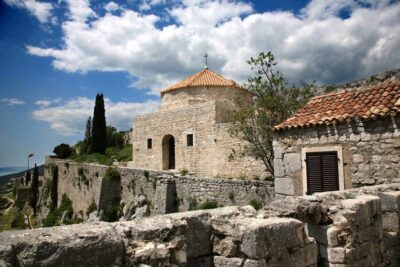 ★ 4.6Klis Fortress GOT and Olive Museum Entry TicketsFrom $14283 reviews
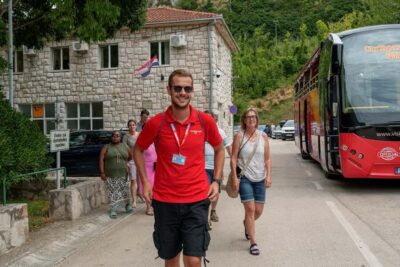 ★ 4.1Historical Tour of Salona, Klis Fortress and TrogirFrom $28108 reviews
 ★ 4.5Visit Klis fortress GOT & Olive museum KlisFrom $1477 reviews
 ★ 4.9Olive museum Klis with Olive Oil TastingFrom $1851 reviews
 ★ 4.5Olive museum Klis with educational olive oil tastingFrom $1750 reviews
 ★ 5.0Trogir Old Town & Klis Fortress from SplitFrom $12238 reviews
 ★ 5.0Private tour to Klis Fortress and Vranjača caveFrom $10615 reviews
Explore its other useful categories