
REVIEW · SPLIT CITY & DAY TOURS
History Split Walking Tour in German – Small group
Split’s history is hiding in plain sight. This tour is a smart, German-language way to make sense of Diocletian’s Palace fast, with stops that connect Roman power to everyday streets. I especially like how the guide links scenes you can literally stand in, with clear explanations like how Diocletian went from nobody to the most powerful man in the world.
Second, I like the pacing. In about 1 hour 30 minutes, you hit the palace highlights plus a few surrounding anchors, so you leave knowing where to go next. One thing to consider: it is not recommended if you struggle with high steps, since parts of old Split are made for ancient feet, not modern ankles.
Quick hits on this Diocletian Palace walk
- Small group size (max 20) keeps the tour human, with time for questions.
- German guide focus on the key palace areas, so you spend less time guessing what you are looking at.
- Free admission at most stops, which helps the value of the $165.08 price.
- Golden Gate and Gregory of Nin connect the Roman complex to later Croatian identity.
- Fruit Square and Marko Marulić bring you from stone architecture to language and culture.
- Stop by the Split Synagogue gives Jewish history context, but the admission is not included.
Why a 90-minute German palace walk is a great first move
Split can feel like it runs on vibes until you learn the basic layout. This tour gives you that layout in a short time, using a guided path through Diocletian’s Palace and nearby highlights. The result is practical: after the walk, you can explore the palace on your own without feeling lost in corridors and courtyards.
You also get a small-group format, capped at 20 people. That matters because Diocletian’s Palace is not just one sight, it is an entire built system. In a big crowd, it is hard to ask questions, but here the size makes interaction more realistic.
Finally, this is a tour with a mobile ticket. That saves hassle on the day, especially if you are bouncing between Old Town stops, trying to beat the midday heat or crowds.
You can also read our reviews of more walking tours in Split

Meeting at the Peristyle, where the palace story starts
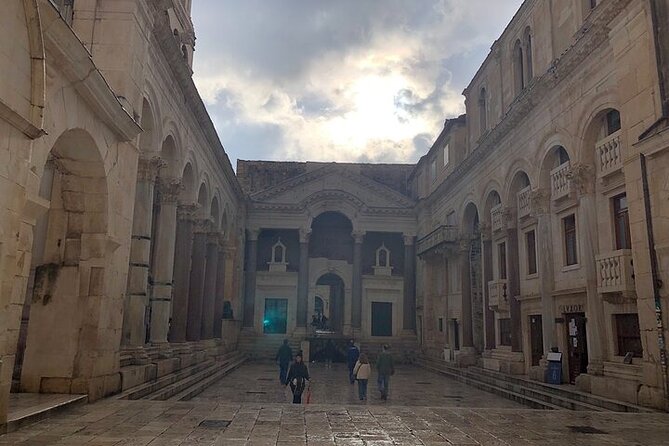
You start near the Peristil ulica (Peristil ul.) area, right at the heart of the palace complex. The first stop is the Peristyle itself, the central square that connects you to almost every other important part of Diocletian’s Palace.
This is the best kind of first stop. You do not begin with random ruins, you begin with the palace’s real control center. From there, the guide can explain the palace’s logic: why the layout looks the way it does, and how the different spaces fit together as power and daily life evolved.
Practical tip: if you like photos, spend a minute orienting before the explanation starts. Even if you move on after 15 minutes, those first views tend to help you interpret everything that comes later.
The Vestibulum stop, where Diocletian’s presence feels close
Next up is the Vestibulum of Diocletian’s Palace. This is a smaller moment in time, but it helps you understand how the palace functioned as an imperial stage, not just a museum-like site.
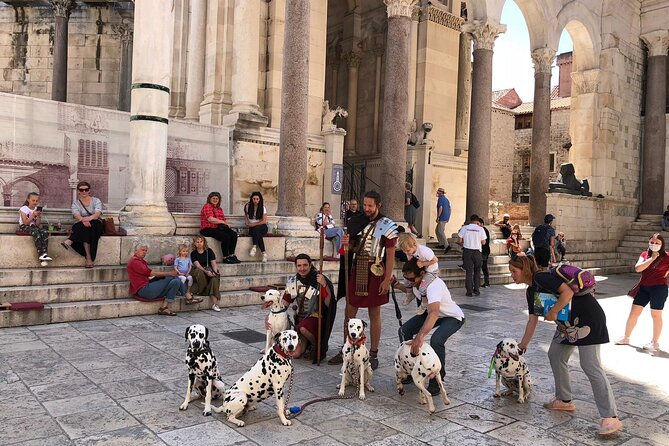
The guide shares the vestibule’s history, and you may even catch traditional Dalmatian singing (it is not guaranteed, but it is a possibility). I like stops like this because they make the storytelling feel tied to place, not just facts on a timeline.
In a palace built by a ruler who wanted authority visible, these transition spaces matter. You learn that the palace was designed for movement, impression, and hierarchy. That theme keeps coming back, especially when you reach later entrances and public-facing areas.
Diocletian’s substructures, construction and changing uses
Then you walk through the substructures of the palace. This is where you get a different perspective. Instead of only looking at the grand above-ground spaces, you see the underlayers that helped the palace work and survive.
Here, the guide talks about the history of how they were constructed and what their function became over the ages. You also skip the museum portion during the tour, but you are told you can visit the museum after.
This is a smart choice if you want clarity without running out of time. A short tour can either cram everything in, or pick the best signals and let you follow up later. The substructures stop does the signaling job well, and you can decide whether the museum is your next step.
Small drawback to consider: if you were hoping for the full museum experience inside the substructures, this tour is not that. It is built for walking and orientation, not for long indoor time.
Golden Gate and Gregory of Nin, Roman entry becomes Croatian identity
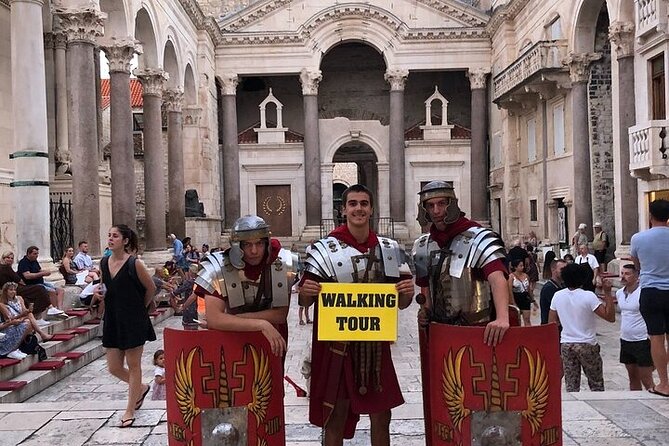
The Golden Gate is the palace’s main entrance, and it is a great stop for two reasons. First, it is visually important. Second, it connects ancient architecture to people and ideas you still run into in modern Split.
You will see the statue of Gregory of Nin and learn why he matters for Croatian history and language. That is a big deal in a city that is layered across empires and eras. It also explains why you might see certain references in everyday life that sound local, not Roman.
The way this stop is framed helps your brain stop treating history like separate chapters. Instead, it feels like a chain, where one era borrows, reacts, and reinterprets what came before.
You can also read our reviews of more historical tours in Split


Riva Harbor stop, a bronze model for quick orientation
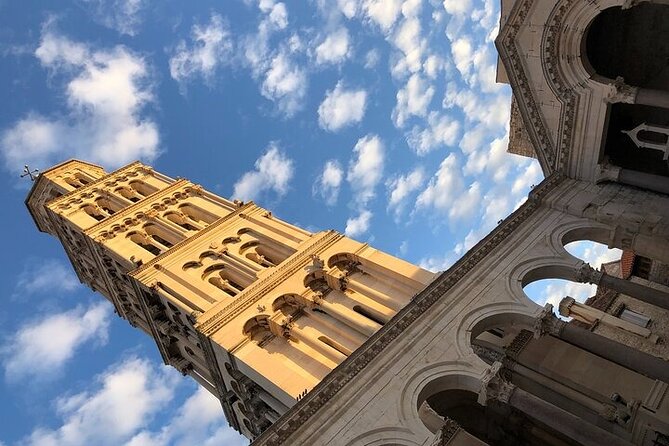
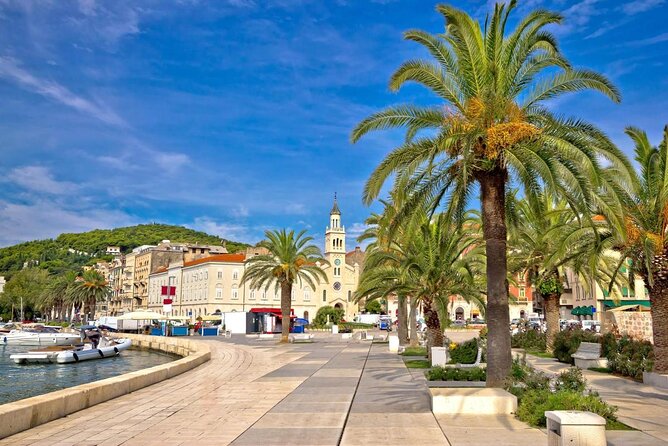
At Riva Harbor, you get two helpful things. You see a bronze model of Diocletian’s Palace, and you learn how Split’s beautiful Riva promenade developed historically.
This model stop is more useful than it sounds. When you are walking through a complex building that is now full of streets and shops, it is easy to lose the bigger shape. A model helps you rebuild that shape in your head, so you can explore the palace later with better confidence.
The promenade lesson also gives context for why people gather where they do. It is not only pretty views. It is a reminder that the palace and the city grew together, and the waterfront became part of daily movement.
Fruit’s Square (Trg Brace Radic), Venetian walls and Marko Marulić
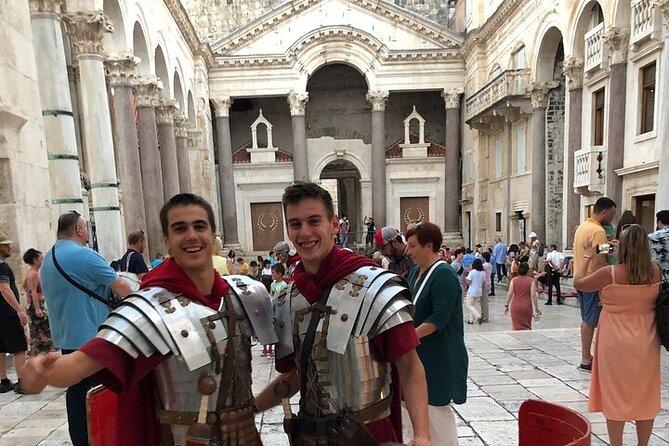
Then you head to Fruit’s Square, officially known as Trg Brace Radic. This stop connects the palace world to the civic world outside it.
You learn about an 15th-century Venetian citadel and about Marko Marulić, described here as the father of Croatian literature. That pairing works. Architecture is one kind of power, but literature and language are another, and the guide shows how both shaped identity.
If you want one memorable takeaway from this part, it is that Split’s streets are not just Roman leftovers. They are stages where later cultures wrote their own roles.
Practical tip: Fruit’s Square is a good place to pause and decide your next route. If you still feel energetic, you can plan how to circle back deeper into the palace. If you feel heat building, this is a reasonable place to regroup.
Split Synagogue stop, Jewish history in the Old Town lane
The final planned stop is a pass by the Split Synagogue, dating to the 16th century. The guide explains the history of the Jewish people in the city of Split.
Important detail: the admission ticket for this stop is not included. Based on how this tour is structured, you should expect a look from outside or a pass-by context, not a full paid interior visit.
Still, this stop is valuable because it rounds out the story. Diocletian’s Palace is the headline, but Split’s Old Town is also a home to multiple communities across centuries. This final moment helps you avoid the common mistake of turning Split into a one-theme Roman photo session.
Price and value: what $165.08 buys you in the real world
At $165.08 per person, this is not the cheapest thing in Split. But it is also not priced like a random overview walk.
Here is why the value can make sense for the right traveler:
- You get a 1 hour 30 minutes guided path that targets the palace’s highest-impact areas.
- Most stops have free admission built into the tour time.
- The group size is capped at 20, which helps you actually ask questions instead of only absorbing info.
- The guide is described as well educated and liked by guests, and the tone is often lively, with humor and patience for questions.
Also, you are booking with a company called Ancient Tours, and the pace suggests they are optimizing for understanding rather than just movement. When you are staring at stone corridors that evolved into modern streets, guided context is worth real money.
One more value angle: tours like this are often booked ahead. The average booking time here is about 44 days in advance, so if you are traveling in a popular season, early booking can save stress.
What to bring and how to handle stairs and old-street terrain
This tour works for most people. It is near public transportation, and service animals are allowed.
The one clear caution is stairs. It is not recommended for travelers who have issues with high steps. That does not mean it is a steep hike, but the palace area and surrounding streets can include uneven steps and changes in elevation.
My practical advice:
- Wear shoes with grip. Split Old Town can be slippery if you catch a damp patch or morning dew.
- Bring water, especially in warmer months. You are out for about 90 minutes.
- If you want to ask questions, plan to do it early. The most interactive moments tend to happen as the group is still forming an understanding of the spaces.
And if you end up wanting to see the Peristyle again afterward, the guide can take you back there if you ask. That flexibility is useful when you realize you want one more orientation view before going off on your own.
Should you book this German History Split Walking Tour?
I would book this tour if you want a high-value orientation to Diocletian’s Palace and the surrounding Old Town without spending hours piecing it together yourself. It is especially worth it if you like explanations tied to what you are looking at, and if you appreciate a guide who can keep things clear and fun.
I would skip it, or at least adjust expectations, if you need a fully accessible route with fewer steps, or if you were hoping for a long museum-style visit inside the substructures. This one is built for walking, context, and leaving you ready to explore.
If you do book, choose shoes for real street terrain, and come ready with questions. With a small group and guides like Antonella or Josip (both mentioned as excellent in German-language tours), you are likely to get answers that go beyond the basic highlights.
FAQ
Is the tour offered in German?
Yes. This is a history walking tour of Split and Diocletian’s Palace in German.
How long does the walking tour last?
It runs for about 1 hour 30 minutes.
How large is the group?
The tour has a maximum of 20 travelers.
Where do I meet and where does it end?
You start at Peristil ulica, Peristil ul., 21000, Split, Croatia. The tour ends not far from where it started, near Diocletian’s Palace in the Grad, Split area. If you ask, the guide can take you back to the Peristyle.
What is included in the tour price?
The tour includes an educated guide with knowledge of the palace and locations around it. You will also use a mobile ticket. Gratuities are not included.
Are admissions included for all stops?
Most stops have admission ticket free, including the Peristyle, Vestibulum, Diocletian Palace substructures (tour portion only, museum part is not visited), Golden Gate, Riva Harbor, and Fruit’s Square. The Split Synagogue admission ticket is not included.
Is the Split Synagogue included in full, or just a pass-by?
The tour plans to pass by the Split Synagogue, and its admission ticket is not included.
Is it easy to reach using public transportation, and are service animals allowed?
Yes, it is near public transportation, and service animals are allowed.
Is it suitable if I have trouble with steps?
It is most often fine for most travelers, but it is not recommended if you have issues with high steps.
When do I get confirmation, and can I cancel for free?
You receive confirmation within 48 hours of booking, subject to availability. Free cancellation is available up to 24 hours before the experience starts, for a full refund.
More Walking Tours in Split
More Tours in Split

More Tour Reviews in Split

Not for you? Here's more nearby things to do in Split we have reviewed




More Split City & Day Tours to consider.
 ★ 4.8Krka Waterfalls Trip with Boat Cruise and SwimmingFrom $3110,519 reviews
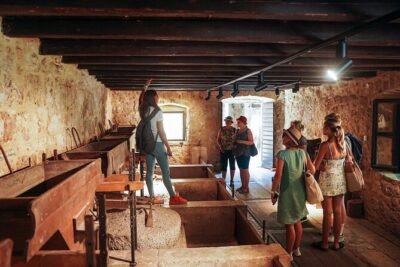 ★ 5.0Krka Waterfalls, Food & Wine Tasting TourFrom $459,326 reviews
★ 4.9Krka Waterfalls, Food & Wine Tasting TourFrom $446,598 reviews
★ 5.0Krka Waterfalls, Food & Wine Tasting TourFrom $459,326 reviews
★ 4.9Krka Waterfalls, Food & Wine Tasting TourFrom $446,598 reviews
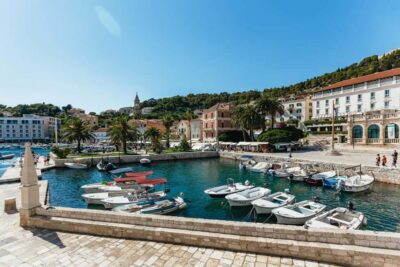 ★ 4.6Split/Trogir: Blue Cave, Mamma Mia, Hvar and 5 Island TourFrom $1096,320 reviews
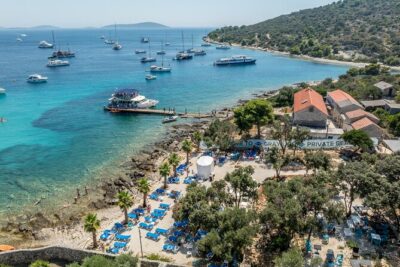 ★ 4.5Blue Lagoon & 3 Islands Cruise with Lunch from SplitFrom $785,756 reviews
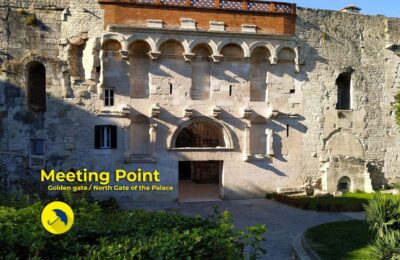 ★ 4.9Old Town and Diocletian Palace Walking TourFrom $174,727 reviews
 ★ 4.9Blue Lagoon Boat Party with DJs, Shots & After PartyFrom $474,610 reviews
 ★ 5.0Krka Waterfalls Tour, Boat Cruise & SwimmingFrom $324,489 reviews
Explore its other useful categories