
REVIEW · SPLIT CITY & DAY TOURS
History Split Walking Tour in French -Small group
Diocletian’s Palace feels like a city inside a city. This French walking tour connects the palace, Split’s old streets, and the big names behind the region, so you understand what you’re looking at instead of just passing by stone. I like the small group size and the fact that the guides are praised for fluent French and engaging storytelling. One thing to keep in mind, there are steps and uneven ground, so it is not the best choice if you struggle with high steps.
You’ll get a tight route that covers the Peristyle, the palace entrances, and the substructures, then links them to later chapters of Split, including Venice and the Jewish community. I also like that the stops are practical, many areas have ticket-free access during the walk, and the tour points you toward what you can do afterward, like the museum portion you will skip. The main drawback is that the Split Synagogue pass-by is not ticket included, so you may want to budget for that separately if you want to go in.
Key highlights you should care about

- Fluent French guiding: Guides like Antonela and Irene are repeatedly noted for being engaging and easy to follow.
- Diocletian’s Palace explained clearly: You connect structures like the vestibule and substructures to how the palace functioned.
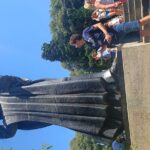
- Gregory of Nin at the Golden Gate: You see the statue and learn why it matters to Croatian identity and language.
- Riva Harbor model stop: A bronze model helps you picture the palace layout.
- Small-group pace: Max 30 people, built for a more personal feel and questions along the way.
Inside Diocletian’s Palace with a Small French Group
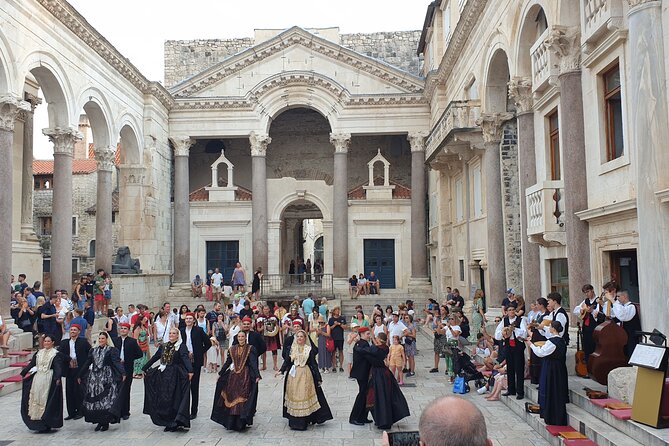
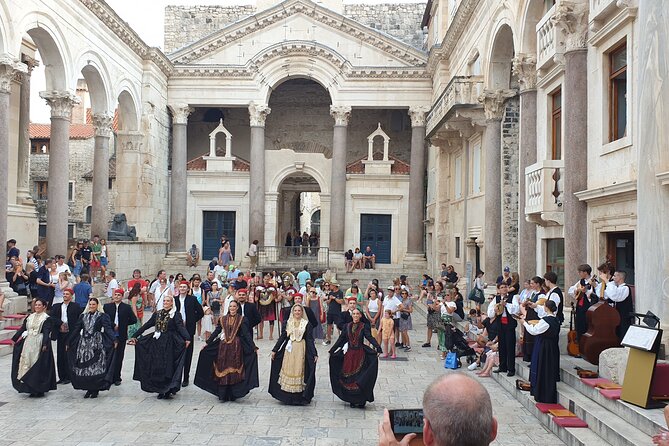
Split’s old town works best when you have a map in your head, and Diocletian’s Palace is the reason. This tour runs through the palace core and the surrounding landmarks so you start recognizing the same stones from multiple angles and time periods.
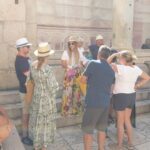
The tour is French and designed for up to 30 people, which matters inside a site that can feel crowded. With a smaller group, your guide can slow down for questions, and you are not just being dragged from one photo spot to the next.
You also get a mobile ticket, which is convenient once you are walking around Split. The tour meets at Peristil ulica / Peristil ul., 21000 Split, and it ends back at the meeting point, so you do not need to re-orient yourself afterward.
One practical tip: even though the tour is listed as about 1 hour 30 minutes, multiple writeups note it can run closer to 2 hours or a bit more. So if you have another plan right after, give yourself a buffer.
You can also read our reviews of more walking tours in Split

Peristyle to Substructures: The Palace Explained Like a Story
The route is built around the idea that Diocletian’s Palace is not just a landmark. It is an engine of the city: entrances, ceremonial spaces, and the service areas that made the whole thing work.
Stop 1: The Peristyle, your orientation point
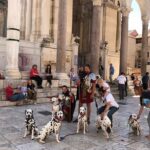
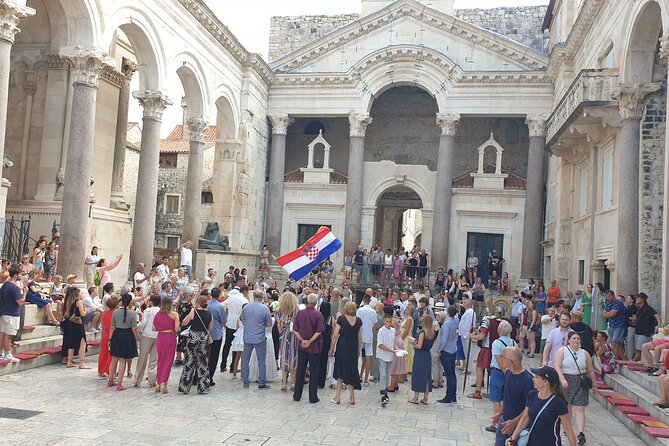
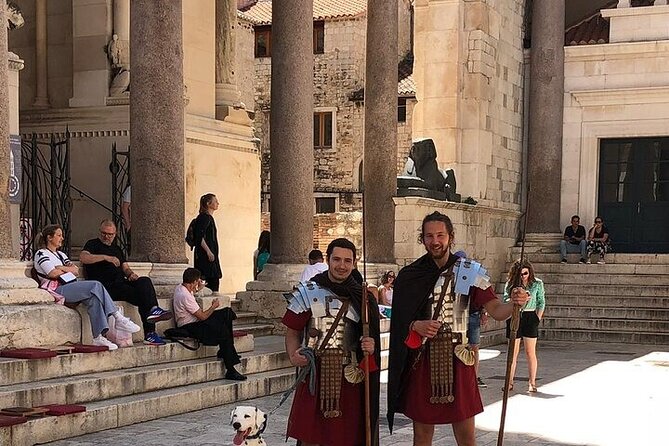
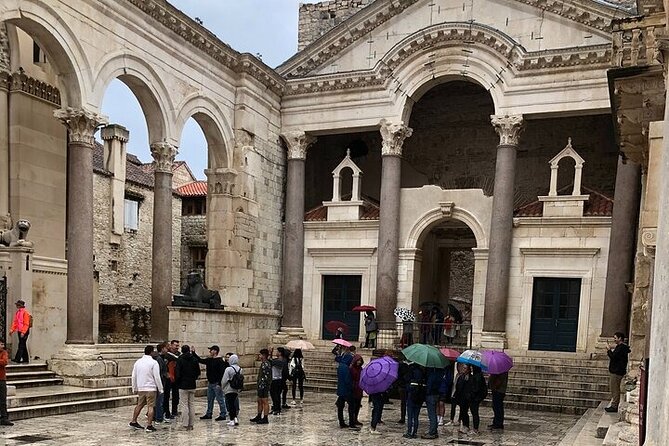
You start at the Peristyle, the central square of Diocletian’s Palace. This is the kind of place where, once you understand the role it played, the rest of the palace starts to make sense. You also get an easy sense of direction because so many other areas radiate out from here.
The tour says admission is free at this stop, so you are paying for the guiding and the route logic, not for entry into a separate ticketed experience.
Stop 2: The Vestibulum, history in a smaller room
Next is the Vestibulum, described as the vestibule of emperor Diocletian. This stop is shorter, but it’s memorable because the guide uses the space to explain context, not just dates. There is also a chance you might hear traditional Dalmatian singing, which is one of those small moments that can make a history tour feel less like homework.
Again, this is listed as ticket-free during the walk.
Stop 3: Substructures, the palace’s practical underworld
Then you move into the substructures of Diocletian’s Palace. This is where the story shifts from grandeur to function. You learn about the construction and how these spaces were used, and it helps you understand why Diocletian’s Palace is so different from a typical ruin.
Important note: you will not visit the museum part of the substructures on this tour. The good news is that it keeps the walk focused, and you can plan a separate visit if you want the museum content later.
This stop is also described as ticket-free during the tour, so you are getting the guided overview without extra entry fees at each step.
You can also read our reviews of more historical tours in Split


Golden Gate, Gregory of Nin, and Split’s Language
If you remember just one stop as a turning point, make it the Golden Gate. It is the main entrance to Diocletian’s Palace, and the guide uses it to connect Roman power to later Croatian identity.
At this stop you see the statue of Gregory of Nin and learn his importance to Split’s history and Croatian language. That detail matters because Split is not a museum city only made of ancient leftovers. It is a living place where older layers keep showing up in modern culture, especially through names, language, and civic pride.
This is another ticket-free stop during the walk, so the cost of the tour is really about the narrative thread and seeing the right points in the right order.
Also, if you like guides who can answer odd questions, several accounts mention that the guides are comfortable with questions and keep things moving without rushing you. I find that confidence makes a big difference when you are standing in front of stones that can feel confusing.
Riva Harbor and Fruit’s Square: Roman to Venetian to Croatian
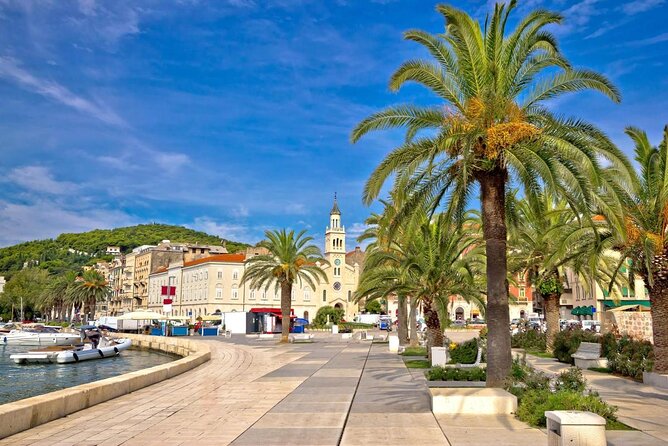
The tour does not stop at the palace walls. It carries you outward into the wider story of Split, so the palace feels like the starting point instead of the ending point.
Stop 5: Riva Harbor and the palace in miniature
At Riva Harbor, you see a bronze model of Diocletian’s Palace. This is one of the most useful learning tools on the route because it gives you a layout view when you are only standing in small sections during the walk. When you can picture where a space sits in the whole complex, the palace stops being random.
From there, the guide explains the history of Split’s Riva promenade, which helps you link the ancient core to the seaside promenade that defines modern Split.
This stop is also ticket-free during the tour.
Stop 6: Fruit’s Square and Marko Marulić
Then you reach Fruit’s Square (Trg Brace Radic). Here the focus shifts to later architecture and intellectual history. You learn about a 15th-century Venetian citadel and you connect that period to the cultural life of Split.
You also hear about Marko Marulić, described as the father of Croatian literature. Even if you do not know his work ahead of time, this kind of stop helps you understand why certain statues, street names, and local references show up in everyday conversation.
This is another ticket-free stop during the walk, and it is a good way to balance the Roman-heavy portion of the tour with something more distinctly Croatian.
Split Synagogue Pass-By: What You See and What You Pay For
The last stop is the Split Synagogue. The tour describes it as a 16th-century synagogue, and you learn about the history of the Jewish people in Split.
You should plan for this one detail: the stop is listed with admission not included. The tour is described as a pass-by, so you will likely spend your time outside while the guide gives you the context you need.
If you are the kind of traveler who wants to go beyond the outside view, budget for the synagogue separately. It is the only place in the route where the entry is explicitly not covered.
Price, Tickets, and How to Plan Your Visit
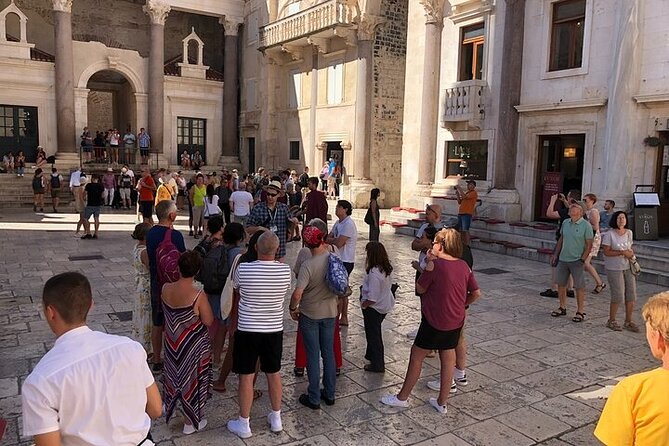
At $69.14 per person for about 1.5 hours (often around 2), the value here is not that you get unlimited attractions included. The value is that you get a guiding system for understanding Diocletian’s Palace, plus a smart sweep through major Split landmarks that you would otherwise need to research yourself.
Here is how the ticket situation works in practical terms:
- Stops 1 through 6 are listed as admission ticket free during the tour.
- The synagogue stop (Stop 7) has admission not included.
- The palace substructures museum is not visited during the walk, but you can go afterward if you want deeper exhibits.
So think of this tour as your paid foundation layer. Then you decide how much extra you want to add, especially at the museum portion and the synagogue.
What to bring
The tour is a walking experience, and the site has high steps in places, so I recommend comfortable shoes and a willingness to take your time. Also, because it is outdoors in Split, bring water and plan for sun or wind depending on the season.
Best time to use it
This is ideal early in your Split stay, because it helps you “read” the city as you wander later. After the walk, you can return to the palace areas with a better sense of what each space likely was for and how later cultures shaped what you see today.
Who gets the most out of it
This is a strong fit for first-time visitors to Split who want the Diocletian’s Palace highlights in French, but it also works well if you travel with kids or prefer an engaging guide style, since several accounts highlight family-friendly energy.
Should you book this French Split walking tour?
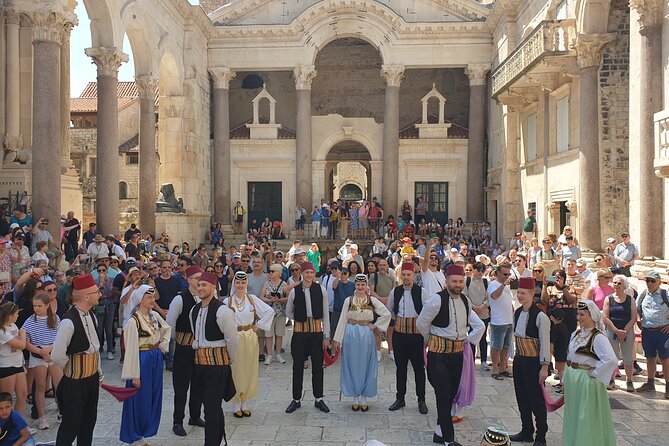
Yes, if you want a focused Diocletian’s Palace experience with a guide who can explain not just the big monuments but the logic of how the palace worked and how Split evolved around it. You are also likely to enjoy it if you value a small group and you appreciate fluent French guiding, with guides like Antonela and Irene often praised for that exact skill.
Skip or reconsider if you need a very step-free route, since it is not recommended for travelers with issues with high steps. Also plan extra time or extra budget if you care about entering the Split Synagogue, because admission is not included.
If you like your history tours organized, friendly, and practical, this one is an efficient way to get your bearings fast in Split.
FAQ
Is the tour in French?
Yes, this is a Split walking tour in French.
How long is the tour?
The tour is listed at about 1 hour 30 minutes, and in practice it can run longer.
What is the group size limit?
The tour has a maximum of 30 travelers.
Where does the tour start and end?
It starts at Peristil ulica / Peristil ul., 21000 Split, Croatia and ends back at the same meeting point.
Do I need to buy tickets during the tour?
Admission is listed as free for the main palace stops. The Split Synagogue admission is not included.
Is the museum part of the substructures included?
No, the tour goes through the substructures, but it does not visit the museum part. You can visit that afterward.
Is the tour suitable if I have trouble with steps?
It is not recommended if you have issues with high steps.
When will I get confirmation, and is cancellation free?
You should receive confirmation within 48 hours of booking, subject to availability. Free cancellation is available up to 24 hours in advance for a full refund.
More Walking Tours in Split

More Tours in Split

More Tour Reviews in Split

Not for you? Here's more nearby things to do in Split we have reviewed





More Split City & Day Tours to consider.
 ★ 4.8Krka Waterfalls Trip with Boat Cruise and SwimmingFrom $3110,519 reviews
 ★ 5.0Krka Waterfalls, Food & Wine Tasting TourFrom $459,326 reviews
★ 4.9Krka Waterfalls, Food & Wine Tasting TourFrom $446,598 reviews
★ 5.0Krka Waterfalls, Food & Wine Tasting TourFrom $459,326 reviews
★ 4.9Krka Waterfalls, Food & Wine Tasting TourFrom $446,598 reviews
 ★ 4.6Split/Trogir: Blue Cave, Mamma Mia, Hvar and 5 Island TourFrom $1096,320 reviews
 ★ 4.5Blue Lagoon & 3 Islands Cruise with Lunch from SplitFrom $785,756 reviews
 ★ 4.9Old Town and Diocletian Palace Walking TourFrom $174,727 reviews
 ★ 4.9Blue Lagoon Boat Party with DJs, Shots & After PartyFrom $474,610 reviews
 ★ 5.0Krka Waterfalls Tour, Boat Cruise & SwimmingFrom $324,489 reviews
Explore its other useful categories