
REVIEW · SPLIT CITY & DAY TOURS
Experience Split History Walking Tour With Local Historian
Split’s palace never feels finished.
I like how this tour mixes Diocletian’s Palace with modern street life, and how the guide uses 3D reconstructions to make what you cannot see still make sense. One drawback to plan for, it is not wheelchair-friendly and you will be on your feet for the full 2 hours.
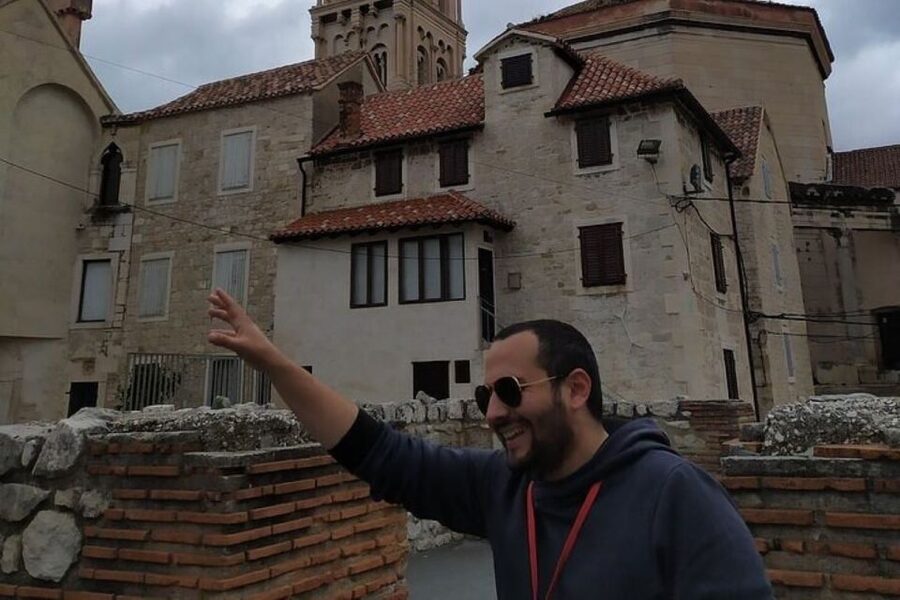
The group stays small, up to 12, so you get room for real questions (not just a line of photos and hurry up). You also start right by the Golden Gate and Gregory of Nin, which is a fast way to get oriented before you step into the complex.
Key takeaways before you walk
- Golden Gate starts the story at the moment Roman power enters Split
- Peristyle is explained like a living square, not a museum exhibit
- Cathedral of Saint Domnius links Diocletian’s mausoleum to later life
- Jupiter’s Temple, vestibule details, and cellars show the palace from multiple angles
- Fruit Square and People’s Square reveal how medieval Split reused space
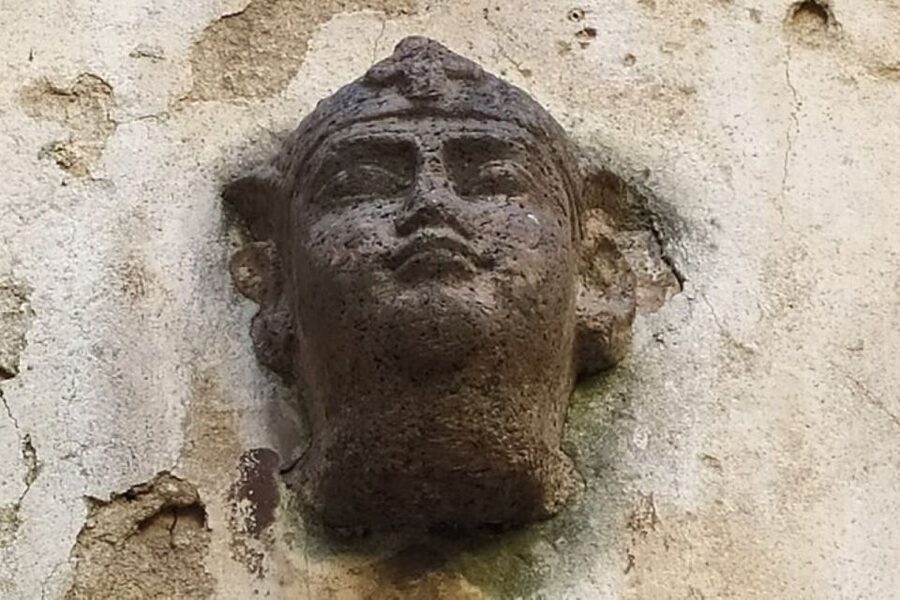
- Secret stops include narrow lanes, a lost sphinx head, and a secret garden moment
Entering Diocletian’s Palace Without Feeling Lost
Split can do a trick on you. You arrive for the sea view and the old stone, then suddenly you are inside one of the best-preserved Roman complexes in Europe. The smart move here is having a local historian walk you through it in order, with clear story beats.
This is not a “read the plaque” kind of tour. The guide connects the palace to the people who lived there after the Romans left, and to the city you walk through today. That is what makes it feel practical, even if you are a non-expert. You leave with a map in your head, not just a memory of big ruins.
A second reason I like this format is the help for the parts you cannot fully picture. The tour includes 3D reconstruction images and pictures via a display book. That means when you hit a spot where the structure is hard to understand at street level, the guide can show you how it may once have looked. You spend less time guessing, and more time noticing details like room shapes, sight lines, and what each space was for.
You can also read our reviews of more walking tours in Split
Golden Gate Meeting Point and Gregory of Nin, Fast Orientation
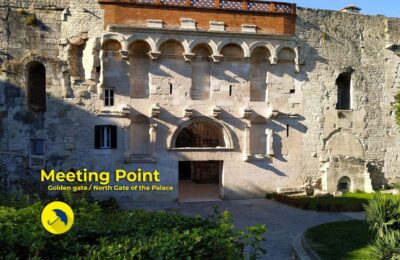
You begin at the Golden Gate, the northern gate of Diocletian’s Palace. The meeting point is right where the palace story starts to feel physical. The guide gives context before you cross the threshold, including what the gate was called, why it mattered, and how it worked for people entering the complex.
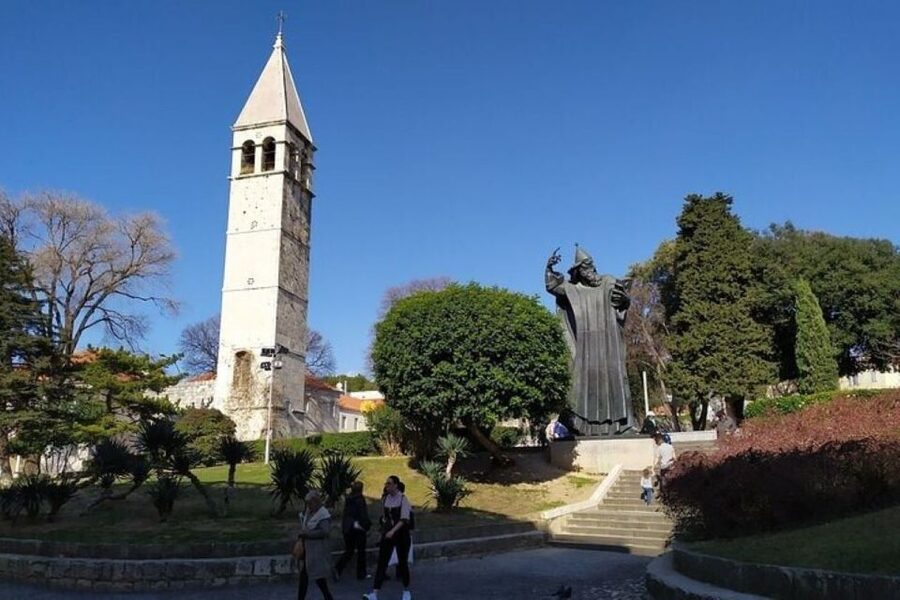
Right in front of you is Gregory of Nin, Split’s famous statue. It stands about eight meters high, and it is placed opposite the gate for a reason. The guide uses that landmark to help you get your bearings immediately, and it also sets up the mix of eras that defines Split: Roman structures around medieval and modern life.
This section is short, but it is a great warm-up. You are learning the vocabulary of the palace before you start walking inside. That reduces the most common problem in Split, which is feeling like you are inside a maze with no story thread.
The Palace Core: Peristyle and the Main Square Feeling Like a Stage
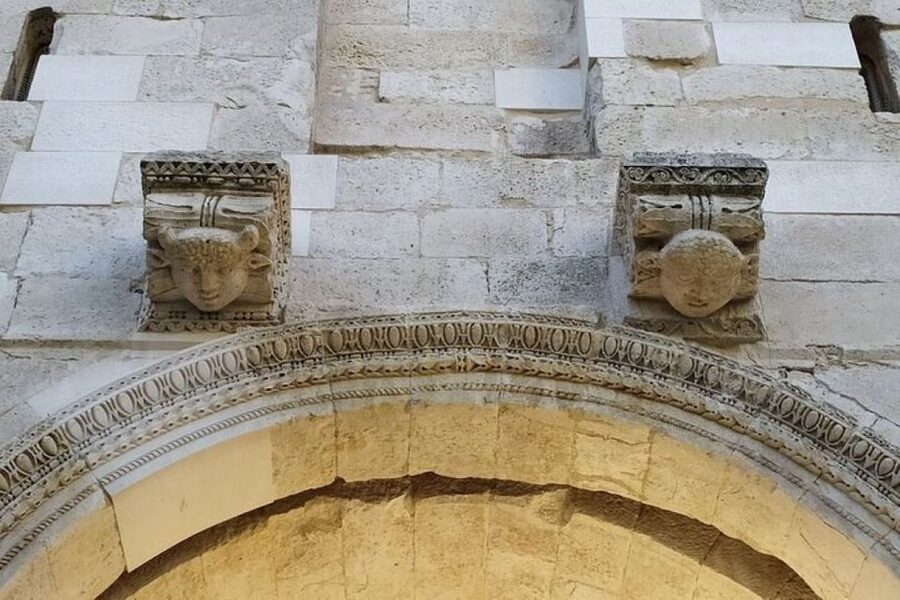
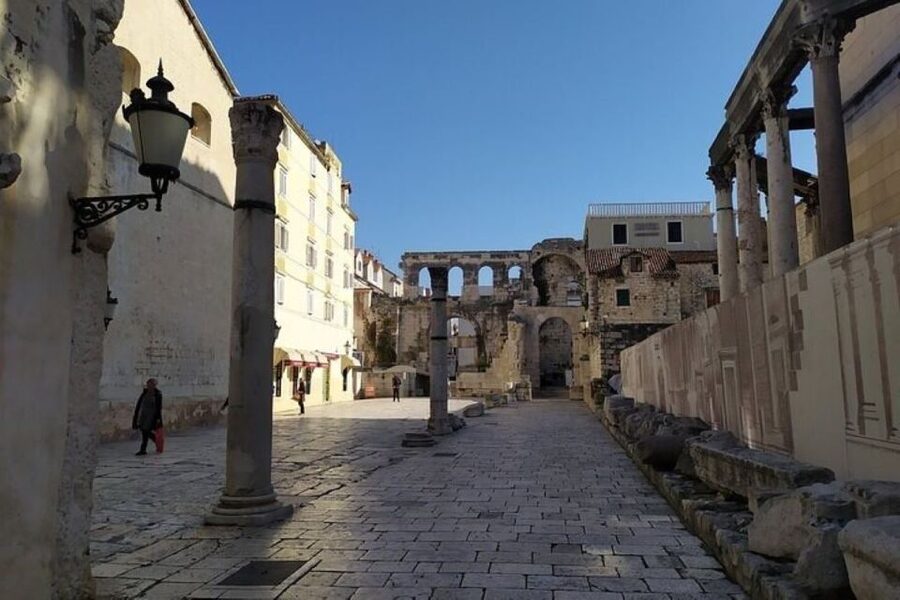
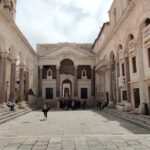
Once you enter the palace complex, the main highlight is Peristil, the central square. The way this tour handles it is simple. You do not just stand in a pretty spot. The guide explains how the square functioned and why the surrounding monumental architecture is not just decoration.
Peristyle is where you notice the “between worlds” feeling of Split. The palace is Roman in origin, but it is also a place where later generations kept building, adapting, and using the space. The guide slows you down just enough to see how the palace’s layout shapes the way people move around today.
You also learn to read the space through the people who would have used it. When the guide talks about emperors and daily movement through the palace, the square stops being abstract. You start to see it as a hub, a social engine. That is why Peristyle is more than a photo stop.
Jupiter’s Temple and the Rooms That Tell You How Power Worked
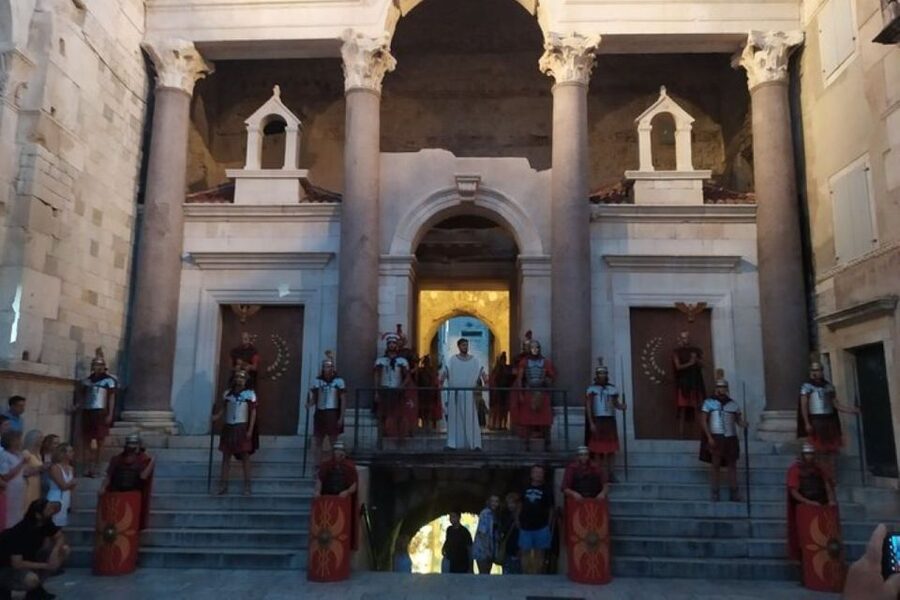
After Peristyle, the tour shifts from the big square to the details that make the palace feel engineered. You spend time at Jupiter’s Temple, and the guide ties its meaning back to the life and symbolism of Emperor Diocletian.
Then comes the kind of place that you might rush past alone. The tour includes the Vestibule and other areas that sit between major rooms. These transitions matter. They are where you feel how the palace guided movement, controlled access, and shaped what people experienced as they went from one space to the next.
If you like architecture that makes sense logically, you will appreciate this portion. You get facts and stories, but you also get a sense of how people would have used the spaces in sequence.
Cathedral of Saint Domnius: From Mausoleum to Cathedral
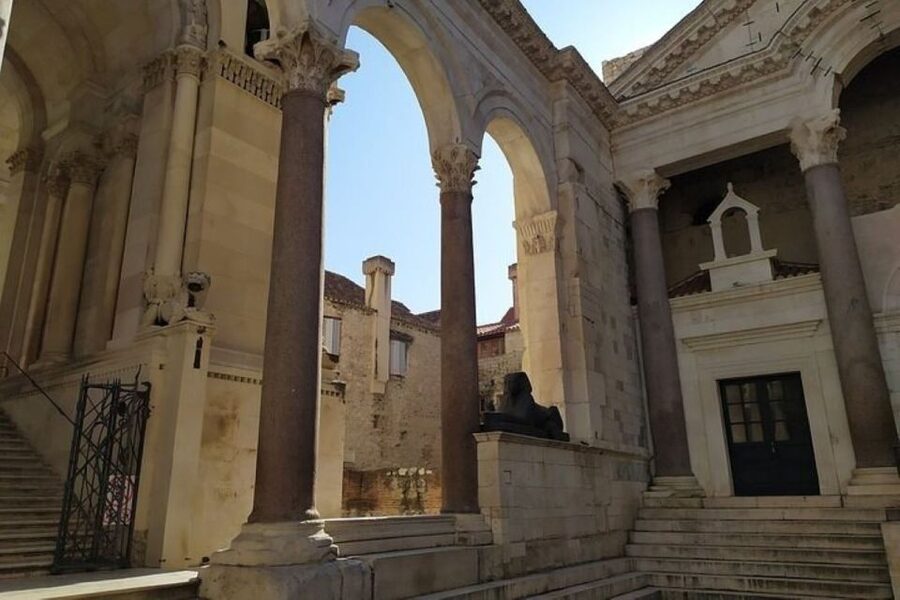
One of the best “wait, that is clever” moments in Split is the link between Diocletian’s mausoleum and the Cathedral of Saint Domnius. This tour takes you to the cathedral area with the right explanation, so you understand it as reuse, not just religious conversion.
You will hear how the original imperial burial context connects to what became the center of later spiritual and community life. That sounds like standard history until the guide frames it in terms of continuity. The same stones hold different meanings across centuries. That is what makes the palace feel like more than an archaeological site.
This is also one of the stops where the guide’s historian background shows. You are not only hearing dates. You are learning why certain choices were made and how later communities made the space their own.
You can also read our reviews of more historical tours in Split
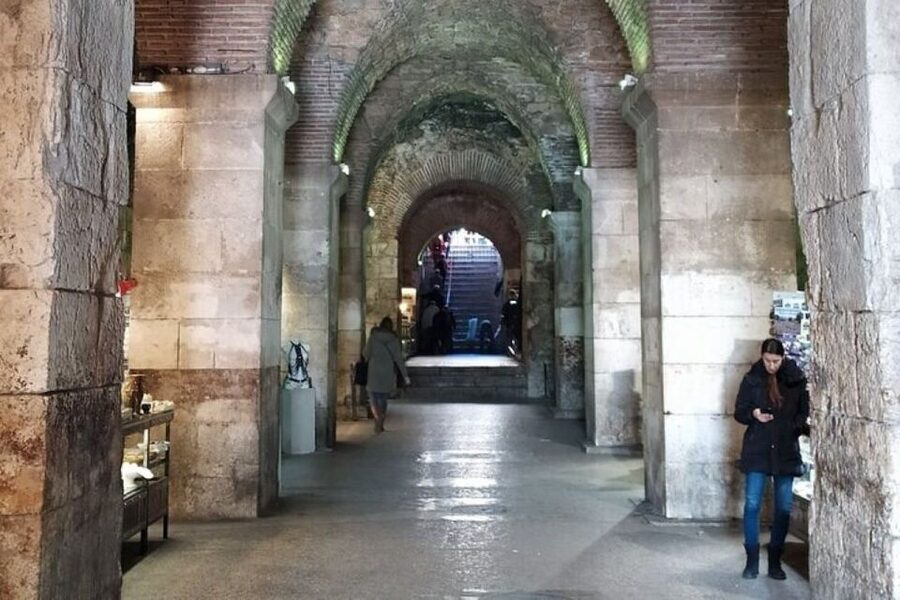
Diocletian’s Cellars and the Palace Beneath the Palace
If you want a tour that changes the way you look at the world above your feet, the Diocletian’s Cellars do that. The guide uses this stop to connect the visible monument to what lies underground.
Even with good photos, cellars can be confusing if nobody explains their purpose. Here, you get guided interpretation of the substructures, so the underground spaces feel like part of the palace’s overall function, not a detached basement tour.
This stop also pairs well with the 3D reconstructions. When the guide shows you how certain elements might have been arranged, you start to understand how the palace managed storage, circulation, or separation of functions. You will likely look at the palace walls differently after this portion.
Riva Promenade: Where Roman and Medieval Life Touch
From inside the palace, the tour moves toward the human scale of Split. You reach Riva, the famous promenade and seafront walkway, which becomes your “today” bridge between the ancient complex and the city outside it.
What the guide focuses on here is connection. You learn how Split’s layout and daily habits fit into the larger historical layers. In other words, you see that the Roman and the medieval do not sit in separate boxes. They overlap in streets, squares, and the everyday routes people still use.
This is also a nice reset. After palace rooms and architectural details, Riva gives you a little breathing space and a sense of rhythm. It helps you take in the city view without turning the tour into a sprint.
Fruit Square and People’s Square: Medieval Split in Two Beatings
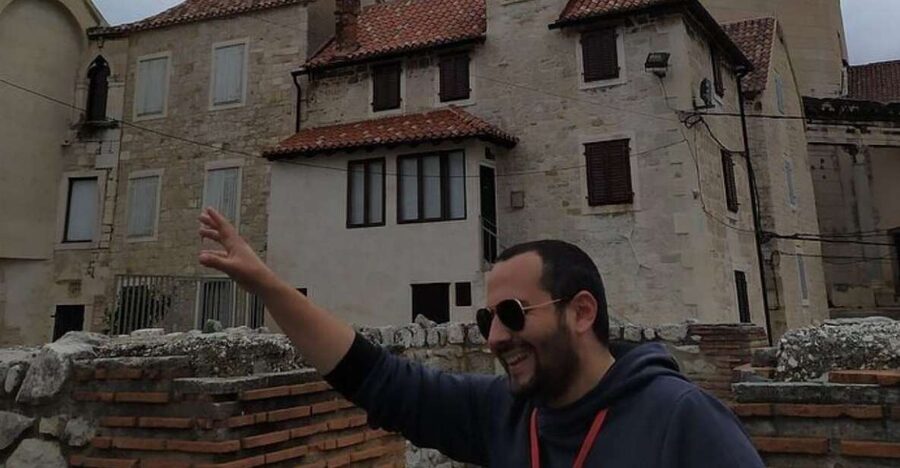
The tour ends with two medieval squares that are small enough to miss if you do not know where to look. You visit Fruit Square and People’s Square, and the guide explains why each one mattered and what you can read from their architecture and history.
Fruit Square gives you a sense of trade and daily logistics. People’s Square feels different, more civic and social. Together, they show how medieval Split organized life around public spaces.
These stops are a reminder that even when you think you are here for Romans, you are actually walking through a long chain of reuse. The guide makes that chain clear, so the squares stop being just scenic corners and start being a map of how communities gathered and functioned.
Secret Stops: Narrow Streets, a Lost Sphinx Head, and a Secret Garden Moment
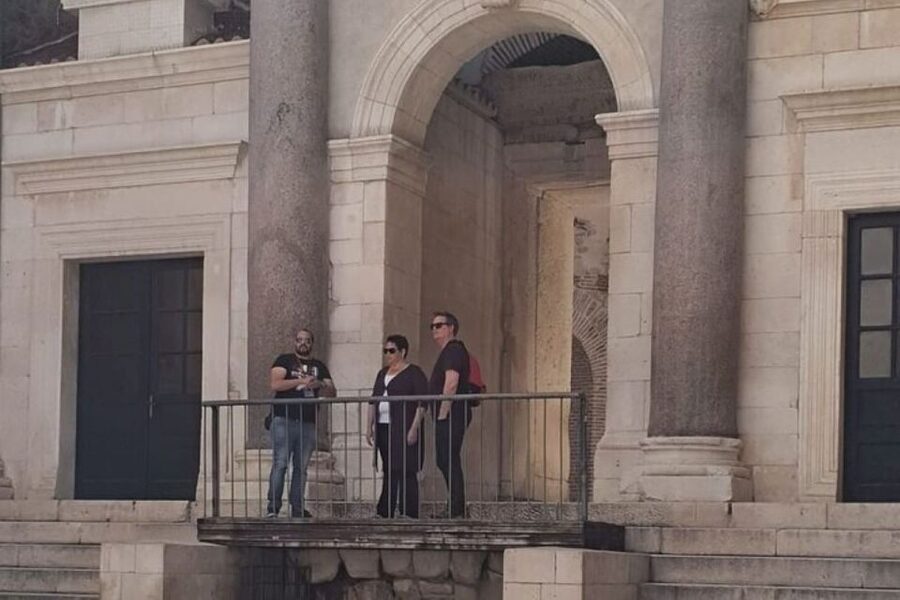
Here is where the tour earns its nickname of more than a basic overview. The route includes secret stops and hidden turns inside the palace area and nearby. You spend time at narrower passages and smaller religious spaces that do not get the same attention as the big names.
The standout details in this category include a mention of a lost sphinx head and time around a secret garden. You are also taken to what the guide calls the narrowest church and the narrowest street. These moments are brief, but they change your awareness. You start noticing how people once moved in tighter rhythms, and how the city’s odd little corners preserve stories.
If you like “how did they fit all this in here” places, these are the stops you will remember later. They also make good fuel for your self-guided wandering afterward, because the guide shows you what to look for.
What 2 Hours Feels Like, and Why the Pace Works
The tour runs about 2 hours, and it stays focused. You are not trapped in one monument for too long. You move from gate to palace square to key rooms and then back out into the city squares.
Because the maximum group size is up to 12, the guide can actually respond when you ask something. Even better, the tour often feels smaller in practice, so the atmosphere stays conversational rather than lecture-like. That matches the experience many people want in a place like Split, where you are surrounded by complex sites.
You will walk. So plan for comfortable shoes. On sunny days, bring water and consider a hat or cap. This is also not suitable for people with mobility impairments or wheelchair users, because the route includes uneven historic surfaces and tight spaces.
Price and Value: $37 for a Historian and Real Interpretation
At $37 per person, this is priced like a mid-range guided experience. Here is the value angle that matters.
First, you are paying for a local guide who is also a professional historian with a master’s degree in history. That changes the quality of the storytelling. You are not only learning what happened, but why these places were built and how they shifted meaning over time.
Second, the tour includes 3D reconstruction images and pictures. That is practical value, not just show-and-tell. It helps you visualize what you cannot fully understand from walking alone.
Third, the tour includes skipping the ticket line. That matters in high-season, when time outside ruins is time wasted.
What is not included is simple: food and drinks. So if you want something to snack on, plan it for after the walk. Also, you should expect to meet and start at Golden Gate, with no hotel pickup.
For a well-paced, historian-led walk of major Split highlights in a single session, this looks like strong value. Especially if you want meaning, not just stamps on a checklist.
Who This Tour Fits Best in Split
This tour is a good match if you:
- want a guided way to understand Diocletian’s Palace without getting lost in terminology
- like history explained through how people lived, not only dates
- enjoy small-group walking with time for questions
- want a clear plan for what to see next after the tour
It is less of a fit if you:
- need wheelchair access or have major mobility limitations
- prefer a totally self-guided pace with no group schedule
- hate walking on uneven historic surfaces
Should You Book the Split History Walk?
Yes, if you want the palace to make sense quickly. The tour does a good job of linking Roman planning to medieval adaptation to modern daily life, and it uses visuals like 3D reconstructions to reduce guesswork.
Book it especially if you know you will be short on time in Split. In two hours, you cover major anchor sites like Golden Gate, Peristyle, the cathedral complex, key palace rooms, cellars, and the two medieval squares, plus a handful of tighter secret corners.
Skip it only if you want zero structure and you plan to wander with no interpretation. This tour is built to guide you through layers, and that is exactly what makes it effective.
FAQ
How long is the Split History Walking Tour, and where does it start?
It is a 2-hour tour. You start at Golden Gate, the northern gate of Diocletian’s Palace, near the Gregory of Nin statue.
Where does the tour end?
The tour finishes at Narodni trg.
Is the tour guided, and what languages are offered?
Yes. It is a live guided tour with a local licensed guide and professional historian, in English and Croatian.
What sights do we see during the walk?
You visit key areas such as Diocletian’s Palace, including Peristyle, Jupiter’s Temple, the Cathedral of Saint Domnius, Vestibule, and Diocletian’s Cellars. You also see Riva, Fruit Square, and People’s Square, plus smaller hidden stops.
Does this tour include 3D reconstruction materials?
Yes. You get 3D reconstruction images and pictures as part of the experience.
Is it suitable for wheelchair users or limited mobility?
No. It is not suitable for people with mobility impairments or for wheelchair users. Comfortable shoes are recommended, and on sunny days bring water and a hat or cap.
More Walking Tours in Split
More Tours in Split

More Tour Reviews in Split


Not for you? Here's more nearby things to do in Split we have reviewed





More Split City & Day Tours to consider.
 ★ 4.8Krka Waterfalls Trip with Boat Cruise and SwimmingFrom $3110,519 reviews
 ★ 5.0Krka Waterfalls, Food & Wine Tasting TourFrom $459,326 reviews
★ 4.9Krka Waterfalls, Food & Wine Tasting TourFrom $446,598 reviews
★ 5.0Krka Waterfalls, Food & Wine Tasting TourFrom $459,326 reviews
★ 4.9Krka Waterfalls, Food & Wine Tasting TourFrom $446,598 reviews
 ★ 4.6Split/Trogir: Blue Cave, Mamma Mia, Hvar and 5 Island TourFrom $1096,320 reviews
 ★ 4.5Blue Lagoon & 3 Islands Cruise with Lunch from SplitFrom $785,756 reviews
 ★ 4.9Old Town and Diocletian Palace Walking TourFrom $174,727 reviews
 ★ 4.9Blue Lagoon Boat Party with DJs, Shots & After PartyFrom $474,610 reviews
 ★ 5.0Krka Waterfalls Tour, Boat Cruise & SwimmingFrom $324,489 reviews
Explore its other useful categories