
REVIEW · SPLIT CITY & DAY TOURS
Split highlights – Evening walking tour
Split at night hits different, especially around Diocletian’s Palace. This 1.5 to 2 hour evening walk is a focused way to learn the story behind Split’s ancient core and then land on the waterfront for real city-life views. I love how the route moves in a clear sequence, so the old palace feels logical instead of overwhelming, and I also like that the walk finishes with a strong viewpoint payoff. One thing to plan for, though, is crowding, because the palace area can get busy in the evening.
You’re also not stuck with dry facts. With a licensed local English-speaking guide in a small group of up to 8, the experience feels personal, and guides in past groups have shared practical ideas like where to eat and how locals move through the city. If you’re traveling when the weather turns iffy, the tour can be rescheduled or refunded, since it requires good conditions.
Key Highlights You Shouldn’t Skip
- Golden Gate into the Diocletian story, with the statue of Croatian bishop Grgur said to bring good luck to passengers
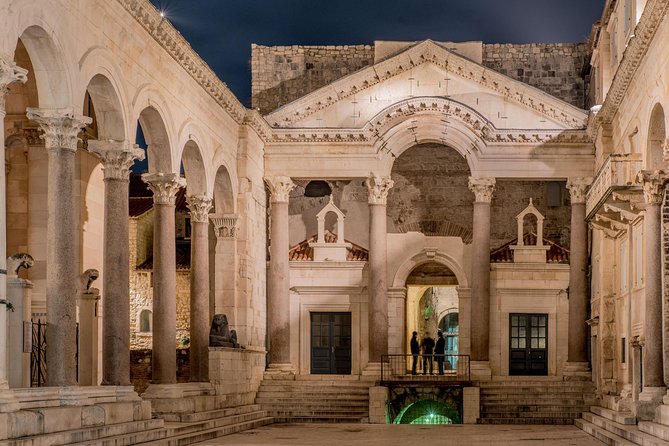
- Peristyle at night, the palace’s “geographical and spiritual center,” guarded by a 3,500-year-old sphinx
- Saint Domnius area, where the Roman emperor’s mausoleum role becomes obvious, plus the Romanesque bell tower
- Vestibulum and klapa singing, a rare moment of atmosphere inside the palace spaces
- Pjaca to Riva, the everyday public stage of Split, from squares to the city’s main promenade
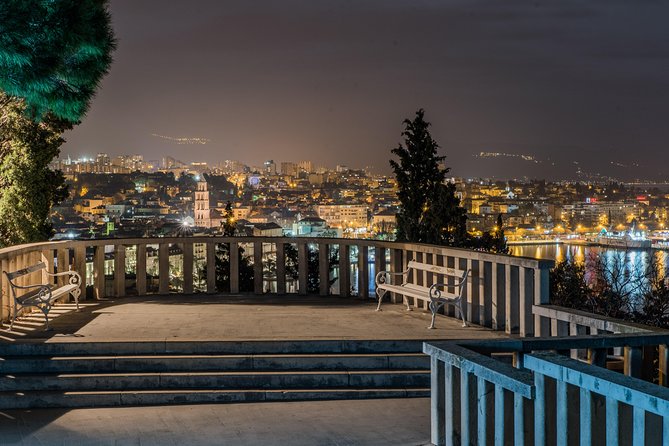
- Prva Vidilica na Marjanu ending view, a simple walking finish that reframes the whole city
Why Diocletian’s Palace Feels Easier at 7:00 pm
An evening tour in Split does two jobs at once. First, it helps you read the city, because the palace walls and gates act like landmarks when the light softens. Second, you get that “living city” feeling by the time you reach the open squares and the harbor promenade.
This timing is great if you’re arriving and trying to beat jet lag. The route is short enough to stay energized, and it gives you a fast sense of where things are, so your next self-guided walk makes more sense. And since it’s a small group, you’re not fighting a crowd every step of the way, even though the palace area can still be busy.
You can also read our reviews of more walking tours in Split



Meeting at Golden Gate, then Moving Like a Shortcut Through Time
You meet at Golden Gate, on Dioklecijanova 7, at 7:00 pm. The tour starts right at the entrance point that frames the entire palace complex, which is smart, because you see the “start” before you see the inside.
The tour runs about 1 hour 30 minutes to 2 hours, with short stops designed for photos and quick context. You’ll use a mobile ticket, and the guide is an English-speaking licensed local. Service animals are allowed, and the route is near public transportation, which matters if you want a low-stress way to reach the meeting point.
Small group size is a real value here. With a maximum of 8 people, questions get answered, and you spend less time waiting at each turn. One review also mentioned the tour being especially quiet when the booking was tiny, which is the kind of bonus that happens sometimes.
Stop 1: Golden Gate and Grgur’s Good-Luck Detail
The first stop is the Golden Gate, the main palace entrance area. What makes this start memorable is the story: Emperor Diocletian entered the main palace gates for the first time when he retired, and the guide will connect that moment to why he never looked back.
This stop also includes a small but fun landmark detail, the statue of Croatian bishop Grgur overlooking the gates. The idea is that he offers good luck to all passengers, which sounds like local folklore, and it works well because it gives you something to notice immediately instead of just staring at walls.
You’ll only spend about 15 minutes here, but that’s the point. You’re setting a mental anchor for everything that comes next, so the palace stops feel connected rather than random.
Stop 2: Peristyle, the Palace’s Center, Plus the 3,500-Year Sphinx
Next up is the Peristyle of Diocletian’s Palace. This is described as the palace’s geographical and spiritual center, and you’ll feel that. The square setting gives the impression of a hub, not a side attraction, and your guide will point out why it still feels monumental.
One of the standout details is that the Peristyle is closely guarded by a 3,500-year-old sphinx. That’s the kind of fact that changes how you look at a place, because it makes you slow down. Even if you’re not a “sphinx person,” it helps you understand that Split’s old layers aren’t just decorative. They’re part of the site’s identity.
Plan for about 20 minutes here. In an evening setting, the light and the openness of the space make photos easier than you might expect inside tighter lanes. Just know the palace complex can get busy, so be ready to share space around the most popular angles.
Stop 3: Cathedral of Saint Domnius and the Romanesque Bell Tower
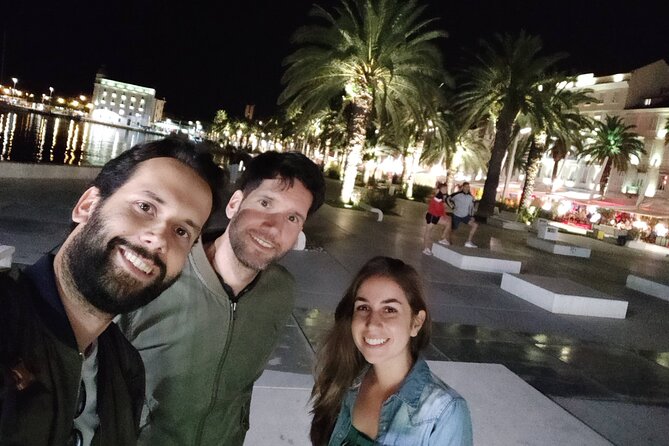
The third stop is the Cathedral of Saint Domnius, which used to function as the mausoleum of Roman Emperor Diocletian. That detail matters because it flips your expectations. You’re not just looking at a church, you’re seeing an older Roman power statement that changed roles over time.
The tour also calls out that Saint Domnius is considered the oldest building in the world where a cathedral is situated. Whether you treat that as a strict claim or a marketing-friendly superlative, the big point is still true: it’s old, and it feels different from typical church stops.
In front of it stands a Romanesque bell tower. You’ll have about 10 minutes here, which is enough to get the main visual without turning it into a long detour. One important note for your budget: admission for this stop is not included.
You can also read our reviews of more evening experiences in Split






Stop 4: Vestibulum of Diocletian’s Palace and the Sound of klapa
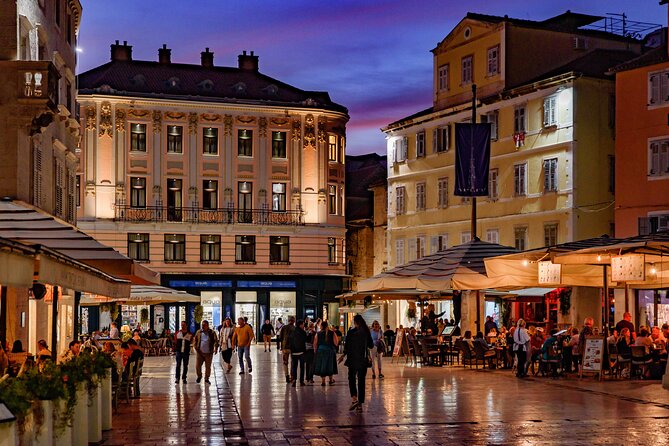
Then you step into the emperor’s chambers through the Vestibule, described as a striking round hallway. This is one of the more atmospheric parts of the tour because the tour focuses not only on what the space looks like, but how it sounds.
You might be able to hear local klapa singing in the area. That’s not the kind of detail you can reliably schedule on your own, and even if it’s subtle, it adds a layer of living culture to a Roman setting. It’s the rare moment where ancient architecture and modern tradition overlap in a way you can actually notice.
This stop is about 10 minutes and it’s free to access as part of the tour. It’s also a good breather between the denser palace points and the more open city squares to come.
Stops 5 to 7: Pjaca, Prokurative, and Riva Harbor as Split’s Daily Stage
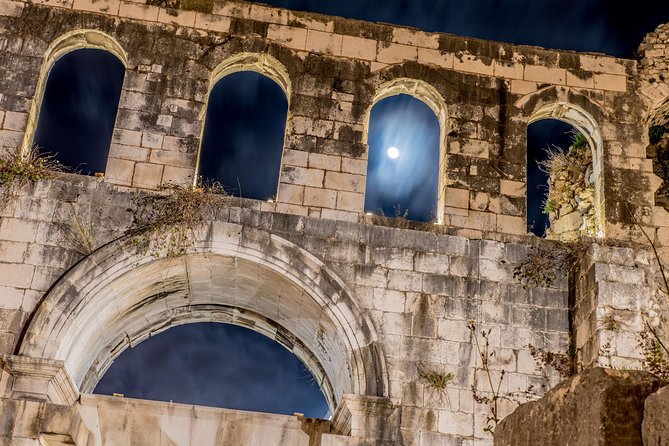
After the palace spaces, the tour shifts to street level, and that’s where you get a real feel for modern Split.
Pjaca is the central stage of city life. This is where locals rest, meet, and see each other, and where the conversation often circles back to football. That might sound like a throwaway line, but it’s actually a helpful interpretation for your visit. You stop treating the city as a museum and start noticing where people naturally gather.
Next is Prokurative, also known as Republic Square. The comparison to Venice’s St. Mark’s Square gives you a quick mental image of what to look for, but what you’ll really appreciate is the layout. The square is open on the south side, so you get a nice view toward the harbor and the Riva promenade.
Finally, the walk reaches Riva Harbor. The Riva is Split’s main public living room and the most important promenade in town. The guide will frame it as everyday theater, a place for public life, and yes, it’s also linked to legendary events over time. Expect about 10 minutes here, enough to slow down, take photos, and reset before the final viewpoint leg.
Stop 8: Prva Vidilica na Marjanu for a Big View Finish
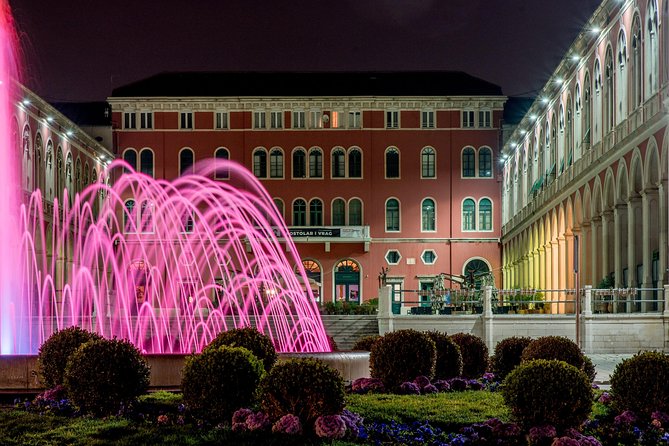
The tour ends with Prva Vidilica na Marjanu, a terrace viewpoint where you can see all of Split. The route includes a short 15-minute walk from the old town to reach the terrace, and the timing is smart because it gives you a finale that feels like a reward.
This is the moment where the whole city clicks. The palace area you saw earlier becomes part of a larger map, and you understand how Split is layered: ancient core, public squares, and then the harbor life that pulls everything toward the water.
You’ll spend about 15 minutes at the viewpoint area. It’s a good window to take photos, cool off, and decide where you want to go next on your own.
Price and Value: What $39.74 Buys You Here
At $39.74 per person, this tour is priced as an affordable, high-impact evening introduction to Split. What you’re paying for is not just movement between landmarks, but a licensed guide who connects the dots between structures, stories, and how the city functions now.
Most stops have free admission tickets included in the tour experience. The cathedral is the exception, where admission is not included. That’s normal for tours like this, but it’s worth planning for mentally: if you want to go inside Saint Domnius, budget extra time and money.
Where the value really shows is in the flow. You cover key palace points, then hit the main squares, then finish with a viewpoint. For solo travelers or couples, that combo saves time and reduces the risk of missing the “why” behind Split’s layout. And with a group capped at 8, you’re not paying for a crowd experience.
How the Guide Can Change Your Night (Bosko, Pavle, Luka)
A tour lives or dies by the person leading it. In past groups, guides including Bosko Papic, Pavle, and Luka have been praised for bringing Split to life with history and stories from daily local understanding.
The best part isn’t just facts about Diocletian. Some guides have also offered practical restaurant tips and insight into how life in Split works. That kind of guidance is gold at the start of your trip, because it gives you something to do the same night, not just “learn and go home.”
If you want to get more out of the tour, come with one simple question: what should I see tomorrow, based on where I’m standing right now? A good guide will tie your answer directly to the route you just walked.
Who Should Book This Tour, and Who Might Skip It
I think this tour is ideal if you want:
- A fast way to understand Split’s palace story without feeling lost
- An evening plan that balances ancient sites with modern public life
- A small-group experience that helps with orientation and questions
- A viewpoint finish that makes your photos better
You might consider skipping or adjusting your expectations if:
- You dislike crowds, because the palace area can get busy at night
- You’re expecting long museum-style time at Saint Domnius, since cathedral admission is not included and most stops are brief
If you’re the type who likes a “see it, then decide what to explore deeper” approach, this is a strong match.
Should You Book This Evening Walk Through Split?
Yes, if your priority is getting your bearings fast and learning what makes Diocletian’s Palace matter, this is a smart use of an evening. The combination of key palace stops, quick stops in the city’s main squares, and the Marjan viewpoint finish gives you a full sense of Split in under two hours.
Book it especially early in your trip. Even if you return later for a longer self-guided wander, this route helps you understand what you’re looking at. Just go in knowing the palace can be busy, and bring your patience, because the payoff is in how the story comes together across the whole walk.
FAQ
How long is the Split evening walking tour?
The tour lasts about 1 hour 30 minutes to 2 hours.
What time does the tour start?
It starts at 7:00 pm.
Where do I meet the guide, and where does the tour end?
You meet at Golden Gate, Dioklecijanova 7, 21000 Split, Croatia. The tour ends at Vodoskok, Trg Franje Tuđmana, with the meeting point described as in front of the fountain at the beginning of the Riva promenade.
Is the tour offered in English?
Yes, the tour is offered in English.
Is admission to the Cathedral of Saint Domnius included?
Admission to the Cathedral of Saint Domnius is not included, while most other stops list admission tickets as free.
What happens if the weather is bad or I need to cancel?
The tour requires good weather. If it is canceled due to poor weather, you will be offered a different date or a full refund. You can cancel for a full refund up to 24 hours in advance.
More Walking Tours in Split


More Tours in Split

More Tour Reviews in Split

Not for you? Here's more nearby things to do in Split we have reviewed




More Split City & Day Tours to consider.
 ★ 4.8Krka Waterfalls Trip with Boat Cruise and SwimmingFrom $3110,519 reviews
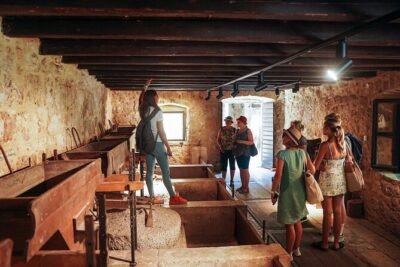 ★ 5.0Krka Waterfalls, Food & Wine Tasting TourFrom $459,326 reviews
★ 4.9Krka Waterfalls, Food & Wine Tasting TourFrom $446,598 reviews
★ 5.0Krka Waterfalls, Food & Wine Tasting TourFrom $459,326 reviews
★ 4.9Krka Waterfalls, Food & Wine Tasting TourFrom $446,598 reviews
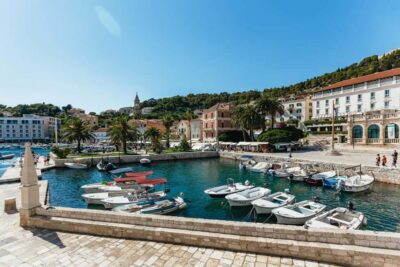 ★ 4.6Split/Trogir: Blue Cave, Mamma Mia, Hvar and 5 Island TourFrom $1096,320 reviews
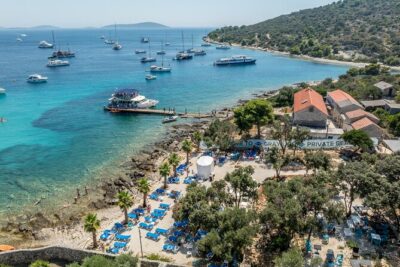 ★ 4.5Blue Lagoon & 3 Islands Cruise with Lunch from SplitFrom $785,756 reviews
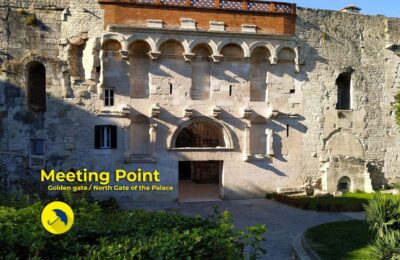 ★ 4.9Old Town and Diocletian Palace Walking TourFrom $174,727 reviews
 ★ 4.9Blue Lagoon Boat Party with DJs, Shots & After PartyFrom $474,610 reviews
 ★ 5.0Krka Waterfalls Tour, Boat Cruise & SwimmingFrom $324,489 reviews
Explore its other useful categories