
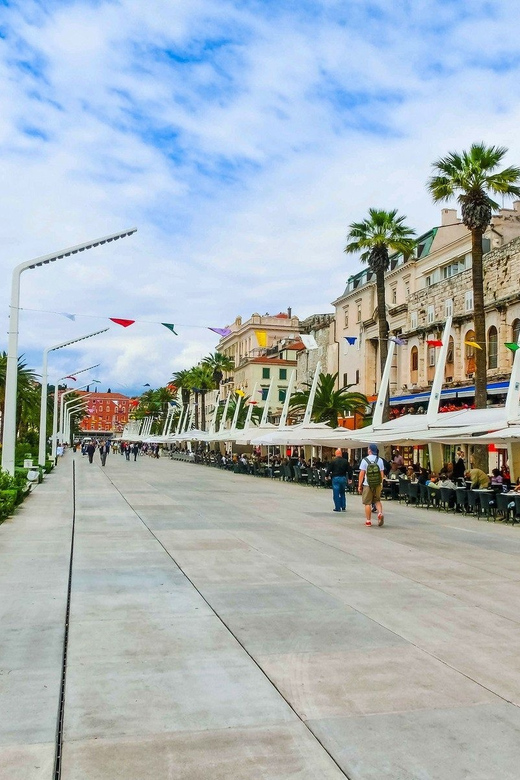
REVIEW · SPLIT CITY & DAY TOURS
Split: Guided Walking Tour in English
Split’s heart is one guided walk away. I especially like the way the tour turns Diocletian’s Palace from a pile of ancient stone into a story you can follow, and I also love the human side of it, the English-speaking local guide who brings the present-day lifestyle and traditions into focus. One thing to plan for: entrance fees are not included, so if you want to go inside churches or museums, you’ll need separate tickets.
The route takes you through the historic center’s maze of narrow stone streets, and that matters because Split’s layout can feel confusing fast. I’m glad this tour gives you a clear route and context for what you’re seeing, including how the city formed around the palace and how people still live within its walls. In some groups, you may even get a smaller dynamic, like I’ve heard happens when booking is light, which makes it easier to ask questions and get tailored local tips.
Key moments worth your attention
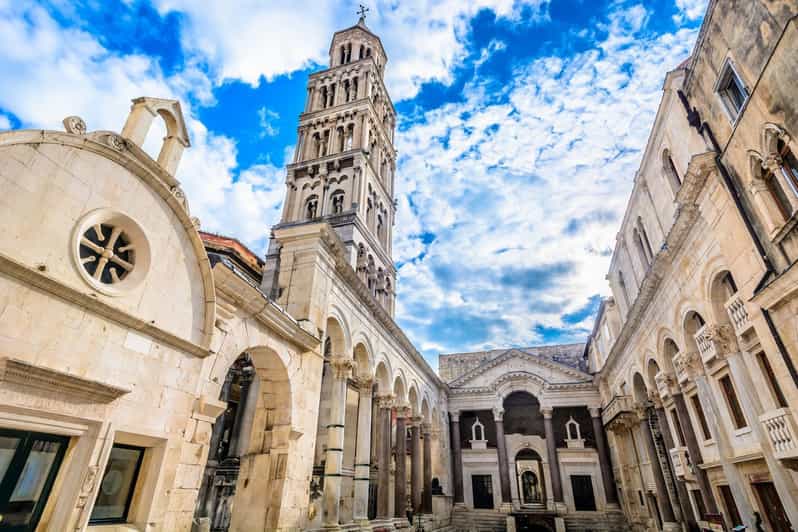
- Diocletian’s Palace, UNESCO World Heritage, explained in plain English
- Peristyle court context, including where key palace spaces connect
- A street-by-street look at the medieval layers added after Rome
- Local customs and traditions, not just dates and names
- A short 90-minute format that’s ideal as a first-day orientation
- Guides with strong English and a knack for answering questions
Getting oriented fast: meeting at Gray Line and walking into Split’s core
You start at the Gray Line office on Obala Hrvatskog narodnog preporoda 21. From there, the tour simply begins walking, and that is a big part of the value. Split is compact, but the streets can twist, and without a guide you can end up admiring buildings without really understanding how they connect.
This is a 90-minute experience designed for momentum. You’ll cover enough ground to feel like you understand the big landmarks, but not so long that your feet are toast by the end. If you’re planning other sites later in the day, this timing is a smart move. It gives you a framework you can use as you wander on your own after the tour.
If you care about history and culture, I also like that the tour isn’t only about the palace walls. It’s set up to show you how the city grew around them, and that makes the rest of your time in Split easier to navigate.
You can also read our reviews of more walking tours in Split


Diocletian’s Palace: the UNESCO site you’ll finally be able to read
The main event is the UNESCO World Heritage Site of Diocletian’s Palace. The palace was built for the Roman emperor Diocletian, and the guide’s job is to help you understand what you’re looking at, not just point at it. In practice, that means you learn the big timeline for Split and how the palace shaped the city that formed around it over roughly 1,700 years.
What I like about this approach is that it changes your viewing. Instead of seeing scattered ruins and medieval buildings, you understand how the palace’s layout influenced movement and life in the center. As you stroll the historic streets, the guide helps you connect what’s in front of you to the bigger picture: Roman plan, later additions, and the way the city adapted over time.
You also get a sense of what makes the palace extraordinary. It isn’t only an artifact behind a fence. It’s integrated into daily life, including areas where people still live within the palace walls. That blend of ancient structure and modern living is one of Split’s signature experiences, and having a guide makes it easier to notice.
Peristyle court, imperial apartments, and the mausoleum

One of the most useful segments is the tour’s focus on the monumental court of the Peristyle. The Peristyle provided access to the imperial apartments and the mausoleum, and learning that relationship helps the palace feel logical instead of random.
Here’s why this matters for your visit. Many visitors see the Peristyle area and then move on. With a guide, you understand what it represented in the palace system: a central court space that connects important functions. That context makes your photos better too, because you know what each space was meant to do.
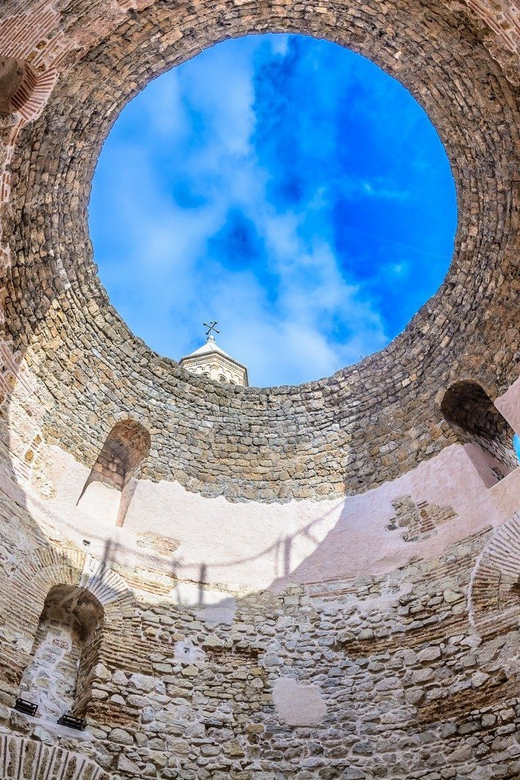
The tour also covers the remains of the ancient building and later medieval extensions. That’s crucial in Split, because you’re rarely looking at one single era. You’re always looking at a mix. The guide helps you sort out what belongs to the original palace structure versus the later layers that grew around it.
If you like asking questions, this kind of stop is perfect. In past experiences with guides like Gabrijela and Petra, I’ve found that strong local interpretation turns those questions into a mini lesson. You walk away knowing more than you walked in, not just having heard a steady stream of facts.
The medieval maze: narrow streets, stone buildings, and how the city formed
After you get the palace context, the tour moves through the narrow stone streets where medieval buildings and palace remains sit side by side. This is where the experience becomes more than monuments. You start to understand how Split’s urban fabric formed, with the palace acting like the anchor point.
You’ll hear how the city grew around Diocletian’s Palace, then later medieval extensions expanded and reshaped the area. That city-growth story is one of the best ways to make sense of what can otherwise feel like a dense historic collage.
I like that this part of the tour is designed as a stroll. It’s not an endurance march. It’s paced so you can take in street-level details and still keep track of the overall narrative. And since the tour is only 1.5 hours, it stays focused on the highlights, so you don’t burn time on anything that doesn’t connect back to the core story.
Local lifestyle and culture: customs, traditions, and what to do next
A good walking tour gives you two things: landmark understanding and practical next steps. This one aims for both. You learn about local customs and traditions, and you also get a feel for how Split lives today alongside its ancient center.
That matters because Diocletian’s Palace can feel like a museum if you don’t connect it to people and daily routines. Hearing how the lifestyle of locals fits into these historic spaces makes the palace feel less like scenery and more like a living neighborhood.
Some guides, including Gabrijela and Petra, have been praised for giving helpful local knowledge, including history and culture, plus suggestions for food and what to look for. You should treat those as starting points rather than a strict checklist. Use them to build your own day after the tour. That’s how you get the best value out of a guided orientation.
If you’re the type who likes culture as much as architecture, this component is a real advantage. You don’t only learn what happened. You also learn how people still think and live here.
You can also read our reviews of more guided tours in Split





Tickets and inside stops: what’s included, what’s not, and how to plan
This tour includes a 1.5-hour guided walking experience with an English-speaking guide, plus all taxes and VAT. Entrance fees are not included. The tour also notes that the guide can help you with where to purchase tickets, and then you can visit churches and museums at your own pace after the walking portion ends.
So here’s my practical advice. If you know you want to go inside specific sites, check which ones require tickets ahead of time. Then decide whether you want to do them on the same day as the tour or save them for later when you can linger.
Because this is a walking tour focused on the palace area and historic streets, it’s smart to treat it as your “understand first” step. You’ll get the context for what you see, and then you can choose which interiors are worth your time based on your interests and how long the lines look.
Price and value: is $29 worth 90 minutes in Split?
At $29 per person for about 90 minutes, this is positioned as an affordable entry to the palace district with a real guide. What makes it good value is that you’re paying for interpretation. Diocletian’s Palace and the center around it can be visually impressive, but without context, you might miss the logic of the palace layout and how later periods layered onto the original structure.
A guide helps you convert walking time into understanding time. That’s especially useful if you have only a short window in Split. Instead of spending your first day piecing it together from maps, you get a guided narrative and can build from there.
The price also feels reasonable given the emphasis on English language and the fact that the tour covers the palace highlights plus the broader story of city growth and local culture. If you’re someone who enjoys history explanations and local perspective, this is likely one of the best “first days” spends you can make.
Who should book, and who might skip it
This tour is a strong fit if you want:
- A guided orientation to Split’s historic center and Diocletian’s Palace
- English commentary on how the city developed over time
- A quick, focused format that still covers major highlights
- Practical culture context, not only stone-and-slab facts
It might be less ideal if:
- You need wheelchair accessibility, since the tour is not wheelchair accessible
- You plan to rely on included entry to churches and museums, since tickets are not included
It also comes with clear rules: pets are not allowed, and unaccompanied minors are not permitted. Children must be accompanied by an adult. If you’re traveling with kids, this can still work well, but it’s smart to bring realistic expectations about a walking-focused tour.
Should you book this Split walking tour?
I’d book it if you want to get your bearings and understand what you’re looking at without wasting hours trying to decode the palace on your own. The combination of Diocletian’s Palace UNESCO focus, the Peristyle context, and the guide-led explanations of how the city grew around the palace makes this a high-impact 90 minutes.
Skip it or weigh alternatives if you only want free-form exploring, you’re not interested in history or local culture talk, or you specifically need included museum and church entry.
If you do book, come with comfortable shoes and a curious mindset. Then use the tour like a base layer. Afterward, you’ll be able to wander with confidence because you’ll know which parts matter and why.
FAQ
How long is the Split guided walking tour?
It lasts about 90 minutes (listed as a 1.5-hour walking tour).
What does the tour cost?
The price is $29 per person.
What language is the guide?
The guide speaks English.
Where do I meet the tour?
Meet at the Gray Line office at Obala Hrvatskog Narodnog Preporoda 21, Split.
Are entrance fees included?
No. Entrance fees for churches and museums are not included, though the guide can help you with details on where to purchase tickets.
Is this tour wheelchair accessible?
No, the tour is not wheelchair accessible.
What are the rules for bringing children or pets?
Pets are not allowed, and unaccompanied minors are not permitted. Children must be accompanied by an adult.
More Walking Tours in Split



More Tours in Split

More Tour Reviews in Split


Not for you? Here's more nearby things to do in Split we have reviewed








More Split City & Day Tours to consider.
 ★ 4.8Krka Waterfalls Trip with Boat Cruise and SwimmingFrom $3110,519 reviews
 ★ 5.0Krka Waterfalls, Food & Wine Tasting TourFrom $459,326 reviews
★ 4.9Krka Waterfalls, Food & Wine Tasting TourFrom $446,598 reviews
★ 5.0Krka Waterfalls, Food & Wine Tasting TourFrom $459,326 reviews
★ 4.9Krka Waterfalls, Food & Wine Tasting TourFrom $446,598 reviews
 ★ 4.6Split/Trogir: Blue Cave, Mamma Mia, Hvar and 5 Island TourFrom $1096,320 reviews
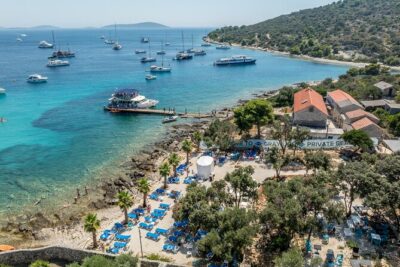 ★ 4.5Blue Lagoon & 3 Islands Cruise with Lunch from SplitFrom $785,756 reviews
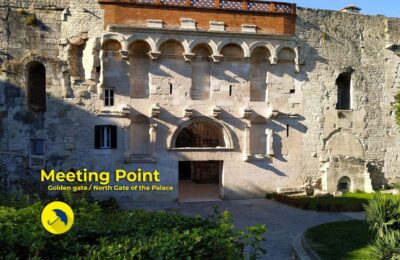 ★ 4.9Old Town and Diocletian Palace Walking TourFrom $174,727 reviews
 ★ 4.9Blue Lagoon Boat Party with DJs, Shots & After PartyFrom $474,610 reviews
 ★ 5.0Krka Waterfalls Tour, Boat Cruise & SwimmingFrom $324,489 reviews
Explore its other useful categories