
REVIEW · SPLIT CITY & DAY TOURS
Split: city center private walking tour 2 h
Split’s old walls still feel alive. I love how the guide brings Diocletian’s Palace cellars to life like a real piece of engineering, and I also like the private, tailored pace that can match your interests. One possible drawback: this route keeps you focused on the main sights, so it is not built for nonstop wandering through tiny side lanes.
This is a 2-hour city center private walking tour in Split, Dalmatia, priced at $141 per group (up to 20 people). You meet near Riva, then work your way through the historic core, with plenty of key photo stops and a finish that makes it easy to grab a coffee or dinner right on the water. Dress smart for the cathedral, and wear shoes for uneven stone.
Key tour takeaways
- Diocletian’s Palace cellars: preserved spaces with a clear story behind their original purpose
- Game of Thrones filming link: a fun, concrete reason to look closely at the spaces
- Peristil, St. Duje, and the Jupiter connection: you see how religion and power shaped the layout
- Private pacing: you can set the tempo and steer the conversation to what you care about
- Market + old-town photo stops: Green Market, People’s Square, and more without rushing
Walking through Split, where “old” still has a pulse
Split is one of those places where history is not behind ropes. It is built into daily life. The old core is dense, walkable, and layered, and this private tour is designed to help you read those layers instead of just checking off landmarks.
What makes this experience click is the way the route connects big monuments to the street-level details around them. You start with the waterfront and orientation points, then move into the walled core where Diocletian’s palace still shapes how Split feels. The tour also ends back on the Riva side, which is practical, because you can keep the day going without a long return plan.
You can also read our reviews of more walking tours in Split


Meeting on Riva, then finding your way fast
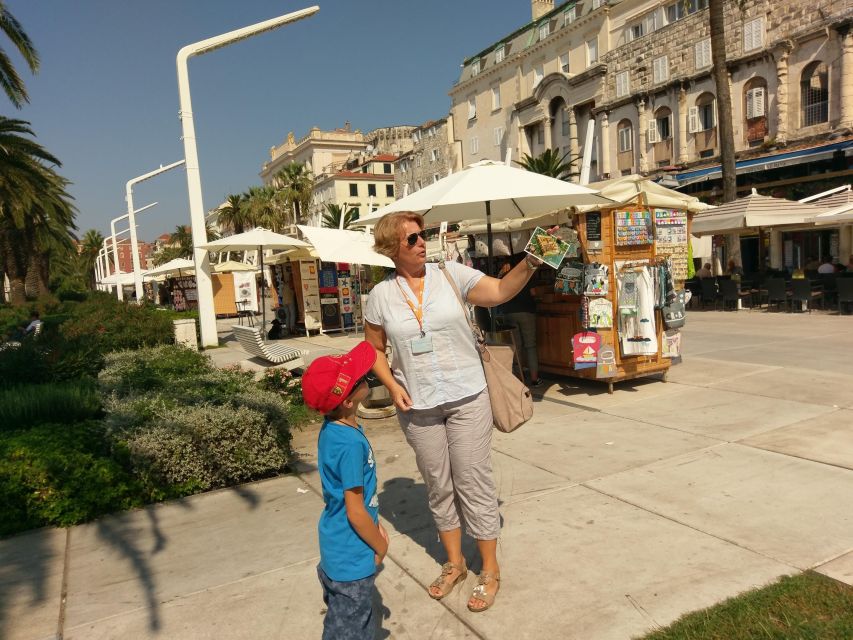
Your tour begins on the Riva promenade, at the spot in front of the entrance to Diocletian’s palace cellars (Obala Hrvatskog narodnog preporoda 15b). Even if you arrive early, the setting is useful. Riva is where Split’s energy concentrates, so it is a good place to orient yourself before stepping into the stone maze of the old town.
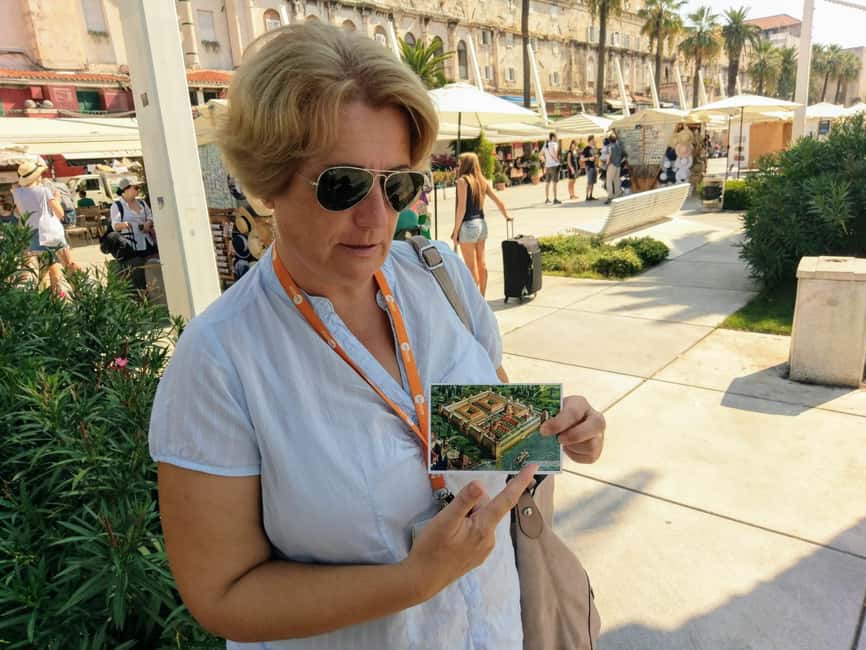
After the initial meeting, you head to a model of Split’s historical core. That small stop matters more than it sounds. Diocletian’s palace is famous, but it can feel confusing at street level. A quick model view helps you understand where walls, entrances, and open spaces fit together before you start climbing and turning.
The tour is private, so you do not get dumped into a crowd and rushed through. It is also offered in English, French, and Croatian, so you can follow along comfortably even if your comfort level with architecture terms is mixed.
Green Market and the quick reality check on daily life
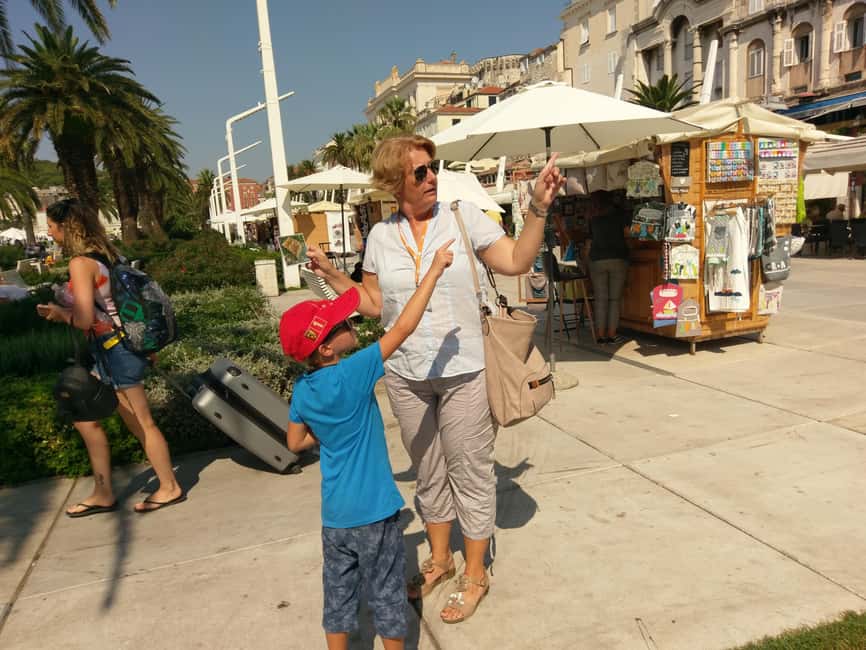
Before you disappear fully into the palace zone, you get a brief stop at the Green Market. It is not a long visit, but it is timed well. You see how locals shop and talk right in the historic center, which makes the monuments feel less like museum props and more like the backdrop to real routines.
You also get a short shopping window. That is a nice bonus because Split can be a place where you forget to pick up anything small until the end of the trip. Here, you have a chance to buy local snacks or simple souvenirs while your feet are already moving through the right neighborhoods.
Diocletian’s Palace: the engine room of Split
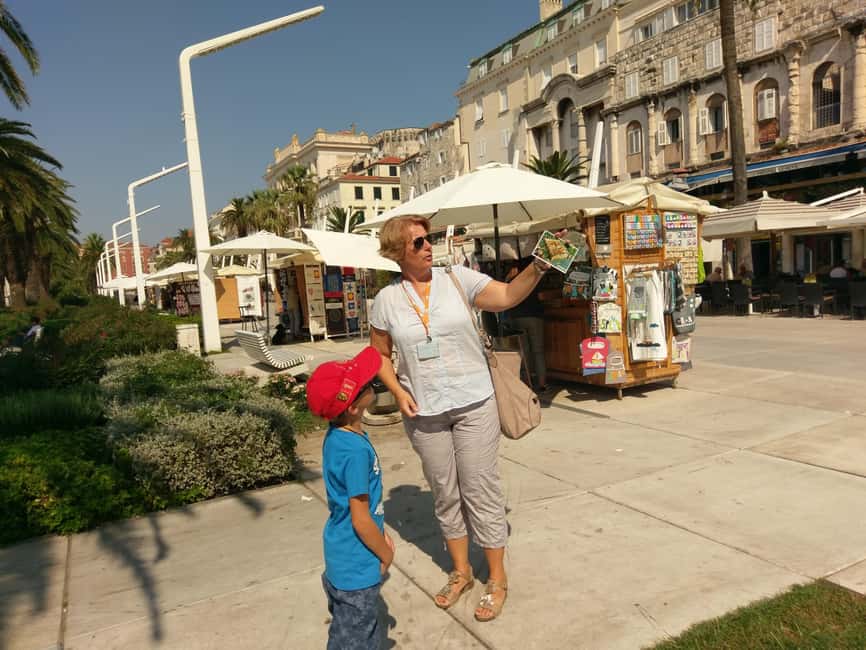
Once you enter Diocletian’s palace area, the tour shifts from general orientation into specific storytelling. The palace is now the heart of Split, and the guide’s job is to help you notice what remains and what it used to do.
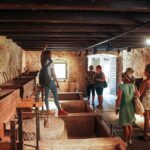
The highlight is a visit to the well-preserved palace cellars. These spaces were not decorative. Their architectural purpose was to support and raise the imperial residential area above. In plain terms, you are looking at the heavy-duty base that helped turn a ruler’s complex into a world of its own.
Here is where that tour detail becomes your advantage. When you understand the cellar function, you stop seeing it as a random underground stop. You start linking it to what you will see above: entrances, stairs, and the big open spaces designed for power and ceremony.
Also, these cellars have been used as filming locations for Game of Thrones. You do not need to be a fan to enjoy it. The fun part is how the guide points out specific visual cues so you can recognize why a production would choose these exact spaces.
Peristil and Stairs of meaning, not just steps
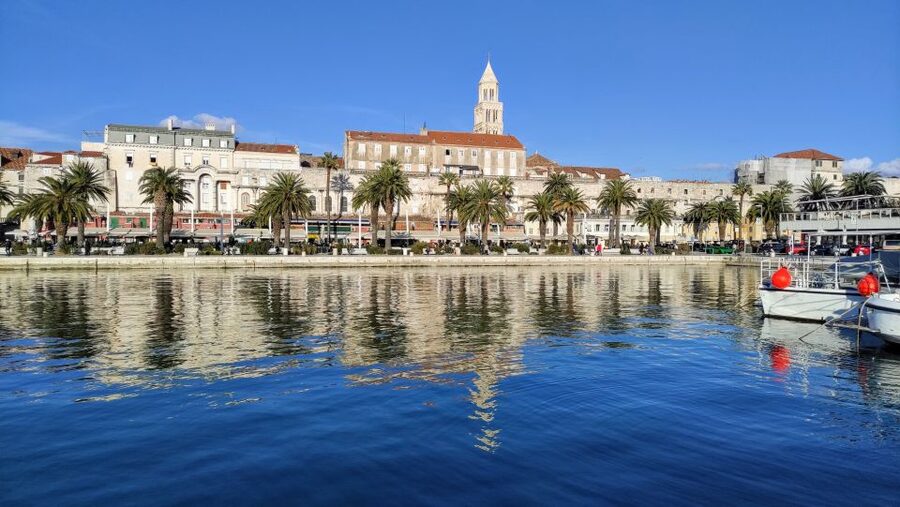
After the cellars, you move up the stairs to Peristil. This is one of those places where elevation changes everything. From street level, you feel like you are inside a city. From Peristil, the architecture reminds you it was built to impress.
Peristil was meant for Diocletian and for the cult tied to the living son of Jupiter. You get to see the temple associated with that cult as part of the flow. Even if you are not obsessed with ancient religion, the point is clear: the palace was organized so ceremonies had a strong physical stage.
This section is also a good example of why private pacing matters. If you need extra pauses to take photos, catch your breath, or ask questions, you can usually do that without holding up a whole busload. Just keep in mind there are stairs and uneven surfaces, so plan for slow comfort, not speed.
You can also read our reviews of more city tours in Split




The cathedral of St. Duje: wear it properly
Next comes the Cathedral of St. Duje, originally the mausoleum of Diocletian. It is dedicated to St. Duje, Split’s patron, and it is said to be the oldest cathedral in the world. Even if you approach that claim with a healthy travel skepticism, the building’s age and importance are still obvious in how the space is used and preserved.
There is one practical thing to get right before you go in: shoulders and knees need to be covered. If you are arriving from the beach or wearing summer light layers, bring a light scarf or layer you can throw on quickly.
This stop is where the tour becomes more than photo ops. The guide helps you connect the palace past to the religious present, showing how one powerful structure became a lasting spiritual center.
Golden Gate, Gregory of Nin, and the quick photo hits
Between the major monuments, you also get classic Split photo moments that make the walk feel like a real tour, not just one long museum line.
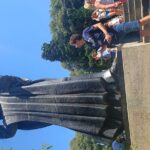
You pass the Golden Gate with a photo stop built in. You also stop near the Statue of Gregory of Nin, another must-see landmark in Split. The guide’s job is to point out what to look for so you understand why those spots matter, not just where to stand.
There are additional quick stops along the way, like the Old Town Hall and other small public squares. These breaks keep the tour human paced. In a place with strong light and lots of stone, you will appreciate having built-in time to adjust your angle and actually see details.
People’s Square (Pjaca) and the Venetian footprint
Then you reach People’s Square, also known as Pjaca, tied to the Venetian rule period. This is one of the areas where you can feel the shift from Roman-era layout to later urban life.
The square works well as a social checkpoint. It is wide enough for pauses, and close enough to the old core that it still feels like part of the same story. If you like traveling with a sense of place, this stop helps you understand that Split did not freeze at one time. It kept changing, and you can feel those changes under your feet.
The tour includes time for photo stops and a short shopping window here, which makes sense. Squares like this are where people naturally linger. You get to do the same without trying to rush your way through everything.
Fruit Square and the fishmarket: finishing the local flavor
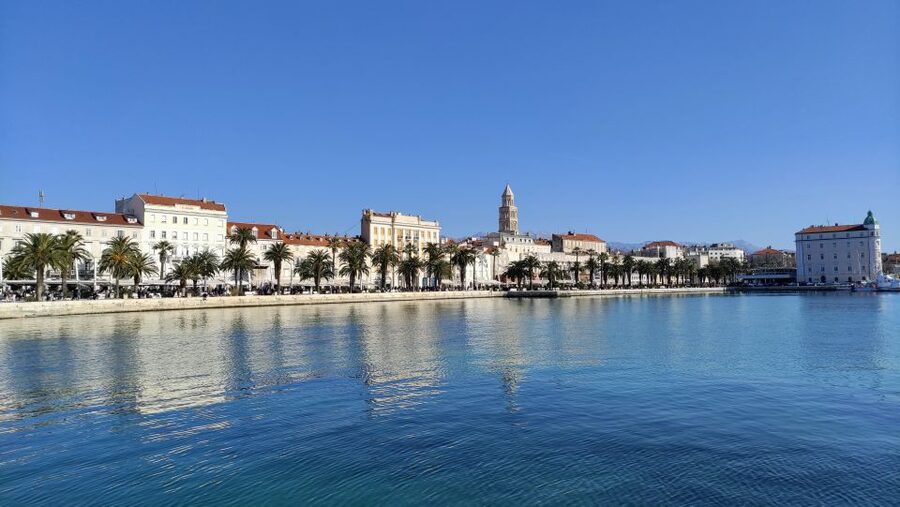
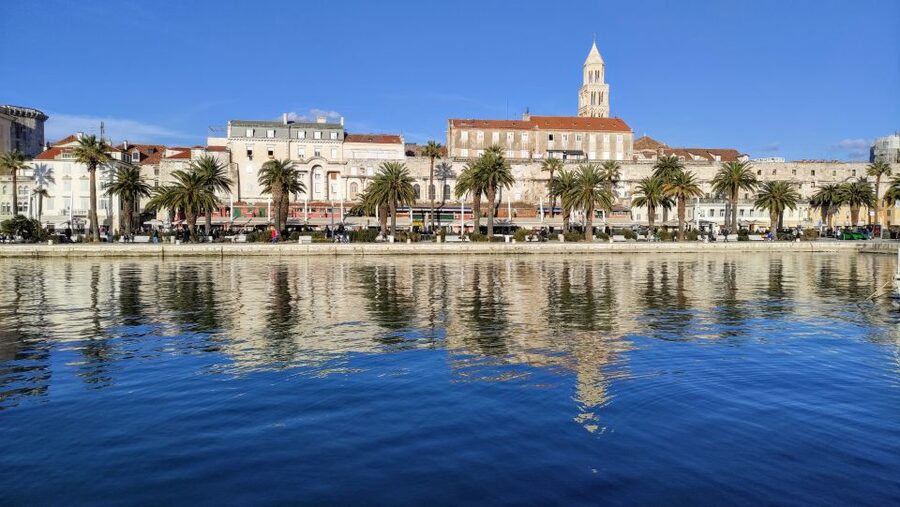
As you near the end, you pass Fruit Square and then the Split Fishmarket. These are practical stops, but they also add texture to the tour. You see daily commerce happening in the same urban pocket as palace stone.
Food markets like this also help you slow down. You start noticing smaller things: how stalls are set up, how people move through narrow spaces, and how the waterfront vibe matches the market vibe. It gives the last stretch of the tour a more lived-in feeling, not just sightseeing fatigue.
Price and value: $141 per group, up to 20 people
At $141 per group for a 2-hour private walking tour (up to 20 people), the value depends on how you split the cost. If you travel as a larger group close to the max, the per-person cost can look very reasonable for a licensed guide and a tailored route.
If you are a small group, the math shifts, but you still get something important: private time with a guide who can adjust the pace to your interests and energy. That matters in a place like Split where a half hour of wrong pacing can turn into stress, because walking surfaces can be uneven and the stops are stacked closely together.
One more value point: entrance fees are not included for the cathedral and the cellars. That means you should budget a bit extra on top of the tour cost, but it also gives you control over the exact entry experience and timing.
Who should book this Split private tour
This tour fits you best if you want:
- A clear, guided path through Diocletian’s palace without getting lost in the layout
- Architecture and city context, not just names and dates
- A pace you can control, since it is private and tailored to your interests
- The chance to end on Riva with easy access to food and views
It is less ideal if your travel style is pure wander mode and you want long, meandering hours in side lanes off the main sights. This route stays focused on high-impact stops, so you get structure over chaos.
Should you book it?
If you are short on time and want your first contact with Split to feel organized and meaningful, I would book it. The Diocletian’s palace cellars plus Peristil, paired with cathedral context and market texture, hits the best mix of big monuments and real street life.
Just come prepared for practical realities: bring comfortable shoes for uneven stone, cover up for the cathedral, and plan for separate entrance fees. Do that, and this becomes a smooth 2-hour walk that helps you understand what you are looking at, long before you head out for dinner on the waterfront.
FAQ
How long is the Split city center private walking tour?
It lasts 2 hours.
Is this tour private?
Yes. It is a private group experience.
What is included in the price?
The tour includes a licensed guide.
Are entrance fees included for the cathedral and cellars?
No. Entrance fees for the cathedral and the cellars are not included.
Where do we meet the guide?
Meet on the promenade Riva in front of the entrance to Diocletian’s Palace cellars, Obala Hrvatskog narodnog preporoda 15b, 21000 Split, Croatia.
What languages are available for the guide?
The tour guide speaks English, French, and Croatian.
Is the tour wheelchair accessible?
Yes, it is wheelchair accessible.
Do I need to dress a certain way for the cathedral?
Yes. Shoulders and knees must be covered to enter the cathedral.
More Walking Tours in Split

More Tours in Split

More Tour Reviews in Split


Not for you? Here's more nearby things to do in Split we have reviewed





More Split City & Day Tours to consider.
 ★ 4.8Krka Waterfalls Trip with Boat Cruise and SwimmingFrom $3110,519 reviews
 ★ 5.0Krka Waterfalls, Food & Wine Tasting TourFrom $459,326 reviews
★ 4.9Krka Waterfalls, Food & Wine Tasting TourFrom $446,598 reviews
★ 5.0Krka Waterfalls, Food & Wine Tasting TourFrom $459,326 reviews
★ 4.9Krka Waterfalls, Food & Wine Tasting TourFrom $446,598 reviews
 ★ 4.6Split/Trogir: Blue Cave, Mamma Mia, Hvar and 5 Island TourFrom $1096,320 reviews
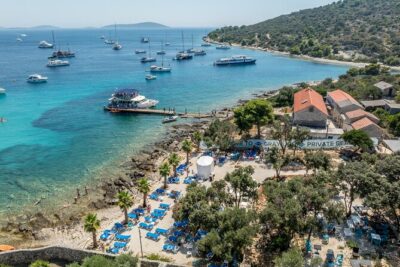 ★ 4.5Blue Lagoon & 3 Islands Cruise with Lunch from SplitFrom $785,756 reviews
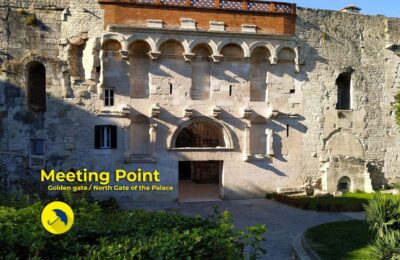 ★ 4.9Old Town and Diocletian Palace Walking TourFrom $174,727 reviews
 ★ 4.9Blue Lagoon Boat Party with DJs, Shots & After PartyFrom $474,610 reviews
 ★ 5.0Krka Waterfalls Tour, Boat Cruise & SwimmingFrom $324,489 reviews
Explore its other useful categories