
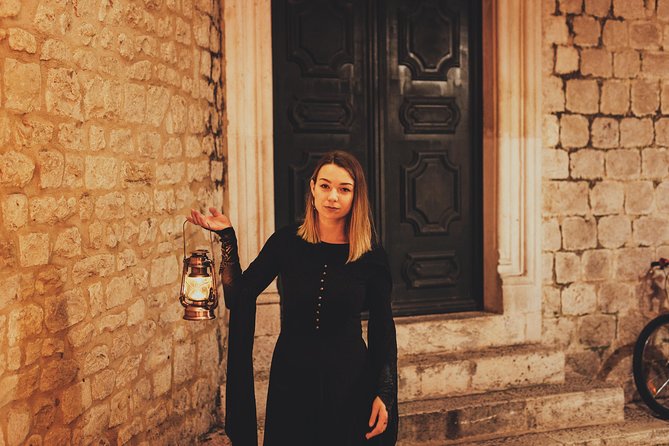
REVIEW · SPLIT CITY & DAY TOURS
Nocturnal Tours Trogir & Split – Myths and Legends of Old Trogir Tour
Trogir at night hits different. This lantern-led walk turns the medieval lanes and stone landmarks into a story you can actually follow, with myths, superstitions, and real characters threaded through the dark.
I especially love the small-group feel and how the tour keeps moving without feeling rushed. I also like the theatrical, character-based storytelling that makes famous sites like North Gate and St. Lawrence’s Cathedral feel personal instead of museum-dry.
One thing to consider: this experience is weather-dependent, and it’s a night walking tour. If you hate cold air, slippery stones, or long dark stretches, plan accordingly.
Key takeaways before you go
- Lantern-lit navigation through Trogir’s older streets makes the town easier to read at night.
- 6 timed stops cover Hellenistic, Roman, and medieval eras without dragging.
- Guides with acting talent help the stories land, including spooky character work.
- Small-group limits (promoted up to 8, listed max 10) keep it interactive.
- Night-focused subject matter covers plague stories, witchcraft fears, and medieval punishments.
Lantern-Lit Myths in Trogir: What This Tour Gets Right
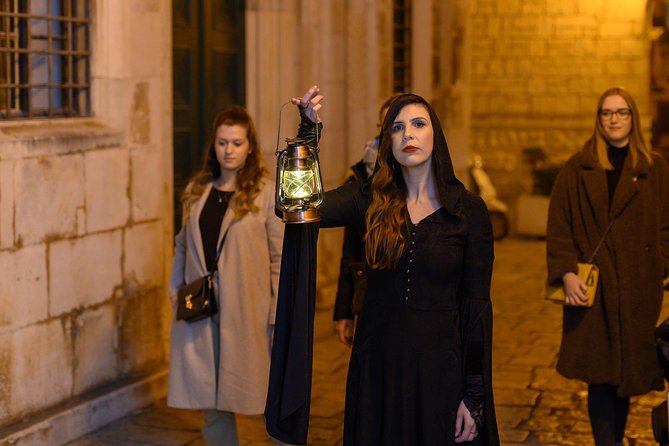
There’s “history you look at,” and then there’s history you walk through. This tour chooses the second option. You start in the historic core, follow a guide at night, and let the lantern glow do more than light the path. It shapes the mood so the stories about nobles, heartbreak, murders, revenge, and superstition feel like they belong to the stones.
Two things make that work. First, the route is built around recognizable anchors in Trogir, like the North Gate area, the medieval fortress stop, and the monastery complex. Second, the pacing is stop-and-story, not lecture-and-stand. You get short segments, then you move. That matters because at night, attention drops fast if you’re stuck listening too long.
You also get a tour that leans into the “dark side” of old-town legend: plague fears, witchcraft accusations, and public punishment. That theme is not random. It fits Trogir’s medieval setting, where people explained what they couldn’t control with myths, religious beliefs, and fear-based folklore.
You can also read our reviews of more tours and experiences in Trogir.


The Route: A Stop-by-Stop Look at Trogir by Night
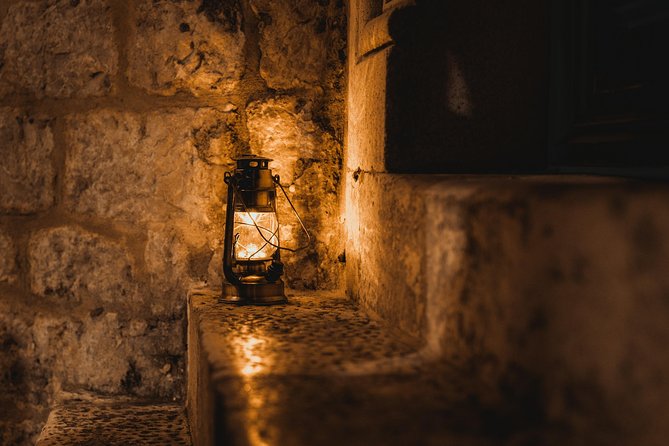
This isn’t a one-stop photo walk. It’s a structured walking itinerary with story time at six places. The tour time you’ll plan around is about 1 hour, and if you add up the listed stop durations, you’ll see roughly 70 minutes of scheduled storytelling plus the travel between points.
Stop 1: Historic City of Trogir (Greek and Roman roots under lantern light)
The tour begins in the Historic City of Trogir, where the city’s layered past sets the stage. You’re led through narrow streets and paths traced back to Greek colonists in the 3rd century BC. From there, the story connects you to the Hellenistic and Roman presence, with “spirits living in stone walls” as the framing device.
This first stop is the best place to get your bearings. You’ll hear why these stones matter, but you’ll also hear why the stories are told the way they are at night: it’s harder to ignore the mood when you’re walking in lantern light. The story theme here is broad on purpose, with medieval drama mixed into an ancient base.
Practical note: this is the longest single segment at about 20 minutes, so it’s where you’ll get the most context. If you’re jet-lagged or low energy, that’s still manageable because the guide keeps the narrative moving.
Stop 2: North Gate (entering the medieval town)
Next you pass through the North Gate area, and the tone shifts. The theme becomes medieval life, with the guide pointing out how the city’s gates mark transitions between eras. The stories here reference fear and suspicion that were very real in medieval Europe: Black Death, “woman as dangerous sin,” witchcraft accusations, and superstitions.
This is a short stop, about 5 minutes, but it’s useful. Gateways like this help you understand the town’s “before and after.” When the guide talks about what you’re entering, you start seeing the city layout as a sequence, not just a postcard background.
If you’re the kind of traveler who likes structure, this stop is your “map in story form.” If you hate feeling rushed, lean into it anyway. It’s brief by design so you don’t lose the thread.
Stop 3: Kula Karmelengo (love, despair, and fortress drama)
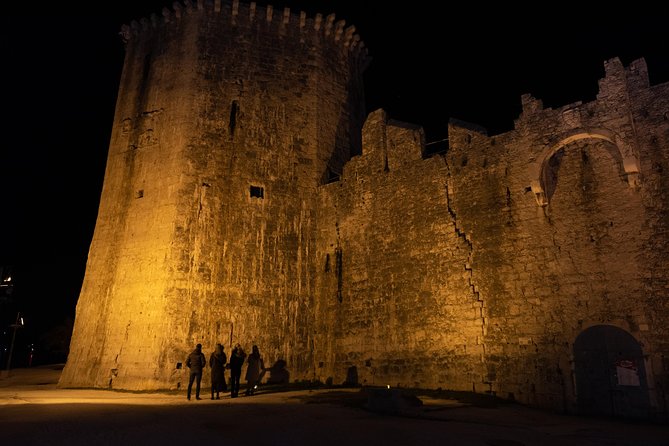
The tour heads to Kula Karmelengo, a medieval fortress setting that turns the night into a stage. Here you get a story of major emotions, the kind that makes legends last: great love and even greater despair.
This stop is about 10 minutes, long enough for a full narrative beat, short enough to keep you moving. Fortress stories also tend to be visually strong, and that’s part of why this stop works on a night walk. The shape of the place supports the mood the guide is creating.
This stop is a good one for families too, as long as everyone is comfortable with dark themes. The tone isn’t graphic in the itinerary description, but it is themed around fear and tragedy.


Stop 4: Kairos Collection at the Benedictine Monastery of Saint Nikola
Then comes one of the more genuinely interesting stops for history-minded travelers: the Benedictine Monastery of Saint Nikola. The description calls it the oldest monastery of its kind still active, and it frames the monastery life through the nuns known as Koludrice of Trogir, who live behind the walls and do not leave.
You also hear about a major symbol kept in the monastery: the Kairos sculptural relief, dated to the 3rd century BC and described as tied to the city’s earliest foundations. The guide ties this artifact to Trogir’s identity, not just as “look, a carving,” but as something that helps explain why stories stick around.
The stop lasts about 10 minutes. For me, this is where the tour balances the “spooky” with something concrete. Even if legends are the star, you end up with a real anchor that you can picture later when you’re back in daylight.
Stop 5: Central Square in Trogir (hero stories and plague blame)
At the Central Square, the guide brings in the tale of Marin Kjudis, described as a hero and also the unintentional cause connected to a plague outbreak in Trogir. This stop leans into the medieval habit of explaining catastrophe with human stories.
It’s about 10 minutes, which is perfect for legend-style storytelling. Square settings also help the guide keep the group together, and you get a sense of where major public life happened during medieval times.
If you like stories that mix morality with fate, this is your stop. The guide likely shows how legends can exist at the same time as history, even when the details are complicated.
Stop 6: Loggia – Doorway (the Pillar of Shame and public fear)
The final stop is the Loggia – Doorway, where medieval punishment stories take center stage. The theme here is crime and punishment, with examples listed as felon, thief, pyromancer, killer, or traitor. The punishment described is a Pillar of Shame, where the convict was displayed publicly.
This segment runs about 15 minutes, the longest stop after the opening. It’s also where the tour’s “dark legend” focus hits hardest. For some people, this is exactly the point, because it shows how public fear shaped everyday life.
For others, this may be heavy if you’re sensitive to violence-adjacent stories. The good news is the tour framing is specific and time-bound, not dragged out.
The Guide Matters: Acting Talent Makes It Work
What really elevates this tour is the way the guide performs the material. The tour description emphasizes passion, but the real-world value is in delivery. In the guide style described through different experiences, you’ll often see character work and a theatrical approach, with guides such as Jelena and Doris specifically named.
If you enjoy walking tours where the guide sounds like they’re telling you a campfire story, this format fits. It also helps families with teenagers, since the humor and spooky character vibe can keep attention on the path instead of turning it into a slow history lesson.
For you, the practical takeaway is simple: choose this tour if you want story plus movement. If you prefer quiet, straightforward interpretation and lots of facts only, you might find the drama more than you want. The itinerary suggests the guide leans into myths and legend, not just timelines.
Price and Value: $28.83 for a 1-Hour Night Story
The price is $28.83 per person for about 1 hour. That’s not a “cheap snack” price, so you should judge value the way you would for any experience: what you’re buying is storytelling, timing, and nighttime guidance.
Here’s where the price makes sense:
- You’re paying for an English-speaking guide and a route designed for night viewing.
- The tour is small-group, promoted up to 8 travelers, with a listed maximum of 10. Either way, it’s not a huge crowd.
- You get multiple themed stops, roughly 70 minutes of scheduled story time when you count the listed durations.
Also, each stop is described with admission ticket free language, so you’re not dealing with a string of paid entry fees at the landmarks named in the itinerary.
If you’re on a tight budget, you can compare it to a regular daytime walking tour, but remember this is night-themed. In old towns like Trogir, night walks often give a different feel, and lantern-led navigation can be more useful than you expect.
Timing, Walking Comfort, and Weather Reality
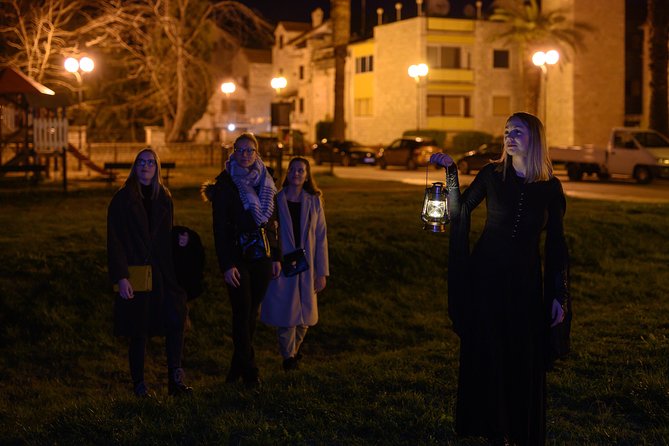
This is a night experience, so “plan for comfort” means practical choices. The itinerary is compact, but old-town stone streets can be uneven, and you will be moving between points in the dark.
The tour also explicitly requires good weather. If it’s canceled due to poor weather, you’re offered a different date or a full refund. That means you should not treat it like an optional add-on on the one night you refuse to reschedule.
If you’re traveling in warmer months, the biggest comfort issue is usually the night temperature and how long you’ll be outside. If it’s cooler, bring layers. If it’s rainy, keep your plan flexible.
Where It Fits in Your Trogir Day
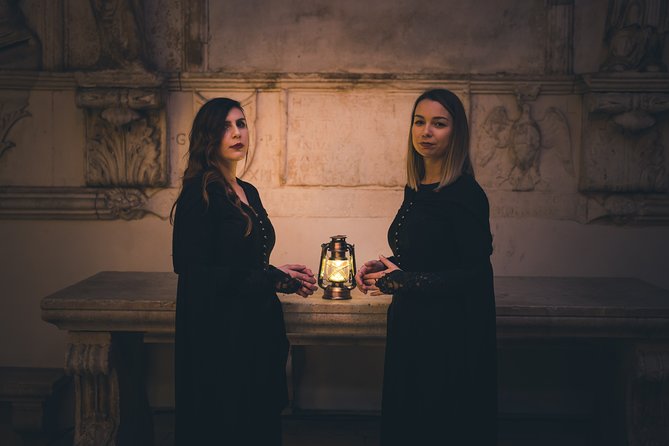
This is best as an evening activity once you’ve had enough daylight to understand the basics of Trogir’s layout, or right at the start if you’re okay learning by story. The route ends near St. Lawrence’s Cathedral, which is convenient because you can continue exploring in the same area after the tour.
Also, because the theme includes Black Death, witchcraft fears, and medieval punishment stories, it’s a good contrast if you’ve been spending the day on lighter sights. It gives you a “different angle” on the same city.
Who Should Book This Lantern Tour
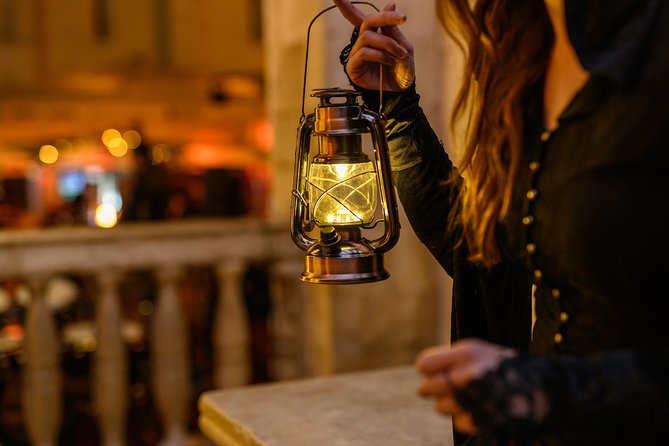
I’d especially recommend it if:
- You like narrative walking tours where the guide performs, not just explains.
- You want a night atmosphere in Trogir rather than another daytime stroll.
- You’re traveling with teenagers who get bored with long lectures, since the tone is made to hold attention.
- You’re the type who enjoys myths and superstitions as part of cultural history, not just spooky entertainment.
I’d think twice if you:
- Want strictly straightforward, academic history with minimal drama.
- Are very uncomfortable with dark themes, even if they’re presented as legend and public historical fear.
Should You Book Nocturnal Tours Trogir, Myths and Legends?
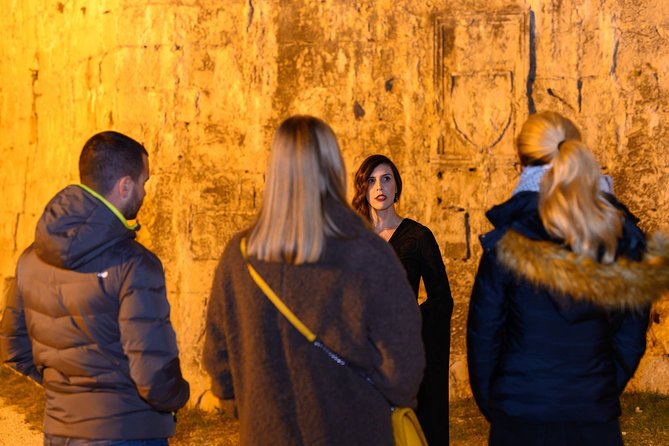
Book it if you want your Trogir visit to feel alive. The combination of lantern-lit guidance, a route with six distinct story stops, and a guide style that can include character performance makes this more than a standard walking tour.
Wait or skip if you prefer quiet sightseeing, or you know weather and nighttime walking are a deal-breaker for you. Since the tour needs good weather, you’ll be happier if you can choose a flexible evening.
If your idea of a great night in Croatia is a short walk, good pacing, and stories that stick, this one is a strong fit for the way people actually remember places.
FAQ
How long is the Nocturnal Tours Trogir & Split Myths and Legends of Old Trogir tour?
The tour is listed as approximately 1 hour. The stop durations add up to about 70 minutes of guided time.
What is the price per person?
The price is $28.83 per person.
Is the tour offered in English?
Yes, it is offered in English.
How big is the group?
It is promoted as a small-group tour with a maximum of 8 travelers, and the activity info lists a maximum of 10 travelers.
Where does the tour start and end?
It starts at Ul. Gradska vrata 6, 21220, Trogir, Croatia. It ends at St. Lawrence’s Cathedral, Trg Ivana Pavla II, 21220, Trogir, Croatia.
Do I need to bring a paper ticket?
You can use a mobile ticket, which is provided for the experience.
Are admissions included for the stops?
The itinerary lists the stops as admission ticket free for each location mentioned.
Is the tour dependent on weather?
Yes, it requires good weather. If it is canceled due to poor weather, you will be offered a different date or a full refund.
Can I bring a service animal?
Yes, service animals are allowed.
What is the cancellation window?
You can cancel up to 24 hours in advance for a full refund.
More Tours in Trogir
More Tour Reviews in Trogir
Not for you? Here's more nearby things to do in Trogir we have reviewed


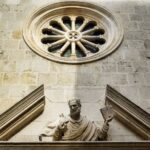

More Split City & Day Tours to consider.
 ★ 4.8Krka Waterfalls Trip with Boat Cruise and SwimmingFrom $3110,519 reviews
 ★ 5.0Krka Waterfalls, Food & Wine Tasting TourFrom $459,326 reviews
★ 4.9Krka Waterfalls, Food & Wine Tasting TourFrom $446,598 reviews
★ 5.0Krka Waterfalls, Food & Wine Tasting TourFrom $459,326 reviews
★ 4.9Krka Waterfalls, Food & Wine Tasting TourFrom $446,598 reviews
 ★ 4.6Split/Trogir: Blue Cave, Mamma Mia, Hvar and 5 Island TourFrom $1096,320 reviews
 ★ 4.5Blue Lagoon & 3 Islands Cruise with Lunch from SplitFrom $785,756 reviews
 ★ 4.9Old Town and Diocletian Palace Walking TourFrom $174,727 reviews
 ★ 4.9Blue Lagoon Boat Party with DJs, Shots & After PartyFrom $474,610 reviews
 ★ 5.0Krka Waterfalls Tour, Boat Cruise & SwimmingFrom $324,489 reviews
Explore its other useful categories