
REVIEW · SPLIT CITY & DAY TOURS
Discover Split’s Hidden History – Guided Walking Tour
Roman ruins are right in Split’s daily life. This 90-minute walking tour strings together the Peristyle of Diocletian’s Palace, the Cathedral of Saint Domnius, and the Temple of Jupiter so you get the big picture fast. I like how it stays practical, not just scenic, and I especially like the small group setup and the certified English speaking local guide.
You’ll get a quick orientation to Split’s old town while still spending real time at each stop. The one drawback to keep in mind is that there can be some stairs and uneven stone, so wear comfortable shoes. Also, the tour notes optional entrance fees, so if there’s anything you want beyond what’s included, you may need a little extra budget on site.
Key things I’d prioritize on this tour
- Max 15 people means easier questions and a pace that does not feel rushed
- Diocletian’s Palace sites first helps you understand Split’s layout immediately
- St. Domnius includes major highlights, from the bell tower look to the treasury contents
- Temple of Jupiter is short but focused, ideal if you want Roman details without a long stop
- English guide with on-the-spot answers makes the history click instead of feeling like facts on a page
90 Minutes of Roman Split: How the Walk Makes Sense
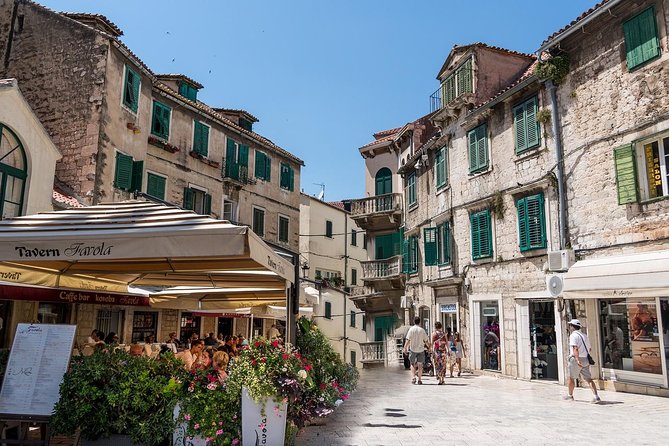
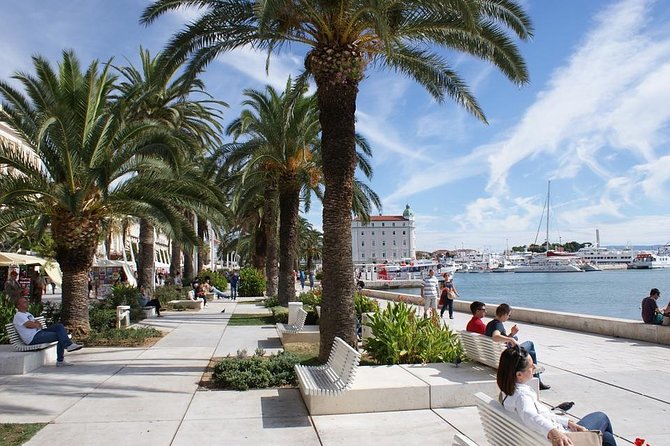
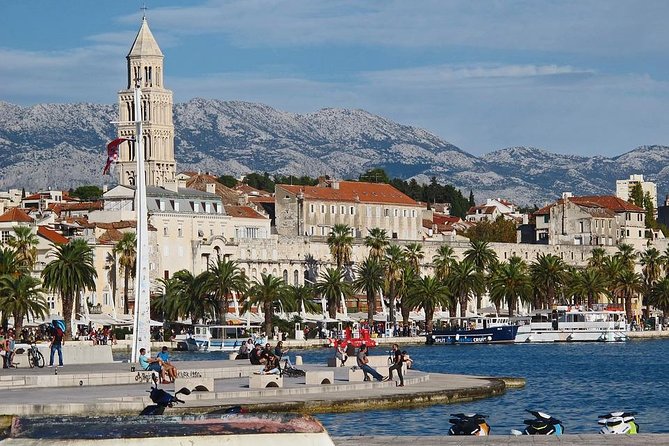
Split can feel like two cities at once. You’re surrounded by waterfront life and then, in the next step, you’re inside Roman walls that still shape where people walk, shop, and gather. This tour is built for that moment of whiplash, with a tight route that takes you straight to the structures that explain everything else.
I like that the timing is balanced across three stops. You’re not sprinting from one photo spot to another. Instead, you get enough time at each location to understand what you’re seeing, including why these buildings mattered when they were new.
If you want a clear starting point for Split Old Town, this style of tour is the fastest route to confidence. You’ll leave knowing where the key areas sit relative to each other, so later you can wander on your own without getting lost in the maze of stone streets.
You can also read our reviews of more walking tours in Split


Finding the Start at Obala Lazareta 3 (So You Don’t Waste Time)
This tour starts at Obala Lazareta 3 and loops back to the same meeting point at the end. Start time is 9:00 am, so plan to arrive a little early, especially if you’re figuring out where to park or how to walk from your lodging.
Because it’s a short 1 hour 30 minutes experience, every minute matters. Showing up on time also helps you settle in before the guide launches into the palace context, which is the backbone of the whole route.
Stop 1: Diocletian’s Palace Peristyle, the Courtyard That Runs the City
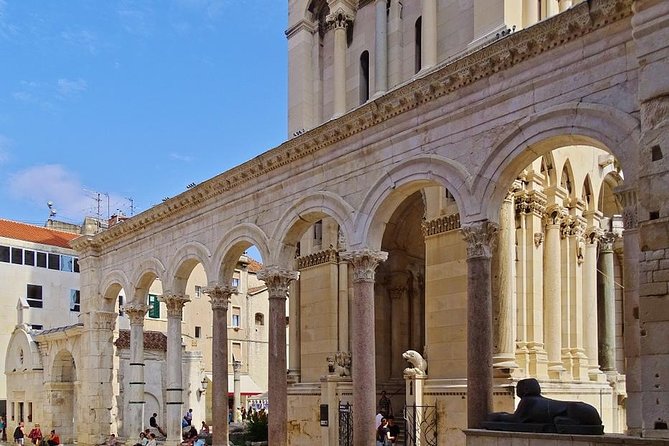
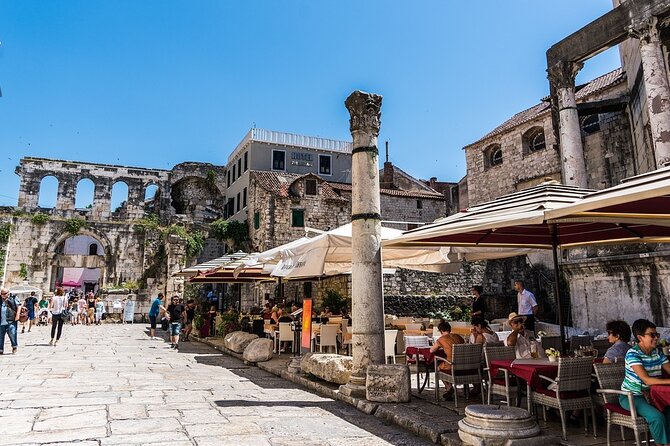
The tour’s first stop is the Peristyle of Diocletian’s Palace, described as the palace’s beating heart. It’s originally the courtyard of the fortress built by one of the last Roman emperors, and that idea matters because it explains the scale and purpose of the entire complex.
What you’ll notice here is how the space functions. A courtyard is not just decoration, it’s where people move, meet, and flow between important areas. The Peristyle gives you a “map in your head,” so when you later see other parts of the palace and city, you understand the logic behind the walls and streets.
The time at this stop is about 30 minutes, and that’s a sweet spot. Long enough to absorb the layout and learn what the space was meant to do, short enough that you’re not mentally fried before you reach the big church and temple sights next.
Practical note: the palace area involves stone surfaces, and you should expect some level of walking. If your feet are sensitive, comfy shoes make a bigger difference than people think.
Stop 2: Cathedral of Saint Domnius, Mausoleum, Bell Tower, and the 24 Columns
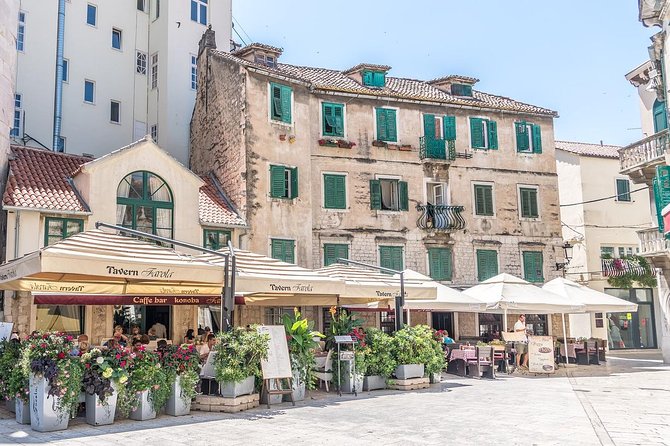
Next up is the Cathedral of Saint Domnius, and it’s often treated as the single most popular attraction in Split. The reason is simple, it’s a layered site. Built as a mausoleum for Diocletian, it carries that political and religious weight that shaped the city’s shift over time.
You’ll also hear about the bell tower, because it’s become an emblem of Split. Even if you’re not focused on church architecture, the tower acts like a visual anchor, a landmark you’ll recognize later from streets and views.
One of the most specific details you should look for is the exterior colonnade: 24 columns that still ring the building. That number is a great clue for how seriously the original Roman design treated proportion and order. It’s easy to overlook when you’re just trying to photograph, so I’d slow down and actually look at the rhythm of the columns.
This cathedral also houses a treasury with a very particular kind of collection: reliquaries, icons, church robes, illuminated manuscripts, and documents in Glagolitic script. That Glagolitic angle is a big deal because it shows how the site links Roman-era structures with later Christian culture in this region.
This stop runs about 30 minutes, and that amount feels right. It gives you time for the big exterior features and then enough to understand what you’re looking at inside the story, not just outside the walls.
Stop 3: Temple of Jupiter, a 3rd-Century Roman Temple You Can Actually Finish
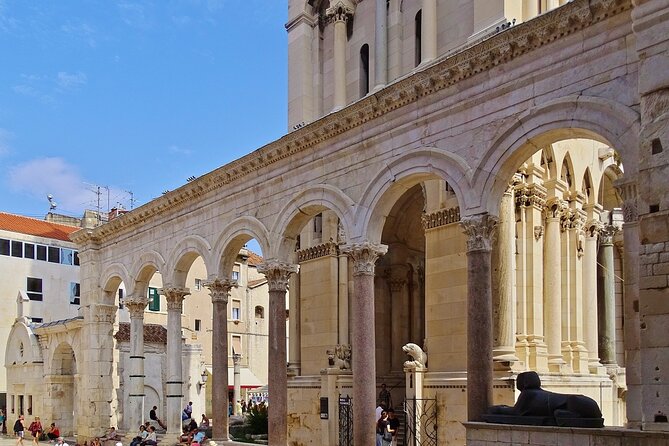
The final stop is the Temple of Jupiter, constructed in the 3rd century as part of Diocletian’s Palace. If you’re worried about Roman stops feeling repetitive, this one breaks that pattern because it’s explicitly tied to worship and belief.
The guide context you’ll get here is that Diocletian believed he was the reincarnation of Jupiter. That matters because it turns the temple from a static building into a statement about power and identity in Roman times, especially before Christian rule became dominant.
This temple is considered one of the best preserved Roman temples in the world, and you’ll feel why when you’re standing in front of it. Instead of just imagining how temples worked, you can see how the structure has held up and how it fits within the larger palace complex.
You only spend about 15 minutes here. That’s the right length for this type of sight on a walking route. Enough time to connect it to Diocletian and Jupiter worship, not so much that you lose momentum or end your tour tired before you can enjoy the rest of your day in Split.
You can also read our reviews of more guided tours in Split





Price and Value at $41.70: What You’re Really Paying For
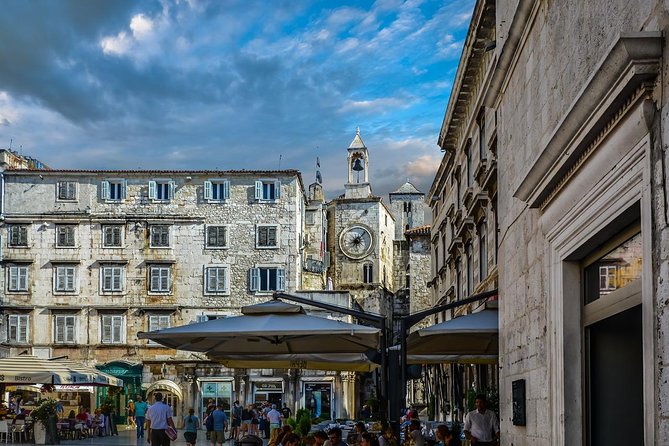
The tour costs $41.70 per person and runs about 1 hour 30 minutes. For the price, the most important value is not just the walking. It’s the combination of a certified English speaking local guide plus included admission tickets at the listed sights.
At each of the three stops, the tour includes an admission ticket. That’s a clear win for planning, because you’re not trying to decide last minute whether you should pay entry fees while you’re already standing in front of the entrance.
That said, the tour also notes optional entrance fees and that not all fees and taxes are included. In plain terms, assume your money covers the main planned entries, but if you add extras on your own once you’re there, you’ll pay those yourself.
I’d call this good value for a first visit to Split Old Town, especially if you want context instead of aimless wandering. If you already know the Roman sites well and just want quick photos, you might prefer to go self-guided. But if you want the story to click while you’re on your feet, this price feels reasonable.
Pace, Stairs, and Getting the Most Out of the English Guide
The group size is capped at 15 travelers, and that detail changes the experience. You can ask follow-up questions, and the guide can keep attention without talking into the back of a crowd.
One of the most praised parts of this tour is how guides handle questions and pacing. You’ll likely find the tour stays friendly and responsive rather than stiff. That matters because Roman architecture and layered religious sites can get confusing fast without a human to untangle the timeline.
As for physical comfort, you should expect some stairs. The good news is the tour is still short and manageable for most people, so it should not turn into a long endurance event. Still, bring shoes with grip. Split’s stone and steps are beautiful, and they can also be slippery when you least want them to be.
If you want to take photos, do it during the pauses the guide builds in. You’ll get better shots when you understand what angle the guide wants you to notice, like the bell tower emblem and the column ring, rather than only shooting quickly while walking.
Who This Tour Suits Best (And Who Might Skip It)
This walking tour is a great fit if you want a structured orientation to Split Old Town, with Roman landmarks that explain the city’s layout. It’s especially good for first-timers who want to hit the big three sites without planning an exact route.
It’s also ideal if you like learning through conversation. The guide format and small group size make it easier to ask what you’re seeing, not just listen to a lecture.
If you’re the kind of visitor who already has a deep plan and you’re happy reading signs on your own, you may find it less urgent. But for most people, this is a smart way to start the day, then spend the afternoon wandering with confidence.
Should You Book This Split Walking Tour?
Yes, I’d book it if you want your first taste of Split’s Roman core to come with clear context and included entry tickets. The Peristyle, Cathedral of Saint Domnius, and Temple of Jupiter are the kind of stops that make the rest of the city make sense, and the 1 hour 30 minute format respects your time.
I’d pass or reconsider only if you dislike walking on stone and stairs, or if you already feel comfortable with Roman Split history and prefer to set your own pace. Otherwise, this is the kind of tour that helps you get oriented fast, so your later self-guided wandering feels easy, not stressful.
FAQ
How long is the Discover Split’s Hidden History walking tour?
It lasts about 1 hour 30 minutes.
How much does the tour cost?
The price is $41.70 per person.
Is the tour offered in English?
Yes, it is offered in English.
Do I get a mobile ticket?
Yes, the tour includes a mobile ticket.
Where does the tour start and end?
It starts at Obala Lazareta 3, 21000, Split, Croatia, and ends back at the same meeting point.
What time does the tour begin?
The start time is 9:00 am.
What are the main stops on the tour?
The tour covers the Peristyle of Diocletian’s Palace, Cathedral of Saint Domnius, and Temple of Jupiter.
Are admission tickets included?
Admission tickets are included for the stops listed on the itinerary. The tour notes optional entrance fees may not be included for extra items you choose to add.
How large is the group?
The tour has a maximum of 15 travelers.
What if weather is bad?
This experience requires good weather. If it’s canceled due to poor weather, you’ll be offered a different date or a full refund.
More Walking Tours in Split


More Tours in Split

More Tour Reviews in Split


Not for you? Here's more nearby things to do in Split we have reviewed






More Split City & Day Tours to consider.
 ★ 4.8Krka Waterfalls Trip with Boat Cruise and SwimmingFrom $3110,519 reviews
 ★ 5.0Krka Waterfalls, Food & Wine Tasting TourFrom $459,326 reviews
★ 4.9Krka Waterfalls, Food & Wine Tasting TourFrom $446,598 reviews
★ 5.0Krka Waterfalls, Food & Wine Tasting TourFrom $459,326 reviews
★ 4.9Krka Waterfalls, Food & Wine Tasting TourFrom $446,598 reviews
 ★ 4.6Split/Trogir: Blue Cave, Mamma Mia, Hvar and 5 Island TourFrom $1096,320 reviews
 ★ 4.5Blue Lagoon & 3 Islands Cruise with Lunch from SplitFrom $785,756 reviews
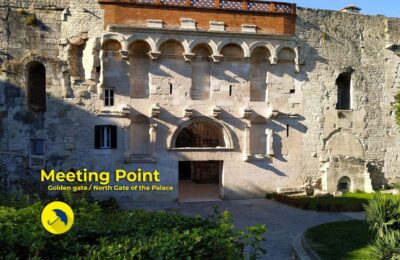 ★ 4.9Old Town and Diocletian Palace Walking TourFrom $174,727 reviews
 ★ 4.9Blue Lagoon Boat Party with DJs, Shots & After PartyFrom $474,610 reviews
 ★ 5.0Krka Waterfalls Tour, Boat Cruise & SwimmingFrom $324,489 reviews
Explore its other useful categories