
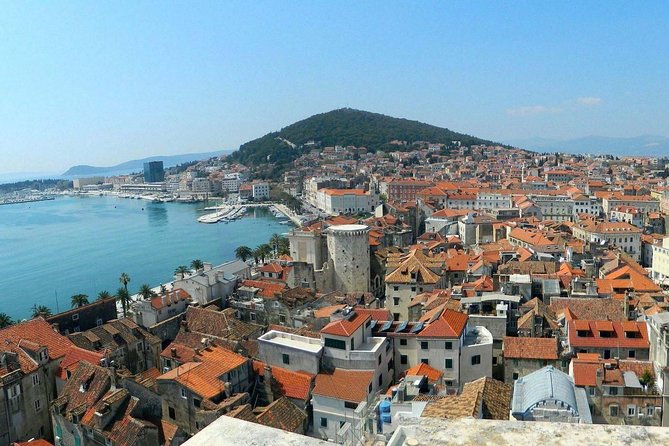
REVIEW · SPLIT DIOCLETIAN'S PALACE & HERITAGE TOURS
YOUR BEST PRIVATE TOUR – amazing Split and Diocletian’s palace
Split’s history feels close enough to touch.
I love how this private walk starts on the Riva and quickly turns into Diocletian’s world, then into medieval Split. You get a licensed guide, a flexible route, and a quick way to understand why the city grew exactly where it did.
My two favorite parts are the time spent inside Diocletian’s Palace and the look down into the substructures. You’ll walk the same streets and thresholds where centuries layered into each other, without dragging a guidebook around.
One thing to consider is that not every stop is free to enter, with the palace substructures specifically noted as an extra cost. Also, you’ll cover a lot of ground on foot, so plan for walking through historic streets and some stone steps.
Key things to know before you go
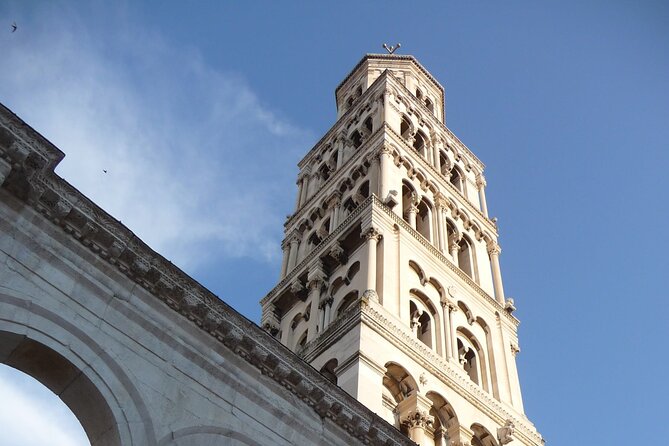
- Start at the Riva for early light and a better feel for Split before the biggest crowds arrive.
- Diocletian’s Palace makes sense when someone explains it. The guide connects the Roman plan to medieval life.
- The substructures are the wow moment if you like seeing how people lived below the city level.
- You’ll see multiple eras in one loop, from Roman gates to medieval squares and a synagogue.
- Chocolate stop is included, but only on non-Sundays, since the store is closed Sundays.
- It’s truly private, so the guide can slow down, speed up, or swap sights to match your interests.
The Riva, your warm-up for Split’s biggest story
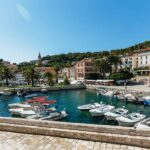
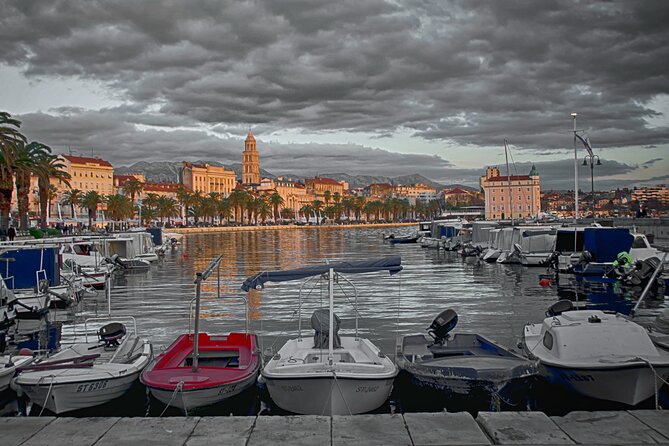
The tour begins at the Riva, Split’s waterfront promenade, often described as the city’s living room. It’s a smart starting point because you get a sense of the harbor and the city’s shape before you go into the stone maze of Old Split.
Your guide sets the stage with a quick intro to Croatia and Split, then points you toward what you’ll see next. I like this approach because it helps you recognize patterns fast, instead of treating the palace like random ruins.
You can also read our reviews of more private tours in Split

Entering Diocletian’s Palace through the Southern Gate
The next shift is immediate: the Southern gate brings you into Diocletian’s Palace, one of the best preserved Roman monuments from the 4th century. The palace began as Diocletian’s luxury retirement home, then later became the medieval city of Split when the palace walls were repurposed for everyday life.
From here, you explore the palace on foot for about 90 minutes or more. Most of the experience is about moving through key zones and learning what they were for, from emperor-level spaces down to the later city layout that grew around them. You’ll also get an introduction to the cathedral area inside the complex, including the highlight of seeing the world’s oldest cathedral.
What I love: the guide’s explanations turn the place from “cool stones” into a timeline you can follow.
What to watch: palace navigation can feel confusing at first, because medieval streets and Roman structures share the same space.
The Peristyle square: Roman core meeting centuries of change
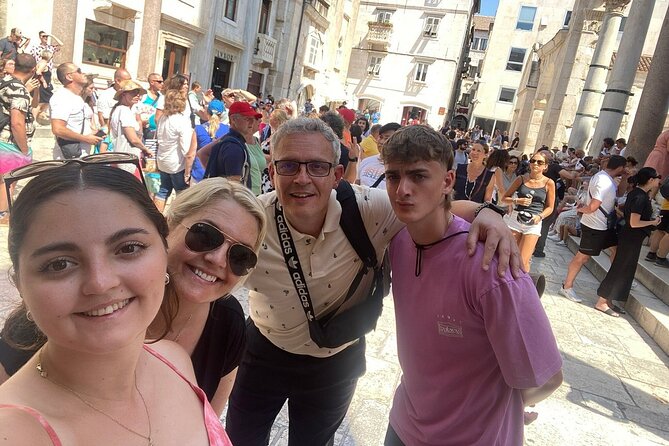
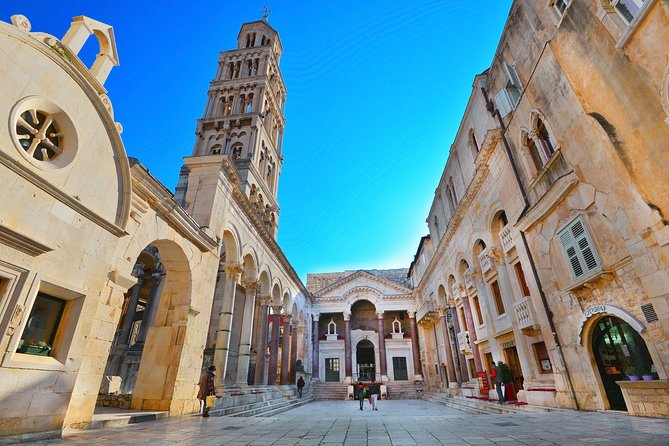
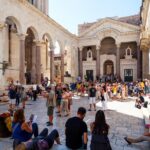
After the main palace walk, you reach the Peristyle, the central square. This is where the palace energy becomes obvious: it’s surrounded by different architectural styles and monuments spanning ancient Roman, Egyptian-era references, medieval pieces, and even later additions.
This is the part where you stop and realize the palace is not one uniform monument. It’s a working city structure that got reused, rebuilt, and reinterpreted over and over.
It’s usually a short stop, around 15 minutes, but it’s worth slowing down. Even if you’ve seen photos, being there in person helps you understand the scale and why certain buildings became focal points for city life.
Going below ground at the Bronze Gate substructures
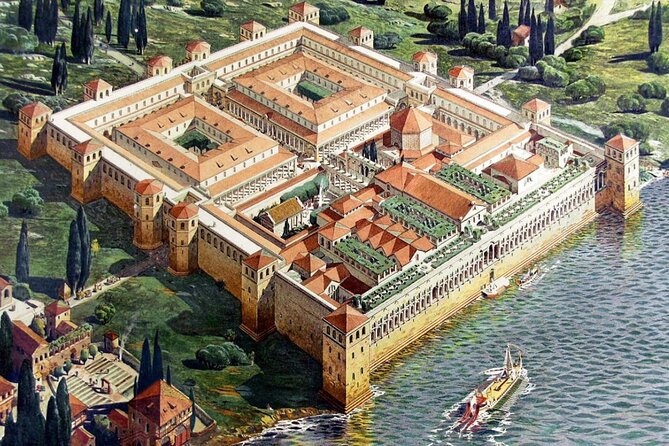
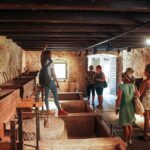
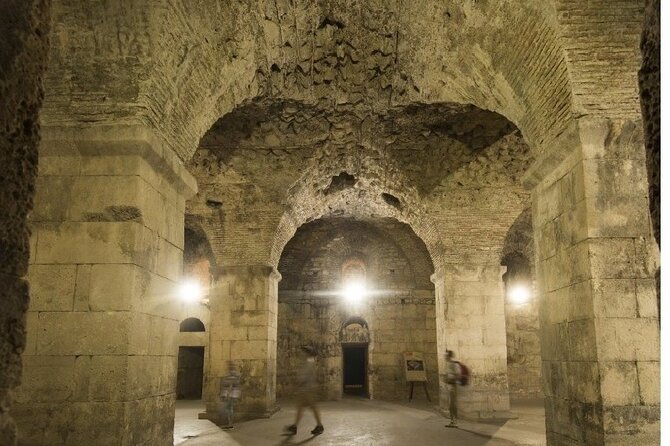
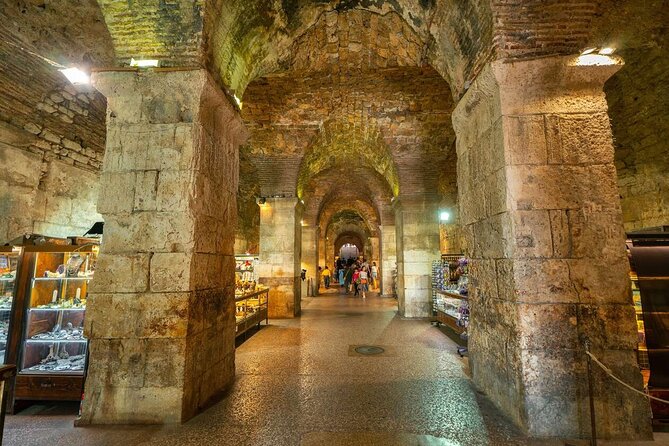
If you want the most memorable contrast, head to the Bronze Gate and the Diocletian Palace substructures. This is the underground world beneath the palace, some 1700 years old, and it’s where the city’s Roman engineering feels real, not decorative.
The tour here focuses on Diocletian’s life and the palace’s construction logic. You’ll hear about how he became emperor, how he ruled, his years of power, and his abdication and retirement. Then the story shifts to the practical side: how the palace was built, including stone sourced from Brac.
This stop is the one place where an admission fee is explicitly noted as not included. Time on the substructures is about 30 minutes, so it works well if you’re the type who likes facts but also appreciates seeing things with your own eyes.
Trade-off: you’ll be walking and listening while you’re in an older, stone-heavy setting, so go in ready for cooler air and a bit of tight space.
Vestibulum and the chance for Klapa singing
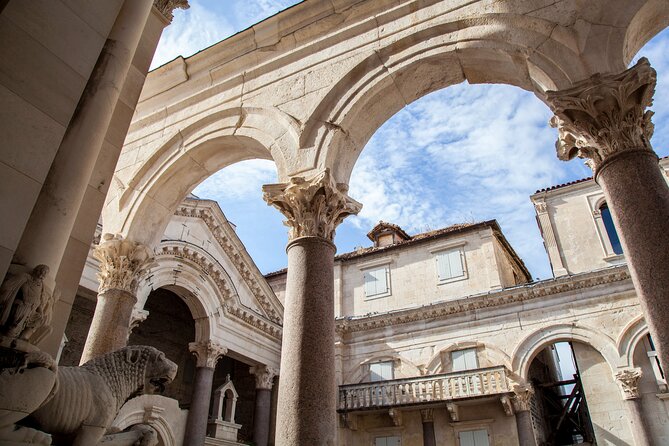
Next comes the Vestibulum, a circular building that served as Diocletian’s lounge, essentially an entrance zone to the emperor’s private chambers. It’s a beautiful spot because the shape and function make sense even if you don’t read architecture.
One small but special note: sometimes you might have the opportunity to hear Dalmatian Klapa choirs singing in this area. It’s not guaranteed, but it’s the kind of cultural detail that makes the palace feel like a living stage, not a museum corridor.
The time here is short, around 7 minutes, so treat it as a quick atmosphere stop. Listen for what’s happening around you, not just the guide’s words.


Gates and street lines: Silver Gate and the Decumanus
The tour continues with the Eastern (Silver) Gate, tied to the Eastern palace entrance. From here, you begin the main Decumanus street, which helps you connect the palace’s layout to Roman street planning.
Even if you only spend 2 minutes at this specific point, it matters. Roman gates and street axes were built to structure movement and power, and seeing them in the palace context makes Split’s street map much easier to read.
If you love “why is this street here?” questions, this is the moment your guide can answer them.
The Golden Gate and the people-trap idea
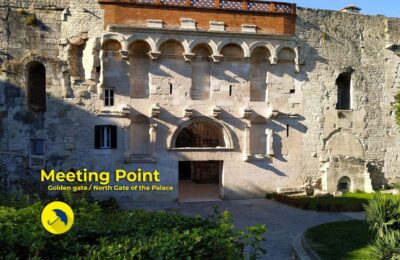
Then you reach the Golden Gate, the palace’s main entrance. This is where your guide explains the Roman concept of a people trap, a design idea that controlled how people moved into and through the space.
You’ll also hear about the Roman street system, including Cardo and Decumanus, and the road to Salona, the ancient Roman capital town. That road connection is important, because Split did not spring up out of nowhere. It grew in a larger regional network.
This is a short stop, about 5 minutes, but it’s one of the most useful “logic lessons” on the whole tour. You leave thinking differently about how entrances, streets, and power worked in Roman times.
A treat inside the Old Split flow: Nadalina cokolada
You’ll stop for a chocolate tasting at Nadalina cokolada. It’s a included visit, about 7 minutes, and you’ll get sweet treats with Mediterranean fruit and herbal flavors.
There’s one practical catch: the shop is unfortunately closed on Sundays. If you’re going on a Sunday, you’ll want to confirm what the guide swaps in for you.
This is one of those small moments that makes a short tour feel complete. It’s also a good reset between palace stone and town squares.
Grgur Ninski Statue: Croatia’s big character
Back outside the palace complex, you’ll see the Grgur Ninski statue, the large statue of the famous 10th-century Croatian archbishop. It’s by Ivan Mestrovic, one of Croatia’s best-known sculptors, and it’s the kind of spot that helps you shift from Roman Split to Croatian Split.
This is a quick stop, around 5 minutes, but it’s a nice pause to reorient your brain. You’re moving from ancient engineering into national identity, right in the same walking loop.
Split Synagogue and the Jewish ghetto area
A highlight for history-minded visitors is the Split Synagogue, connected to the old Jewish ghetto area. You’ll spend about 15 minutes here, which is long enough to appreciate the space and short enough to keep the tour from dragging.
The synagogue is described as a 16th-century to medieval-era site, and the tour notes that it’s the third oldest operating synagogue in Europe. Whether or not you know Jewish history in the region, the visit adds a key layer to how Split’s Old Town formed.
Consideration: this is a calm stop compared with the palace zones. If you prefer nonstop moving, this might feel slower, but it’s also where the tour’s tone becomes more reflective.
Squares that define the medieval city: Narodni Trg, Fruit’s Square, Prokurative
After the historic interiors and gates, you shift into the medieval open-air parts of Split.
Narodni Trg
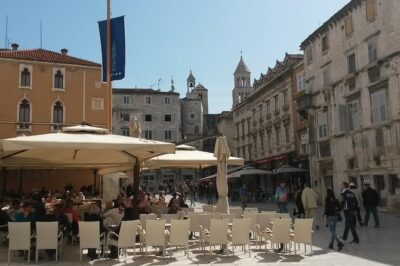
At Narodni Trg, the main square of medieval Split, you see the City Hall building and a ring of beautiful palaces around the square. You’ll spend around 8 minutes here, enough to understand this is the civic center, not just a pretty backdrop.
Fruit’s Square (Trg Brace Radic)
Then you move to Fruit’s Square, also called Vocni trg. This used to be a market place, and you’ll find a statue of Marko Marulic, a 15th-century poet and humanist often called the father of Croatian literature. This is an easy place to imagine everyday trade and talk in earlier centuries, with a short, clear stop of about 8 minutes.
Prokurative
Finally, you reach Prokurative Square, a more open promenade-like space surrounded by neo-Renaissance buildings. It’s often compared to St. Mark’s Square in Venice, and it’s included as a quick stop, around 3 minutes, that gives you a sense of the Old Split pace.
Price and value: what you pay for, and what you don’t
The tour costs $124.34 per person and typically runs about 1 hour 50 minutes to 2 hours 10 minutes. That price can feel steep for a city walk, but it’s paying for your biggest advantage: a licensed private guide who can translate layers of Roman and medieval planning into something you actually understand.
Most of the sights are offered as free-to-view stops, but the substructures admission is explicitly noted as not included. So it’s best to think of the price as paying for guidance and access to the right order of places, then minor on-site entry where applicable.
You’ll also get a mobile ticket. If you hate paperwork, that matters. The tour is also private, so it’s just your group.
Who this tour suits best (and who might prefer something else)
This is ideal if you want a short, focused Split overview without wasting time wandering. It’s especially good for:
- First-time visitors who want Diocletian’s Palace explained in plain language
- Travelers who like architecture and timelines, but still want breathing room
- Couples and small families who prefer a private pace and flexible stop choices
- People who want a morning tour so they can enjoy the city before the biggest crush
If you only want photos and don’t care about history or layout, you might feel the guide time is more than you need. If you dislike walking on uneven stone, you may want to plan on taking it slow and leaning on the guide to choose the easiest routes.
Should you book this Split and Diocletian’s Palace private tour?
Yes, I’d book it if you want your first Diocletian’s Palace experience to make sense quickly. The palace substructures plus the gates and squares combination is a smart use of two hours, and it prevents the usual problem of seeing a lot but understanding little.
I’d pass or choose carefully if you’re on a tight budget for entrances, or if Sunday timing matters to you because the included chocolate stop is closed Sundays. Otherwise, this is a strong way to get the Roman-to-medieval story in one walk, with a guide who can tailor the route to what you care about.
FAQ
How long is the private tour of Split and Diocletian’s Palace?
The tour runs about 1 hour 50 minutes to 2 hours 10 minutes.
What does the tour cost?
The price is $124.34 per person.
Is it a private tour?
Yes. It’s a private tour, so only your group participates.
Is pickup available?
Pickup is possible only if you are staying in Old town Split accommodations. If you arrive by cruise ship, you’ll be picked up at the port at the cruise ship dock exit gate. If you are staying outside the Old town, you meet at the Old town meeting point.
Where do we meet for the tour?
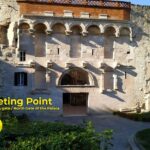
The tour starts at Luka Split, Obala kneza Domagoja 7, 21000, Split. There is also an Old town meeting point option by the bronze model of the historical core at Obala Hrvatskog narodnog preporoda 23.
Are entrance fees included?
Entrance fees are not included. Some sights are listed as free, while the palace substructures specifically notes admission is not included.
Is the tour offered in English?
Yes, the tour is offered in English.
Is the chocolate stop included, and is it open every day?
The chocolate tasting at Nadalina cokolada is included. It is closed on Sundays, so you may need a different stop if your tour is on that day.
Can I cancel for a full refund?
Free cancellation is available if you cancel at least 24 hours before the experience start time. If you cancel less than 24 hours before, the amount paid will not be refunded.
More Private Tours in Split


More Tours in Split
More Tour Reviews in Split

Not for you? Here's more nearby things to do in Split we have reviewed




More Split Diocletian's Palace & Heritage Tours to consider.
 ★ 4.9Old Town and Diocletian Palace Walking TourFrom $174,727 reviews
 ★ 5.0Walking Tour of Split and Diocletian’s PalaceFrom $482,588 reviews
 ★ 5.0Split & Diocletian’s Palace Walking TourFrom $211,125 reviews
 ★ 4.7Diocletian Palace & Old Town Guided Walking TourFrom $17882 reviews
 ★ 4.8Game of Thrones Tour with Diocletian’s Palace CellarFrom $41545 reviews
 ★ 5.0Diocletian’s Palace and Old Town SMALL GROUP Walking TourFrom $16502 reviews
 ★ 5.0SPLIT-PRIVATE Walking Tour of Diocletian’s Palace & Old TownFrom $240467 reviews
 ★ 5.090-min Diocletian Palace Walking TourFrom $21323 reviews
Explore its other useful categories