
REVIEW · SPLIT CITY & DAY TOURS
Split: Magical Evening Sightseeing Private Tour
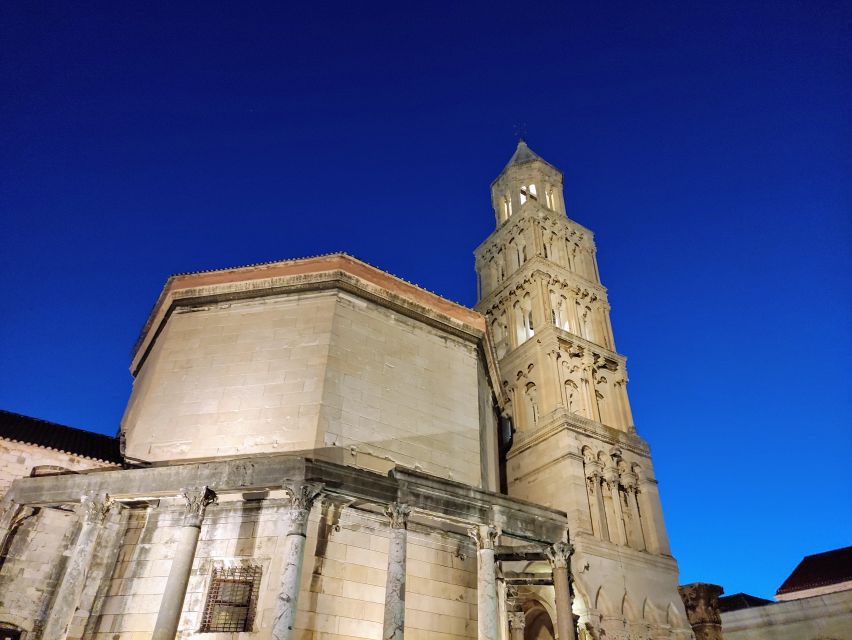
Roman Split feels different at dusk. This 2-hour private evening walk threads you through Roman ruins and later medieval layers, when the old town softens and the squares start buzzing. I like that it focuses on Diocletian’s Palace and the key sights around it at a comfortable pace, not a sprint. The main catch is timing: the Cathedral of St. Domnius may be closed during the tour hours, so you should plan for outside views.
You start near the waterfront, then your guide leads you through a 1700-year story in compact steps: Peristyle, Jupiter Temple, the cathedral’s setting, Golden Gate, Piazza, and the Fruit Square area. I also love the private format, because you can slow down for photos or speed up through spots that don’t grab you. You’ll still need to bring comfortable shoes, since it’s an active walk and the old town has steps, though steps can be avoided if necessary.
Key Highlights I’d Prioritize
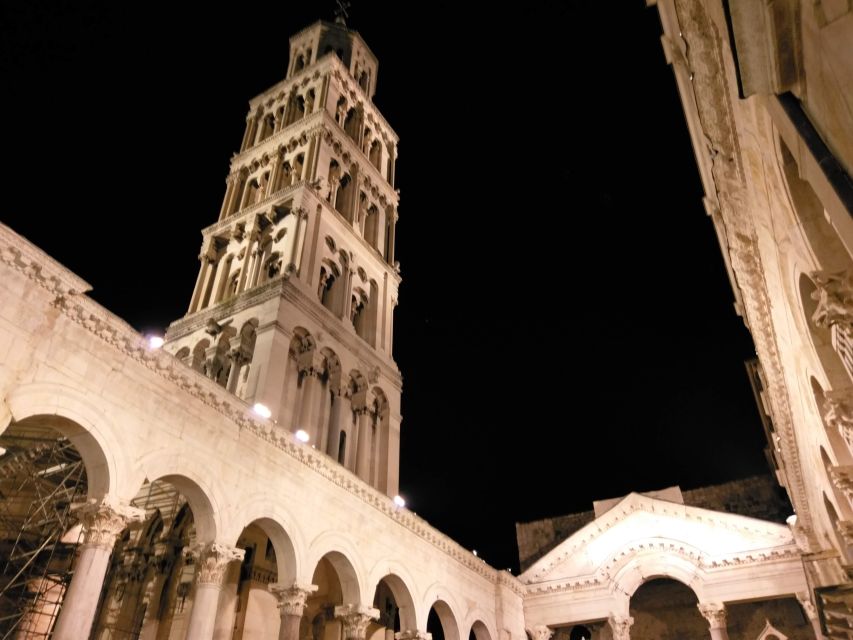
- Diocletian’s Palace at evening pace, including cellars and key highlights like the Peristyle area and Jupiter Temple.
- St. Domnius framing, with photo stops timed to help you orient yourself (and a heads-up that it may be closed).
- Golden Gate and the town’s Roman-to-medieval transition, so you understand what you’re seeing instead of just passing it.
- Piazza (People’s Square) from Venetian rule, plus the feel of Split’s evening social scene.
- Fruit Square stop, a quick window into everyday old-town life beyond the big monuments.
- Private tour flexibility, so the route and photo breaks can match your interests, not a rigid group schedule.
A 2-Hour Evening Walk Through Split’s Roman Core
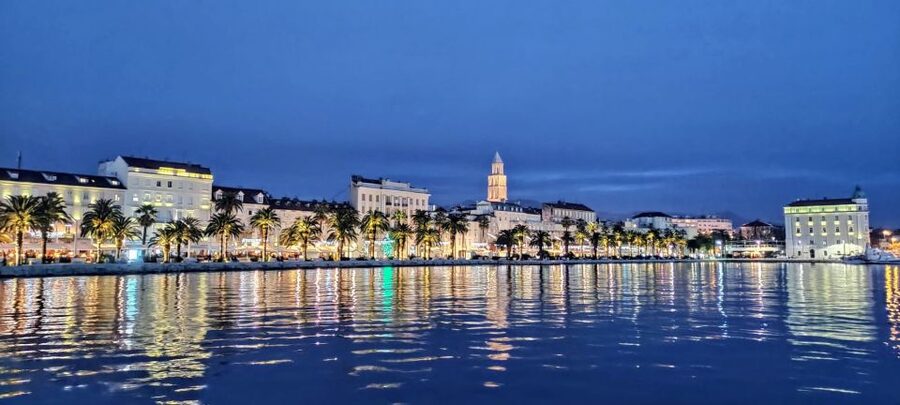
Split is a UNESCO-listed city where Roman architecture isn’t a distant museum wall, it’s part of daily life. This tour is built around that idea: you walk where emperors planned, then you move outward into later city layers, all within a short 2 hours. The timing matters. Evening light makes stone feel warmer, and the Mediterranean rhythm shows up in the squares and waterfront areas where people gather after dinner.
This is also one of those experiences where a good guide changes everything. You’re not just looking at monuments, you’re learning what they are in relation to each other. That makes your self-guided time after the tour way easier, because the city stops feeling random and starts feeling connected.
One more practical note: the group is private, but priced per group up to 20 people. That means it can make sense for a family group, a couple who wants more flexibility, or friends who want a guided intro before wandering on their own.
You can also read our reviews of more private tours in Split
Starting on Obala and Getting Oriented Near Riva
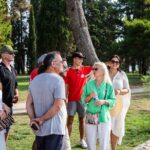
Your evening begins on Obala Hrvatskog narodnog preporoda. The tour’s starting location is listed at Obala Hrvatskog narodnog preporoda 15b, but the actual meeting point is in front of the cellars entrance to Diocletian’s Palace at Obala Hrvatskog narodnog preporoda 23. Either way, you’ll be close to the waterfront side of town, which is convenient because Split’s old town is easiest to approach on foot from the harbor area.
The first stop is Riva, Split, a quick photo stop with guided context. Think of this as your warm-up. You get your bearings and a feel for the layout: where the waterfront sits, how the old town climbs, and how the biggest landmark, Diocletian’s Palace, anchors the city plan.
Why this matters: if you arrive later in the day and want to make your time count, a short orientation beats hours of guesswork. Even if you plan to return later for longer exploring, you’ll know where to go and why.
Diocletian’s Palace: Cellars, Peristyle, and Jupiter Temple
The heart of the tour is the Diocletian’s Palace visit, about an hour of guided time. This is the kind of place where it helps to have someone point out what is Roman, what is reused, and what has shifted in meaning as the city evolved. The palace was built as part of the emperor Diocletian’s plan, and the experience here is about seeing that plan in stone and space.
Inside the palace area, you’ll first connect to the story through the well-preserved cellars. These are the “below the level” spaces that help you understand how the complex functioned. From there, the tour moves to upper areas, with time for walking and viewpoint moments.
Then you head toward the Peristyle and the Jupiter Temple area. Even if you’ve seen photos of these places, the guided explanation helps you recognize the structure and how people used these spaces over centuries. In plain terms, you start seeing the layout as a system, not as isolated ruins.
A useful pace tip: this tour is private, so your guide can manage the flow. That’s a big deal at a site like this, where it’s easy to get slowed down by crowds at one choke point and then regret rushing the next one.
The Cathedral of St. Domnius, Plus a Reality Check on Hours
After Diocletian’s Palace, the tour moves toward the Cathedral of St. Domnius (also known as St. Duje). You get a photo stop here and a guided bit of context aimed at helping you understand why this church matters.
Here’s the key detail you’ll want to remember: the cathedral is dedicated to the patron saint of Split, and it’s said to have originally been the mausoleum of Diocletian. It is often described as the oldest cathedral in the world. Whether you treat that claim as exact fact or as a dramatic tradition, the point is clear. You are standing in a site where the Roman imperial story and Christian worship story overlap.
Now the consideration: due to operating hours, the cathedral will likely be closed during the tour. So plan for outside viewing and photo time rather than expecting a full interior visit. If you want interior time, you can treat this tour as your orientation and then schedule your own visit earlier or later depending on the day.
This isn’t a dealbreaker. In my view, seeing the cathedral in context, after Diocletian’s palace, gives you the “why” that makes a later return more meaningful.
Golden Gate Photo Stop for City-Scale Perspective
Next up is the Golden Gate photo stop. It’s a short stop, but it’s there for a reason. This is one of those viewpoints that helps you step back and understand the city’s shape. The gate area is part of the palace and city plan logic, and it ties together the Roman wall and entry story you’ve been learning.
If you like photos, this is a good moment to slow down. Take a wide shot, then take one from slightly different angles. The goal is not perfection, it’s collecting enough context that later, when you’re walking on your own, you can visualize where you are in the city’s timeline.
You can also read our reviews of more evening experiences in Split

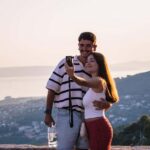


People’s Square (Piazza) and Venetian-Era Energy
The tour then heads to People’s Square, also called Piazza, linked to the period of Venetian rule. Even though the guided time here is brief, it’s a smart inclusion because it shifts you from the Roman fortress mindset into the social and civic life that grew around it.
This is where the “evening feel” of Split shows up. Markets and squares come alive during summer evenings, and Piazza is exactly the kind of place where that atmosphere makes the history feel less like a lecture and more like a living city.
If you enjoy people-watching, this is a good stop to pause, grab a quick photo, and just absorb the spacing of the square. You’ll likely feel the difference between defensive Roman space and the more open civic rhythm of later centuries.
Fruit Square: A Quick Hit of Everyday Old-Town Life
To round out the route, you visit Fruit Square, with photo time and a short guided visit. This stop is quieter than the big-name monuments, but it’s valuable. It keeps the tour from becoming only “architectural highlights.”
Old towns work when you understand the daily walking logic, not just the postcard corners. Fruit Square helps you get that sense of how locals might move through the area, where commerce happens, and how the city feels in motion.
In a short tour like this, those smaller stops do a lot of work. They help you remember the city as a place you can actually enjoy, not just a place you toured.
Price and Value: When $129 Makes Sense
The price is $129 per group, up to 20 people, for a 2-hour private tour. That’s not cheap if you’re thinking only in per-person terms for one or two people. But it gets interesting fast depending on your group size.
At full capacity (20 people), the effective cost is low per person. More realistically, even splitting among a handful of people can bring the guided cost into a range that feels fair for what you get: a licensed guide, a tight Roman-to-medieval route, and a private format where pacing can adjust.
You should also factor in entrance fees. Entrance fees for Diocletian’s Palace and the Cathedral of St. Domnius are not included. So the total cost for you will be slightly higher once you decide whether you will pay for cathedral and palace entry during your visit. Because the tour includes guided time and specific sightseeing areas, paying those fees can still feel like a good use of limited evening hours.
If you want a low-effort way to understand Split’s layout, this tour’s structure is the value. You’re buying orientation, context, and a time-efficient path through the top sights.
Who This Tour Fits Best (And Who Might Want More Time)
This works best if you want a guided introduction that you can build on. It’s ideal for:
- Couples who want a romantic evening walk with real context.
- Small groups or families who like a private pace.
- First-timers who need the big landmarks connected into one story.
- Anyone who plans to do more independent wandering afterward.
It’s less ideal if you want a long, slow, inside-focused museum style. Since the cathedral is likely closed and the tour is only 2 hours, you will probably want to pair it with your own daytime revisit if interior time is a top priority.
Also, bring a mindset for walking and steps. The good news is that steps can be avoided if necessary, and the tour is listed as wheelchair accessible. If you need that kind of adjustment, it’s smart to communicate your needs at the start so the guide can plan around it.
Practical Tips So Your Evening Goes Smoothly
A few small choices make a big difference in Split’s old town, especially at dusk.
- Wear comfortable shoes. You’ll be walking, and stone streets can be unforgiving.
- Plan for a possible cathedral exterior. If your priority is interior access, consider a separate time window.
- Expect photo stops. The stops are short at Cathedral of St. Domnius and Golden Gate, so move with your camera ready.
- Use the private format wisely. If your interest leans toward Roman architecture or later periods like Venetian influence, tell the guide early so your time reflects that.
- After the tour, keep walking. The ending point is Riva along the waterfront, where you’ll find lots of restaurants and cafes to keep the evening going.
One more helpful detail: licensed guides can offer real direction. In one set of experiences, a guide named Zrinka was praised for keeping a perfect pace through Diocletian’s Palace and the surrounding areas, and for sharing strong restaurant recommendations. That kind of local advice can turn a good tour into a better evening overall.
Should You Book Split: Magical Evening Sightseeing Private Tour?
I think you should book this tour if you want a time-efficient evening overview that connects Roman power, Christian transformation, and later Venetian-era city life. The private format is a real advantage in a place like Split, where your energy level, photo habits, and interest in details can vary from person to person.
Skip it or pair it with extra planning if your top goal is cathedral interior time. The tour timing makes that unlikely, and you may only get outside views at St. Domnius. Also, if you’re traveling solo, the $129 group price may feel less appealing unless you enjoy paying for a private guide experience.
Overall, with a 4.9 rating from 6 bookings, this is the kind of guided walk that aims to help you understand the city fast, then enjoy it on your own with confidence.
FAQ
How long is the Split Magical Evening Sightseeing Private Tour?
The tour lasts 2 hours.
What does the tour cost?
It costs $129 per group, for groups up to 20 people.
Is this tour private?
Yes, it is listed as a private group tour.
What sights are included in the tour?
You’ll see Diocletian’s Palace, the Cathedral of St. Domnius (with a photo stop), Golden Gate (photo stop), People’s Square (Piazza), and Fruit Square.
Are entrance fees included?
No. Entrance fees for Diocletian’s Palace and the Cathedral are not included.
Where do I meet the guide?
The meeting point is in front of the entrance to the cellars of Diocletian’s Palace at Obala Hrvatskog narodnog preporoda 23, Split.
What languages is the live tour guide available in?
The guide is available in French, English, and Croatian.
Is the tour wheelchair accessible?
Yes, it is listed as wheelchair accessible.
What should I bring?
Wear comfortable shoes.
Will I be able to enter the Cathedral of St. Domnius during the tour?
The cathedral will likely be closed during the tour due to operating hours, so you should expect outside views.
More Private Tours in Split

More Tours in Split
More Tour Reviews in Split

Not for you? Here's more nearby things to do in Split we have reviewed
More Split City & Day Tours to consider.
 ★ 4.8Krka Waterfalls Trip with Boat Cruise and SwimmingFrom $3110,519 reviews
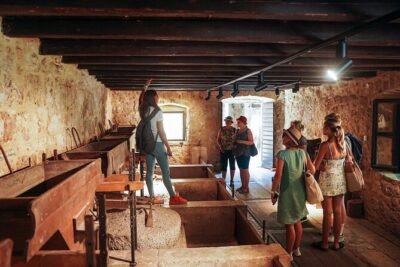 ★ 5.0Krka Waterfalls, Food & Wine Tasting TourFrom $459,326 reviews
★ 4.9Krka Waterfalls, Food & Wine Tasting TourFrom $446,598 reviews
★ 5.0Krka Waterfalls, Food & Wine Tasting TourFrom $459,326 reviews
★ 4.9Krka Waterfalls, Food & Wine Tasting TourFrom $446,598 reviews
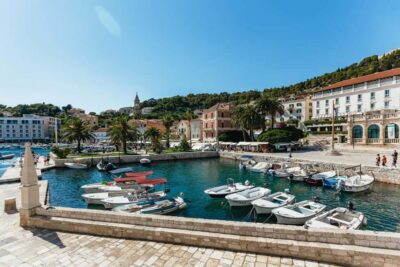 ★ 4.6Split/Trogir: Blue Cave, Mamma Mia, Hvar and 5 Island TourFrom $1096,320 reviews
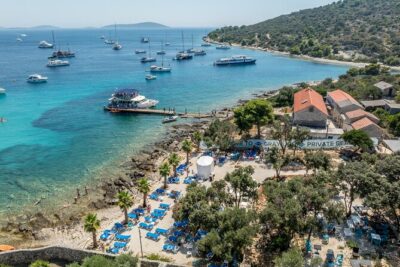 ★ 4.5Blue Lagoon & 3 Islands Cruise with Lunch from SplitFrom $785,756 reviews
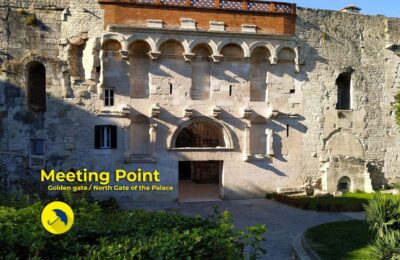 ★ 4.9Old Town and Diocletian Palace Walking TourFrom $174,727 reviews
 ★ 4.9Blue Lagoon Boat Party with DJs, Shots & After PartyFrom $474,610 reviews
 ★ 5.0Krka Waterfalls Tour, Boat Cruise & SwimmingFrom $324,489 reviews
Explore its other useful categories