

REVIEW · SPLIT CITY & DAY TOURS
Private Walks & Storytelling – the best small group tour in Split
One short walk in Split can feel like several lifetimes. This private small-group tour mixes local storytelling with real sights inside and around Diocletian’s Palace, so you get history you can actually picture.
I like that it stays focused on what interests you, not a rigid checklist, and it moves at a human pace with stops built for conversation and photo moments. I also really appreciate the guide is licensed and from Split, so you hear how people lived then and how they live now.
The main thing to consider is that some entrances are not included, so you may want a bit of extra cash or card for a couple of ticketed spots.
Key things to love about this Split storytelling walk
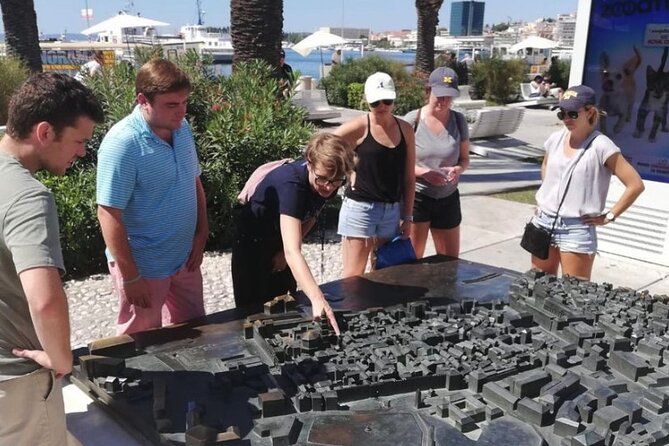
- Licensed local guide who tells Split’s story with both folklore and modern everyday details
- Small group up to 10, which makes it easier to ask questions and adjust the route
- Roman to medieval to modern, with stops that show how the city kept changing
- Good ticket mix: several admissions are included or free, with a couple not included
- A flexible ending, so you can finish near where you want to go next
- Food-friendly timing, including a chocolate stop for a true local pause
Why this private Split walk feels different
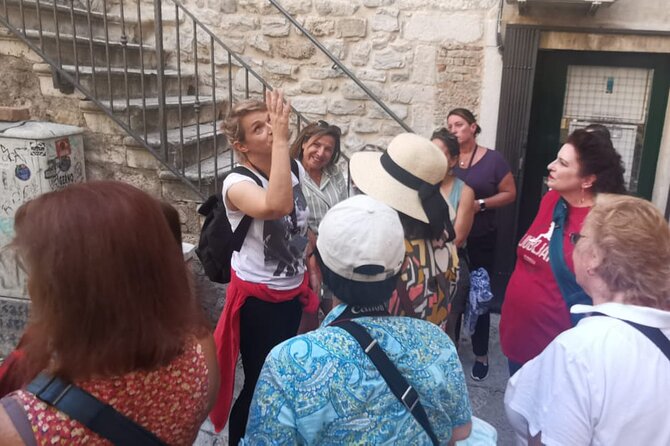
Split has two faces. One is the postcard one, stone arches and seaside views. The other is the daily one, people lounging at the waterfront, small shops doing their thing, and laundry somehow still finding a place between ancient walls.
This tour leans hard into that second face. You start at the Riva Harbor, where the city’s rhythm is slow and social. Then you step into Diocletian’s Palace world, including the substructures where you feel the weight of centuries under your feet.
What makes it work is the storytelling style. The guide ties details together, so you don’t just see places, you understand why they matter. The pacing also helps. You get enough time at each spot to read the scene, ask questions, and move on without feeling rushed.
If you like history but hate when it turns into a lecture, this is a strong match. You’ll be walking, listening, and looking for clues the whole way.
You can also read our reviews of more private tours in Split
Price and value for a group up to 10
It costs $238.34 per group, up to 10 people. On a private walk, that’s the key question: will it feel worth it once you add up time, guide quality, and what you actually get to see?
Here’s why it can be good value. First, you get a licensed, local-born guide who focuses on what you care about, so you are not stuck with a generic script. Second, the route hits major Diocletian’s Palace highlights plus surrounding areas that explain how Split grew beyond the palace walls. Third, the tour includes a few admissions along the way, and others are free, which reduces the add-on surprises.
It is not the cheapest way to walk Split, but it is a practical way to get a quality intro without wasting half a day figuring stuff out on your own. If you are traveling as a small group or with family, you’ll usually feel the best value here.
Starting at Porta Aenea and finishing exactly where you want
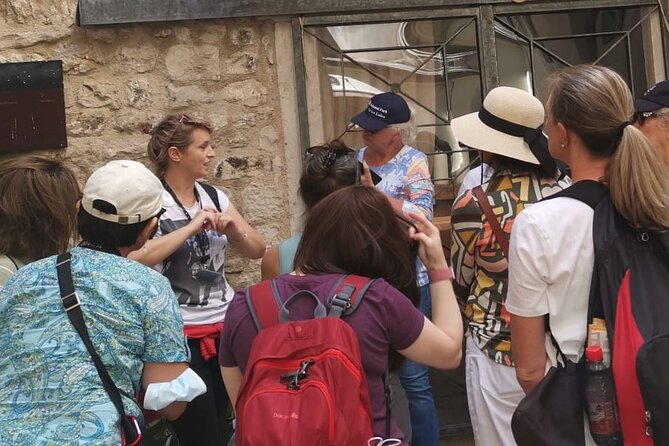
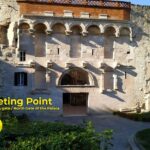
You meet at the Brass Gate, Porta Aenea, on Obala Hrvatskog narodnog preporoda 22. That’s a smart start point because it puts you right at the edge of the story, where palace meets city.
Ending is also flexible. The standard finish point is Ul. Stari pazar 9, but you can tell the guide where you want to wrap up, and the tour can adjust. That matters because Split’s Old Town is easy to explore after you get your bearings, but it can be a pain to backtrack.
So if you want to end near a café, a museum, or just closer to your next transport stop, you’ll have an easier time. It also helps if you have people with different energy levels in the group.
Riva Harbor: get your bearings with the city’s daily soundtrack
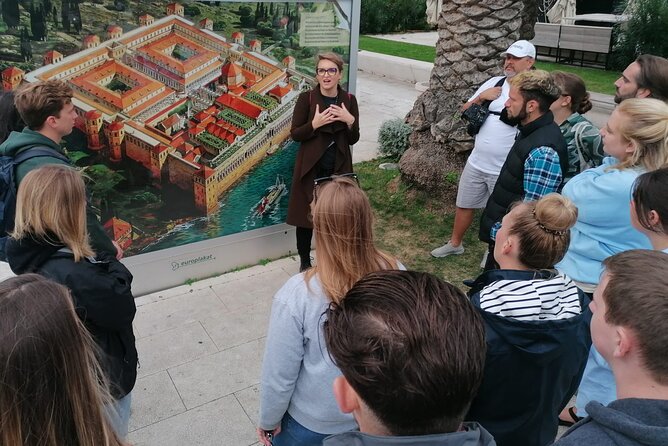
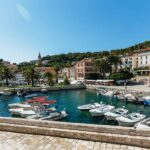
Stop 1 is the Riva Harbor. This is where Split actually breathes. Locals linger. People sit in the sun, sip coffee, talk, and watch the sea without acting like they are on a schedule. That sets the tone for the entire tour.
From there, you wander into the old town and toward Diocletian’s Palace. The guide frames what you are seeing in a way that connects past and present. You are not only learning who built things, you’re learning how life kept happening around the same walls.
You also get a practical moment: a chance to stop for a bite. That’s a small detail, but it helps keep the tour comfortable and makes the storytelling feel natural, like the guide is showing you around with local routines, not marching you between monuments.
Admission note: this stop includes an admission ticket.
Diocletian Palace substructures: where time feels close
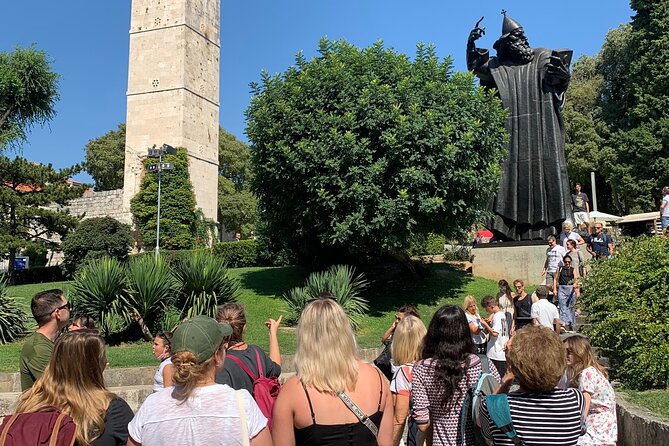
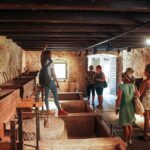
Stop 2 takes you below street level into the Diocletian Palace substructures. This is one of the best “mind shift” moments in Split. Above ground, you see a palace built for power. Below, you see a system built for work, trade, and daily function.
The effect is physical. The walls feel heavy, and you can sense the way these spaces shaped the city’s earliest life. Even if you’re not a Roman-nerd, this stop helps you understand why Diocletian’s Palace still feels like a living neighborhood.
Admission note: the substructures are free for this stop.

Peristyle: the imperial square that still pulls you in
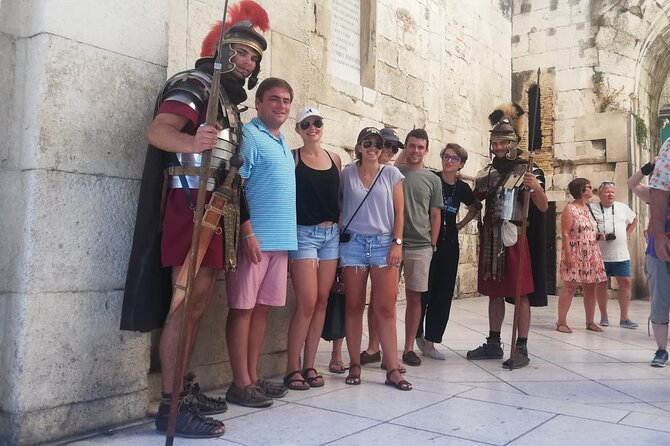
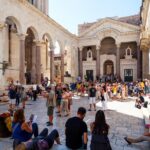
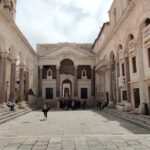
Stop 3 brings you to the Peristyle, the open space of the imperial square inside the palace. This is classic Diocletian’s Palace drama, the geometry, the light, the sense of scale.
The guide adds a key theme here: how Split has two speeds. There is the formal ancient layout, and then there is the local way of taking it easy, pomalo. You’ll hear how people move through the city now compared with how they once moved through it inside imperial space.
Admission note: this stop includes an admission ticket.
Cathedral of Saint Domnius: small scale, big sense of continuity
Stop 4 is the Cathedral of Saint Domnius. You’ll spot the tall bell tower from the Peristyle. The cathedral itself is protected in the palace context, and it’s described as one of the smallest and oldest cathedrals in the world.
This is a good break in your brain. After Roman structures, the cathedral makes the timeline feel continuous. Instead of “then and now” as two separate worlds, you start to see how one era layered onto the next.
Admission note: this stop does not include admission.
If you go into this stop expecting a quick look, you’ll likely enjoy it more. The cathedral works best when you pause, notice details, and treat it like a quiet chapter.
Temple of Jupiter: the Roman site that later became Christian
Stop 5 heads toward the Temple of Jupiter. The placement ties Diocletian’s authority to the divine, with Jupiter as the Roman god of the sky and thunder.
Then you get a key historical twist: during the Middle Ages, the temple was converted into a baptistery dedicated to St. John the Baptist. That change is more than a fact. It shows how Split reused sacred space instead of starting over from scratch.
Admission note: admission is not included for this stop.
This stop can be especially satisfying if you like seeing how cities adapt. Split didn’t just keep old buildings, it repurposed them, and that habit shaped the city’s feel.
Let Me Pass (Pusti me da prodjem) Street: narrow, local, and funny in the best way
Stop 6 is a tiny street between the ancient temple and a medieval building now used as a hotel. Locals call it Let Me Pass, with the name Pusti me da prodjem, and it is said to be the narrowest street in town.
Even though it’s short, it’s a perfect storytelling pause. It gives you the human scale of old architecture. You get a quick laugh, a photo opportunity, and a reminder that city history often lives in small, practical details.
Admission note: free.
Narodni Trg: where Split grows beyond the palace walls
Stop 7 is Narodni Trg, where the story expands westward. When the ancient walls could no longer contain life, Split grew, and this area became a “new old town” where northern and southern European influences meet in stone.
The practical value here is orientation. You’ve spent time inside palace space, and now you see how Split’s street pattern developed once people needed more room. The mix of styles over time becomes easier to spot, because your guide has already trained your eye.
Admission note: free.
Nadalina chocolate: a sweet stop that actually fits the theme
Stop 8 is Nadalina, a chocolate place with samples of locally flavoured chocolate. The guide talks about food production while you try different tastes.
This is not a random tourist detour. It fits the tour’s core idea: Split is a place you understand through daily routines, not only stone. A chocolate tasting gives you a sensory memory that sticks, especially after a string of ancient sites.
Admission note: this stop includes an admission ticket.
If you are traveling with kids, picky eaters, or anyone who needs a non-history break, this stop is a smart safety valve.
The Golden Gate: Roman strategy and hidden corners
Stop 9 is the Golden Gate, also known as Porta Aurea. It’s one of the main Roman gates into Diocletian’s Palace, and it sits on the road toward Salona, the capital of the Roman province of Dalmatia and Diocletian’s birthplace.
The guide connects architecture with strategy here, which is a nice change from pure description. You’ll hear how Roman planning worked and then spot hidden buildings nearby that you might miss without guidance.
Admission note: free.
Grgur Ninski Statue: ending with Roman walls and a local ritual
Stop 10 finishes at the Grgur Ninski statue, in front of a wall area surrounded by layers of time. You’re close to the 4th-century antique wall, with 20th-century art and modern life around you.
There’s also a local ritual: you respect the tradition here and make a wish as you end the walk. It’s a small moment, but it gives the tour a feel-good landing point.
Admission note: this stop includes an admission ticket.
The best part of ending here is that you leave with one last visual anchor. You’re standing in a place where the city’s “past and present” idea is visible in the same frame.
Timing, pacing, and how long you should plan for
The tour runs about 1 hour to 1 hour 40 minutes. That range usually feels right for an Old Town walk that includes indoor or semi-indoor palace spots, plus a food stop.
Because it is private and capped at 10, pacing stays flexible. If your group wants more photos or more explanation, it’s easier for the guide to slow down. If you’re moving fast and just want the highlights, you can keep it efficient.
One practical note: some places have admissions included, and some are not included. If you want zero stress, it helps to assume you might pay something extra for the Cathedral of Saint Domnius and the Temple of Jupiter, since those are specifically listed as not included. Everything else is either included or free depending on the stop.
Who this tour suits best in Split
This works well if you want:
- A story-first introduction to Split, not just photo stops
- A small group setting where you can ask questions
- Roman sites plus the modern street life around them
- A guide who connects folklore, history, and everyday culture
It may be less ideal if you prefer a totally self-guided trip. This tour’s value is the licensed guide and the storytelling thread. If you hate stopping to listen, you might feel constrained.
From the people who have done it before, one theme is clear: the guide style fits mixed-age groups, including teenagers and adults, and it can handle different interests within the same group.
Should you book this Split storytelling walk?
Book it if you want a high-quality Split orientation with a licensed local guide, and you like walking through Diocletian’s Palace while also understanding how the city feels now. The route makes sense, the pacing is comfortable, and the added sensory moments, like coffee time and chocolate, keep it from feeling like a museum tour.
Skip it if your top priority is maximum sightseeing density with minimal talking. This is built for meaning and conversation, so you get the best payoff when you lean into stories as you walk.
If you’re planning a first day in Split, this is one of the easiest ways to get your bearings fast and leave with the city’s details clicking into place.
FAQ
What is the group size for this Split walking tour?
The tour has a maximum group size of 10 people.
How long does the tour take?
The duration is approximately 1 hour to 1 hour 40 minutes.
Is the tour in English?
Yes, it is offered in English.
Where do we meet for the tour?
The start meeting point is at Brass Gate (Porta Aenea), Obala Hrvatskog narodnog preporoda 22, 21000 Split.
Where does the tour end?
The default end point is Ul. Stari pazar 9, 21000 Split. The tour can end wherever you like, as long as you tell the guide at the beginning.
Are entrance tickets included?
Some are included and some are free, while a few are not included. The Cathedral of Saint Domnius and the Temple of Jupiter are listed as admission ticket not included.
Is there a mobile ticket?
Yes, the tour offers a mobile ticket.
What is the cancellation policy?
Free cancellation is available. You can cancel up to 24 hours in advance for a full refund. The experience may also be canceled due to poor weather, in which case you are offered another date or a full refund.
More Private Tours in Split

More Tours in Split
More Tour Reviews in Split

Not for you? Here's more nearby things to do in Split we have reviewed
More Split City & Day Tours to consider.
 ★ 4.8Krka Waterfalls Trip with Boat Cruise and SwimmingFrom $3110,519 reviews
 ★ 5.0Krka Waterfalls, Food & Wine Tasting TourFrom $459,326 reviews
★ 4.9Krka Waterfalls, Food & Wine Tasting TourFrom $446,598 reviews
★ 5.0Krka Waterfalls, Food & Wine Tasting TourFrom $459,326 reviews
★ 4.9Krka Waterfalls, Food & Wine Tasting TourFrom $446,598 reviews
 ★ 4.6Split/Trogir: Blue Cave, Mamma Mia, Hvar and 5 Island TourFrom $1096,320 reviews
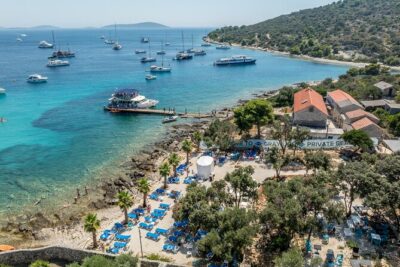 ★ 4.5Blue Lagoon & 3 Islands Cruise with Lunch from SplitFrom $785,756 reviews
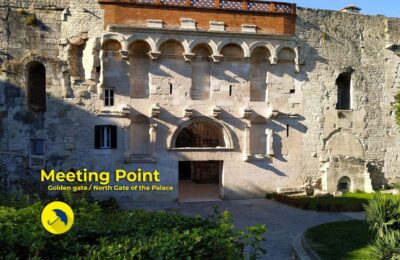 ★ 4.9Old Town and Diocletian Palace Walking TourFrom $174,727 reviews
 ★ 4.9Blue Lagoon Boat Party with DJs, Shots & After PartyFrom $474,610 reviews
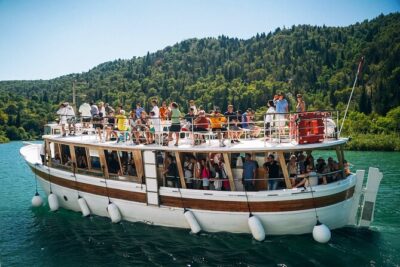 ★ 5.0Krka Waterfalls Tour, Boat Cruise & SwimmingFrom $324,489 reviews