
REVIEW · SPLIT DIOCLETIAN'S PALACE & HERITAGE TOURS
Essential Diocletian’s Palace Tour for First-Time Visitors
A palace tour that feels like a local chat. You start at the statue of Gregory of Nin and walk into Diocletian’s Palace with Jelena Tanjić guiding you through the headline sights that define Split.
What I like most is the storytelling that connects the palace era to everyday life in Split, not just stone and dates. And the small group limit of 10 keeps the pace relaxed and the questions flowing.
One thing to consider: this tour is not suitable for wheelchair users, and it does not include access to the Substructures or the Bell Tower.
Key things to know before you go

- Meet at Gregory of Nin and the Golden Gate so you start oriented and walk right into the palace area.
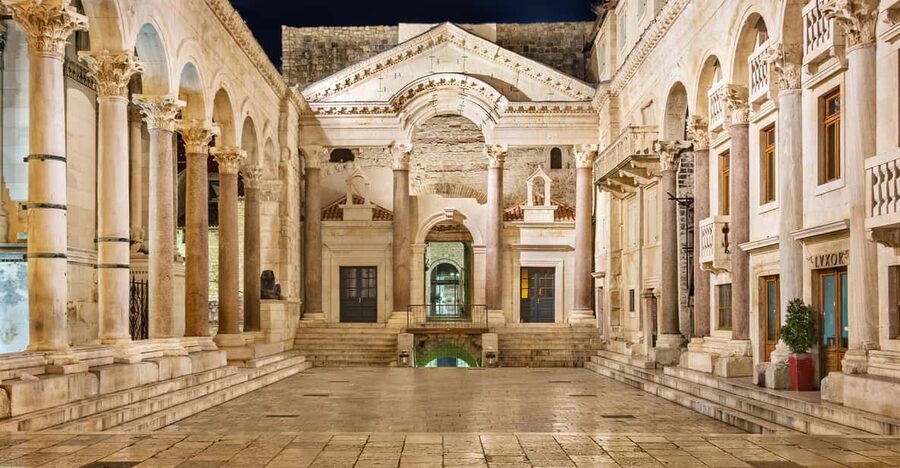
- You hit the classic lineup: Golden Gate, People’s Square (Pjaca), Jupiter’s Temple, Peristyle, and Saint Domnius Cathedral.
- Vestibule Dome Selfie included, so you leave with a fun group memory.
- Vouchers plus a recommendation list help you turn your walk into real plans for food and sightseeing after.
- Small-group format means more back-and-forth with the guide, not a lecture in a crowd.
- Not Substructures or Bell Tower, so if those are top priorities, you’ll want a different option.
Start Smart at Gregory of Nin and the Golden Gate
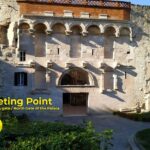
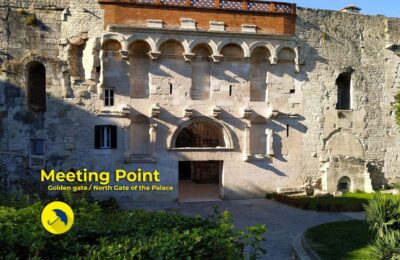
Most Split first-timers feel two things at once: excitement, and the fear of wandering in circles. This tour tackles that early by beginning in a spot you can actually find. You meet in front of the big statue of Gregory of Nin and the north entrance to the palace called the Golden Gate.
From there, you get a quick “how to read this place” orientation. That matters because Diocletian’s Palace is not a single museum room. It is a whole world of passages, squares, and landmark buildings, and the route makes sense because you are moving from one recognizable anchor point to the next.
You’ll also want to keep an eye out for the black umbrella the guide uses at the meeting point. It is a small detail, but it saves you that awkward minute of trying to match strangers to photos.
You can also read our reviews of more tours and experiences in Split.

Golden Gate and People’s Square: the Split “front door” moment
The Golden Gate stop is where the tour starts turning history into something you can picture. It is the classic ceremonial entry point, and the guide uses it to set the big picture for what you are about to see.
Next comes People’s Square, also known as Pjaca, the main square area of Split. This is the part of the tour that helps you shift from palace-only thinking to “this is a living city.” The guide frames what you are seeing so it connects to city rhythms, not just original construction.
If you love tours that give you context you can reuse later, this pairing does a good job. You get oriented at the palace edge, then you step into the civic heart, which makes the rest of the walk feel like a story with chapters rather than random stops.
Jupiter’s Temple and the Peristyle: where the palace starts to feel human
Jupiter’s Temple and the Peristil are the kind of stops where you can easily fall into autopilot if you are just sightseeing. The value here is that you do not treat them like a checklist.
The guide, Jelena Tanjić, is from Bosnia and Herzegovina and has lived in Split for many years. That background shows up in the way she explains connections across the wider region, which adds a broader lens to the palace story. It is not just “look at this.” It is “here’s why it mattered and how you can still sense that influence today.”
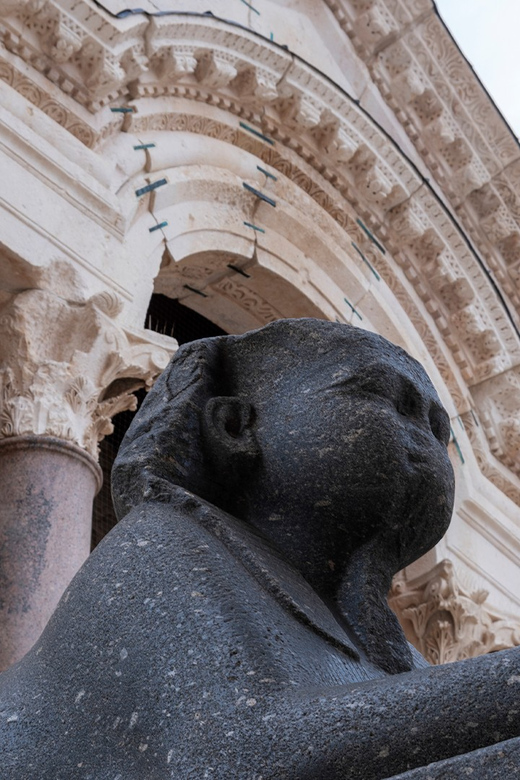
At Peristil, you get that classic central-space feeling, the sense that you are standing in the middle of how the site functions. And you will see standout features pointed out along the way, including the Egyptian Sphynx. It is the sort of detail that is easy to miss on your own, but it makes the tour feel specific to Split instead of generic.
One practical tip: bring your phone charger mindset. These are the stops where you naturally want photos, especially once the guide starts explaining what you are looking at. The tour keeps it lively, so don’t wait until the end to get your best shots.
Saint Domnius Cathedral: history with a working-city perspective
Then you move to the Cathedral of Saint Domnius. This stop is important because it adds a religious and civic layer to what you have already seen. You are not only inside a palace complex anymore, you are stepping into an anchor site that still shapes the feel of the area.
What I appreciate is how the guide blends past and present. You are not left guessing how a monumental building fits into daily life. Instead, you get the kind of context that helps you understand why people keep returning to places like this long after the first visit thrill fades.
It also helps that the tour style encourages questions. With a group of up to 10, you are more likely to actually ask something and get a useful answer that changes how you look at the next stop.
Vestibul Dome Selfie: a souvenir moment that does not feel forced
The Vestibul is where the tour takes a breath and adds a light, memorable touch. You get to do a group Vestibule Dome Selfie in the Vestibule area.
This is not just a gimmick. The timing works because you have already built your visual map of the palace highlights. Now you capture a moment that marks you as having completed the route with guidance, not just self-toured through.
If you travel with friends or family, this part is especially handy. It gives you one shared photo that you can reference later when everyone tries to remember which stop was which.
If you hate staged photo moments, you can still treat it as optional. The bigger win is that the guide uses this stop to keep the tour flowing at an energetic pace without turning it into a speedrun.


Diocletian’s Cellars and the walk toward the Riva
After the Vestibul stop, the route continues into Diocletian’s Cellars. This is where you get a change in atmosphere, from open landmark spaces to a more enclosed “under-the-surface” feel.
The guide’s approach keeps it connected to the wider story of the palace and Split’s daily life. You are not only learning what things are called. You’re learning how they fit into the bigger site experience.
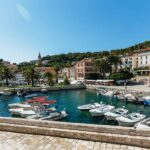
Then the tour finishes at the Split Riva area. Ending here matters. The Riva is the natural place to reset from “tour mode” to “wander mode.” You can use the energy from the last guided stop to choose your next move with less stress.
Also, this tour includes time connected to the Riva promenade and Old Town sights. So even if the guided portion is only 1.5 hours, the mental map you get is wide enough to help you keep exploring confidently afterward.
Price and value: $17 that earns its keep
At $17 per person for about 1.5 hours, the tour is priced like a smart add-on, not a luxury splurge. The main reason it feels like good value is that you are paying for more than a route. You are paying for the guide’s ability to turn confusing palace spaces into a coherent story you can retell.
The other value lever is what happens after the tour. You receive access to vouchers in some of Split’s well-known restaurants and bars, plus a list of recommendations. That means part of what you pay turns into practical money savings or at least a clearer path to great meals.
In my experience, that combo, guided orientation plus useful follow-through, is where tours often win. You are not just walking. You are getting a plan you can act on right away.
What makes Jelena’s style useful for first-timers
The guide makes a difference, and Jelena Tanjić’s style lands well for first-time visitors. Her explanations include humor, and she keeps circling back to make sure the major points actually stick.
One detail that I think you will appreciate is how she talks about present-day life in Split, not only the old structures. That helps you avoid the trap of feeling like you saw “cool old stuff” but still don’t understand why the city feels the way it does now.
Because the tour is small, conversations feel natural. You are not stuck waiting for the tour to end to ask questions. You can ask while you are standing in the exact place you are confused about.
Also, the pace is built for a relaxed introduction. At 1.5 hours, it does not swallow your whole day, so it is a good fit even if you want to fit in beach time, ferry time, or a late dinner plan.
Who this tour suits best (and who should choose differently)
This is a great match if you:
- Are coming to Split for the first time and want a structured route through Diocletian’s Palace landmarks.
- Want a guide who connects sites to both history and daily life.
- Prefer small-group tours where you can ask questions and get real conversation.
It might not be the best fit if you:
- Need wheelchair-friendly access, since this option is listed as not suitable for wheelchair users.
- Specifically want access to the Substructures or the Bell Tower, because this tour does not include that.
If your top priority is those missing parts, you’ll need a different tour for your wishlist. But if your priority is getting your bearings fast and understanding what you are seeing, this one is built for that job.
Should you book this Diocletian’s Palace tour?
Book it if you want a first-timer-friendly overview that feels like a guided story, not a checklist. With a 10-person limit, Jelena Tanjić’s mix of history and present-day context, plus the Vestibule Dome Selfie, you get a satisfying “I get this place now” result in just 1.5 hours.
I’d skip it only if you already know you want the Substructures or Bell Tower, or if accessibility is a must for your group. Otherwise, the $17 price makes sense because you are not only touring. You are also leaving with vouchers and a plan for where to eat and what to do next.
FAQ
What’s the duration of the tour?
The tour runs for 1.5 hours.
How much does it cost?
The price is $17 per person.
What language is the tour guide using?
The tour is in English.
How big is the group?
The small group is limited to 10 participants.
Where do I meet, and where does the tour end?
You meet in front of the statue of bishop Gregory of Nin and at the north entrance to the Palace called the Golden Gate. The tour ends back at the meeting point area by Split Riva.
Is the tour wheelchair accessible?
No, it is not suitable for wheelchair users.
Does the tour include the Substructures or Bell Tower?
No. Access to the Substructures and the Bell Tower is not included.
More Tours in Split
More Tour Reviews in Split
Not for you? Here's more nearby things to do in Split we have reviewed




More Split Diocletian's Palace & Heritage Tours to consider.
 ★ 4.9Old Town and Diocletian Palace Walking TourFrom $174,727 reviews
 ★ 5.0Walking Tour of Split and Diocletian’s PalaceFrom $482,588 reviews
 ★ 5.0Split & Diocletian’s Palace Walking TourFrom $211,125 reviews
 ★ 4.7Diocletian Palace & Old Town Guided Walking TourFrom $17882 reviews
 ★ 4.8Game of Thrones Tour with Diocletian’s Palace CellarFrom $41545 reviews
 ★ 5.0Diocletian’s Palace and Old Town SMALL GROUP Walking TourFrom $16502 reviews
 ★ 5.0SPLIT-PRIVATE Walking Tour of Diocletian’s Palace & Old TownFrom $240467 reviews
 ★ 5.090-min Diocletian Palace Walking TourFrom $21323 reviews
Explore its other useful categories