
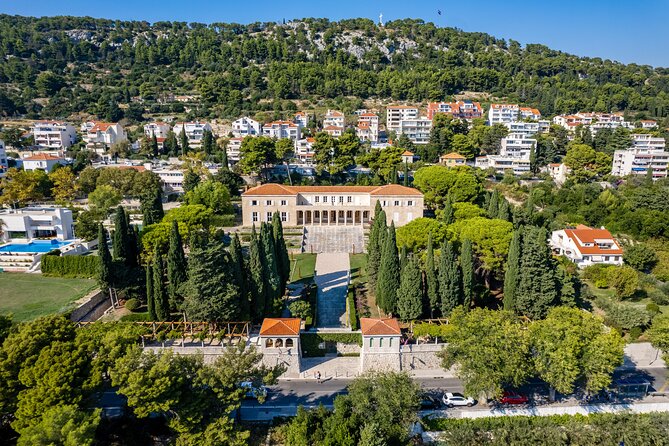
REVIEW · SPLIT DIOCLETIAN'S PALACE & HERITAGE TOURS
Diocletian’s Palace Small Group Tour in Split
Split’s stone maze is easier with a guide.
What makes this tour appealing is how it turns Diocletian’s Palace into a readable walk, not a random wander, and how the guide adds local streets-and-life context while you’re moving through the old town. I also like that it keeps things efficient, with a short, focused route that hits the big palace landmarks in about 2 hours. The one thing to think about is this is a walking tour with a moderate fitness level, so you’ll want comfy shoes and a little patience for uneven ancient stone.
I like the tone of this experience: friendly, professional guidance, plus multiple departures during the day, so you can match it to your schedule. And if you care about quality, the guide lineup really stands out in the feedback, with names like Luka, Sandra, and Jelena showing up as favorites. The drawback for some people is simple: there’s no food stop built in, and tickets for the cathedral are not included.
If you want the fastest way to get your bearings inside Split’s UNESCO core, this tour is a smart bet. You’ll leave with a mental map of how the Roman palace sections connect, and you’ll know what you’re looking at when the streets start looking the same.
Key highlights to look for
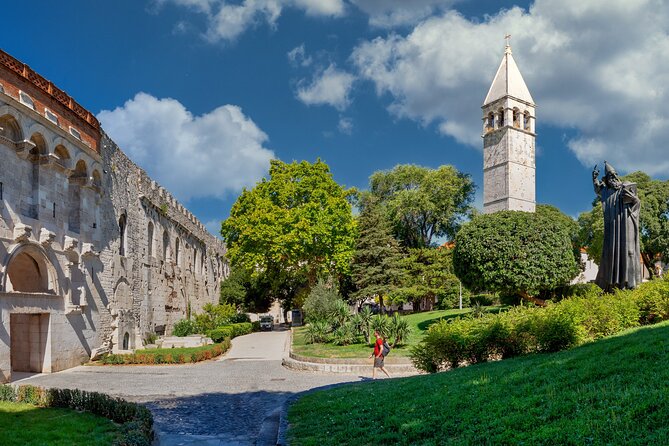
- Small-group pacing that covers the palace’s main zones without dragging on.
- Real guide value, with guides like Luka, Sandra, and Jelena praised for clarity and personality.
- Peristyle and acoustics focus, so you understand why this square mattered.
- Substructures (cellars) view, which helps explain why Split’s old core is UNESCO-listed.
- Golden Gate context, including how Diocletian used the entrance and why the gate’s shape mattered.
Why Diocletian’s Palace feels like a city within a city
Diocletian’s Palace is one of those places where your first reaction is usually confusion, then wonder. The name says palace, but the scale is closer to a fortress. Half of the complex served Diocletian personally, while the rest was set up for a military garrison. That mix is exactly why you’ll feel both comfort and constraint as you walk.
What I like about a guided approach here is it gives you a structure to hold onto. You’re not just “seeing old buildings.” You’re learning how the palace was designed, where key civic moments happened, and why the old town’s streets grew around it. And when you connect the Roman planning to today’s Mediterranean street life, Split starts to make more sense fast.
The palace also matters beyond aesthetics. It’s UNESCO-listed, and the best way to understand why is to actually look at the parts that survived, including the substructures and interior spaces that still read as Roman engineering.
You can also read our reviews of more tours and experiences in Split.

Price, timing, and group size: what you’re really paying for
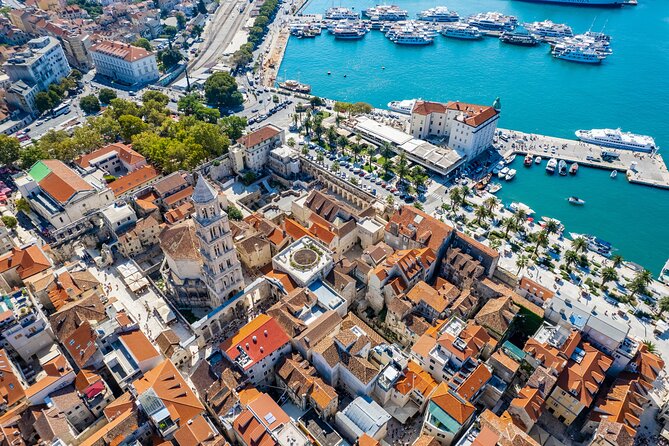
At $60.21 per person for about 2 hours, you’re paying for interpretation and timing, not for a long ticketed attraction day. The good news is the tour leans on areas that are listed as admission-free for the palace sites covered, so your money goes toward guidance and orientation.
It also helps that this experience offers several departures throughout the day. That matters in Split, because weather, cruise schedules, and your own sightseeing plans can shift. Being able to pick a slot helps you avoid the worst timing traps and makes it easier to pair this with other old-town stops.
Group size is capped at a maximum of 99. That’s not tiny, but it’s still built for a guided walk rather than a chaotic crowd. In practice, the standout theme in the feedback is the tour feeling personal and well explained, with guides who share details and answer questions instead of rushing you through.
And yes, you get a mobile ticket, which tends to reduce stress on arrival.
Where the tour starts and how to avoid early confusion
The meeting point is South Tours Travel Agency at Mrčelina 1, 21000, Split. The tour ends back at the same location, so you don’t need to worry about regrouping at some far corner of the city.
Here’s a practical tip: arrive a little early. Diocletian’s Palace is famous for turning first-timers into temporary cartographers. If you’re early, you can take a quick look at the surrounding old streets before the guide starts moving you. That reduces that feeling of, where are we going, as soon as you start walking.
Also, plan for a moderate walking pace. The tour is short, but you’ll be on stone surfaces and in tight old passages where you’ll naturally slow down.
Stop-by-stop: what each palace spot teaches you
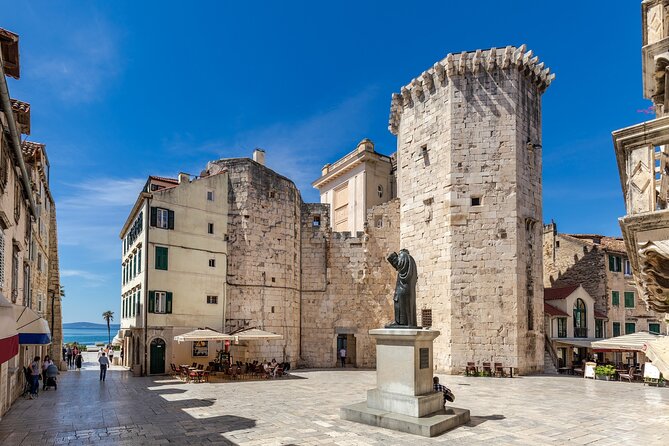
This is a walk through the palace’s core spaces, not a “tick boxes and go” route. The stops are short, which is great when you want a fast mental map. The trick is using the guide’s framing so the spaces stop feeling random.
Exploring Diocletian’s Palace, the UNESCO maze
You begin in the bigger palace footprint, where the complex covers about half of Split’s old town and city center. This is where you see the scale: the palace isn’t a single building you tour, it’s a massive zone that shaped the city’s layout.
One thing to keep an eye out for is the mix of eras inside the palace walls. You may notice an ancient Egyptian sphinx, plus structures spanning centuries up to more modern buildings. That time overlap is one of the reasons this place feels like a living city rather than a museum. The guide helps connect the dots so you understand what belongs to the Roman period and what came later.
A potential downside of this section is also the best part: if you’re the type who likes to read every plaque slowly, the pace may feel brisk. But for a first visit, it’s ideal.




The Peristyle: where architecture becomes theater
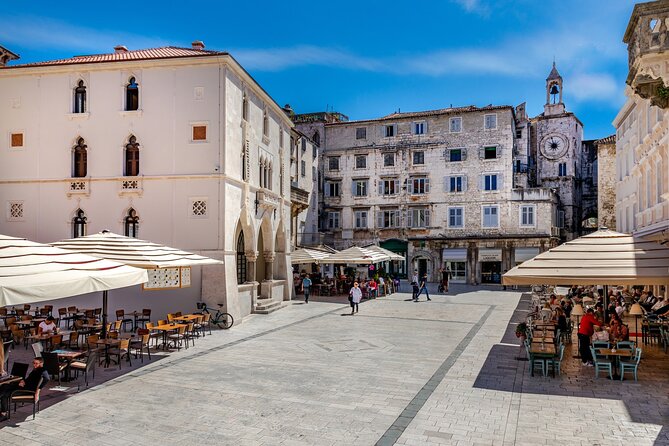
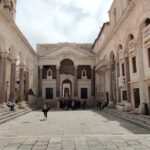
Next you spend time at the Peristyle, the central square of the palace. It was designed as a major public space, and it ties to Roman religious ideas, including the emperor presented as a living son of Jupiter.
What makes the Peristyle special for many visitors is its unusual acoustics. It’s easy to understand why this space could become a stage for opera classics and ancient-literature works. Even if you don’t care about performance, the acoustics clue helps you grasp how Romans thought about crowds, ceremonies, and voice carrying.
Practical note: this is a good place to pause and take in sightlines. The square can look small from some angles and massive from others. The guide’s explanation helps you see how it’s meant to function as a centerpiece.
The Vestibulum: the contrast between the outside and inside
Then comes the Vestibulum, a space that makes a point about Roman design. From the outside it reads as rectangular, while inside the ground plan becomes circular.
That inside-outside shift is the kind of detail that sounds abstract until you stand there. With a guide, it stops being just a geometry fact and becomes a way to think about how the Romans engineered movement and moments.
If you’re photographing, this stop is also useful because shapes and transitions give you stronger images than flat facades.
Diocletian’s Cellars: where preservation tells the UNESCO story
You also get to see Diocletian’s Cellars, known as the palace substructures. This is a key area because it’s one of the best preserved complexes of its kind, and it’s a major reason the historical core of Split earned UNESCO status.
Even if you’re not a “cellars and ruins” person, this section helps you understand the foundation logic. The palace’s survival is not just about walls, it’s about what held everything up and what remained intact over time. When you connect that to the city around it, you get why Split’s old center still feels built on Roman bones.
A possible consideration: this part can feel darker or cooler than the outside streets. Wear layers if you’re visiting in shoulder seasons.
The Golden Gate: a Roman entrance with a date tied to Diocletian
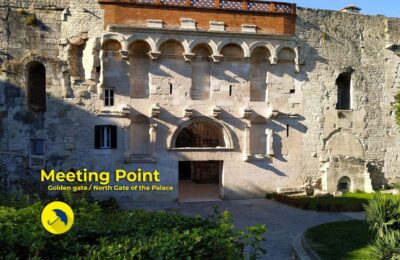
Finally, you visit the Golden Gate, Roman Porta septemtrionalis. The guide context here is the difference between “a gate” and “the gate.” Emperors and armies mattered, and Diocletian walked through this entrance on June 1, 305 when he entered the palace.
The gate’s defensive design is also important. It was built with double doors and a rectangular shape, connected to military tactics and defensive planning. So yes, it looks like an impressive structure, but it also reads as an engineering decision meant to control entry and movement.
If you like history that has a physical footprint, this is one of the best stops. You can imagine the procession without needing a visualization exercise.
Why the guides make or break this tour
This is where the feedback is consistently loud. The tour’s value is not just the sights, it’s the way the guide explains them.
In the stronger comments, guides like Luka, Sandra, and Jelena come up as standouts. People highlight how the guides teach well, stay friendly, and use their time generously. One of the most useful patterns I see is that guides don’t stop at dates and names. They add practical street-level context, including tips and local detail that help you understand what you’re walking past after the tour ends.
I’d also pay attention to the personality element. The notes mention quirky humor and an eagerness to answer questions. That sounds small, but it matters in a place like Diocletian’s Palace, where repetition of stone corridors can make people mentally check out. A lively guide keeps the walk from turning into a blur.
And since it’s English offered, you can expect explanations in a language most visitors can follow without straining.
What you’ll be able to do after the walk ends
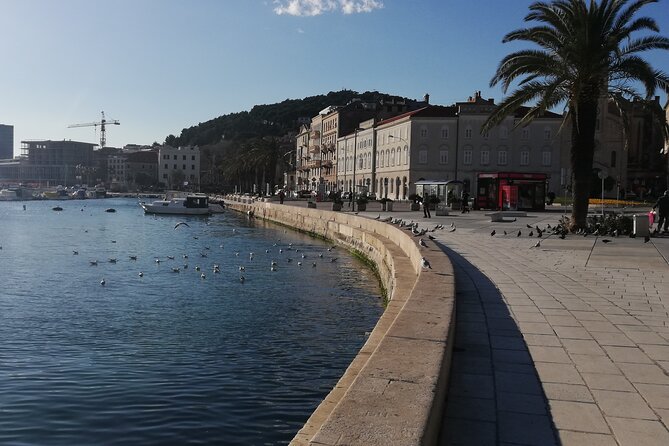
A good palace tour should do one job: help you navigate on your own later. This one is built around that idea. Because you cover the palace’s central spaces and entrances, you leave with a mental map of where things are and why they’re significant.
That makes a difference when you return to the streets later for coffee, browsing, or just more wandering. Instead of “looking at old walls,” you’ll spot the Roman logic in the layout. You’ll also know what parts relate to public ceremonial space versus military or foundation substructures.
It’s also helpful for planning. If you’re deciding what to add next, having the palace framework in your head makes the rest of Split’s old town feel less overwhelming.
What to expect in 2 hours, and what to bring
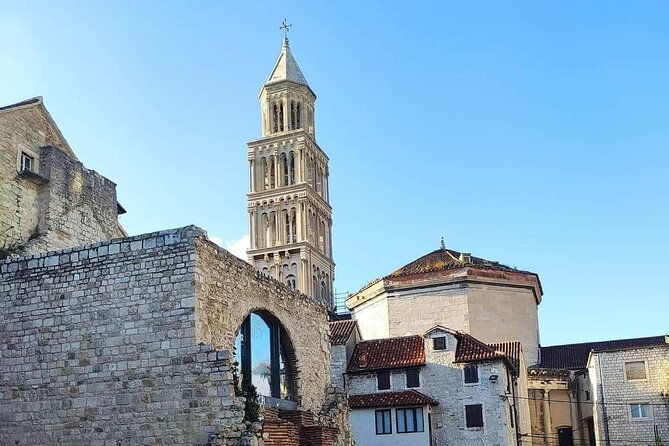
This tour runs about 2 hours. Each stop is short, and you move through the palace core at a walking-tour pace. That compact timing is great when you’re optimizing your time in Split, but it also means you won’t get hours of slow, independent exploring inside every nook.
What I suggest you bring:
- Comfortable shoes for uneven stone streets and ancient surfaces
- Sun protection in daylight, and a light layer if you get cool in the cellar areas
- A water bottle, since food and drinks are not included
Also, tickets for the cathedral are not included. If you’re planning to see the cathedral too, you’ll want to add it separately to your plan.
Who this tour is best for

This experience is best for you if:
- You want a fast, structured orientation to Diocletian’s Palace
- You value a friendly guide who explains more than just the basics
- You like walking and don’t mind short stops that keep things moving
- You’re visiting on a schedule where you can’t afford a half-day commitment
It’s less ideal if you hate walking through crowds of stone corridors, or if you want to spend a lot of time lingering in one interior space without moving on.
If you’re traveling solo, this kind of small-group guided format can feel especially useful, because you get the context you might otherwise miss.
Should you book the Diocletian’s Palace small-group tour?
If you’re asking whether this is worth your time, my answer is: yes, especially for a first visit to Split’s old core. The price makes sense when you treat it as a guided orientation to multiple key palace zones, not as a long-ticket attraction day. The tour also benefits from strong guide performance, with names like Luka, Sandra, and Jelena repeatedly associated with great explanations and a warm approach.
Book it if you want your bearings fast and you like learning while you walk. Skip it only if you already know your way around Roman palace planning and you’d rather read everything at your own speed, because the pace is part of the value.
FAQ
How long is the Diocletian’s Palace small-group tour in Split?
The tour lasts about 2 hours.
What’s included in the tour price?
The tour includes a local guide and a professional guide. Food and drinks are not included.
Are there tickets required to enter the palace stops?
The listed palace areas on the tour are marked as admission ticket free. Tickets for the cathedral are not included.
What language is the tour offered in?
The tour is offered in English.
Where do I meet the guide?
You meet at South Tours Travel Agency, Mrčelina 1, 21000, Split, Croatia. The tour ends back at this meeting point.
Is this tour suitable for people who don’t walk much?
It’s designed for people with a moderate physical fitness level, since it’s a walking tour through old streets and palace areas.
More Tours in Split
More Tour Reviews in Split
Not for you? Here's more nearby things to do in Split we have reviewed








More Split Diocletian's Palace & Heritage Tours to consider.
 ★ 4.9Old Town and Diocletian Palace Walking TourFrom $174,727 reviews
 ★ 5.0Walking Tour of Split and Diocletian’s PalaceFrom $482,588 reviews
 ★ 5.0Split & Diocletian’s Palace Walking TourFrom $211,125 reviews
 ★ 4.7Diocletian Palace & Old Town Guided Walking TourFrom $17882 reviews
 ★ 4.8Game of Thrones Tour with Diocletian’s Palace CellarFrom $41545 reviews
 ★ 5.0Diocletian’s Palace and Old Town SMALL GROUP Walking TourFrom $16502 reviews
 ★ 5.0SPLIT-PRIVATE Walking Tour of Diocletian’s Palace & Old TownFrom $240467 reviews
 ★ 5.090-min Diocletian Palace Walking TourFrom $21323 reviews
Explore its other useful categories