
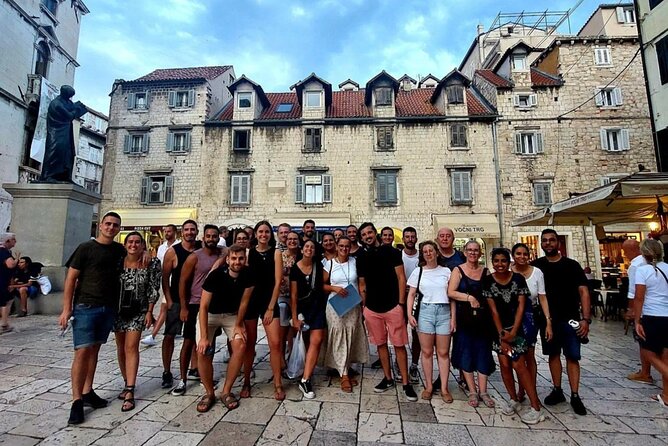
REVIEW · SPLIT CITY & DAY TOURS
Best of Split & Trogir: Private VIP Tour with Local Guide
Split to Trogir moves fast, with purpose. This private VIP tour strings together the must-sees of Diocletian’s Palace and UNESCO-listed Trogir using a local guide and a crowd-aware pace.
I especially like the smooth, guided flow through the tight streets of Split and the old-town lanes of Trogir. It keeps you from wasting time figuring out where to look next, and the route hits key landmarks like the Peristyle, the Cathedral of Saint Domnius, and the Kamerlengo Fortress viewpoints.
One thing to consider: several major buildings have admission listed as not included, including the Cellars of Diocletian’s Palace, St Lawrence’s Cathedral, Kamerlengo Fortress, and Čipiko Palace. Also, some views in Trogir can be partially blocked by summertime spots, so aim for the best sightlines when your guide tells you to.
Key highlights
- Private VIP format so it is just your group, not a public-queue scramble
- Peristyle first for an instant feel of Diocletian’s Palace layout
- Gregory of Nin statue toe tradition stops are timed so you actually notice details
- Trogir old town focus around the central square, loggia, and cathedral
- Kamerlengo Fortress views that actually explain why this coast mattered
- Multiple stops are short so you see more in 6 hours, without feeling trapped in one museum
The 6-hour VIP loop: Split and Trogir without the drag
This tour is built around a half-day window, about 6 hours, with each featured stop scheduled at roughly 15 minutes. That short timing is a feature, not a flaw, because it forces smart priority setting. You get the story moments, the best angles, and enough time to look around without turning the day into a waiting game.
You also get pickup offered, which matters in Split because getting from cruise-area clusters or parking points into the historic core can eat up time fast. With a mobile ticket and an English-speaking guide, you can keep the day moving and spend your energy on what you came for: stone, streets, and viewpoints.
Booking signals a big reason to plan early. The tour is often reserved about 172 days in advance, which usually means the best slots go quickly. If you want a specific day or want to combine it with other plans, I’d treat early booking as part of the strategy.
You can also read our reviews of more guided tours in Split


Diocletian’s Palace Peristyle: where the layout becomes the story
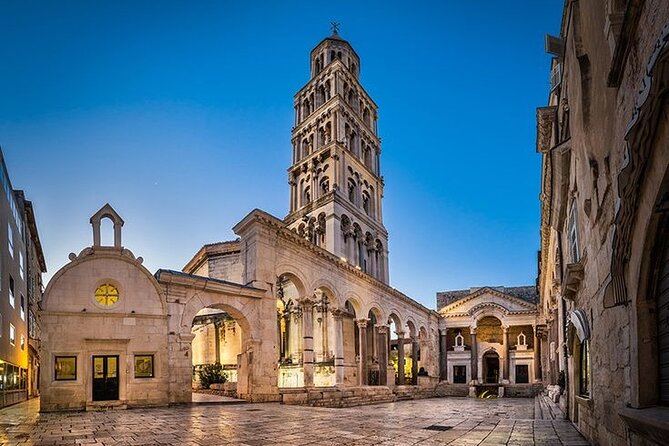
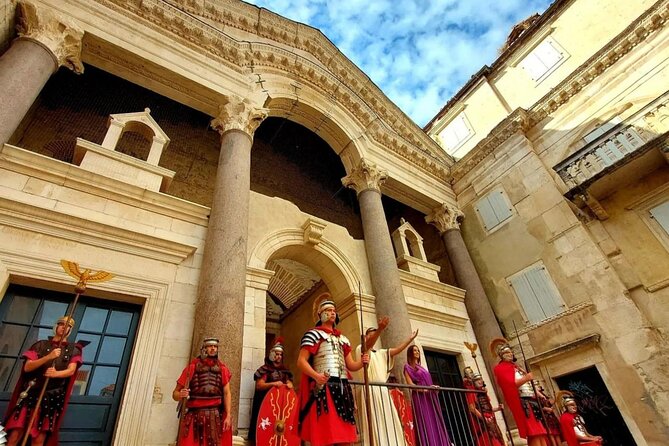
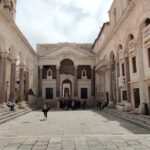
The day starts at the Peristyle of Diocletian’s Palace, placed right at the crossroad of the two main roads inside the palace complex. Even if you do not know Roman architecture, this is where your brain can map the place fast. It is a rectangular open court framed by colonnades, and the guide explains how this kind of space worked as a city heart.
What I like about starting here is how it trains your eyes for everything that follows. You begin to spot why certain buildings sit where they do, and you understand how Split’s modern streets grew up around Roman planning.
Admission for this stop is listed as free, so you can spend more time focusing on the space and less on budgeting or ticket logistics for the first moment.
Saint Domnius, Gregory of Nin, and Jupiter’s Temple in one compact route
After the Peristyle, the tour moves through three landmarks that show how Split layers centuries.
First is the Cathedral of Saint Domnius. It was consecrated around the turn of the 7th century AD, and it is often described as the oldest Catholic cathedral in the world still in use in its original structure. The key takeaway for you is not just age, it is continuity. When you stand inside a place like this, you feel the difference between a historical site and a functioning religious space.
Next comes the Grgur Ninski statue, an 8.5-metre work by Ivan Meštrović. The toe-polished look is not random. There is a long-running tradition where rubbing the toe is said to bring good luck, and your guide points out how that small gesture became part of the site itself.
Then there is the Temple of Jupiter, located in the western part of Diocletian’s Palace near the Peristyle. Built between 295 and 305, it ties you directly to the palace construction era. Even with only a short stop, you can still get the big idea: Split is not just “Roman ruins,” it is a built environment that shaped worship, governance, and daily life.
Practical note: the statue stop lists free admission and a 15-minute timeframe. For Saint Domnius and Jupiter, the provided details do not specify ticket inclusion the same way, so if you are ticketing-focused, you can plan for the possibility of costs there as well.
Diocletian’s Palace substructures: the basements that tell the truth
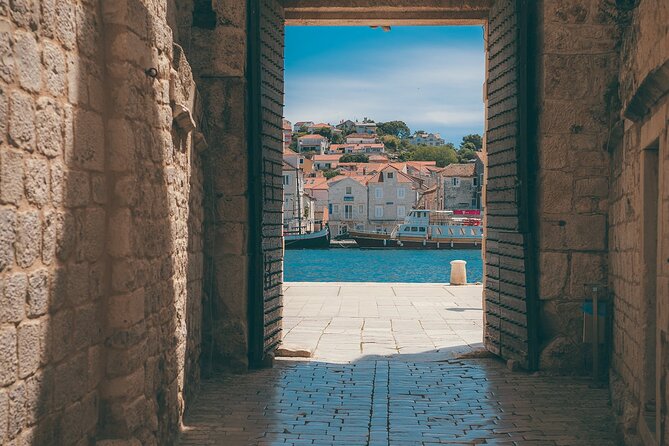
The Cellars of Diocletian’s Palace, sometimes called basement halls, are a highlight if you like architecture that explains function. This set of substructures sits at the southern end of Diocletian’s Palace, in the part of Split that is now the southernmost area of the old quarter. The site is described as one of the best preserved complexes of its kind.
This is one of those stops that changes how you view the whole palace. When you understand what was under the surface, the grandeur above makes more sense. You see how private spaces and service spaces were separated, and you get a clearer sense of how the palace operated rather than just how it looked.
Admission for these substructures is listed as not included, so factor that into your day planning. I think this is worth it for the “real structure” angle, especially if you have already toured old towns where everything feels like storefronts. Here, the focus is on preserved complexity.
Trogir’s Central Square and Loggia: Venetian-style streets, civic pride
Once you reach Trogir, the tour shifts from Roman power to medieval civic design.
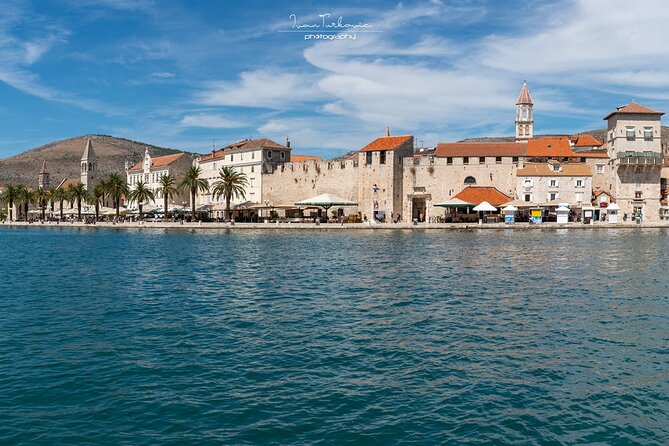
You start at the Central Square, also called John Paul II Square. Trogir is described as a little port city in central Dalmatia with a Venetian-style feel, and its old town is UNESCO-listed. That UNESCO label can sound abstract, but you will feel it when you see how the buildings and public spaces create a coherent walking experience.
The tour specifically calls out the Loggia opposite the cathedral. The Loggia used to be a public courtroom, with features like its six pillars and carved reliefs. There is also a note that during summer, the pillars can be harder to see because of a nearby coffee bar. In other words, you do not need perfect photography to appreciate the architecture. You need the guide telling you what to look for and when to look.
Admission for the Central Square is listed as free. The tour also includes a stop at Trogir’s Town Loggia later, which is also marked as free. That gives you a good chance to slow down your eyes and catch details you would otherwise miss while walking.
You can also read our reviews of more private tours in Split

St Lawrence’s Cathedral and the Kamerlengo Fortress viewpoint payoff
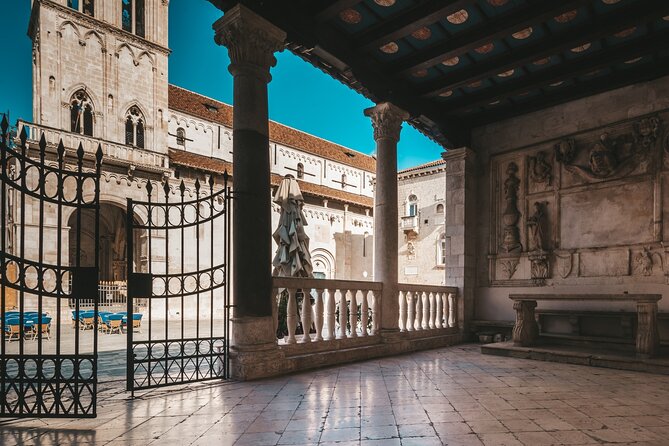
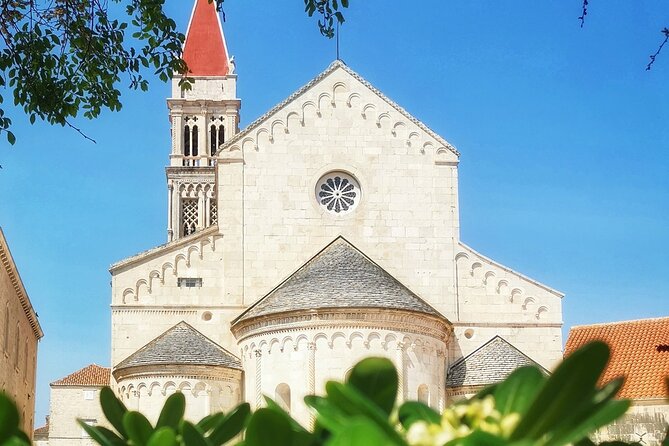
Trogir’s next anchor is Saint Lawrence’s Cathedral, a Roman Catholic triple-naved basilica built in Romanesque-Gothic style. One reason this stop matters is the way construction spans multiple centuries. You can see how styles changed over time in Dalmatia, instead of everything being stuck in one design era.
Admission for St Lawrence’s Cathedral is listed as not included, so it may be one of the bigger ticket cost items of the day. If you like architecture that shows evolution, you’ll likely enjoy it more than a quick exterior-only peek.
Then you get the Kamerlengo Fortress, a 15th-century coastal fortress built during Venetian rule to protect Trogir from naval attacks. This is the part of the tour where the view earns its keep. The fortress offers panorama angles over the old town, the marina, and nearby islands, and the story behind it helps you understand why the coastline needed defenses.
Admission for Kamerlengo Fortress is also listed as not included. Still, I like the way this stop ends on geography. It turns the day from a list of monuments into a reasoned picture of the coast.
Čipiko Palace and Trogir’s noble layer: when streets explain wealth
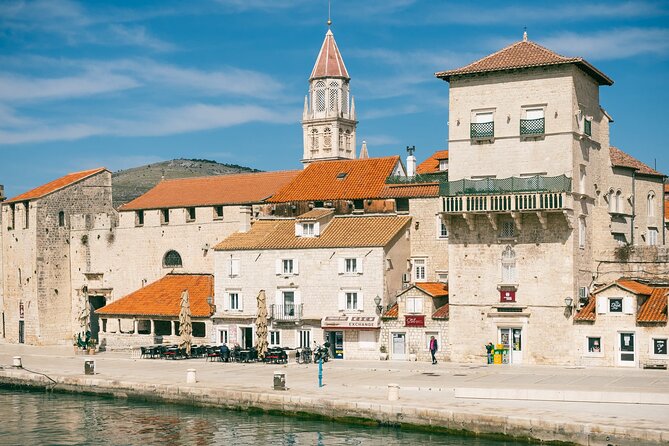
The final named stop is Čipiko Palace, the largest residential palace in Trogir and an example of Gothic-Renaissance architecture. It belonged to the influential Čipiko family, and the building is tied to the noble past of the town.
Admission for this stop is listed as not included, so treat it like a pay-for-details moment. If your interest leans toward how wealthy families signaled power through architecture, this can feel satisfying. If you are mostly there for Roman ruins and fortress views, you might still appreciate the context because it rounds out Trogir beyond public squares and churches.
Price and value: is $228.78 per person worth it?
At $228.78 per person for a private VIP format and about 6 hours total, the value comes from what you avoid, not only what you see. You pay for a guide to connect the dots between sites, plus help managing time and crowd pressure through Split’s old streets and Trogir’s tighter lanes.
If you are traveling with a group of adults who all want similar sights, private format can actually be cost-efficient compared to piecing together multiple smaller tours or constantly hiring local guides for short segments. You also get pickup offered and an English-speaking local guide, plus a mobile ticket.
Where you might feel the price more is if you are only interested in one or two big monuments. This tour is designed for people who want a broad sweep: palace heart, cathedral layer, statue tradition, substructures, then a UNESCO old town circuit with churches, fortifications, and palaces.
Who this tour suits best
This is a strong match if you like structured sightseeing but hate feeling rushed. The short stop timing works well when you want to cover highlights in one day without locking yourself into a long museum session.
It is also a good pick for first-time visitors who want context quickly. You get a guided explanation for why spaces matter, including the logic of Diocletian’s Palace layout and the defensive reason behind the Venetian fortress at Kamerlengo.
If you are more of a slow wanderer who wants long free time in cafés, you might find the 15-minute stop cadence limiting. In that case, plan your own extra time in Trogir after the tour, so you can linger where you liked it best.
A final note on guides: you may meet guides such as Kristina, who is praised for being native and for sharing personal stories tied to local traditions. You might also get Andrea, praised for helping groups navigate crowds with ease. That style matters here because both Split and Trogir can feel dense during peak hours.
Should you book this Best of Split and Trogir tour?
Book it if you want a half-day private VIP plan that hits the core monuments of Split’s Diocletian world and Trogir’s UNESCO old town in a single, sensible route. It is especially worth it when you value a local guide who gives you enough structure to understand what you are looking at, without turning the day into classroom notes.
I would hold off if you only care about one or two sites, or if you are highly price-sensitive about admissions. Because several key buildings list admission as not included, the final total can climb beyond the base tour price once you factor in those stops.
If your schedule is tight and you want the classic highlights handled in the right order, this tour is a dependable choice for getting your bearings fast and leaving with a real sense of how these two towns connect.
FAQ
How long is the tour?
The tour duration is about 6 hours.
What is the price per person?
The price is $228.78 per person.
Is this tour private?
Yes. It is a private tour, so only your group participates.
Do they pick you up?
Pickup is offered.
What language is the tour in?
The tour is offered in English.
How long are the main stops?
The listed time for each featured stop is about 15 minutes.
Which stops have free admission based on the tour details?
Admission is listed as free for the Peristyle of Diocletian’s Palace, the Grgur Ninski statue, the Central Square in Trogir, and the Town Loggia.
Which stops list admission as not included?
Admission is listed as not included for the Cellars of Diocletian’s Palace (substructures), Saint Lawrence’s Cathedral, Kamerlengo Fortress, and Čipiko Palace.
Does the tour include mobile tickets?
Yes, a mobile ticket is included.
What is the cancellation policy window?
Free cancellation is available if you cancel up to 24 hours in advance of the experience start time.
Are service animals allowed?
Yes, service animals are allowed.
More Guided Tours in Split

More Tours in Split
More Tour Reviews in Split

Not for you? Here's more nearby things to do in Split we have reviewed



More Split City & Day Tours to consider.
 ★ 4.8Krka Waterfalls Trip with Boat Cruise and SwimmingFrom $3110,519 reviews
 ★ 5.0Krka Waterfalls, Food & Wine Tasting TourFrom $459,326 reviews
★ 4.9Krka Waterfalls, Food & Wine Tasting TourFrom $446,598 reviews
★ 5.0Krka Waterfalls, Food & Wine Tasting TourFrom $459,326 reviews
★ 4.9Krka Waterfalls, Food & Wine Tasting TourFrom $446,598 reviews
 ★ 4.6Split/Trogir: Blue Cave, Mamma Mia, Hvar and 5 Island TourFrom $1096,320 reviews
 ★ 4.5Blue Lagoon & 3 Islands Cruise with Lunch from SplitFrom $785,756 reviews
 ★ 4.9Old Town and Diocletian Palace Walking TourFrom $174,727 reviews
 ★ 4.9Blue Lagoon Boat Party with DJs, Shots & After PartyFrom $474,610 reviews
 ★ 5.0Krka Waterfalls Tour, Boat Cruise & SwimmingFrom $324,489 reviews
Explore its other useful categories