
REVIEW · SPLIT CITY & DAY TOURS
Storytelling World War II in Split Tour
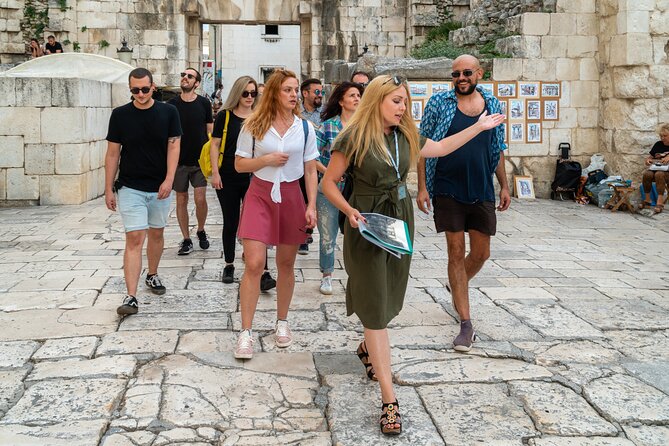
World War II makes Split feel close and personal. In just 2 hours, you follow a tight loop of key locations, with archival WWII photos and a licensed local guide who turns the street layout into a story you can actually feel. I also really like that the tour is kept small, max 15 travelers, so you can ask questions and stay connected to what you’re seeing. One heads-up: this is a walk-and-stop format with short stops, so you may do more standing than you expect.
My second favorite part is the way Ina Nikolic links the wartime events to specific places, like the Roman emperor Diocletian’s Palace and the squares that became stages for violence. I also appreciate that the tour uses old materials from the Museum of the City of Split archive, not just generic textbook talking points. The main drawback is emotional subject matter, including bombing and executions, so if you’re sensitive to WWII violence, plan your timing and mindset.
Quick reasons this WWII walk works in Split
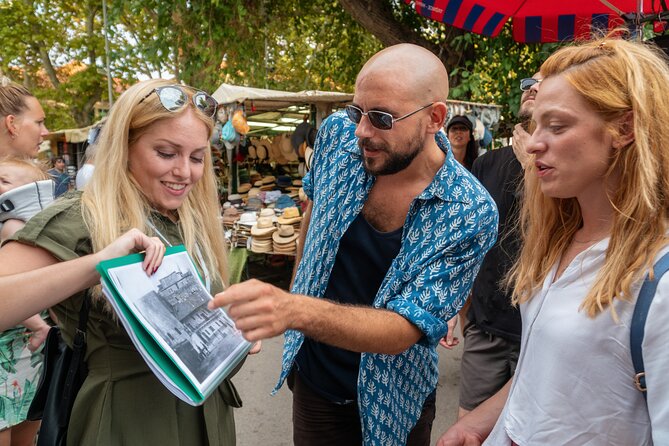
- Archival photos in hand, from the Museum of the City of Split archive, used during the tour
- Small group size (max 15), which keeps the storytelling interactive
- Stop-by-stop wartime geography, from Split Riva to Prokurative
- Clear focus on local impacts, including the bombing of Split and what happened in major squares
- Extra context when it fits, including connections beyond WWII (up to the 1990s wars) and Jewish history
Split Riva to Prokurative: a WWII story told on real streets
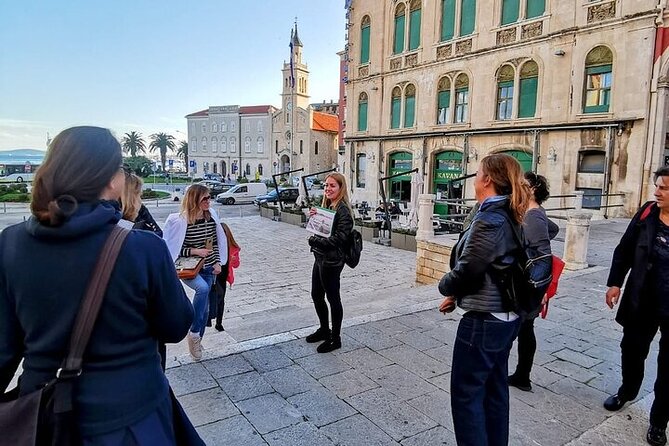
This tour feels built for people who like history with “location names” attached. In Split, you can stand in a place that still has the same shape, same stone edges, same sea-facing mood, and learn what those walls and streets went through in the 1940s. The format is simple: meet in the center, walk short distances, stop often, and let the guide connect each spot to a specific chapter of wartime Split.
You’re not staring at one museum exhibit for hours. Instead, you’re walking through the city as if it’s a timeline. That matters, because WWII in Split is not just big-picture headlines. It’s the feeling of where people were when the danger hit, and how a city that’s ancient on the surface had modern scars underneath.
One of the smartest parts of this experience is the pacing. The tour keeps each segment tight, with brief stop times, so you’re not stuck in one location waiting for the next story to start.
You can also read our reviews of more tours and experiences in Split.

Price and time: what $60.01 buys you in about 2 hours
At $60.01 per person for roughly 2 hours, you’re paying for three things: a licensed local guide, a small-group format, and wartime materials (archival photos) that are brought into the experience with permission.
Is it “cheap”? Not really. But the value comes from how much you get per minute. You’re learning across multiple key sites in the old historical center, with admission ticket costs marked as free for the stops described. You also get a mobile ticket, which tends to make city-center days smoother, especially if you’re hopping between plans.
Also, if you’re the kind of traveler who hates paying for a tour and then feeling bored, this one has a built-in advantage. The stop list is short enough to keep your attention, but varied enough to prevent the whole thing from feeling repetitive.
Who the tour suits best (and who should think twice)
This is a good fit if you’re one of these travelers:
- A history fan who wants local WWII stories, not generic European war summaries
- A parent traveling with a teenager who can handle serious topics and wants context
- Someone who likes comparing “then and now” in the same place
It can also work well for couples, because the route is in the old center and the stories are aimed at making the city readable. One review-style detail you should take seriously in your planning: people often mention that it involves a fair amount of standing. If you have mobility limits, shorter stop durations may still be harder than you’d like. And again, the subject matter includes bombing and prisons and executions, so you’ll want to be mentally prepared.
Language is English, and the tour is described as suitable for most travelers. If you’re traveling with service animals, service animals are allowed.
Meeting and ending points in the center of Split
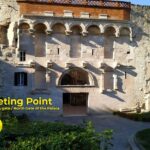
You’ll meet at Obala Hrvatskog narodnog preporoda 27 in Split. This puts you in the historical center zone, close enough to the action that you’re not spending the whole evening figuring out how to arrive.
If you want pickup, it’s offered at Trajektna luka Split, Obala kneza Domagoja. That can be a real time-saver if you’re arriving by ferry or want a simpler start without searching for a street address.
The tour ends at Trg Republike, also described as Prokurative square. You’ll remain near the promenade, so it’s easy to roll into dinner or a short walk along the water afterward.
The route, stop by stop: where the WWII story lands
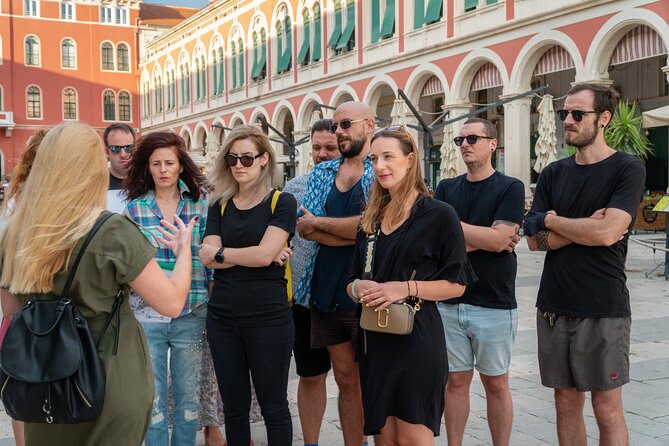
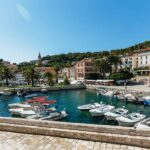


Stop 1: Split Riva, the starting point of the conflict in Split
You begin at Split Riva, and the guide sets the stage for why the war experience in Split began where it did. Even if you’ve studied WWII in general, this opener matters, because it anchors the story in Split’s geography and timing.
This is also where the tour tone gets established. The guide frames what you’re about to see, so later stops don’t feel random. If you like when a guide gives you the “map” of the story first, this start helps.
Stop 2: Green Market, and the bombing story that hits hard
Next comes the Green Market. This stop is short, but the takeaway is big: you’ll hear about the most horrific bombing in Split. A market sounds everyday, even festive, so learning about bombardment there is exactly the kind of contrast that makes the city feel real.
If you’re the type who learns better through specific location-and-event combos, this is one of the key moments. The market setting helps you imagine civilians moving through ordinary routines while history turns dangerous.
Stop 3: Eastern (Silver) Gate into Diocletian’s Palace
At the Eastern (Silver) Gate, you pass into the world of Diocletian’s Palace from the east. This is not just a “pretty ancient entrance” stop. It’s a bridge between centuries, because wartime damage did not respect old stone.
This segment works especially well if you’re already familiar with Diocletian’s Palace in broad terms. Here, you get the war angle attached to a recognizable architectural boundary.
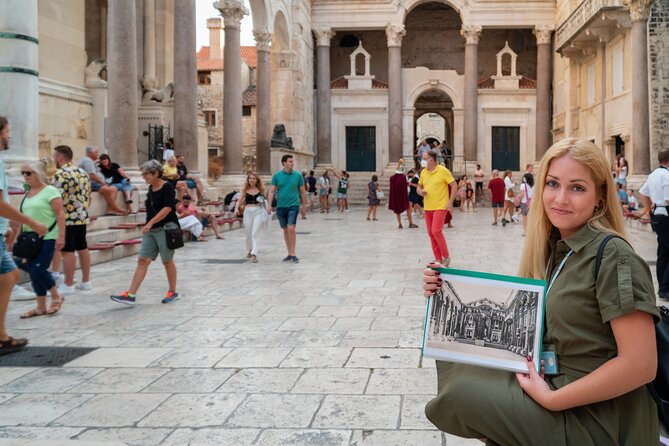
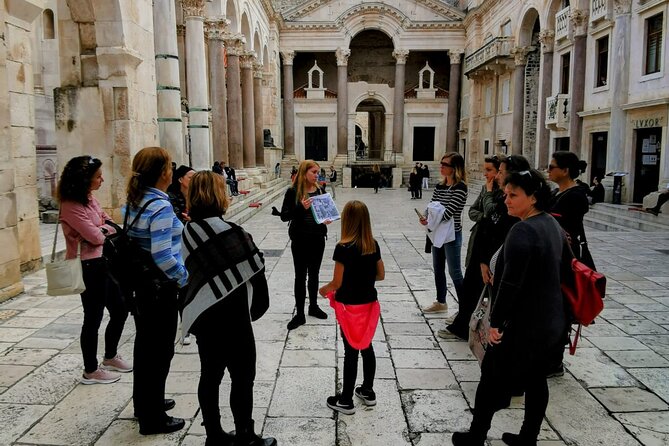
Stop 4: The Peristyle of Diocletian’s Palace, where you see what was attacked
In the Peristyle, you learn which portions of Diocletian’s Palace were attacked during the war. The Peristyle is a strong choice for storytelling because it’s open and dramatic in a way that makes details feel more immediate than a closed space.
When you combine the ancient layout with wartime narratives, you get a clearer sense of scale. The city did not just suffer abstractly. Parts of a major landmark were part of the conflict.
One practical note: this is the kind of stop where you might take a few photos before the story continues. Keep your camera handy, but don’t let it steal the focus from what the guide points out.
Stop 5: Narodni Trg, the main square where terrible events unfolded
Narodni Trg is next, and it’s your reminder that the center of town was not only for daily life. This is where you learn about what took place in the main square during the war.
Squares are “public by design,” and WWII stories become more intense when you realize how quickly public spaces can turn into danger zones. If you tend to remember history better through social settings, this stop is a good anchor.
Stop 6: Marmontova Ulica, the main street as a witness to horror
Marmontova Ulica is the main street, and the guide uses it as another kind of evidence. It’s not a monumental landmark like a palace entrance, but it matters because main streets show how war affects movement, daily schedules, and where people would pass through.
This is a short stop, so pay attention to what the guide is connecting: street geometry, patterns of what people likely saw, and why certain locations were harder to avoid.
If your legs are getting tired by this point, this is where your “standing stamina” matters. The story may be intense, but you still need to keep your focus through a brief pause in the middle of a walking route.
Stop 7: Prokurative, ending with prisons and executions
You finish at Prokurative, and the tour ends with the darkest theme in the itinerary. You’ll learn about prisons and executions during the war, tying the narrative to the city’s political and human costs.
Ending here can feel heavy, but it also makes sense. The last stop gives the story a final shape: from early war impacts, to public spaces, to the machinery of punishment and violence.
When you leave, you’ll be near the promenade and the central squares. That’s helpful because it gives you a gentle landing after the final topic.
What the guide does with the photos, maps, and context
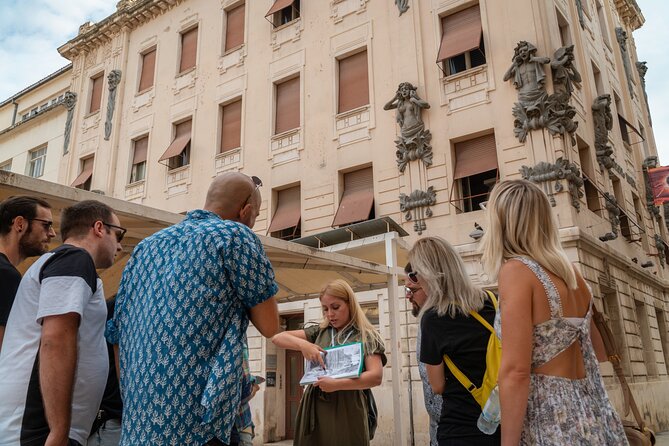
A big reason this tour seems to click for history-minded travelers is the use of visuals. You’re not just hearing dates. You’re seeing old WWII photographs from the Museum of the City of Split archive, and the guide has permission to use them. Those images help you compare old street views and town life with what you see today.
That “then and now” comparison is a powerful learning tool. It turns vague memories of WWII into recognizable details: buildings, open spaces, and the way neighborhoods looked before modern rebuilding and reshaping.
The tour also tends to include wider context. Ina Nikolic can connect WWII history to later conflict patterns, including the 1990s wars, and the guide may bring in Jewish history as part of the larger local story. If you like when a guide explains why the past keeps echoing, this kind of context can make the whole experience feel more coherent.
Expect Q and A energy too. The guiding style described is friendly and responsive, so if something in the story puzzles you, you’ll likely have a chance to ask.
Logistics that actually matter on a city-center walk
A few practical details will help you plan:
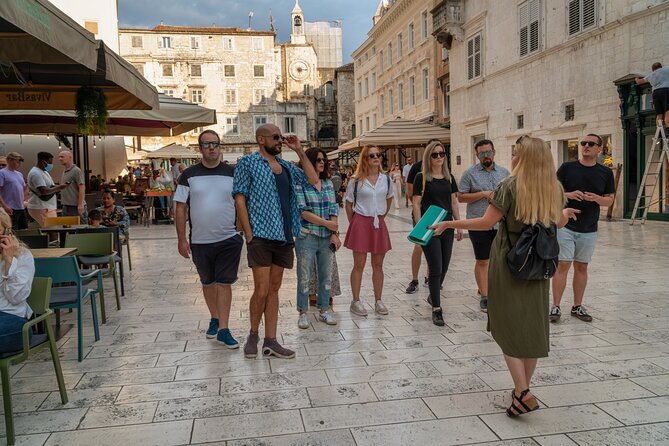
- Duration is about 2 hours, so wear shoes you can stand in for a while
- Maximum group size is 15 travelers, which usually means less crowd pressure
- You’ll stay in the old historical center, so it’s easy to combine with other Split plans
- You can choose pickup at Trajektna luka Split (Obala kneza Domagoja), if you’re arriving by ferry
- The tour is offered in English
- A mobile ticket is used, so you do not need to hunt down paper paperwork
Timing-wise, you might consider doing it when the light fits your mood. One useful detail you can take from the experience format is that it can be great in the evening, which often makes city-street walking more comfortable than midday heat. If you’re the type who likes photos and atmospherics, evening can help the architecture and the atmosphere play together.
Should you book this WWII storytelling tour in Split?
Book it if:
- WWII history interests you, and you want it tied to real Split locations
- You like walking tours where each stop has a clear wartime reason
- You appreciate archival photos and visual comparison, not just lecture-style storytelling
Skip or think twice if:
- You have low tolerance for heavy topics like bombing, prisons, and executions
- You need a tour with minimal standing or very long seated breaks
If you decide to go, I’d treat this as an adult-intensity history walk, not a casual sightseeing stroll. It’s priced for a guided, story-driven experience in a high-value central area, and it uses visuals and place-specific context in a way that tends to stick.
FAQ
How long is the tour?
The tour lasts about 2 hours.
Where does the tour start?
It starts at Obala Hrvatskog narodnog preporoda 27, 21000, Split, Croatia.
Can I get pickup?
Pickup is offered at Trajektna luka Split, Obala kneza Domagoja.
Where does the tour end?
The tour ends at Trg Republike, also noted as Prokurative square.
Is the tour offered in English?
Yes, the tour is offered in English.
What is the group size?
The tour has a maximum of 15 travelers.
Does it include historical photos or materials?
Yes. The guide uses old photographs from the time of World War II kept in the Museum of the City of Split archive.
Do I need to pay for admissions at the stops?
The stops listed include admission tickets marked as free.
Is a mobile ticket used?
Yes, the tour offers a mobile ticket.
What if my plans change?
Free cancellation is available, and you can cancel up to 24 hours in advance for a full refund.
Are service animals allowed?
Yes, service animals are allowed.
More Tours in Split
More Tour Reviews in Split
Not for you? Here's more nearby things to do in Split we have reviewed



More Split City & Day Tours to consider.
 ★ 4.8Krka Waterfalls Trip with Boat Cruise and SwimmingFrom $3110,519 reviews
 ★ 5.0Krka Waterfalls, Food & Wine Tasting TourFrom $459,326 reviews
★ 4.9Krka Waterfalls, Food & Wine Tasting TourFrom $446,598 reviews
★ 5.0Krka Waterfalls, Food & Wine Tasting TourFrom $459,326 reviews
★ 4.9Krka Waterfalls, Food & Wine Tasting TourFrom $446,598 reviews
 ★ 4.6Split/Trogir: Blue Cave, Mamma Mia, Hvar and 5 Island TourFrom $1096,320 reviews
 ★ 4.5Blue Lagoon & 3 Islands Cruise with Lunch from SplitFrom $785,756 reviews
 ★ 4.9Old Town and Diocletian Palace Walking TourFrom $174,727 reviews
 ★ 4.9Blue Lagoon Boat Party with DJs, Shots & After PartyFrom $474,610 reviews
 ★ 5.0Krka Waterfalls Tour, Boat Cruise & SwimmingFrom $324,489 reviews