
REVIEW · SPLIT CITY & DAY TOURS
Split and Trogir Half Day Tour from Split (with port pickup)
Trogir and Split in one smooth half-day. I like how this tour combines UNESCO-listed old towns with a comfy ride, and how the guide ties Roman, Venetian, and local stories into one clear timeline. I also love the straightforward port pickup and city-center finish, so you can get back to your ship without stress. The main thing to consider is that it is a lot of walking for a half-day, with short stops that still add up.
In practice, I think the best part is the pacing. You get guided time where you want it, then you have room to breathe and wander, especially in Trogir. If you are on a cruise day, that matters.
What really sells this tour is the human touch. Guides such as Tina or Sandra are often the ones mentioned for energetic, organized commentary, and names like Roko, Hrvoje, and Josipa show up too. You will still want to bring your patience for weather and crowds, since the route runs in all conditions.
Key Things You’ll Notice On This Split To Trogir Tour
- Port pickup that is designed for cruise days, with a clear meeting point and a guide holding a Croatian Trails sign
- Air-conditioned coach comfort, so the trip to Trogir does not feel like a sweat test
- UNESCO stops with built-in time to look around, not just a rushed photo parade
- Diocletian’s Palace plus Trogir’s churches and cathedrals, so you see how empires left visible fingerprints
- A guided split between “see with the group” and “wander on your own”, especially in Trogir
Getting Your Bearings Quickly in Split
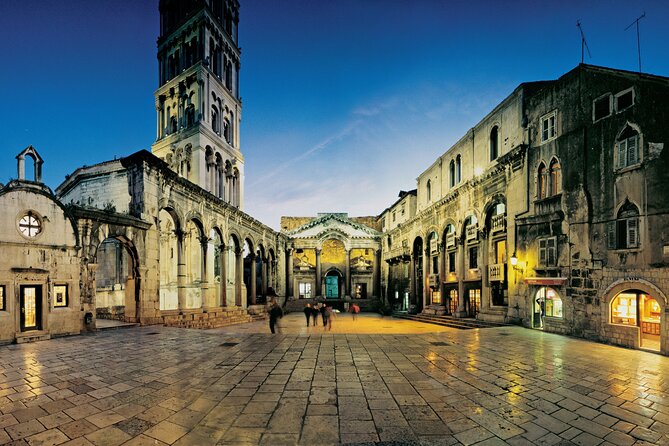
Split can feel like a living museum, but in a good way. The old core is built around what used to be an imperial stronghold, and this tour starts by putting you in the right mental map fast.
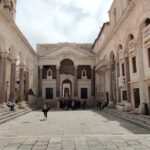
You begin at Diocletian’s Palace, which was built by Emperor Diocletian around the turn of the 4th century AD. Today it shapes about half of the old town and city center. Even if you have seen photos, it helps to stand inside the surviving palace walls and understand what you are looking at before you wander off on your own.
This stop is short, about 20 minutes. That sounds brief, but it is ideal if you are on a timed cruise schedule. You will get the big story, the key layout idea, and then move on rather than getting stuck reading stones for an hour.
You can also read our reviews of more tours and experiences in Split.

Palazzo di Diocleziano Stop: Roman Walls, Everyday Streets
The Diocletian palace area is special because it explains why Split looks the way it does. Streets, buildings, and public spaces grew around an ancient plan, so you are not just touring ruins. You are stepping into a neighborhood that still functions.
A practical note: because this is a palace core stop, expect uneven surfaces and tight corners. It is manageable for most people, but if you have mobility limits, go slow. The tour does note moderate physical fitness.
The Coach Ride to Trogir Along the Coast
Then you transfer by air-conditioned coach to Trogir. The ride is short and scenic, and you will start shifting from Split’s palace-center vibe into Trogir’s quieter historic streets.
This is one of those details I appreciate: the transport is built into the experience. Instead of figuring out local buses or timing a taxi, you get a direct flow. On a half-day, that saves energy for the actual sightseeing.
The tour also runs in all weather, so the coach part helps regardless of whether you have sun or rain.
Historic City of Trogir: A UNESCO Old Town With Room to Wander

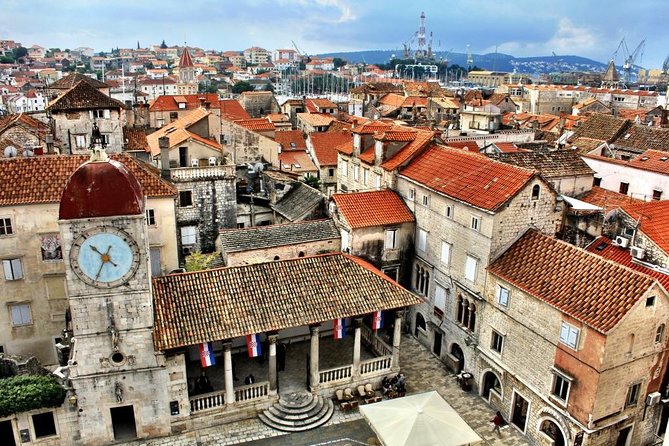
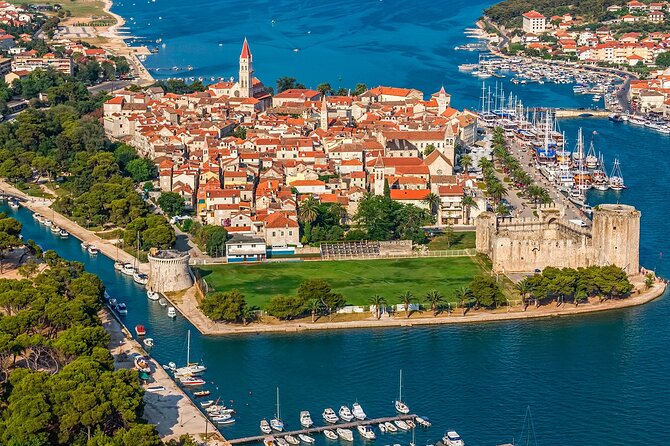
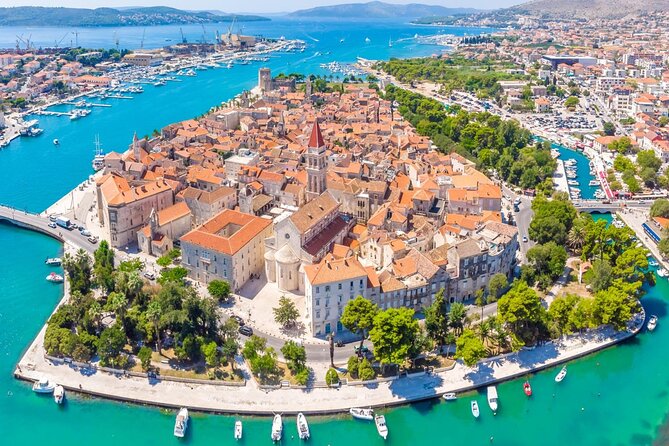
Trogir is where the tour gives you space to enjoy, not just listen. You spend about an hour in the Historic City of Trogir, a UNESCO World Heritage Site.
What makes Trogir memorable is the layered architecture. It traces back to Greek colonists in the 3rd century BC and has around 2,300 years of continuous urban tradition. What you see on the street is a mix that goes from Romanesque churches to Renaissance and Baroque work tied to the Venetian period.
You get a guided introduction first, then you have time to explore at your own pace. Use this hour to do the practical things you rarely plan for on cruise days: find a good vantage point for photos, slow down for a coffee, and check out small streets that you would miss if you stayed in “tour mode” the whole time.
If you like food breaks, this is also when you can follow the guide’s local suggestions for a treat in Trogir. Even a simple dessert break can make the half-day feel richer.
Cathedral of Saint Domnius: Roman Roots and a Distinct Bell Tower
Back in Trogir, the tour pauses at the Cathedral of Saint Domnius for about 20 minutes.
This complex is fascinating because it comes from different eras. The structure includes what began as an Imperial Roman mausoleum, later evolving into a church complex with a bell tower. The church portion is dedicated to the Virgin Mary, while the bell tower belongs to Saint Domnius.
Even in a short stop, it is worth paying attention to how the pieces fit together. One reason this stop works is that it helps you read the site. Without that, you might just see a pretty cathedral exterior. With the explanation, you understand why the building feels like a patchwork of power and faith.
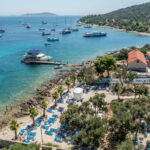

Kula Karmelengo: A Castle-Former With Performance Season Energy
Next is Kula Karmelengo, a castle built in the mid-15th century by Marin Radoj. It is tied to the expansion of the Veriga Tower that stood earlier in the late 14th century.
This stop is about 20 minutes. The point is not to spend forever inside. It is to connect the dots between Trogir’s medieval defense story and its later identity as a cultural stage. The tower is used for performances during the summer months.
If you are visiting in off-season, you might not catch an event, but you can still appreciate how the building has found a second life.
Prokurative: Venice-Inspired Streets in Split
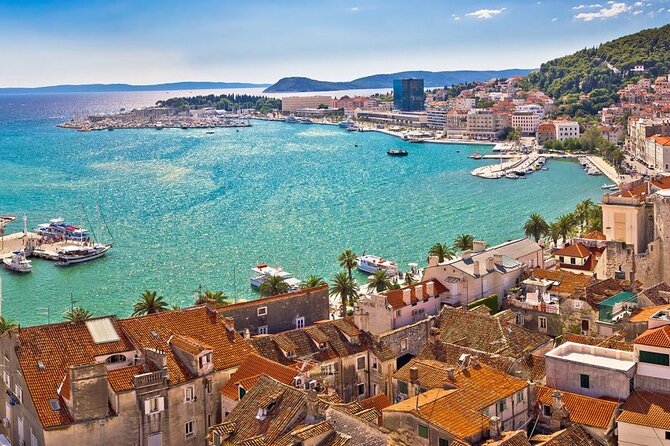
Then you head back toward Split’s historic center and stop at Prokurative for about 15 minutes.
Prokurative dates to the 19th century, supervised by General Marmont, and initiated by Split’s mayor Antonio Bajamonti. The design is largely inspired by Italian architecture from that time and closely resembles St. Mark’s Square in Venice. Even the architect was from Venice and aimed to build something that reminded him of home.
This is a quick stop, but it is a good reminder that this region is not stuck in ancient times. You are seeing how Split absorbed styles through politics, travel, and ambition.
Saint Lawrence’s Cathedral: Styles Layered Over Centuries
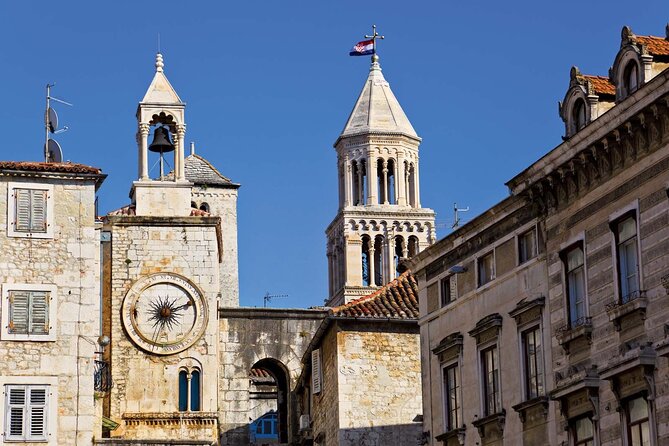
In Trogir again, the final major architectural pause is Saint Lawrence’s Cathedral for about 15 minutes.
This cathedral is a Roman Catholic triple-naved basilica built in Romanesque-Gothic style. What makes it especially interesting is that construction lasted several centuries. That means you can see styles that came one after another in Dalmatia rather than a single uniform look.
Even if you only get a brief visit, it helps to mentally look for changes. It turns the cathedral from a single monument into a timeline you can spot with your eyes.
Logistics That Actually Matter on Cruise Day
This tour is built for real schedules. You get port pickup, and the coach handles the between-city travel.
For cruise passengers, you should expect to provide details like your ship name plus docking, disembarkation, and reboarding times. That is the kind of info that lets a tour run on time rather than wait around with everyone sweating in the sun.
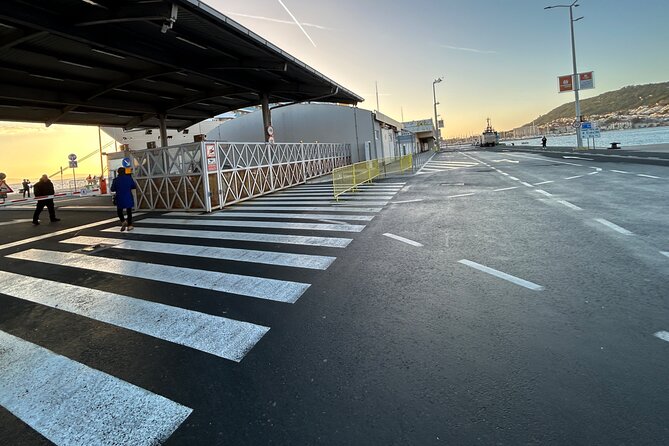
The meeting point for cruise ships is at the New Split Berth for cruise ships at Obala kneza Domagoja 16, 21000 Split. Your guide will have a sign reading Croatian Trails and will be at the entrance area near the ship’s terminal gate, by the hop-on or hop-off red buses. The tour ends in the city center at Split Riva. There is no drop-off back to the ship, and you may need about a 20-minute walk back to the ship’s terminal. The guide can help you arrange a taxi if you need one.
Also, the tour notes that the duration of transfers is approximate and depends on traffic and time of day. That is normal. Just plan your next move with a little buffer.
Time, Price, and What You Get for the Money
The price is $78.61 per person for roughly 4 hours. On paper, that is not “cheap.” In practice, it can be good value if you care about three things: a guided UNESCO experience, air-conditioned transportation, and cruise-ready pickup.
Entry fees are not included, so you should expect a bit extra if you decide to pay for any sites you stop at that require tickets. The tour does include live commentary on board, a professional guide, and taxes and handling fees.
To judge the value fairly, I look at what you would otherwise pay and plan yourself. If you are doing Split and Trogir alone, you are usually paying for transport and spending time figuring out meeting points, then paying for guides or audio options to get the context. Here, the context is part of the package.
Group size matters too. The tour caps at 50 travelers. Some guests describe very small groups, which can make it feel more personal, but the key fact you can plan with is the max size.
Who This Tour Fits Best
This half-day works best if you:
- want a structured way to see both Split and Trogir without losing your whole day
- are traveling with limited time, especially on a cruise stop
- like history that has context, not just dates
- prefer a comfortable coach over cobbling together local transport
It may feel less ideal if you:
- dislike walking, since the stops are short and you still move between them
- need a very slow pace or lots of long breaks, because the itinerary is designed to cover major highlights in limited time
The Main Tradeoff: Short Stops Add Up
The biggest “watch out” is walking plus multiple brief stops. The tour is paced like a highlight reel with frequent look-ins. That is efficient. It can also be tiring if the weather is hot or if you are not used to cobblestones.
One practical move: wear shoes you trust. No fancy sandals. Bring water if the weather is warm, and consider a light layer if it gets breezy.
Should You Book This Split and Trogir Half-Day Tour?
I would book it if you want the cleanest path to seeing Diocletian’s Palace area and Trogir’s UNESCO core in one morning or afternoon block. The combination of air-conditioned transport, a guide who can connect eras, and built-in wander time in Trogir makes it a strong use of limited time.
I would skip it or choose a gentler alternative if walking is a big concern for you, or if you want a slow, deep museum-style experience. This tour is about smart highlights, not hours of lingering in one spot.
If you are on a cruise day, this one is especially appealing because it is designed around pickup and a realistic return finish in the city center. Just remember you may need that 20-minute walk back, so plan your reboarding buffer accordingly.
More Tours in Split
More Tour Reviews in Split
Not for you? Here's more nearby things to do in Split we have reviewed



More Split City & Day Tours to consider.
 ★ 4.8Krka Waterfalls Trip with Boat Cruise and SwimmingFrom $3110,519 reviews
 ★ 5.0Krka Waterfalls, Food & Wine Tasting TourFrom $459,326 reviews
★ 4.9Krka Waterfalls, Food & Wine Tasting TourFrom $446,598 reviews
★ 5.0Krka Waterfalls, Food & Wine Tasting TourFrom $459,326 reviews
★ 4.9Krka Waterfalls, Food & Wine Tasting TourFrom $446,598 reviews
 ★ 4.6Split/Trogir: Blue Cave, Mamma Mia, Hvar and 5 Island TourFrom $1096,320 reviews
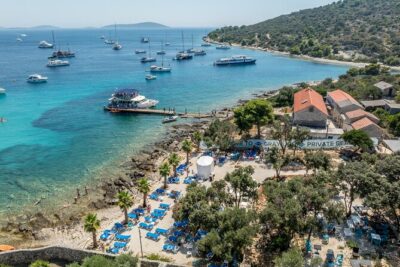 ★ 4.5Blue Lagoon & 3 Islands Cruise with Lunch from SplitFrom $785,756 reviews
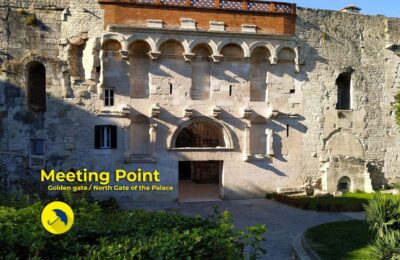 ★ 4.9Old Town and Diocletian Palace Walking TourFrom $174,727 reviews
 ★ 4.9Blue Lagoon Boat Party with DJs, Shots & After PartyFrom $474,610 reviews
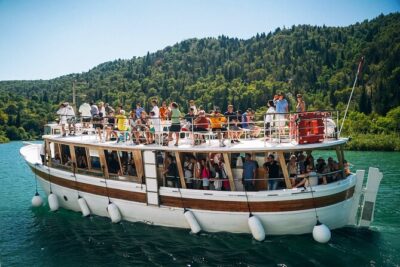 ★ 5.0Krka Waterfalls Tour, Boat Cruise & SwimmingFrom $324,489 reviews
Explore its other useful categories