
REVIEW · SPLIT CITY & DAY TOURS
Split and Trogir Half Day Guided tour
Split and Trogir fit surprisingly well. In about 5 to 6 hours, you get a guided pass through Diocletian’s Palace and then roll right into Trogir’s old-town center, with air-conditioned transport and an English-speaking guide. I love how the route is structured so you see the big hitters without wasting time, and I love that Trogir includes real free time for wandering, not just a quick photo sprint. Guides like Antonia and Ivana are the kind that turn stone and street names into stories you actually remember.
One thing to plan for: walking. There is enough strolling on old streets and uneven ground that comfy shoes matter, especially if you do not love long historic walks.
Key highlights you will feel right away
- Two old towns for the price of one day plan: Split plus Trogir in a single half-day tour.
- Diocletian’s Palace focus from substructures to main square: you do not just glance at highlights.
- Substructures with Game of Thrones filming context: you see the palace basements and why they matter.
- Riva Harbor and Fruit’s Square keep the day grounded in real Split.
- Trogir time that is not rushed: you get a guided tour plus time to roam on your own.
- Some key sights require separate tickets: plan for St Lawrence’s Cathedral and Kula Karmelengo.
A Half-Day Split and Trogir plan that actually makes sense
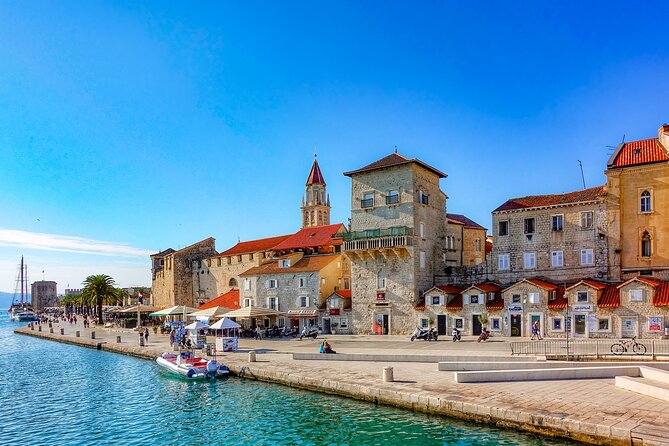
Split is one of those places where it is easy to get lost in “important-looking” streets. This tour is valuable because it gives you a clear backbone: palace first, then Split’s seaside and squares, then Trogir.
The best part is the contrast. Diocletian’s Palace shows you the muscle of Roman-era power. Trogir shows you how later rulers shaped a smaller city into a jewelbox, with Venetian-era influence around the edges. You end the day with both the grand and the refined, without needing a separate full day.
For a first trip to Croatia, this also works as an orientation tool. After you have walked through Diocletian’s Palace and learned the logic of the streets, Split becomes easier to explore on your own later. Same story in Trogir.
You can also read our reviews of more guided tours in Split


Golden Gate to the palace maze, where your timing matters
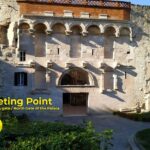
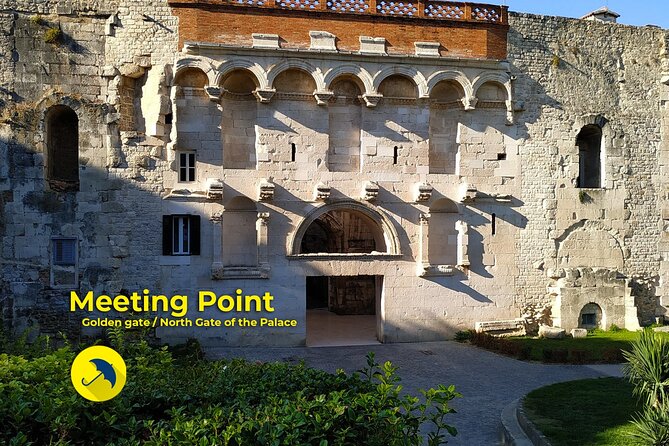
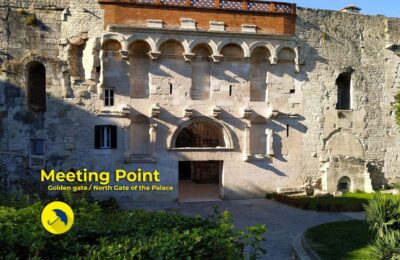
Your meeting point is the Golden Gate area, at Dioklecijanova 7 in Split. From there, you start where the palace’s north entrance frames the story of the whole complex. Even if you have seen photos, being guided into the layout changes everything, because you understand what you are looking at.
From the first minutes, the tour emphasizes transitions, not just stops. You move from exterior street life to the palace’s inner world, and then back out again. That rhythm matters because Diocletian’s Palace can feel like one giant “walk around” if you do not have landmarks and context.
The palace route also includes brief time windows at each stop. That is part of the value. You do not burn half your day waiting around at one location, but you still get enough time to see each space clearly.
Diocletian’s Palace stops, what you should look for at each one
This tour is built around the palace core, and it hits several areas that most “see the palace” plans skip.
The Palace substructures, basements with Game of Thrones context
You start with the Diocletian Palace substructures, often called the basements. These are listed as a short stop, and the key idea is that you are not just walking indoors for comfort. You are viewing the palace spaces that connect to how the complex functioned in earlier centuries.
One fun hook: these basements were used for filming the TV series Game of Thrones. Even if you are not a fan, it helps you picture the atmosphere and scale. Think of it as a shortcut into the mood of the palace before you step into its brighter ceremonial spaces. Admission is noted as free for this stop, so you can focus on the experience rather than extra costs.
The Peristyle, Diocletian’s main square
Next comes the Peristyle, the palace’s central square. This is where you get a feel for how the palace was organized, and why the layout still pulls people in. The time window is short, but it is enough to orient yourself to the space and spot architectural cues.
If you tend to “collect facts,” this is the stop where you will appreciate the explanations most. If you prefer slower looking, take advantage of the quick viewing time to find one detail you want to remember later, like the way the square frames surrounding structures.


The Vestibulum, an entrance with palace-scale meaning
The Vestibulum is the ancient entrance area tied to Diocletian’s residence. It sounds like a minor stop, but entrances are power statements in places like this. You are basically learning how movement through the space was controlled, then seeing how modern life layers itself over older walls.
Golden Gate again, but now with context
You also spend time at Golden Gate, which is both a landmark and your orientation point. Because you start and reference it during the day, it helps you keep your bearings when you are later walking outside along Split’s waterfront streets.
Split’s Riva Harbor and Fruit’s Square, the real-city break
After the palace spaces, you shift into the parts of Split that feel lived-in. This is where the tour becomes more than architecture homework.
Riva Harbor, for sea views and a reset
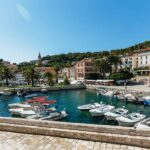
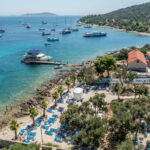
At Riva Harbor, you walk along the famous promenade area. The stop is brief, but it is a smart pacing move. You get a break from enclosed stone and get fresh air and sea views.
This is also where you can quickly check your own energy level. If you are tired, you can use the promenade as a gentle step back before you move into the next square.
Fruit’s Square (Trg Brace Radic), a snapshot of everyday Split
Then comes Fruit’s Square (Trg Brace Radic). Squares in old Dalmatian cities are like social engines. They hold markets, conversations, and the daily rhythm of locals. Even in a short time, you can feel the difference between palace gravity and city life.
This stop is also useful because it anchors you back into street-level geography. Once you know where the squares sit, you can navigate Split more confidently later.
The ride to Trogir, and how to use your free time
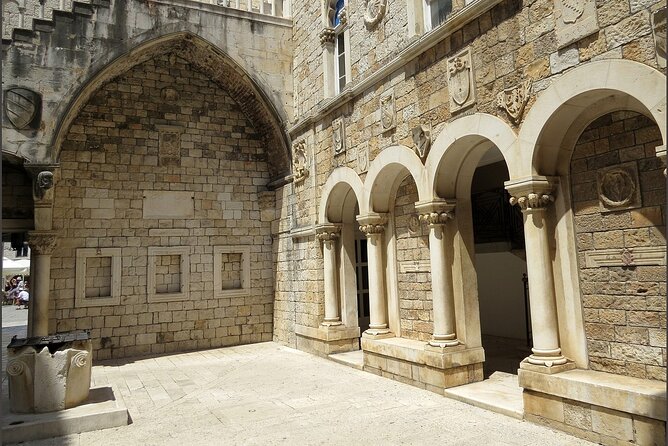
There is a transfer from Split to Trogir by vehicle, and the day is designed so you arrive with enough time to do something meaningful once you get there. You are not left thinking, nice town, shame I only have ten minutes.
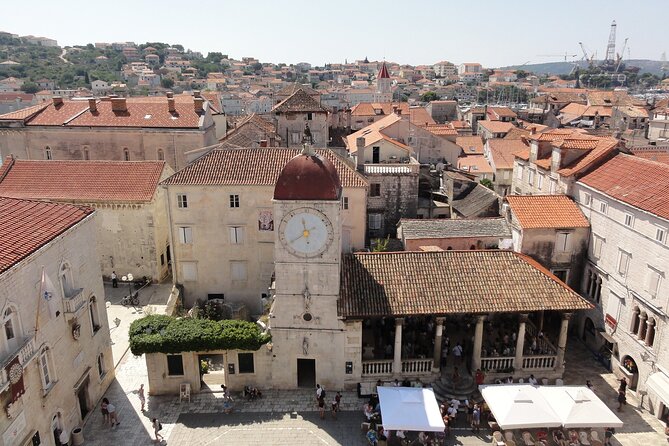
In Trogir, the tour includes guided time plus free time. That matters because Trogir is the kind of place where you want to linger if you enjoy photography, small streets, or just watching people move through the square.
I like using your free time in a simple way: pick one area to revisit slowly. For most people, that is the Central Square area around the sights. If you keep circling the main streets, you naturally find small corners without needing a detailed map.
Trogir old town sights, from Central Square to Kula Karmelengo
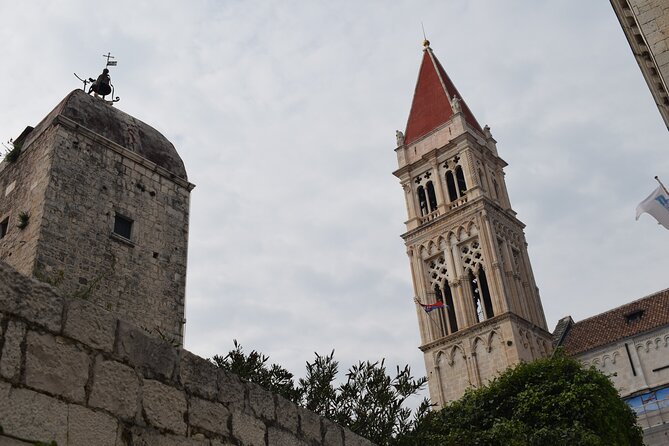
Trogir’s highlights come fast, so it helps to know what each place is for.
Ayuntamiento (city hall) and the flow into the main squares
You start with Ayuntamiento Trogir, described as a city hall with interesting history. City halls tend to sit at the heart of civic life, so this stop helps explain how the town organized itself and why the center feels so intentional.
Even with a short time window, this works as a narrative bridge into the bigger square moments to come.
Central Square, the hub for looking and learning
Next is the Central Square, the main focus area. This is where you get your bearings and understand why Trogir looks the way it does from street to street.
This stop is also a great place for casual observation. I find that when the square is your anchor, the rest of the old town becomes easier to explore later.
St Lawrence’s Cathedral, the one you might pay to enter
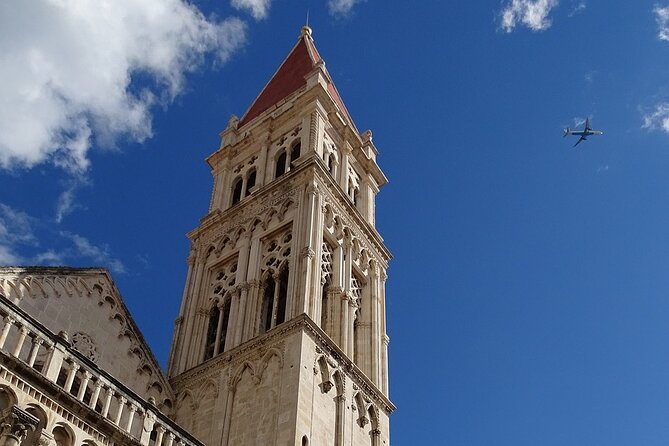
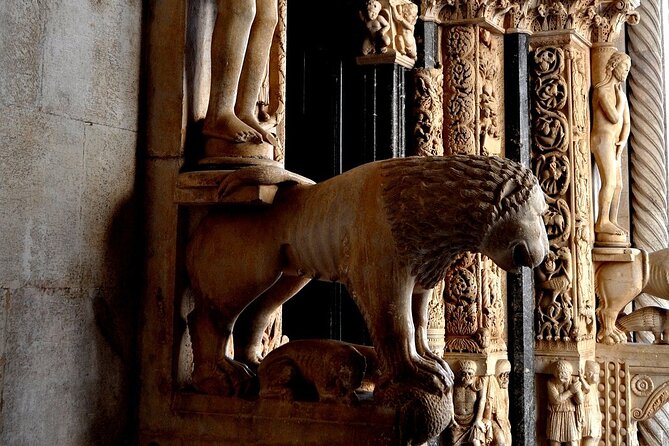
Saint Lawrence’s Cathedral is the major religious landmark on the route, and the tour notes that entrance tickets are not included. The cathedral is dedicated to the patron of the city, so it is not just another church stop. It is part of what made Trogir’s identity stick through centuries.
If you are willing to pay the separate ticket, it can be a worthwhile add-on, especially because it is the kind of interior that rewards attention. If you prefer to keep costs low, you can still take in the exterior and surrounding views, then spend your time elsewhere.
St Sebastian, from church history to a memorial place
You also stop at St. Sebastian, which today is described as a memorial place and used to be a church. This is one of those stops that is quick but emotionally grounded, because memorial sites often feel different from purely architectural sights.
Even if you only take a few minutes, it adds texture to the day. It reminds you that old places are not frozen in time.
Kula Karmelengo, the Venetian fortress ticket stop
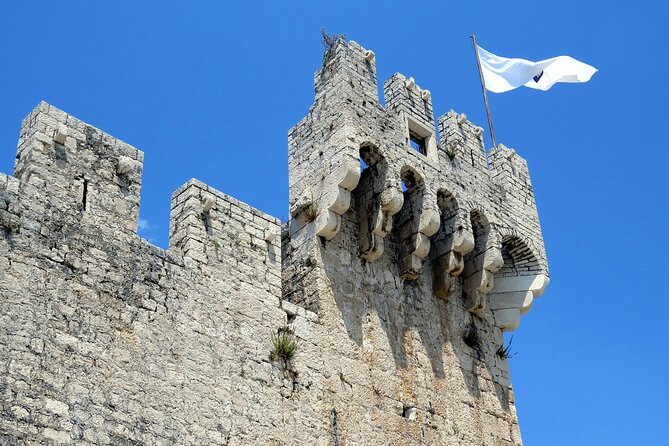
Finally, you visit Kula Karmelengo, described as a fortress built by the Venetians. Admission tickets are noted as not included for this part, so plan for potential extra cost if you want to go in.
Fortresses give you a different kind of understanding. You start seeing the town as something that needed protection, not just something that got decorated.
Walking, comfort, and who this half-day tour fits best
Most people should come in with the mindset of moderate walking. The tour keeps each stop brief, but there are enough ground changes and cobblestones that your legs will notice by the end.
A few practical notes:
- Bring comfortable shoes with grip. Even “flat” old streets can be slippery.
- If you get heat fatigue, plan to take advantage of the vehicle breaks and shade when you can.
- Bring a camera. The palace spaces and Trogir squares are built for photos, even when the light is not perfect.
If you have limited mobility, this tour may feel like a stretch, even though it is half-day. Some stops are short, but the day still layers multiple historic areas. If walking is difficult for you, you might want to ask whether the pace can be adjusted, since the structure of the itinerary is fixed.
English guide, small-group feel, and value for $60.49
The price is listed at $60.49 per person, for a 5 to 6 hour guided experience in English. That is not cheap, but it is also not random. You are paying for three things at once: expert guidance, transportation, and organized coverage of two major old towns.
Here is why I think it is good value for the right traveler:
- You get a professional guide and guided time in both Split and Trogir.
- You get air-conditioned vehicle transport, so you are not piecing together transit on your own.
- You are not just dropping in for photos. The stops focus on specific palace parts and civic landmarks.
The small-group ceiling is listed as maximum 50 travelers, but it can feel more intimate in practice. On some departures, groups have been split into small clusters of around nine people, which makes questions easier and reduces that overwhelmed feeling when you want to hear what the guide is pointing out.
Also, several palace-related stops are listed as having free admission tickets. That keeps your out-of-pocket costs more predictable than tours where almost every stop charges you again.
A few tips to make this tour smoother
These are small things that matter when you are stacking palace, harbor, and old-town wandering in one go.
- Aim to arrive at the Golden Gate meeting point with a bit of buffer. Old city streets can be confusing.
- If you care about interiors, budget time and money for St Lawrence’s Cathedral and Kula Karmelengo, since entrance tickets are noted as not included.
- Pack for changing weather. The tour says it operates in all weather conditions, and it also notes you should dress appropriately.
- If you love local storytelling, ask your guide about what you are seeing right in front of you. Guides like Antonia and Frane have a knack for adding local perspectives that make the same stone look new.
One more real-world bonus: on some days, you can stumble into local moments in the palace area, like ceremonies happening near churches inside the palace walls. It is not guaranteed, but it is the kind of surprise that makes guided tours worth it.
Should you book the Split and Trogir half-day guided tour?
Book it if you want a smart first taste of Split and Trogir without building a complicated plan yourself. This tour is especially good for you if:
- You only have about half a day and still want the major highlights.
- You like your history with a clear route and stop-by-stop explanations.
- You want transportation handled, plus time to wander Trogir on your own.
Consider skipping or choosing a different format if:
- You strongly dislike walking on uneven cobblestones.
- You want total freedom with no fixed route, since this is a guided itinerary with set stops.
If you fall into the first group, I think this is a solid use of time. You leave with two old towns covered, a palace layout you can revisit later, and Trogir’s center as your easy next stop for independent exploring.
More Guided Tours in Split



More Tours in Split
More Tour Reviews in Split

Not for you? Here's more nearby things to do in Split we have reviewed



More Split City & Day Tours to consider.
 ★ 4.8Krka Waterfalls Trip with Boat Cruise and SwimmingFrom $3110,519 reviews
 ★ 5.0Krka Waterfalls, Food & Wine Tasting TourFrom $459,326 reviews
★ 4.9Krka Waterfalls, Food & Wine Tasting TourFrom $446,598 reviews
★ 5.0Krka Waterfalls, Food & Wine Tasting TourFrom $459,326 reviews
★ 4.9Krka Waterfalls, Food & Wine Tasting TourFrom $446,598 reviews
 ★ 4.6Split/Trogir: Blue Cave, Mamma Mia, Hvar and 5 Island TourFrom $1096,320 reviews
 ★ 4.5Blue Lagoon & 3 Islands Cruise with Lunch from SplitFrom $785,756 reviews
 ★ 4.9Old Town and Diocletian Palace Walking TourFrom $174,727 reviews
 ★ 4.9Blue Lagoon Boat Party with DJs, Shots & After PartyFrom $474,610 reviews
 ★ 5.0Krka Waterfalls Tour, Boat Cruise & SwimmingFrom $324,489 reviews
Explore its other useful categories