
REVIEW · SPLIT CITY & DAY TOURS
Small-Group Communist Tour of Split – Boutique group tour
Split gets a different chapter. This 3.5-hour tour uses a communist lens to help you read the city in a new way, stop by stop, without rushing you through museums. I especially like how the tour is built around a local historian and history teacher voice, so the facts connect to places you can actually see.
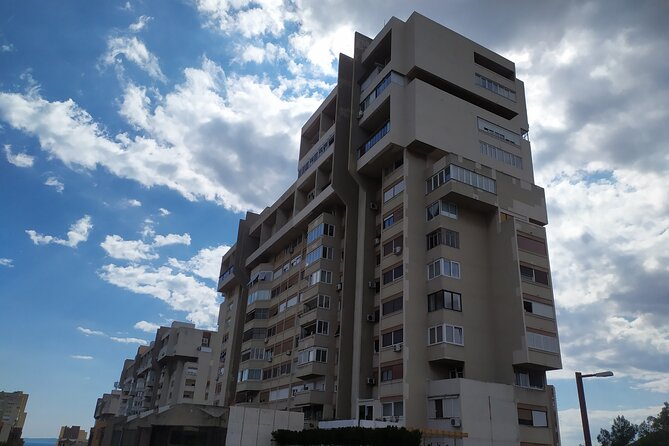
My second favorite part is the mix of architecture and real-life planning. You’ll look at Tito-era design in places like Poljud Stadium and the planned neighborhood of Split 3, then hear how those ideas affected housing, schools, health, and daily politics.
One thing to consider: the subject matter includes war and the violent end of Yugoslavia, so if you want light sightseeing only, this may feel heavy. Also, the tour is weather-dependent, so plan for a day that isn’t rainy or too windy.
Key things to know before you go
- Small-group cap of 8 keeps the pace calm and questions easy.
- Private vehicle rides help you reach far-apart sites without long transfers.
- A local historian and history teacher focus means clearer context for what you’re seeing.
- All stops are admission-ticket-free, so you spend less time figuring out logistics.
- Split 3 and Poljud Stadium are your biggest architecture payoffs.
- Soda/pop included as a small taste of communist-era popular culture.
Why Split’s Communist Story Works Better Than a Regular Sights Tour
Most Split tours aim for the old town highlights. This one does the opposite, and that difference is the point. You’re not just collecting monuments. You’re learning how a political system shaped buildings, neighborhoods, and even how people shopped, traveled, and lived.
What I like about that approach is that it’s not theory-heavy in a vacuum. Each stop is a physical object in the city: a square tied to WWII narratives, a stadium built for major games, housing blocks with nicknames, and a relic train tied to the final years. You end up understanding the why behind the what.
And because it’s a boutique format with a maximum of 8 people, the guide can slow down where you need it. You’re not stuck with a crowd that drowns out the story.
You can also read our reviews of more tours and experiences in Split.

Start at Trg Franje Tuđmana: WWII Context Before You See the Buildings
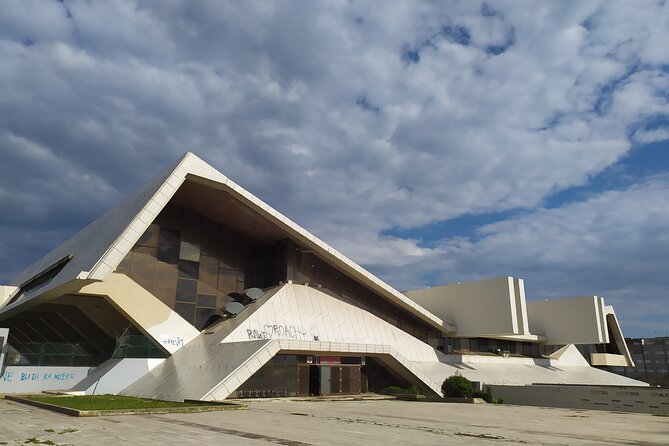
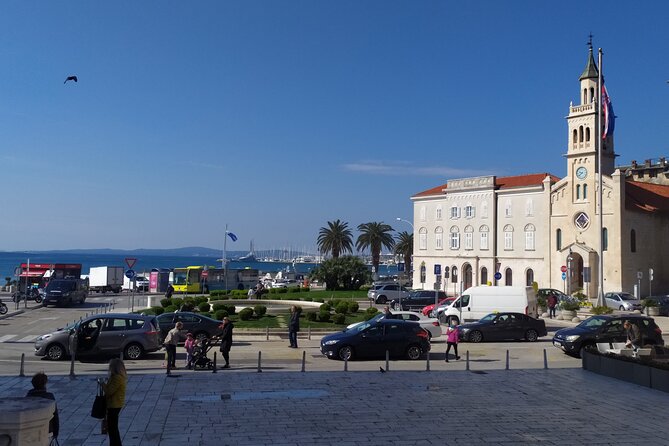
The tour begins at 9:00 am at Autobusno stajalište Sv. Frane, on Trg Franje Tuđmana. This first stop sets the tone quickly. You’ll get introduced to the communist tour of Split, then the guide steps back to WWII events in Split and Yugoslavia in general that led toward the communist state.
Expect to see pictures of war damage in Split. That’s not filler. It gives you a baseline for why later rebuilding and architecture mattered so much. If you’ve ever looked at a city and wondered how it got from destruction to something orderly, this is where that thread starts.
Practical note: this stop is short, about 25 minutes, and the admission is free.
Poljud Stadium and the China Wall: Yugoslav Design for Sports and Show
Next you’ll head to Poljud Stadium area for a quick panoramic stop. The guide will connect the stadium to the communist period in Yugoslavia, including the big sports moment it was built for, the Mediterranean Games. You’ll hear why this stadium became a key symbol, not only locally but also internationally.
Here’s a detail that makes this stop more interesting than a basic photo stop: Poljud Stadium was shown as part of a Yugoslavia architecture exhibition at MoMA in New York. Even if you’ve never heard of that exhibit, the point is clear. This isn’t just a local sports venue. It’s architecture that was considered important enough for a major global art and design institution.
You’ll also be pointed to the China Wall, described as the widest existing building in Split and linked to Yugoslav socialist architecture. That pairing matters. The stadium shows the public face of the system. The China Wall shows a different scale, long, functional, and urban.
This stop runs about 10 minutes, and again, admission is free.
What to watch for while you’re standing there: notice the way the area is organized for spectators and movement. Even if you do not care about sports, you’ll start seeing how the system planned for crowds.
Koteks Shopping Center: What Modern Shopping Looked Like in a Closed-East Economy
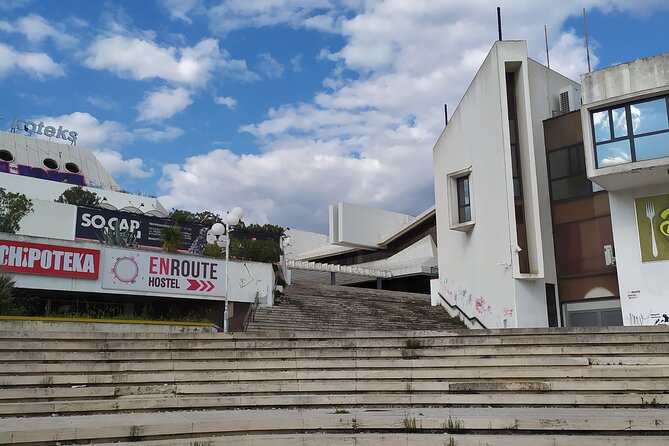
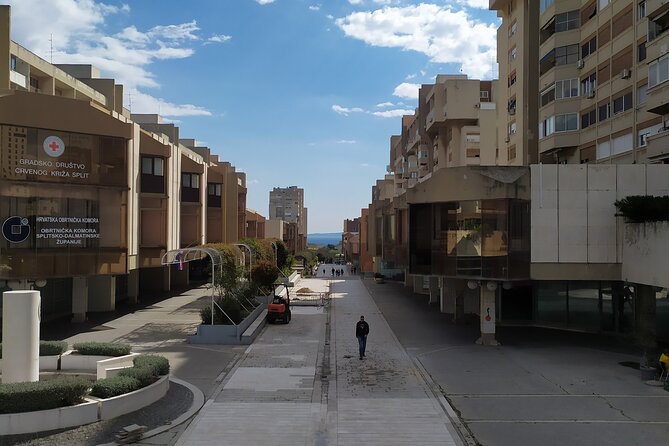
Then it’s on to Prodajni centar Koteks, described as the first shopping mall in Yugoslavia. This is one of those stops that surprises people, because it shifts from grand politics to the everyday question: where did people get stuff?
You’ll walk around the mall area while the guide explains the modern idea behind shopping in the communist state. You’ll also hear about its short popularity and how it declined over the years. That rise and fall is part of the story, not a side note.
The guide frames Yugoslav consumer life as living between an open West and a closed East, with its own supply challenges. The emphasis is on creativity. In practical terms, the tour helps you understand how ordinary routines worked when the economy had limits.
This stop lasts about 30 minutes, and it’s free to enter (no admission ticket required based on the tour info). If you like social history and the daily mechanics of society, this is a key stop.
One consideration: walking around a mall space may feel less dramatic if you prefer only exterior architecture. Still, the narrative here is the point.
Split 3 Neighborhood: The Planned City Where Life, Work, and Politics Mix
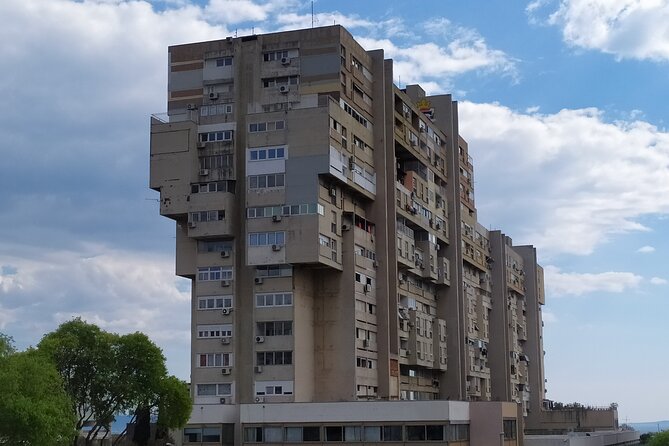
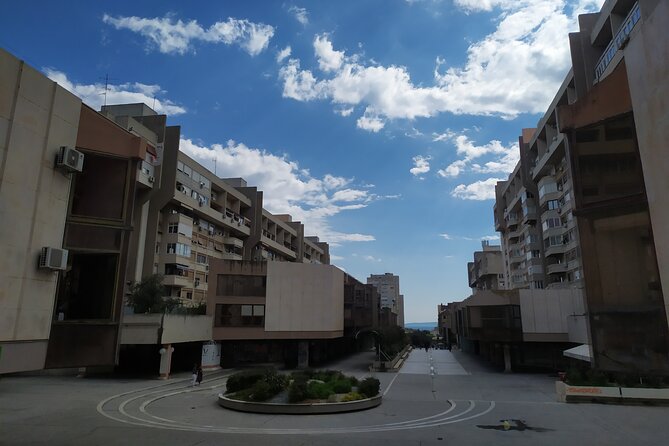
After the shopping stop, you move to Krstarica, the area tied to Split 3, a modern communist Yugoslavia neighborhood built to provide a quality mix of living, working, and resting. This is where the tour really becomes an architectural and social systems lesson.
As you walk, you’ll check different architecture styles from local architects, including a building nicknamed Cruiser. The guide uses the neighborhood to explain housing policy, educational system, health system, economy, social life, and politics, with emphasis on the dictatorship of Tito.
In other words, this isn’t just a tour of buildings. It’s a tour of how a government shaped daily structure, from schools to health to what people could realistically expect from public life.
Another MoMA-linked detail shows up here too. Split 3 was also highlighted in a Yugoslavia architecture exhibition at Museum of Modern Art in New York, recognized as an important residential project. That matters because it suggests the neighborhood was not treated as second-tier by designers. It was part of a serious vision.
This stop includes free time, about 1 hour 10 minutes, and entry is free at this location per the tour info. That free time is valuable. You can step away from the story and simply look: building heights, spacing, and how the area feels for walking.
Small tip for making the most of it: when the guide points out one example building style, pause and scan the surrounding blocks. The city design starts to make more sense when you see patterns, not just one highlight.

Kopilica Railway Station and the Armored Train: Why Yugoslavia Ended in Violence
For the final leg, you go to Split Predgrađe, tied to Kopilica railway station. This is a quieter but heavier stop, focused on why Yugoslavia didn’t survive and why the end in the 1990s turned violent.
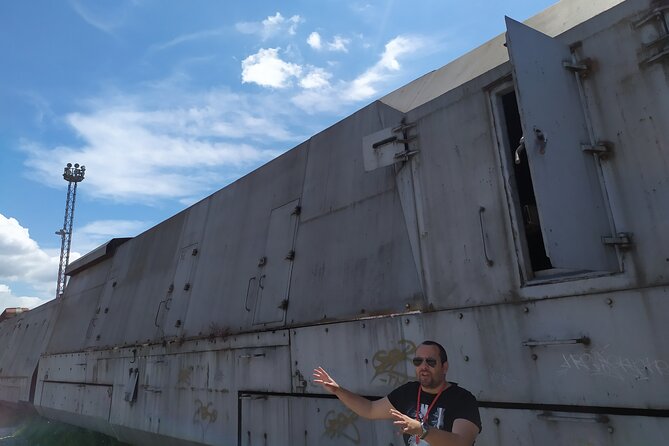
As the story is explained, you’ll look at an armored train displayed on the railway. The guide frames the armored train as a symbol for the beginning of the violent end of Yugoslavia and the serious consequences that followed, including changed relations across Southeast Europe.
This is the part of the tour where the political narrative fully lands. You’ll have seen the system’s building blocks earlier: sports venues, housing projects, planned urban life, and everyday consumption. Here, the guide brings you to the breaking point.
This stop runs about 30 minutes, and it’s marked as free for admission.
If you’re sensitive to war topics, you may want to brace mentally before you arrive. The tour gives context, but the images and conclusions are not meant to be neutral.
The Private Vehicle Piece: How It Keeps the Tour Feeling Light
Even though the total time is about 3 hours 30 minutes, the pacing is kept realistic by using an air-conditioned vehicle and private transportation. The sites are dispersed, and riding between them matters for two reasons.
First, it saves your legs for the walk where the guide actually needs you to look closely. Second, it keeps the flow smooth, so you don’t spend half your tour lost, waiting at stops, or figuring out connections.
The meeting point is near public transportation, but you do not have to rely on it for the tour itself. You’ll be guided to each location, and the tour ends back at the meeting point.
What You Really Get for the Price: $108.14 in Context
At $108.14 per person, this isn’t a bargain-bin activity. But it’s also not priced like a premium private driver and museum escort bundle.
Here’s the value equation that makes sense from the details you get:
- Small group capped at 8
- A local historian and history teacher style presentation
- Private air-conditioned vehicle
- Multiple distinct locations across Split, not just a single neighborhood
- No admission ticket costs listed for the stops
- Soda/pop included, a small but fun local touch that ties the tour theme to everyday culture
Also, the tour is typically booked about 10 days in advance on average. That’s a sign of steady demand for this niche topic. If this specific angle appeals to you, booking sooner usually saves you from last-minute availability issues.
One more detail that can change the experience: with a small group, the tour can sometimes feel more personal if fewer people join. In one described experience, the group shrank to a one-on-one feel. That kind of format usually means more questions and slower answers.
Who This Tour Fits Best (and Who Might Want to Skip It)
This works best for you if you like:
- Cold War and Yugoslavia-era stories, especially as they relate to places
- Architecture with political meaning, not just pretty buildings
- Social history, like education, healthcare, and how people shopped and lived
- A tour that balances big-picture context with city-level details
You might skip it if:
- You want only uplifting, purely scenic stops
- You prefer beaches, cathedrals, and old town streets above anything else
- You do not want to hear about WWII damage or the violent end of Yugoslavia
Good news: the tour is offered in English, and the info says most people can participate. The duration is manageable too, and the free time in Split 3 helps if you need a breather.
Timing, Tickets, and What to Bring
You’ll start at 9:00 am and the activity ends back at the meeting point. You get a mobile ticket, which is handy if you like keeping everything on your phone.
Because the tour requires good weather, bring gear for walking outdoors even if the route includes vehicle transfers. Comfortable shoes matter here, since you’ll walk around at several stops, including a longer segment with free time in Split 3.
Also, since the tour covers emotional topics, you might appreciate a few minutes of personal control. Use the free time to step away, clear your head, and then come back when you feel ready.
Should You Book This Communist Tour of Split?
Book it if you want Split to make sense beyond the old town postcards. This tour offers a rare angle, communist-era planning and architecture, taught by a local historian and history teacher, and tied directly to the city’s real spaces.
If you’re the type who likes asking why a city looks the way it does, you’ll probably enjoy this. It turns places like Poljud Stadium and Split 3 into evidence, not just scenery.
I’d pass only if you strongly prefer light themes, or if you know you won’t handle war and the violent end of Yugoslavia. Otherwise, for the price, the format is efficient, the group size is small, and the sights are far enough apart that the private vehicle actually earns its place.
FAQ
What is the duration of the Communist Tour of Split?
It runs for about 3 hours 30 minutes.
How much does the tour cost?
The price is $108.14 per person.
How big is the group?
This tour has a maximum of 8 travelers.
What language is the tour offered in?
The tour is offered in English.
Where do you meet, and when does the tour start?
You meet at Autobusno stajalište Sv. Frane, on Trg Franje Tuđmana in Split. The start time is 9:00 am. The tour ends back at the meeting point.
Is there a mobile ticket?
Yes, the tour uses a mobile ticket.
Is the tour mostly walking or riding?
You’ll ride in a private, air-conditioned vehicle between dispersed stops, with walking and sightseeing during each location visit.
Are there admission fees for the stops?
The tour information lists admission ticket free for each stop.
What is included in the tour besides transportation?
A soda or pop is included.
What happens if the weather is bad?
The tour requires good weather. If it’s canceled due to poor weather, you’ll be offered a different date or a full refund.
More Tours in Split
More Tour Reviews in Split
Not for you? Here's more nearby things to do in Split we have reviewed


More Split City & Day Tours to consider.
 ★ 4.8Krka Waterfalls Trip with Boat Cruise and SwimmingFrom $3110,519 reviews
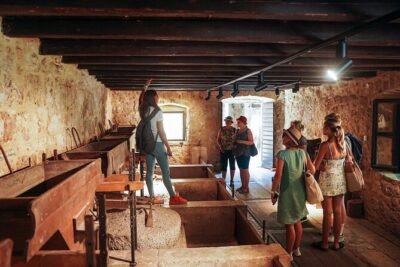 ★ 5.0Krka Waterfalls, Food & Wine Tasting TourFrom $459,326 reviews
★ 4.9Krka Waterfalls, Food & Wine Tasting TourFrom $446,598 reviews
★ 5.0Krka Waterfalls, Food & Wine Tasting TourFrom $459,326 reviews
★ 4.9Krka Waterfalls, Food & Wine Tasting TourFrom $446,598 reviews
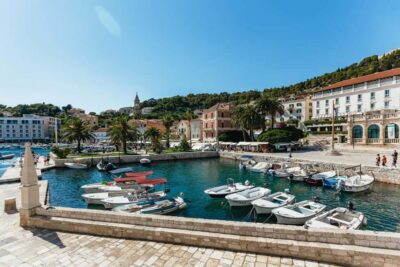 ★ 4.6Split/Trogir: Blue Cave, Mamma Mia, Hvar and 5 Island TourFrom $1096,320 reviews
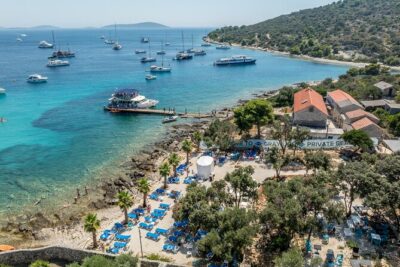 ★ 4.5Blue Lagoon & 3 Islands Cruise with Lunch from SplitFrom $785,756 reviews
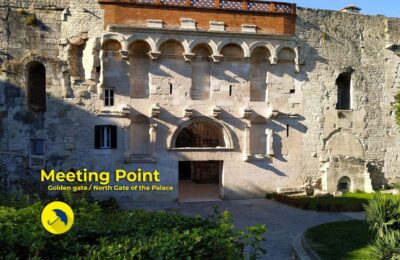 ★ 4.9Old Town and Diocletian Palace Walking TourFrom $174,727 reviews
 ★ 4.9Blue Lagoon Boat Party with DJs, Shots & After PartyFrom $474,610 reviews
 ★ 5.0Krka Waterfalls Tour, Boat Cruise & SwimmingFrom $324,489 reviews