
REVIEW · SPLIT DIOCLETIAN'S PALACE & HERITAGE TOURS
Private Split: Visit Diocletian Palace & Taste Food at the Market
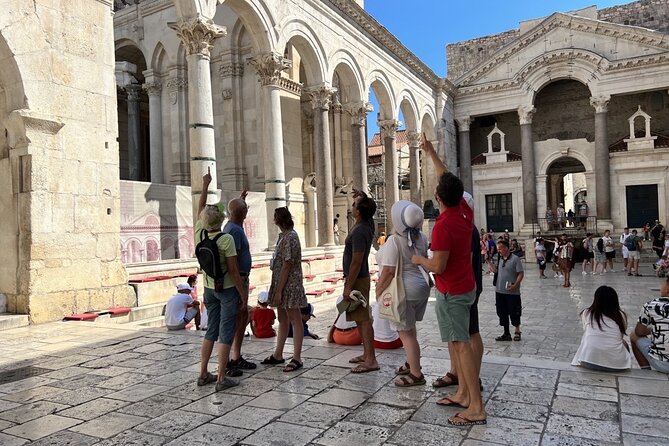
Walking Split’s palace streets feels like time travel. This private 2-hour stroll blends UNESCO-listed Diocletian’s Palace with serious local-food energy at the Green Market, all led by an English-speaking guide who connects Roman walls to everyday Split. You start on the Riva, move through the palace complex, then end with seasonal bites that follow what locals actually buy and eat.
I especially like two things. First, the palace walk is not just postcard stuff. You get guided context for how the palace became part of the city, including the Peristil square and the Golden Gates area. Second, the food stop is practical and delicious, with tastes like pršut (Dalmatian prosciutto), sheep cheese, anchovies, olives, olive oil, and rakija, plus seasonal market favorites.
One thing to consider: this is a short tour, so you do not cover everything inside the wider palace grounds. Extra entrance fees often apply for places like the cathedral, underground areas, and other museum-type stops, so plan on returning if you want a deeper dive.
Quick hits: what makes this tour worth your time
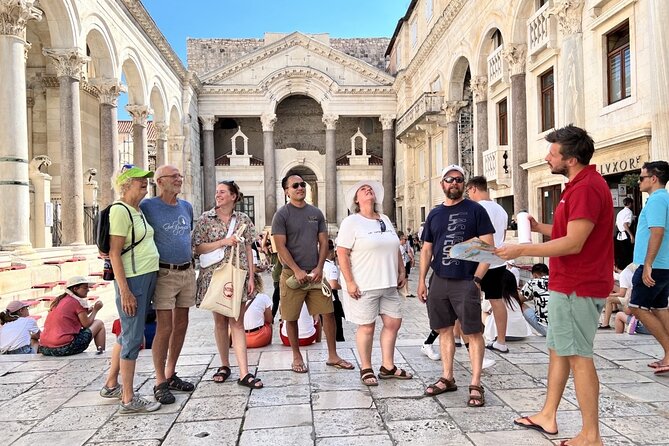
- A true small-group feel with a maximum of 12 travelers, plus private attention for your group
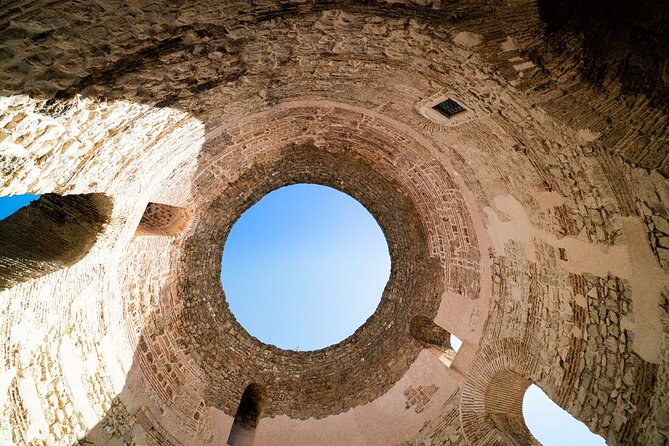
- Diocletian’s Palace highlights including Peristil, the Golden Gates area, and the vestibule/private palace sections
- Local market atmosphere at Peskarija and the Green Market, where you get context for how people shop
- Dalmatian tastes you can name and order later like pršut, cheese, octopus salad, anchovies, olives, and figs
- Golden toe tradition at Gregory of Nin, a small moment that connects history to local habits
- Responsible travel option run by a B Corp certified company and described as carbon neutral
From the Riva to Diocletian’s Palace, in a smooth 2-hour arc
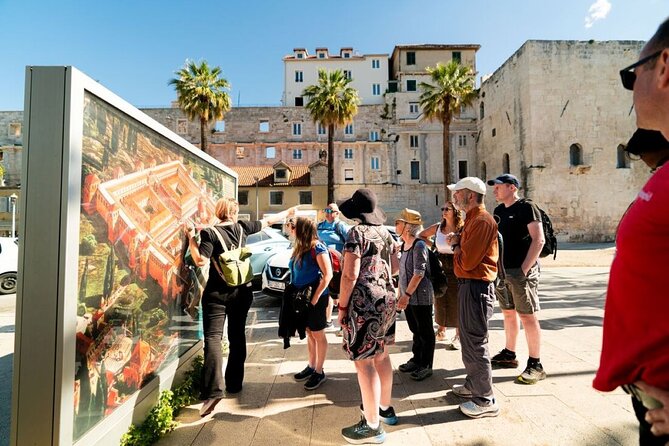
I like tours that help you build momentum fast, and this one does. You meet at the Riva area, Split’s main coastal promenade, which is a great starting point because the city is already in motion around you. From there, you head straight into Diocletian’s Palace, so you do not spend your limited time just finding the right places.
The format is simple: one hour in the palace complex, then one hour at the market and food tasting area, with the walk back to the Riva to wrap it up. In practice, that timing works well if you’re short on time or if you want a guided orientation first, then wander on your own afterward with better instincts.
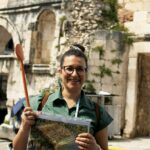
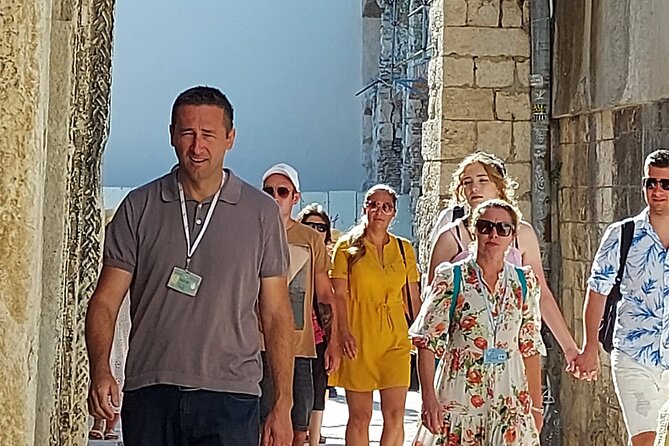
Your guide is the key here. This is the kind of tour where details matter, like knowing why certain parts of the palace feel more city-like than museum-like. And based on the kinds of guides credited, you may run into someone like Maja, Maya, Linda, or Lindis, with deep historical framing and a knack for turning the palace layout into real stories you can picture.
You can also read our reviews of more food & drink experiences in Split

Entering Diocletian’s Palace: more than roman ruins
Diocletian’s Palace is one of those sites that can feel confusing if you walk it alone. The walls are dramatic, sure, but the “what am I looking at?” question hangs in the air. A guide solves that with a clear thread: Diocletian built this as a Roman emperor’s palace, then the complex gradually became living space for people long after his time.
You’ll walk the palace streets and key areas while learning how the site aged into part of Split’s fabric. The palace is UNESCO-listed, and you’ll see the parts that locals and visitors use every day, not just the parts that get the best photos.
This part of the tour is also where you’ll get your most useful historical anchors. You learn to connect the palace structure with later layers of life, including how shopfronts and everyday routines took over spaces that started as elite Roman power architecture. That shift, from imperial residence to working city, is the big story your guide helps you feel.
Stop 1 focus: Peristil and the palace squares
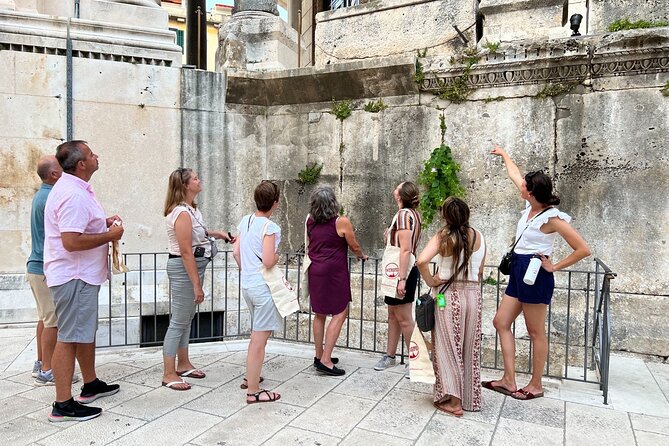
Peristil is a major payoff in this tour. It’s the main square inside the palace walls, and it’s one of the places that makes the whole complex click. When you see it with context, you stop thinking of the palace as a single era and start understanding it as a long-lived neighborhood.
You’ll also visit the vestibule and a private section of the palace. Those stops are valuable because they are not the generic “stand in front of the arch” experience. They give you a sense of how the space was organized, and why certain areas feel more official or transitional than others.
The Golden Gates: a quick history shortcut
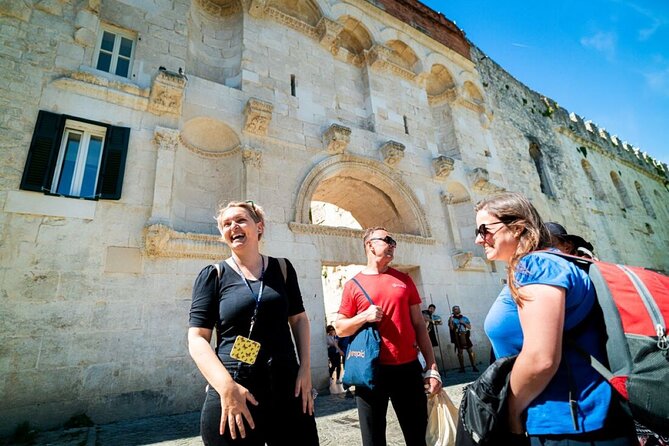
You also see the Golden Gates. Even if you do not know their story at first, the gates help you orient the palace complex. It’s one of those elements that becomes easier to read once someone explains what it meant in the original layout and how it fits into the modern street pattern.
Game of Thrones sighting, plus the real reason it matters
Yes, you may spot places that fans of Game of Thrones often recognize. But the smarter reason this matters is not the TV connection. It’s that the palace layout is distinctive enough that pop-culture references can help you remember where you are.
When a guide points out those filming-related spots, it gives your brain an easy hook. Then, as you walk, the guide builds on it with actual historical context: what the space used to do, how the palace functioned, and how it later became part of daily life.
That combination, light pop-culture references plus straight historical explanation, keeps the walk from turning into a lecture. It also helps you ask better questions as you go, especially if you’re the type who wants to understand what you are seeing rather than just ticking boxes.
More Split tours, Dalmatian island days, and Adriatic experiences



Green Market and Peskarija: taste Split the way locals do
After the palace, the tour shifts gears. This is where the experience becomes practical, because the Green Market side is built around food you can recognize and remember long after the walk ends.
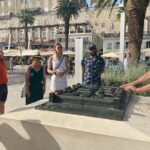
Split’s market scene can be loud and quick. The fish market part, Peskarija, sits just off the coast, and you’ll hear vendors call out the day’s catch. That energy is part of why this stop works. It’s not a curated tasting room with polite silence. It’s a working market with real local rhythm.
Your guide helps you interpret the shopping culture, so you’re not just wandering stalls. You learn how locals buy, what to look for, and how seasonal ingredients shape what you taste.
What you’ll actually eat: Dalmatian bites with names you’ll want later
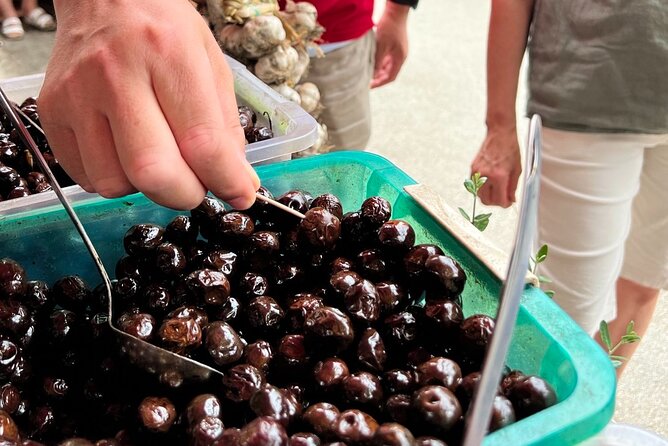
This stop is designed around seasonal local tastes. Menu items can change, but you can expect a mix of classic Dalmatian flavors, with practical amounts that feel like a true snack rather than a token bite.
Here’s what the tour experience highlights as possible favorites:
- pršut (Dalmatian prosciutto)
- sheep’s milk cheese
- octopus salad
- anchovies and olives
- fruits, olive oil, rakija, and dry figs
Even better, you’re not just eating. You’re learning how the food is prepared and why it shows up in this region’s everyday menu. That matters because you can translate the flavors into future ordering. After this kind of guided tasting, you walk into other places and you know what you’re looking for.
And food is only half the story. The guide also tells you how Split’s past connects to the present, so you’re eating while learning. That’s a small thing that makes the tour feel like more than a sightseeing combo.
The Gregory of Nin golden toe tradition
One neat local moment is the golden toe of Gregory of Nin, known as Grgur Ninski. You can make a wish there, which is a fun, easy ritual to fold into a busy old-town walk.
It’s also a useful reminder that Split’s history is not sealed in glass. It shows up in public spaces, tiny traditions, and daily behavior.
The ending on the Riva: use the tour to plan your next moves
When you finish, you head back toward the Riva. This part is underrated, because it lands you in the best possible place to keep exploring.
At this point, you’ve got:
- a mental map of the palace area, including where key squares and gates fit
- food references you can use later
- history context that helps you read the streets as layers, not just old stone
Your guide is there with recommendations too. Ask for what to see next based on what you liked most, not what someone else thinks you should see. If you want coffee or something sweet, you can sit nearby and decompress while the old town still feels fresh instead of overwhelming.
Price and value: what you get for $148.72
$148.72 per person is not a budget price, but it is also not just you buying access to a site. You’re paying for two things that add up quickly in Split.
First, you’re paying for guided time inside Diocletian’s Palace. The palace is big, and without a guide, you can lose time wandering or miss how certain sections relate to each other. A good guide saves you that confusion time.
Second, you’re paying for a guided food experience at the Green Market, with tastings and explanations. Food tastings that are anchored to what’s actually available and seasonal can easily cost more when you do them on your own piecemeal. Here, the guide gathers the right mix for you.
Also consider the added value of the company behind the tour. It’s described as carbon neutral and operated by a B Corp certified company committed to using travel as a force for good. I don’t think you should pick a tour only for ethics, but it does matter when the experience is already strong.
Who should book this Split private palace and market tour
This tour is a great fit if you want:
- a fast, well-paced introduction to Split’s old town
- palace context that helps you understand what you’re looking at
- a food stop with recognizable Dalmatian flavors, not mystery tasting
It also suits people who like asking questions. The format is small enough that your guide can respond in the moment, instead of sticking to a scripted path.
If you’re traveling with kids, it’s child-friendly. Children under 6 can join for free, as long as you inform the operator when booking.
Where it might not be ideal: if you want a long, museum-level, everything-open deep itinerary, this may feel short. It does not include certain major sites, and some entrances require extra fees.
Practical planning: what to know before you go
A few things help you get more out of the 2-hour window.
Wear walking shoes. You’ll cover a lot of old-town ground on foot, and palace areas can be uneven.
Come hungry enough for a real snack. The tasting is meant to be satisfying, but it still might not replace a full meal if you eat lightly elsewhere that day.
Plan for optional extras if you fall in love with the palace. The tour does not include entrance fees to the cathedral, underground, bell tower, museums, or the Temple of Jupiter. If those matter to you, budget extra time and money for a follow-up visit on your own.
Bring curiosity. The guide’s best work is connecting Roman design to how the city lives now. If you lean into that, you’ll get more than facts, you’ll get a sense of how Split became itself.
Should you book this Diocletian’s Palace and Green Market private tour?
Yes, if you want a smart first visit to Split old town that mixes top sights with local food you can remember and order again. I like it most for three reasons: it orients you quickly inside Diocletian’s Palace, it turns the palace layout into something you can picture later, and the Green Market tasting gives you a practical taste of Dalmatia’s flavor DNA.
Skip it only if you already know the palace well and just want a self-guided food wander, or if you specifically want the cathedral, underground palace areas, bell tower, museums, or the Temple of Jupiter included in the same price.
If this is your first time in Split and you want value for time, this private format is a solid choice.
FAQ
How long is the tour?
The tour runs for about 2 hours.
Where does the tour start, and what time does it begin?
You meet at Obala Hrvatskog narodnog preporoda 23, 21000, Split, Croatia. The start time listed is 9:00 am.
What do we see inside Diocletian’s Palace?
You’ll visit the main square within the palace walls (Peristil), see the Golden Gates, and check the private section and vestibule. Admission ticket for the palace stop is listed as free.
What food is included at the Green Market?
You’ll taste local seasonal food. It can include fruits, olive oil, rakija, cheese, dry figs, and other market specialties such as prosciutto (pršut), sheep’s milk cheese, octopus salad, anchovies, and olives. The exact menu can change with the season.
Is the tour private, and how big is the group?
It is a private tour for your group, with a maximum of 12 travelers.
Are any sights excluded for extra entrance fees?
Yes. Entrance fees to the cathedral, underground of the palace, Bell Tower, museums, and the Temple of Jupiter are not included.
More Food Experiences in Split
More Food & Drink Experiences in Split
More Tour Reviews in Split

Not for you? Here's more nearby things to do in Split we have reviewed


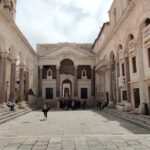

More Split Diocletian's Palace & Heritage Tours to consider.
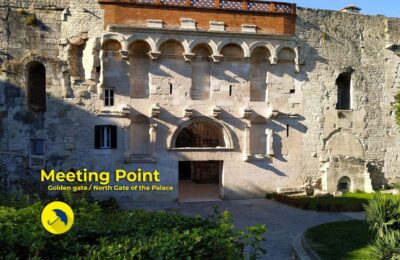 ★ 4.9Old Town and Diocletian Palace Walking TourFrom $174,727 reviews
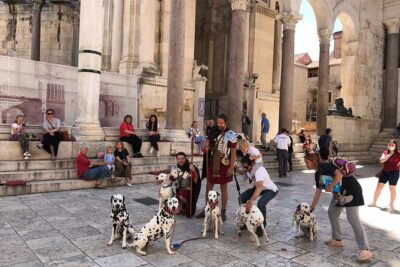 ★ 5.0Walking Tour of Split and Diocletian’s PalaceFrom $482,588 reviews
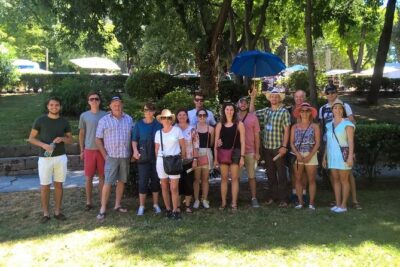 ★ 5.0Split & Diocletian’s Palace Walking TourFrom $211,125 reviews
 ★ 4.7Diocletian Palace & Old Town Guided Walking TourFrom $17882 reviews
 ★ 4.8Game of Thrones Tour with Diocletian’s Palace CellarFrom $41545 reviews
 ★ 5.0Diocletian’s Palace and Old Town SMALL GROUP Walking TourFrom $16502 reviews
 ★ 5.0SPLIT-PRIVATE Walking Tour of Diocletian’s Palace & Old TownFrom $240467 reviews
 ★ 5.090-min Diocletian Palace Walking TourFrom $21323 reviews
Explore its other useful categories