
REVIEW · SPLIT CITY & DAY TOURS
Experience Split With Local Professional Historian – Private
Diocletian’s Palace starts making sense fast. This private 2-hour walk in Split links major landmarks into one clear story, from the Golden Gate to the bustle around Pjaca. It’s guided in English, and you get smart visuals too, not just a lecture.
Two things I like right away: the master’s degree history background means the talk stays grounded in real details, and the guide uses 3D reconstruction images in a display book to explain what you’re actually looking at. One consideration: several of the big sights are handled as outside viewpoints, so if you want interior access, you may need a separate plan after the tour.
Quick reasons this tour works well
- A private, historian-led pace that stays flexible for your group
- 3D reconstruction visuals that clarify Roman spaces you can’t easily imagine
- Diocletian’s Palace focus without needing a museum ticket
- Clear stops in old town Split, from Golden Gate to Pjaca
- Practical local context that connects monuments to how the city lived over time
Split in 2 hours, with a guide who actually connects the dots
This is the kind of old town walk that helps you stop feeling lost. You’ll cover a tight loop of Split’s core landmarks, staying mostly in the historic center, and you’ll get a spoken guide narrative that ties buildings to daily life.
The tour runs about 2 hours and is private, meaning only your group goes. That matters in a place like Split where the streets can feel chaotic, because you can ask questions without the whole group waiting.
Timing is also specific. It operates Monday to Friday, 5:00 PM to 7:00 PM (within the listed date range), so it’s built for an early evening stroll rather than a morning rush.
You can also read our reviews of more private tours in Split

Starting at Golden Gate, where the story begins
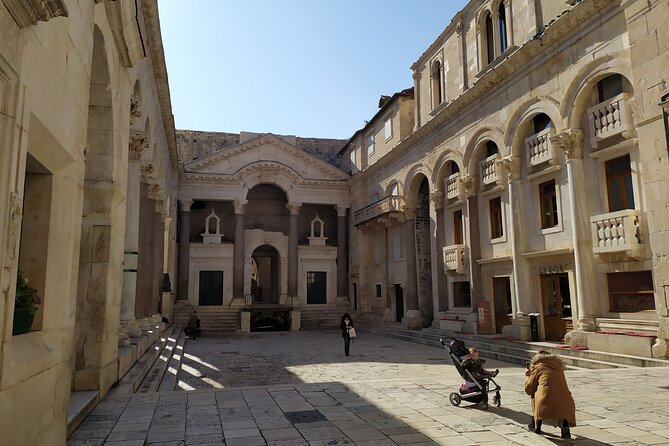
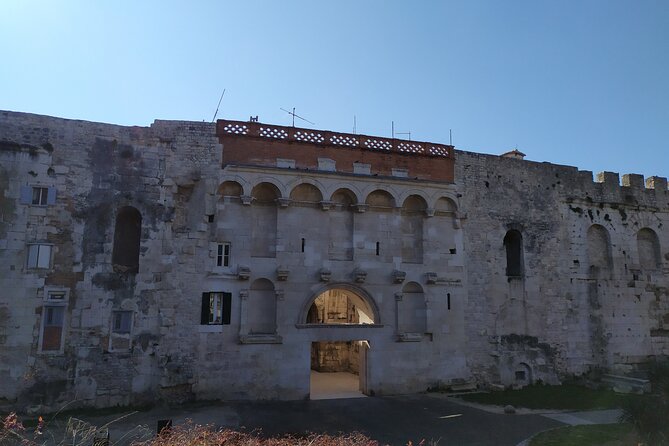
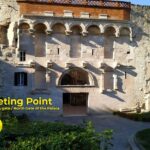
You meet at Golden Gate at Dioklecijanova 7, right at the northern gate of Diocletian’s Palace. It’s famous, but it’s also oddly easy to overlook if you rush past. The guide starts by setting the scene, explaining what the gate meant and how it connects to other nearby highlights, including the Gregory of Nin area across the way.
What I find useful here is the framing. Golden Gate isn’t just a photo stop, it’s a way to understand how the palace functioned as the center of Roman power, and how Split grew around it later.
If you like your history with street-level context, this opening works well. It helps you understand what comes next before you’re standing in the middle of the palace complex.
Gregory of Nin statue: the legend, the sculptor, and the meaning
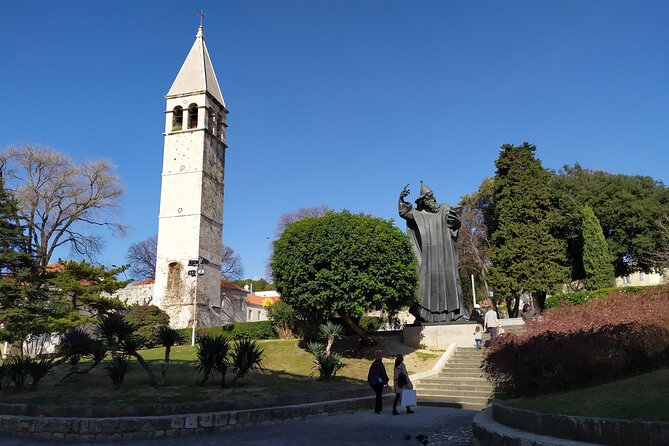
From Golden Gate, you move to the Grgur Ninski statue, one of those Split landmarks that you’ll probably spot even if you aren’t sure why it’s important. Here the guide focuses on Gregory of Nin, sharing the story and key facts about him.
You’ll also learn about the monument itself, including the sculptor connected to the statue. That’s a small detail, but it changes how you look at public art. Instead of seeing a “random statue,” you understand what it’s doing in the city’s historical memory.
The stop is short, so treat it like a quick injection of context. After this, the palace explanations land harder, because you’ve already connected power, religion, and public life.
Diocletian’s Palace walkthrough: from the main monument to the real hidden rhythm
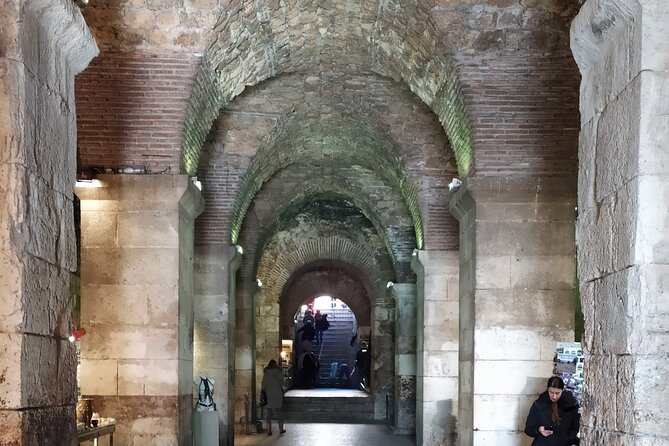
Next comes the big one: Palazzo di Diocleziano, the core monument of Split’s old town and the reason the city looks the way it does. The guide presents Diocletian as a major figure from the Roman Empire, and then walks you through why the palace is still considered among the best preserved examples of its kind.
You’ll cover several palace highlights, including places around:
- Peristyle
- Jupiter’s Temple (outside)
- Diocletian’s Cellars, described as the central substructure area
- Triclinium
- Mausoleum (Cathedral; outside)
This part is valuable because it doesn’t treat ruins like isolated things. You’ll hear how the palace transitioned into a medieval city, and how that shift shaped what locals experienced over time.
One practical note: you’ll be moving through areas where the “Roman logic” doesn’t always feel obvious at street level. That’s where the guide’s visual help comes in. If your brain likes models and reconstructions, the 3D images and photos shown in a display book can save you from guessing.
Peristyle: the palace square that connects and divides
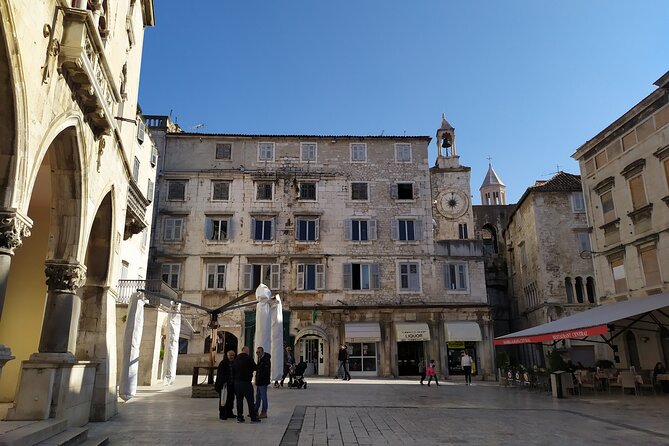
At the Peristyle of Diocletian’s Palace, you stand in the central open space and learn what it was for. The guide explains its function as a place that connected people but also separated them from the Emperor.
This is a clever stop because it’s hard to understand social power from buildings alone. Peristyle makes that idea tangible. From the center, you can look around and connect the layout to the way palace life likely worked.
The talk also touches the transition over time, including what changed as Christianity expanded and buildings shifted in role. You’re not just hearing dates, you’re being taught how to read the physical space.
From Peristyle, you go into the central part linked to the palace’s cellars area. Here the guide explains usage across history, then contrasts what it meant for the city in earlier eras versus now.


Triclinium and Roman dining, explained without turning it into a food show
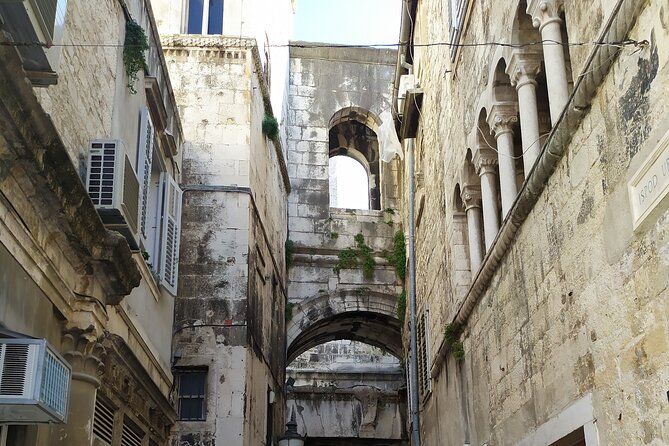
You’ll check up Triclinium, the part tied to dining and daily elite routine. The guide explains Roman eating habits and how the Emperor’s dining room was organized.
I like this stop because it’s concrete. Roman architecture can sound abstract, but dining is human. It gives you a reason to care about layout, entrances, and space.
It’s also a good “break” in the story. You go from power and religion to the social mechanics of meals, which makes the whole palace visit feel more complete.
Temple of Jupiter and Cathedral of Saint Domnius, what to notice from outside
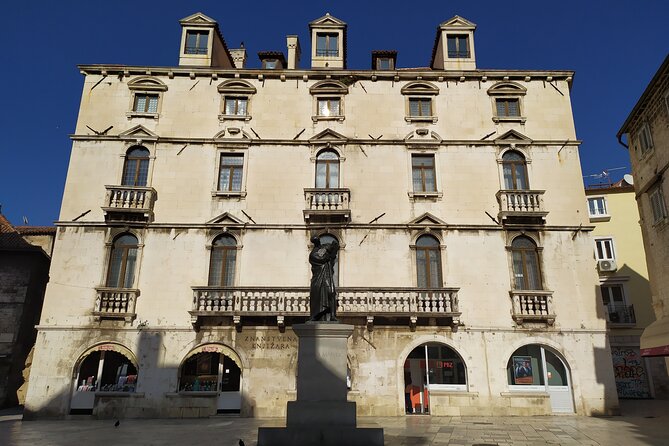
Two stops focus on major religion-related landmarks: the Temple of Jupiter and the Cathedral of Saint Domnius.
At Jupiter’s Temple, the guide explains the importance of religion in Roman life and explains this particular temple while viewing it from outside. This is a real strength of the tour. Even if you don’t go inside a temple, you’ll know what to look for and why it mattered.
Then you face St. Domnius Cathedral also as an outside visit. The guide points out significant parts and shares the story behind it. They also warn you on interesting things to watch for inside, in case you decide to visit later on your own.
That warning is practical. If you only do the tour and then skip the cathedral interior, you can still enjoy what you see. But if you want the extra layer, you’ll know where to focus.
Vestibulum and private chambers, then Riva Harbor for city energy
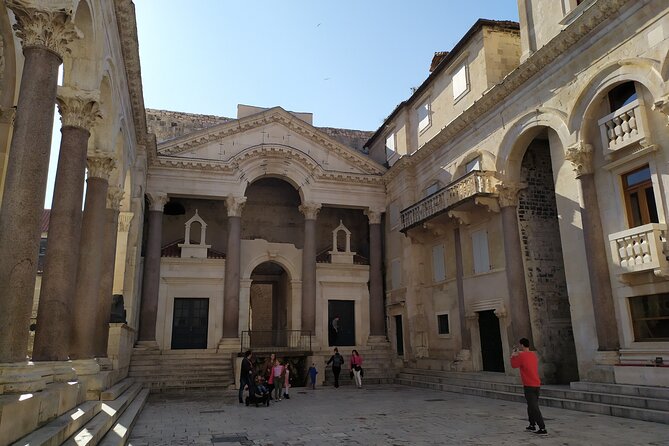
After the cathedral stop, you reach the Vestibulum of Diocletian’s Palace, described as the pre-entrance to the Emperor’s private chambers. The guide explains what it looked like and its function, and you’ll see how even a doorway area in a palace had meaning.
This part helps you understand that Roman power wasn’t just about big halls. It lived in how people moved from public to private areas.
From there, you head to Riva Harbor, Split’s main promenade. Here the focus shifts from Roman structure to city life. The guide explains how Riva was built across centuries and why it became a central place for locals.
This stop is short, but it’s an important contrast. You end the palace “time machine” feeling the modern city again.
Fruit Square (Trg Brace Radic) and Pjaca, the everyday centers of Split
Finally, you wrap up at Fruit Square (Trg Brace Radic) and then People’s Square, Pjaca (Piazza).
Fruit Square is described as small and charming, and the guide explains why it’s called Fruit Square and what stands in the middle, plus other important sights around it. Even without long explanations, this kind of stop helps you understand the logic behind everyday place names.
Then comes Pjaca, Split’s “center of happenings” from medieval times to today. The guide explains its story and the surrounding buildings, including the old City Hall area.
You’ll finish generally on People’s Square. From a practical standpoint, this is smart. You’re ending where you have options: food, a place to regroup, and the easiest starting point for whatever you add next.
Value and practical logistics: what $156.21 per group really means
The price is $156.21 per group for up to 15 people, with mobile ticket delivery and an English-speaking guide.
Here’s the value angle: if your group stays small, the per-person cost rises fast. But if you travel with family or friends and you can fill a few spots, this price format can feel surprisingly efficient compared with per-person guided tours.
You also get an included history guide with a master’s degree in history, plus 3D reconstruction visuals during the walk. That’s not fluff. Those reconstructions help when buildings do not clearly “look like” what they once were.
One more practical note: the tour says no admission tickets are included, but the listed stops are marked as admission ticket free within the tour flow. In plain terms, you generally shouldn’t be paying for entrance fees during this specific walk, but you should still plan any optional stop-ins you want to add afterward.
The group style is also worth noting. It’s private, only your group, so you’re not competing with strangers for attention or slowing down the whole schedule.
Who should book this private Split history walk
This works especially well if:
- You want a structured overview of Split’s most important landmarks without a car
- You like your Roman history explained in human terms, like movement, power, and daily life
- You’d benefit from 3D reconstruction visuals to picture what the palace once looked like
- You want a private guide who can adapt to your group pace and questions
It may not be the best fit if you only want ticket-based interior access. Since several major sights are handled from outside, you’ll likely still want to add follow-up visits on your own if you’re hoping for deeper interior time.
It’s also weather-dependent. The tour requires good weather, and if poor weather cancels it, you’ll be offered a different date or a full refund.
The biggest payoff: seeing Split as one story, not separate postcards
The strongest part of this tour is the way it connects landmarks. You start at a gate tied to power, then move to a statue tied to public memory and religion, then enter the palace spaces tied to how an empire ruled a city.
Even the ending makes sense: Riva Harbor and Pjaca aren’t random. They’re where the city lives now, after those Roman foundations shaped the layout.
And in a city where you can easily burn time wandering without direction, this gives you a clean path. You’ll leave with a better map in your head, so you can wander with purpose afterward.
Should you book it?
Yes, if you want a 2-hour, historian-led walk that helps you read Diocletian’s Palace and the surrounding old town with less guesswork. The combination of master-level storytelling and 3D recon visuals is a big reason to consider it.
Skip it or pair it with something else if you need lots of interior time, because several stops are explained from the outside. Also, plan for the early evening schedule and keep an eye on weather.
If you’re in Split for a short stay and you want the highlights to click fast, this private tour is a strong match.
FAQ
How long is the Split private historian tour?
It runs for about 2 hours.
Is this tour private or shared with other groups?
It’s private. Only your group participates.
What language is the tour offered in?
The tour is offered in English.
Where do we meet, and where does it end?
You meet at Golden Gate, Dioklecijanova 7, 21000 Split. The tour ends at Narodni trg 16, 21000 Split, generally at People’s Square (Pjaca).
Are admission tickets included?
No admission tickets are included.
What if the weather is bad?
The tour requires good weather. If it’s canceled due to poor weather, you’ll be offered a different date or a full refund.
More Private Tours in Split

More Tour Reviews in Split

Not for you? Here's more nearby things to do in Split we have reviewed




More Split City & Day Tours to consider.
 ★ 4.8Krka Waterfalls Trip with Boat Cruise and SwimmingFrom $3110,519 reviews
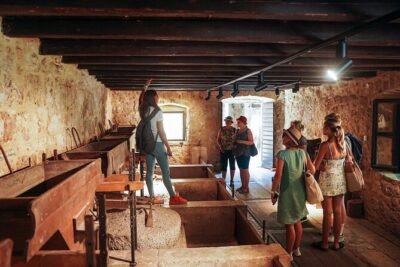 ★ 5.0Krka Waterfalls, Food & Wine Tasting TourFrom $459,326 reviews
★ 4.9Krka Waterfalls, Food & Wine Tasting TourFrom $446,598 reviews
★ 5.0Krka Waterfalls, Food & Wine Tasting TourFrom $459,326 reviews
★ 4.9Krka Waterfalls, Food & Wine Tasting TourFrom $446,598 reviews
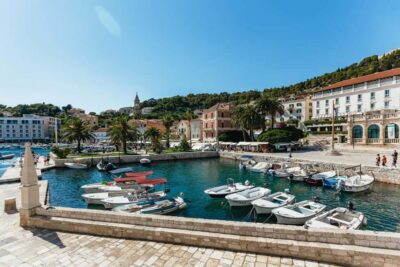 ★ 4.6Split/Trogir: Blue Cave, Mamma Mia, Hvar and 5 Island TourFrom $1096,320 reviews
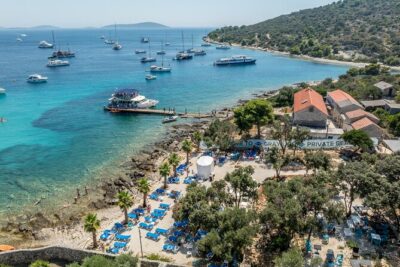 ★ 4.5Blue Lagoon & 3 Islands Cruise with Lunch from SplitFrom $785,756 reviews
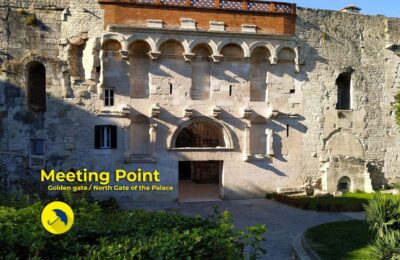 ★ 4.9Old Town and Diocletian Palace Walking TourFrom $174,727 reviews
 ★ 4.9Blue Lagoon Boat Party with DJs, Shots & After PartyFrom $474,610 reviews
 ★ 5.0Krka Waterfalls Tour, Boat Cruise & SwimmingFrom $324,489 reviews