
REVIEW · SPLIT CITY & DAY TOURS
Split Quest Experience: Discover the City
A mystery game turns Split into a scavenger hunt. You’ll explore a 1700-year-old city through small alleys, grand monuments, and a Roman-emperor puzzle, with directions delivered right to your phone. I like the self-guided format because you can pause, restart, and set the pace, and I like the monument payoff at Diocletian’s Palace.
One catch to think about: the experience depends on phone-first navigation, so you need a charged device and comfort solving on-screen challenges instead of chatting with a live guide.
- Self-guided pacing keeps you out of rigid schedules, and you can take breaks whenever you want.
- Sustipanski Park to Diocletian’s Palace is a smart one-way feel, starting with sea air and ending at Roman stone.
- Free stop admissions listed throughout lowers the “what will I pay next?” stress.
- Gregory of Nin and Marko Marulić landmarks add local Croatian layers beyond the Roman core.
- Questo app turn-by-turn directions guide you from stop to stop in real time.
- Private group format means it is just your group, not a mixed crowd herd.
How a phone mystery changes the way you see Split
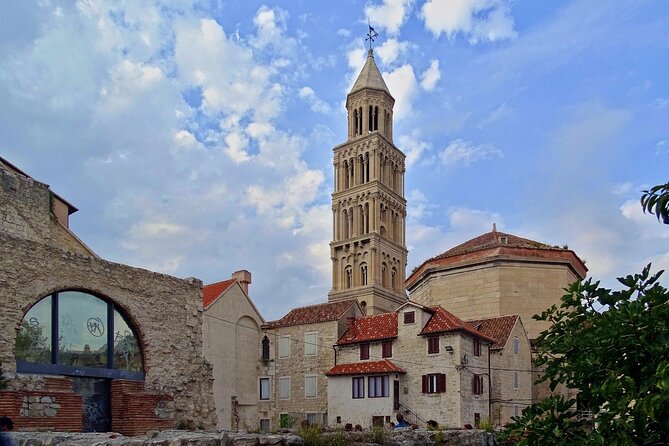
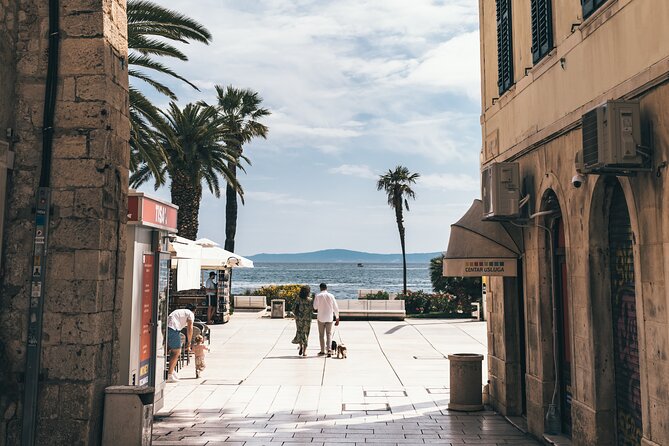
Split is a city you can walk in circles all day. This experience tries to keep your feet moving with a story, so you notice details you might otherwise miss, like architectural transitions, odd street corners, and small monuments tucked off main paths. The game approach also gives you a reason to stop, look, and read what’s in front of you.
What I especially like is that it stays outdoors and self-guided. That means you can avoid the most chaotic congestion because you are not waiting for a group to catch up. You’re also not stuck listening to the same talking points on repeat, which is a win when the sun decides to do its own thing.
The one downside is that you are running the show from your phone. If you hate apps, hate logging in, or just want human guidance, this may feel like homework. In particular, there has been at least one very unhappy take that boiled down to this: people expected a live guide, but the experience is designed to be app-led.
Price and value: what $5.97 gets you in Split
At $5.97 per person, this is priced like an entry-level activity, not a premium guided tour. For that money, you get access to the Questo app city exploration game, plus the promise of flex start and continue at your own pace. The duration estimate is about 1 hour 30 minutes to 2 hours, which is a reasonable time window for a compact walking route.
You also get listed mobile ticket access and group discounts. That matters if you’re traveling with friends, because splitting the cost can make a “fun walking mission” feel cheaper than a museum-ticket add-on.
Value-wise, the biggest factor is the mix of stops. You’re not only doing Roman monuments. You also pass through places tied to Croatian identity, like the Gregory of Nin statue and Marko Marulić sites, plus local curiosities like the quirky fountain and the head sculpture. If you enjoy connecting dots on your own, the $5.97 starts to feel like the cost of a fun afternoon plan rather than a long tour.
You can also read our reviews of more city tours in Split


The practical flow: from Sustipanski Park to Peristil
The experience starts at Sjaš svijetliš svemiriš me, which is located at Sustipanski put, 21000, Split. It ends at Peristil ul., 21000, Split, and the app handles the final directions from there.
You are given an end point, but the real engine is the in-app directions between stops. Each location is listed at about 7 minutes, which hints at a steady pace built for short puzzle breaks and quick sightseeing.
Opening hours run 8:00 AM to 6:00 PM, Monday through Sunday, within the stated date range. The practical takeaway is simple: plan to start in daylight hours, so your phone navigation and your monument viewing both feel easy, not stressful.
Stop-by-stop walkthrough: what to look for at every location
Below is how I’d plan your attention at each stop so you get the most from the walking route and the mystery-game logic.
Start: Sustipanski Park and sea views
Stop 1: Sjaš svijetliš svemiriš me (Sustipanski Park area)
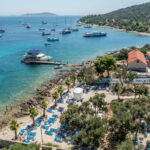
You begin at Sustipanski Park, a place known for scenic views and a relaxing atmosphere. Look for the green paths, the spots to sit, and the sea framing around the edges. This is a calm opener that makes the rest of the city feel less intense.
One practical note: since this is the start, treat the first few minutes as a setup period. Make sure your app is loaded and you understand what the next prompt expects before you start racing to monuments.
Waterfront promenade, easy rhythm
Stop 2: Obala kneza Branimira
This waterfront promenade is a simple walking stretch along the city’s edge. You can spend as much time here as you want before following the next directions, which is nice if you want a breather or a photo stop without breaking the game flow.
If you’re pairing this with another activity, this promenade is also a good “buffer” space. You can slow down here and still catch the rest of the route.



Matejuška: fishing harbor character
Stop 3: Matejuška
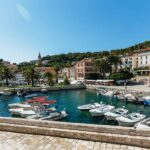
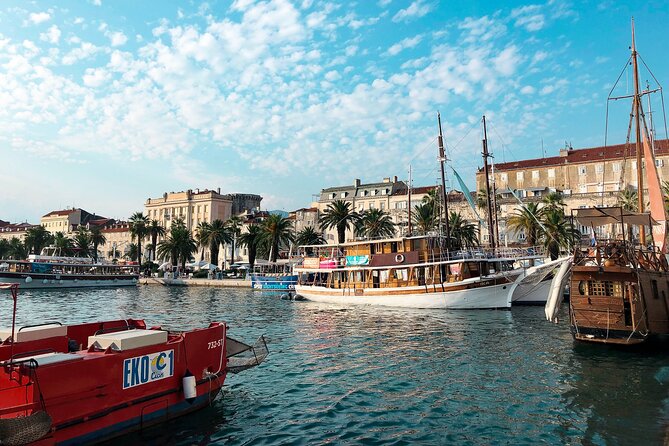
Matejuška is described as a small fishing harbor and marina with traditional, authentic charm. Even without reading every sign, the vibe tells you you are still in living Split, not only the postcard version. Watch how boats and shoreline layout shape the feel of the area.
This stop works best when you give yourself time to look. Small harbors have details that reward the extra 60 seconds.
Neretvanska ulica: the everyday city texture
Stop 4: Neretvanska ulica
Here you’re in a more ordinary street scene, mixing residential buildings, shops, and restaurants. That’s not “stop and pose” sightseeing. It’s the kind of street wandering that gives you real context for how locals experience the city.
This segment can feel less dramatic than the Roman bits, so lean into it. Think of it as the city’s connective tissue.
The Weird Fountain (Prva voda)
Stop 5: Ul. kralja Tomislava 2, the Weird Fountain (locally Prva voda)
You’ll meet a quirky fountain known locally as Prva voda. The point isn’t just the object, it’s the contrast. After sea air and neighborhood streets, this kind of oddity makes you slow down and pay attention.
If you’re the type who likes oddball things, this stop can become a favorite. If you only want big monuments, you may treat it as a short photo and move on.
Gregory of Nin: a statue with national importance
Stop 6: Gregory of Nin Statue
This is one of the headline stops. The statue was created by Croatian sculptor Ivan Meštrović, erected in 1929, and it’s one of Split’s most iconic landmarks. You can use this moment to calibrate your thinking: you’re not only learning about emperors, you’re also seeing how modern Croatia celebrates its own figures.
Practical tip: this is a good place to pause and reset your route mindset. Once you leave here, the game’s navigation will start steering deeper into the old-town core.
Marulićeva ulica and the poet connection
Stop 7: Marulićeva ulica
This street is named for Marko Marulić, a Renaissance poet and author from Split often called the father of Croatian literature. A street name can sound like trivia, but in a place like Split it’s an easy way to connect the city to ideas, not just stones.
Use this stop to look up at building façades and street alignment. Streets like this help you understand how people moved through the city over time.
Marko Marulić Statue
Stop 8: Marko Marulić Statue
You get a second Marulić moment in statue form. Having the poet referenced in two ways makes it harder to forget the theme, and it gives your puzzle walk a more human, local backbone alongside the Roman storyline.
This stop is also a helpful check point for orientation. If your phone starts acting up, you now have a major landmark to mentally anchor yourself.
Diocletian’s Palace and the Roman layers
Stop 9: Ul. Iza Vestibula 3, Diocletian’s Palace area
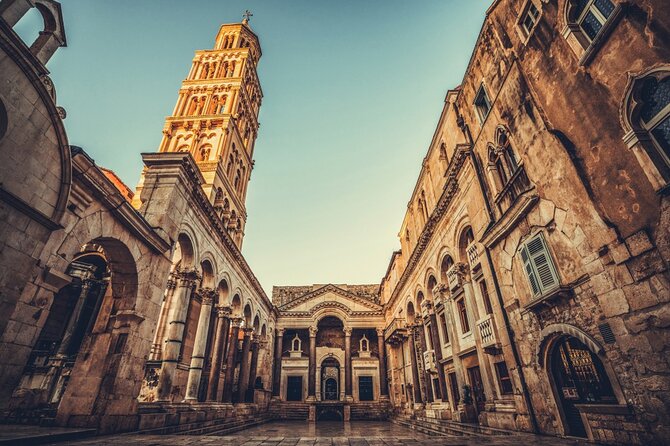
This is where your route shifts into the Roman core. Diocletian’s Palace combines architectural styles, including Roman, Hellenistic, and Byzantine elements. Even from the outside edges, you can spot well-preserved walls, gates, columns, and courtyards.
The palace complex can overwhelm you if you only sprint for photos. The app format helps because it gives you “targets” to reach, which keeps the sightseeing from turning into a random walk.
The Iron Gate, aka the Silver Gate (Porta Orientalis)
Stop 10: Iron Gate (Silver Gate, Porta Orientalis, Eastern Gate)
This gate is described as one of four main entrances to Diocletian’s Palace. The naming is a little confusing, but the substance is clear: it’s the eastern entry point, with strong historical value because it frames how people entered the palace world.
When you reach this kind of gate, look at how the stone and opening guide your sightline forward. Gates are designed to control movement, and in Diocletian’s Palace, that design still shapes your walk.
Papalić Palace: Baroque details in an older setting
Stop 11: Papalićeva ulica, Large Papalić Palace
This stop shifts time forward to Baroque architecture, dating to the 18th century. The description notes it was built for the Papalić family, which is a reminder that Diocletian’s Palace isn’t the whole story of Split. The city keeps reusing, reshaping, and adding new layers.
If you want a quick contrast to Roman stone, this is a good place. The Baroque vibe can feel more ornamental, more decorative in feel.
The Head on the Wall
Stop 12: Dominisova ulica, Glava na Zidu
You’ll find the local curiosity called The Head on the Wall. It’s a sculpture affixed to a building wall, depicting a human head.
This is the kind of stop that makes the app mystery feel playful, because it’s not always the “main attraction” people chase. It rewards people who like odd details and local quirks.
Jupiter’s Temple: a Roman temple inside town life
Stop 13: Jupiter’s Temple (Hram Jupitera)
Jupiter’s Temple dates to the 3rd century AD and is connected to Diocletian’s Palace construction. It’s one of those stops where you can pause and look up, then look again at how the surrounding city wraps around the temple structure.
This stop is valuable because it turns “Roman ruins” into an actual place in the city. Even if you only spend a minute, the temple makes the Roman-era scale feel real.
Vestibul: the emperor arrival space
Stop 14: Vestibul
The Vestibul is an ancient entrance hall that served as a central grand entrance to the palace, leading toward the emperor’s residential quarters. It’s a fitting final stop because it’s about movement, entry, and transition from public space into the emperor’s world.
If you want a clean ending photo, this is a good place to do it. It’s also a natural final “chapter moment” for the mystery you’ve been solving.
What story and learning you actually get from the game
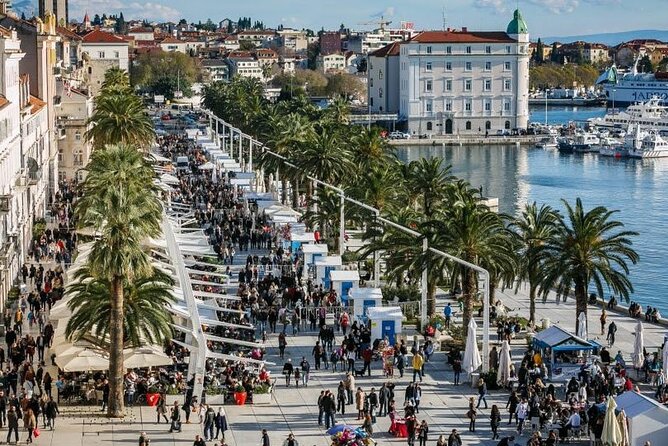
The tour summary promises history of a 1700-year-old town, plus a mystery about who and what happened to one of the greatest Roman emperors. You won’t be stuck reading long plaques the whole time. Instead, the narrative uses short challenges and prompts that push you to the next location.
The best part is how the route supports meaning. You start with sea atmosphere, move into neighborhood streets, pick up Croatian cultural landmarks, and only then land fully in Diocletian’s Palace. That ordering makes the Roman parts feel earned, not random.
Also, the app format means your attention is guided. When you get to major pieces like Jupiter’s Temple, Iron Gate, and the Vestibul, you’re more likely to notice specific architectural cues because the game has already trained you to look.
Convenience, crowd control, and the self-guided reality check
This is not a guided walking tour with a person leading you. It’s a self-guided app experience, and that’s the core trade-off.
Here’s what works in its favor:
- It’s self-guided and open air, so you avoid crowd bottlenecks.
- You can take a break and then continue when you want.
- It is private in the sense that your group is the only group doing it at that time.
Here’s what to watch for:
- Your phone matters. You need to have downloaded the Questo app and created an account using the same email used for purchase.
- You must have a charged phone.
- You should expect your experience to feel different from a live guide tour, because there are no human explanations in the moment.
If you love puzzles and you enjoy the autonomy of deciding when to pause, this format can feel surprisingly satisfying. If you want a storyteller to translate every stone, the app might not feel like enough.
Who should book this Split Quest, and who should skip it
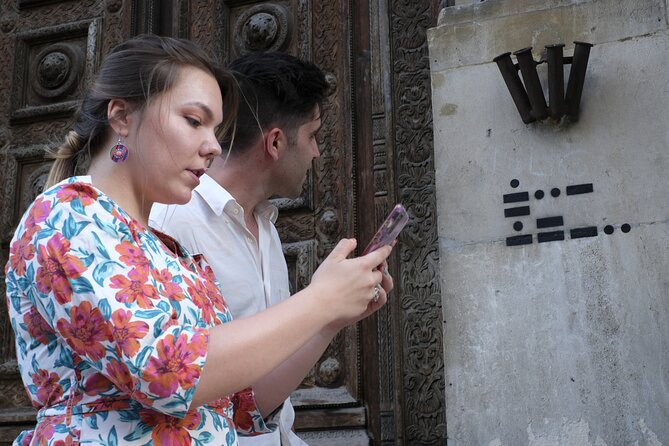
This fits best if you fall into one of these buckets:
- You like self-guided walking plans and you’re comfortable following phone directions.
- You want to see Roman and local Split highlights in a single outing without buying several tickets.
- You enjoy solving a mystery and don’t mind learning facts through prompts rather than a lecture.
It may not be ideal if:
- You get frustrated with app logins, moving between pages, or low battery situations.
- You strongly prefer a live guide, Q and A, and real-time clarification.
- You want a slow, museum-style pace with lots of sitting time and extended reading. The overall estimate is about 1.5 to 2 hours.
For most people, the sweet spot is using it as a structured way to walk Split’s old core without feeling like you’re wandering blindly.
Should you book Split Quest Experience: Discover the City?
Book it if you want a low-cost, high-motivation walk that blends Roman monuments with local Croatian landmarks. The $5.97 price works best when you actually use the app as intended, follow the directions, and treat each stop as a short “mission,” not a long museum visit.
Skip or reconsider if you need a live guide, struggle with phone-based navigation, or dislike puzzle-style experiences. The experience is designed to be self-guided, and that design choice shows up in every step of the route.
If you’re the kind of traveler who likes to solve, then look, then move on, this one is a smart fit for a Split afternoon.
FAQ
What is included in Split Quest Experience: Discover the City?
You get a city exploration game on your phone through the Questo app. The experience is self-guided with flex start and flex break options, and there is 24/7 customer support.
Is there a live tour guide?
No. A live tour guide is not included.
How long does the experience take?
The duration is approximately 1 hour 30 minutes to 2 hours.
Where does the tour start and end?
It starts at Sjaš svijetliš svemiriš me on Sustipanski put, 21000, Split. It ends at Peristil ul., 21000, Split, and you’ll get to the final stop by following directions in the app.
What do I need to use the experience on my phone?
You need to download the Questo app, create an account, and use the same email you used to purchase. You also need a charged phone, since the app provides the directions.
What are the opening hours?
The stated opening hours are 8:00 AM to 6:00 PM, Monday through Sunday, within the listed date range.
Do the stops require paid admission?
The stops are listed with admission ticket free in the itinerary details provided.
Is it a private activity?
Yes, it is listed as a private tour or activity, meaning only your group participates.
Can I start whenever I want after booking?
You can start and continue at your own pace during the listed operating hours, since it is flexible. You should still plan to start within the available timeframe.
Is free cancellation available?
Yes, you can cancel for free up to 24 hours in advance of the experience start time for a full refund. If you cancel less than 24 hours before, the amount paid is not refunded.
More City Tours in Split
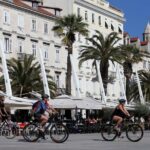

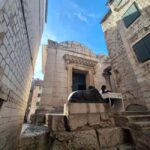
More Tour Reviews in Split

Not for you? Here's more nearby things to do in Split we have reviewed



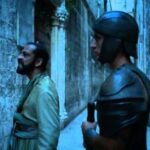
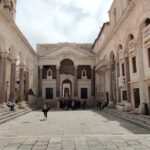

More Split City & Day Tours to consider.
 ★ 4.8Krka Waterfalls Trip with Boat Cruise and SwimmingFrom $3110,519 reviews
 ★ 5.0Krka Waterfalls, Food & Wine Tasting TourFrom $459,326 reviews
★ 4.9Krka Waterfalls, Food & Wine Tasting TourFrom $446,598 reviews
★ 5.0Krka Waterfalls, Food & Wine Tasting TourFrom $459,326 reviews
★ 4.9Krka Waterfalls, Food & Wine Tasting TourFrom $446,598 reviews
 ★ 4.6Split/Trogir: Blue Cave, Mamma Mia, Hvar and 5 Island TourFrom $1096,320 reviews
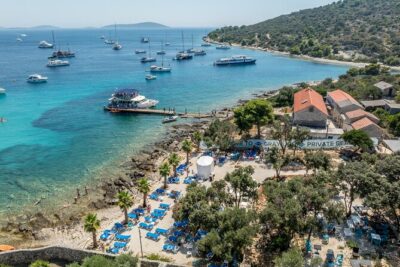 ★ 4.5Blue Lagoon & 3 Islands Cruise with Lunch from SplitFrom $785,756 reviews
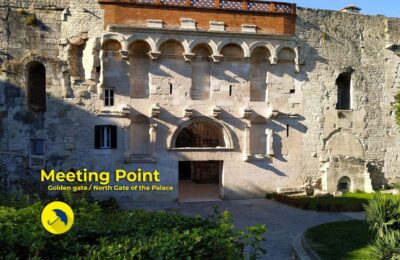 ★ 4.9Old Town and Diocletian Palace Walking TourFrom $174,727 reviews
 ★ 4.9Blue Lagoon Boat Party with DJs, Shots & After PartyFrom $474,610 reviews
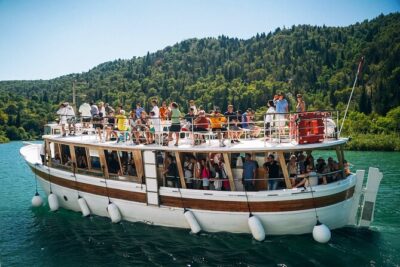 ★ 5.0Krka Waterfalls Tour, Boat Cruise & SwimmingFrom $324,489 reviews
Explore its other useful categories