
REVIEW · SPLIT CITY & DAY TOURS
Secret Split: Socialist Architecture & brutalism – Urban Utopia
Split gets real after the Romans.
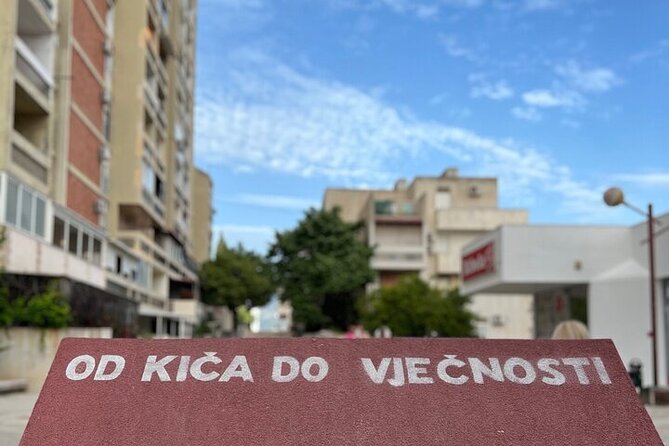
This Secret Split walk trades ancient landmarks for 20th-century socialist architecture, and it stays focused on how the city was designed for daily life. I love the way the story is brought to life by guide Mirjana, and I love the connection to MoMA in New York through Split 3.
One thing to consider: this is not a quick photo stroll. You’re signing up for a thoughtful walk through concrete, planning ideas, and city design, usually spanning 1 to 3 hours.
Key highlights you should care about
- Split 3 and a MoMA connection from 2018
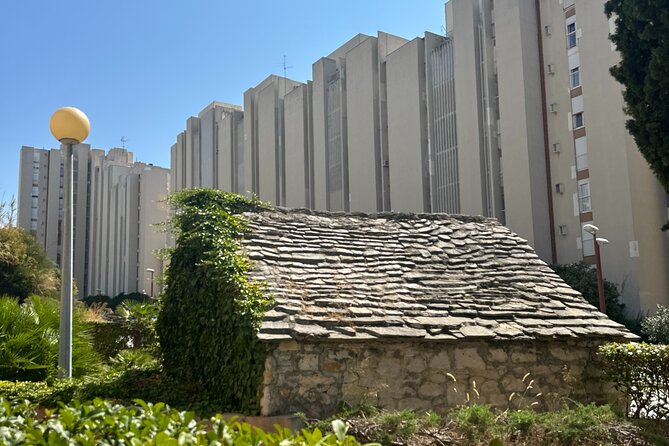
- A residential area you can actually walk through, not just look at from afar
- Pedestrian, community-focused urban planning
- Brutalism explained as care, not just concrete aesthetics
- Art activism woven into how people live in Split today
- A licensed tourist guide plus a certified heritage interpreter, with a private group feel
Socialist architecture in Split 3: the concrete that made it to New York
Most Split walks start with Rome. This one starts where most visitors stop paying attention: the post-World War II decades, when planners tried to design a better everyday life using concrete geometry.
The star is Split 3, an expansion of the city of Split that took shape in the 1970s. The idea was bold, almost utopian: if you shape public space well, you shape social life too. And yes, it mattered enough to land in the international conversation, including MoMA in New York in 2018.
What I like about this angle is that it doesn’t treat the architecture like a museum object. You’ll connect the buildings to the lived rhythm around them, which is the real value of seeing brutalism in context. It turns a style lesson into a life lesson.
You can also read our reviews of more tours and experiences in Split.

Where the walk starts, how long it takes, and what to expect
The tour meets at Ul. Šime Ljubića 3, in central Split. You’ll be back there at the end, which keeps things simple.
Expect a walking experience that can run from 1 to 3 hours. That range matters. If you only have 45 minutes, you’ll probably feel rushed. If you can spare a couple of hours, you’ll get the full effect of connecting the ideas to the streets and open spaces.
It’s also private, meaning only your group joins the walk. The upside is less crowd friction. The downside is you’ll want your group to be on the same wavelength, since this is about understanding modern architecture and urban planning, not just sightseeing.
And one practical note from the experience details: it uses a mobile ticket, and service animals are allowed.
Papandopulova ulica: your first taste of Split 3 and MoMA’s message
One of the first stops is along Papandopulova ulica, where you’ll start seeing Split 3 as more than a design style. The key thread here is the MoMA link, specifically the exhibition Toward a Concrete Utopia (2018).
The point isn’t name-dropping. It’s using that global recognition to help you look harder at what’s in front of you. When a major museum puts a housing plan into its conversation, it’s usually because the plan says something bigger about people, systems, and how space is used.
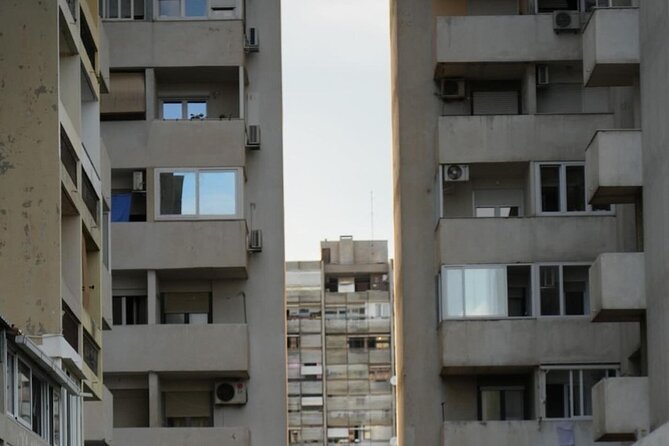
As you walk, you’ll notice the visual language brutalism is known for: raw building surfaces, clean lines, and open space that reads almost like it was drawn with a ruler. Those choices can look blunt at first, but the tour frames them as part of a broader approach to care and community.
If you like architecture but you get bored by pure theory, this stop is a good entry point. You get the headline story first, then you see it in real street space.
Split-Dalmatia County context: why the plan was built for real pressures
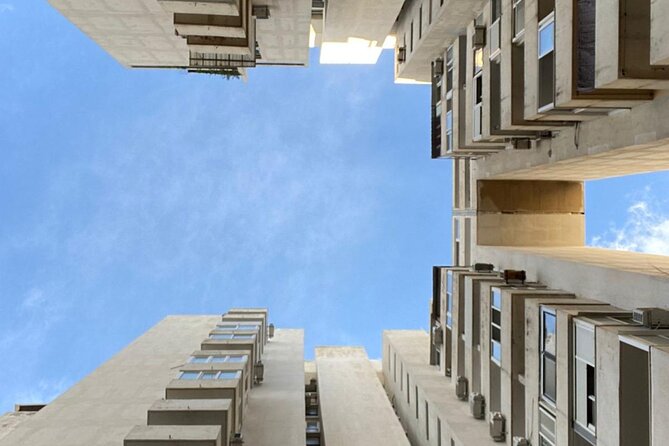
The next segment zooms out to the why. Split 3 wasn’t dreamed up in a vacuum. Rapid demographic growth pushed cities to find solutions quickly, and planners answered with large-scale urban planning.
You’ll hear how the project was positioned as a response to that pressure. The details matter because they explain why the design is so structured and so focused on daily routines. When a plan is created for large numbers of people, it tends to prioritize legibility, repetition, and shared public areas.
There’s also an important nuance: the project was never fully realized. That is useful to know going in, because it prevents the common trap of treating everything as perfectly executed utopia. Instead, you see it as an experiment that shaped parts of the city, even if it didn’t reach every intended milestone.
For me, that makes the walk more honest. You’re not being sold a perfect fantasy. You’re being shown what happens when ideology meets budgets, timing, and the messy reality of building a city.
Art activism in Split: how the city’s ideas still show up today
The final part shifts from architecture to people and culture, focusing on art activism and critical communication in Split. This is where the tour becomes more than an architectural walk and starts feeling like a street-level social story.
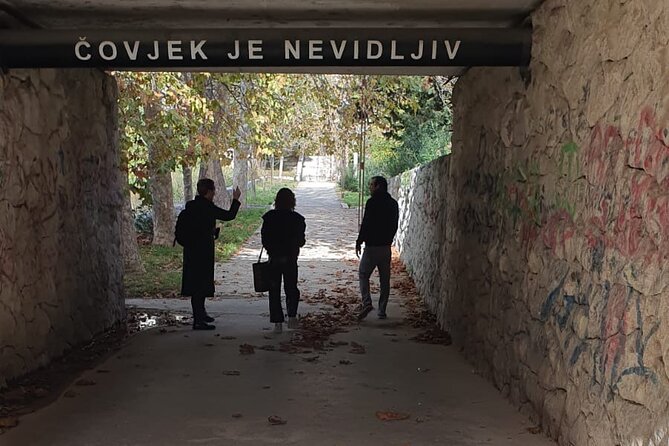
You’ll also meet local artists/activists. That part is included, and it changes the tone quickly. Architecture is one thing. But when you hear how creatives and activists interpret the spaces around them, you understand how a neighborhood gets used, debated, and reimagined over time.
The tour frames this as a city within a city, with a pedestrian zone designed for community and daily life. That matters because it links design choices to outcomes you can actually observe: where people gather, how movement happens without cars dominating, and how public space becomes part of routine.
If you’re the type of person who only likes architecture when it’s dramatic, you might be surprised. This section is about the quieter power of design and how it supports ordinary life, including for children, not just grand gestures.


How to see brutalism the way this tour teaches it
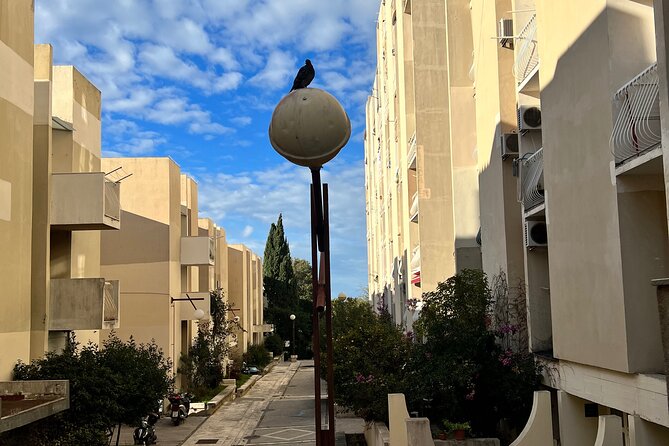
Brutalism gets a bad rap online, as if it’s only about looking tough or using too much concrete. This walk pushes a different lens: brutalism as care.
Here’s what that looks like in practice as you move through the streets:
- Raw materials and strong geometry are treated as honesty, not decoration.
- Open spaces matter because they support everyday social life.
- Pedestrian-first planning changes what the neighborhood feels like hour to hour.
- The design tries to put community on equal footing with housing.
I think this is the secret sauce. The tour doesn’t ask you to like concrete because it’s trendy. It asks you to look for the human logic behind the choices, and that logic is easier to spot when you’re walking inside the spaces instead of viewing them from a distance.
So if you’re unsure whether you’ll enjoy brutalism, do this: keep asking yourself how the space affects behavior. Where would you meet a friend? Where would kids play? Where would you linger? Those questions make the architecture feel personal fast.
Meeting local artists and hearing the neighborhood’s ongoing story
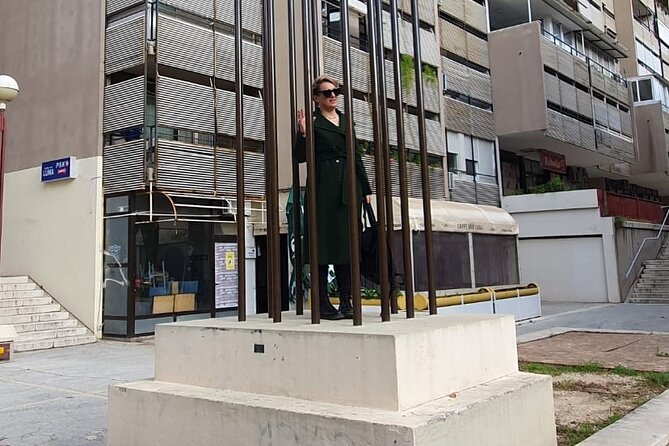
One of the most valuable parts is that you’re not left with a one-way lecture. The experience includes meeting local artists/activists, which adds a contemporary layer to socialist-era planning.
This matters because neighborhoods change. Even when the buildings stay, the meaning can shift. Art activism is one way that shift shows up. It can challenge official narratives, highlight social issues, and rewrite how residents interpret their own streets.
You’ll likely come away connecting themes across time: the original goal of shaping society through urban form, and the present-day desire to communicate critically through culture and public space. In other words, the tour treats art activism as part of the neighborhood’s infrastructure.
If you enjoy conversations more than monologues, this is a big plus. If you prefer quiet sightseeing, you can still enjoy the architecture, but be ready for a dialogue component.
Value and price: is $113.90 a smart buy for this kind of tour?
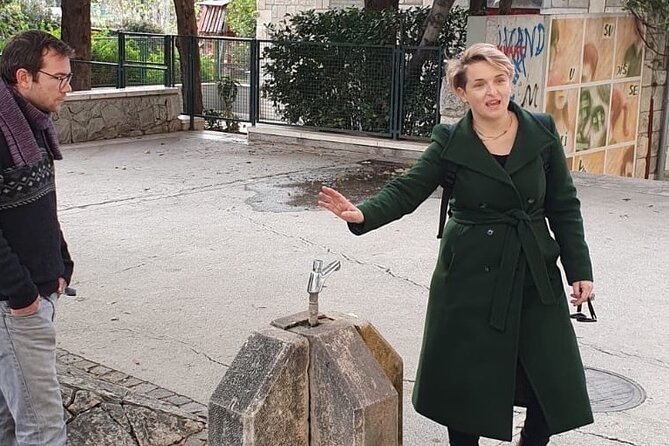
At $113.90 per person, this isn’t a budget-only walk. But it has a few things that can make it feel fair if you’re into modern architecture and local perspective.
First, you get a licensed tourist guide and a certified heritage interpreter. That dual expertise is usually what separates a random architectural stroll from an interpretation-focused walk that helps you connect details to bigger ideas.
Second, you visit a residential area and meet local artists/activists. That inclusion is often where tours justify their cost, because it turns the experience into something less repeatable.
Third, it’s private. If your group is small, private pricing can feel more expensive per person than a big group tour. But you also get a calmer, more tailored pacing, especially helpful when the subject is nuanced like urban planning.
Add it up, and the best way to think about the price is this: you’re paying for context, not just movement. If you love modern design and want a meaningful explanation, it can be a good value. If you want classic old-town sightseeing, you might feel like you paid for a topic you didn’t fully buy into.
Who should book Secret Split, and who might want a different tour
This experience fits you if you:
- Like brutalism and want to understand it beyond aesthetics
- Want to see Split through a 20th-century lens
- Care about urban planning, public space, and how neighborhoods work
- Enjoy meeting locals, especially artists and activists, as part of the story
You might not love it if:
- Your Split priorities are mostly ancient ruins and Roman-era highlights
- You want a quick, low-brain-power walking tour
- Your group doesn’t enjoy architecture or city design talk
The good news is that the walk is designed to help you “get it” as you go. You’re led through raw spaces and clean geometry with an explanation that keeps returning to how the city was supposed to function.
Should you book Secret Split? A practical decision checklist
I’d book it if you want a side of Split that most people never look for. It’s modern, it’s urban, and it connects architecture to social ideas in a way that feels relevant even today.
I’d skip it if you’re in Split for only one day and your wish list is purely Roman sights. In that case, this tour could feel like a detour from the big hitters.
A smart compromise: if you’re already comfortable spending time in museums or reading about design, this will click. If you normally avoid anything labeled architecture, try it only if you can commit to being curious while walking through the neighborhoods.
If your schedule works, it’s an excellent pick for travelers who want to understand modern life in Split, not just photograph it.
FAQ
How long is the Secret Split walk?
The tour runs about 1 to 3 hours.
Where does the tour start?
The meeting point is Ul. Šime Ljubića 3, 21000 Split, Croatia.
Is the tour private or shared?
It is private. Only your group participates.
What’s included in the tour?
It includes a tour with a licensed tourist guide and a certified heritage interpreter, visiting the residential area of Split, and meeting local artists/activists.
Are there admission tickets you must buy for the stops?
The provided stop details list admission ticket free.
Are service animals allowed?
Yes, service animals are allowed.
What days and hours is the tour available?
The stated opening hours are Monday through Thursday, from 8:00 AM to 7:00 PM, within 05/25/2022 to 09/07/2026.
Can I cancel for a full refund?
Yes. Free cancellation is available. You must cancel at least 24 hours before the experience start time for a full refund.
How far in advance is it commonly booked?
On average, it is booked about 12 days in advance.
More Tour Reviews in Split
Not for you? Here's more nearby things to do in Split we have reviewed






More Split City & Day Tours to consider.
 ★ 4.8Krka Waterfalls Trip with Boat Cruise and SwimmingFrom $3110,519 reviews
 ★ 5.0Krka Waterfalls, Food & Wine Tasting TourFrom $459,326 reviews
★ 4.9Krka Waterfalls, Food & Wine Tasting TourFrom $446,598 reviews
★ 5.0Krka Waterfalls, Food & Wine Tasting TourFrom $459,326 reviews
★ 4.9Krka Waterfalls, Food & Wine Tasting TourFrom $446,598 reviews
 ★ 4.6Split/Trogir: Blue Cave, Mamma Mia, Hvar and 5 Island TourFrom $1096,320 reviews
 ★ 4.5Blue Lagoon & 3 Islands Cruise with Lunch from SplitFrom $785,756 reviews
 ★ 4.9Old Town and Diocletian Palace Walking TourFrom $174,727 reviews
 ★ 4.9Blue Lagoon Boat Party with DJs, Shots & After PartyFrom $474,610 reviews
 ★ 5.0Krka Waterfalls Tour, Boat Cruise & SwimmingFrom $324,489 reviews