
REVIEW · SPLIT CITY & DAY TOURS
Controversies behind Split and Croatia-Anthropologist guide
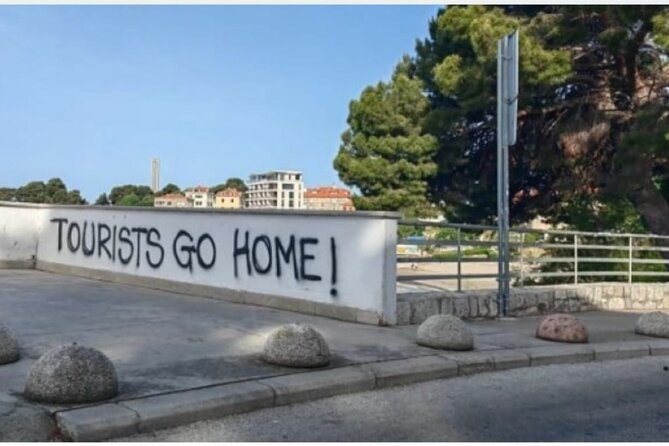
Split’s old stones have political baggage. This 2-hour city-center walk frames Split through an anthropologist lens, especially the controversy around Diocletian’s Palace, which locals have argued over in every era. I like that the stories are not just dates and names, they’re about how people lived with the place, and why that still matters today.
I also love the way guide Marin brings the route to life. He stays warm and open, and uses maps and visuals on an iPad, which helps when you are walking past the same walls tourists photograph, but never really understand. One heads-up: you will spend time on your feet and may have some standing while explanations happen, so wear comfortable shoes.
Key things to know before you walk Split with an anthropologist
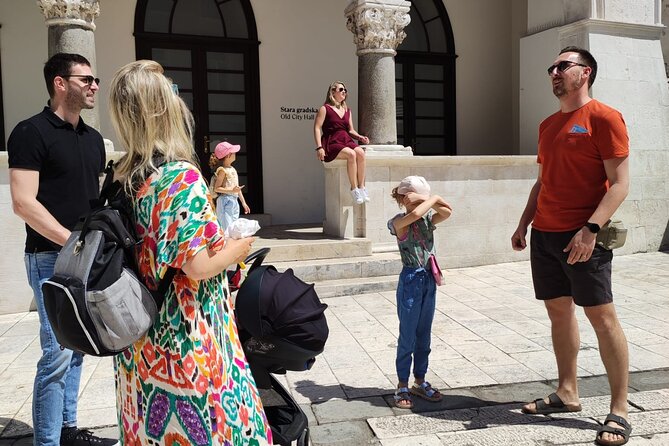
- Diocletian’s Palace, explained through conflict: not just impressive architecture, but why it became a local argument again and again
- A small group up to 12 people: easier questions, calmer pacing, and more attention from Marin
- Multiple central stops, each with a “why”: promenade life, Venetian-era frontiers, and even what lies under foot
- Real modern links to past events: Ottoman-era perceptions and 1990s divisions are part of the story
- iPad maps and visuals: you get your bearings fast and follow the bigger picture
More than marble: why this Split tour feels like society, not sightseeing
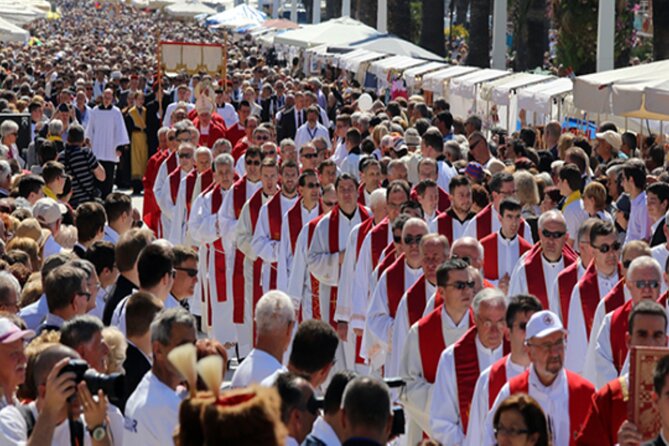
If you only want a quick hit of landmarks, you might feel slightly irritated. This tour is built for people who like interpretation, the messy human side of history, and the way today’s identity grows out of older arguments.
Split is a layered city, but most tours keep those layers in separate boxes. Here, the guide connects them. You’ll hear how one site can mean different things over time, and how that keeps shaping local politics, community pride, and even personal opinions.
And because the group stays small, you can actually ask things you wonder about while you’re standing in the square. That turns the walk from passive listening into a guided conversation.
You can also read our reviews of more guided tours in Split


Where Split’s power stories start: Diocletian’s Palace controversies
The first stop is Palazzo di Diocleziano, about 35 minutes, and admission is included. This is the part where you slow down and look at the palace as more than a Roman flex. The guide treats it as a contested object in the local imagination, something the city’s people have argued over across historical periods.
You’ll also get the sense that heritage sites do not become neutral just because they are old. People claim them, reject them, reinterpret them, and use them to explain who they are now. That is the “anthropology” angle in plain language: history as lived meaning, not just museum facts.
One practical note: this opening stop sets the tone for the whole walk. If you are the type who likes context before you wander, this start will click. If you prefer to just wander first and ask questions later, you may find yourself wanting a slower warm-up.
Obala Hrvatskog narodnog preporoda, where public life actually happens

Next comes Obala Hrvatskog narodnog preporoda, roughly 15 minutes. This promenade is presented as the traditional Mediterranean-style riva, the place where daily public life concentrates, and where important historical events took place.
Even if you have seen waterfronts all over Europe, this stop is useful because it teaches you to look at “everyday space” as historical space. Long stretches of water-front view can feel repetitive on foot, but the guide gives you reasons to pay attention to what happened there, and why people gathered.
If you’re hungry for atmosphere, bring your curiosity, not your phone. You’ll get more out of this if you watch how the promenade works as a social stage, not just a pretty background.
Trg Braće Radić: the old Venetian square and the Ottoman frontier story
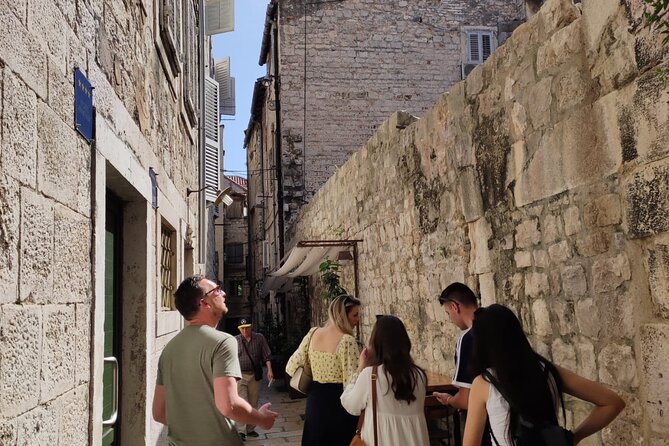
Trg Braće Radić gets about 15 minutes. This is described as an old Venetian square and a perfect place to talk about turbulent times, including Split fighting on the frontier against the Ottomans.
Here’s the useful twist: the guide links that period to how it is perceived nowadays. That matters because memory is political. Two people can look at the same past and reach totally different conclusions, depending on what they need the past to do for them in the present.
You will likely notice how squares like this are built for public statements, debates, and gatherings. That is why they are strong stages for identity stories.
Narodni trg under your feet: human remains and later “infamous” events
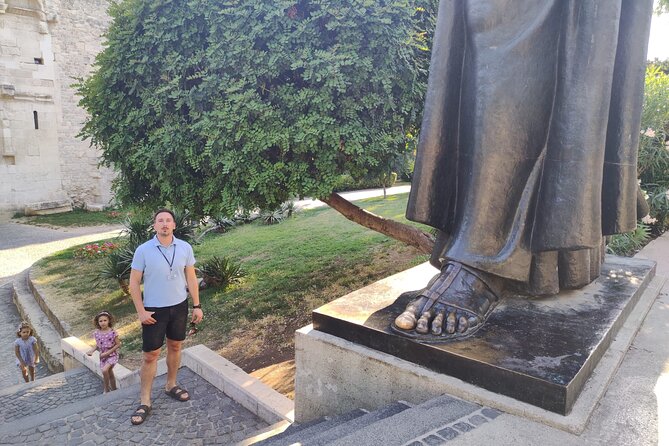
Narodni trg is another 15 minutes, free. The standout detail is the reminder that there are human remains beneath the area, because the spot used to be an ancient graveyard.
The tour uses this to talk about how places absorb layers of life and death, then keep getting reused. After a graveyard, a city does not neatly erase the past. It overwrites it, builds over it, and then argues about what that means.
The good part for you: this stop makes the earlier “Palace controversies” theme feel real. Heritage is not a clean story of progress. It’s a complicated one of bodies, power, reuse, and interpretation.


Šperun ulica: the neighborhood tourists sleep through, and locals remember
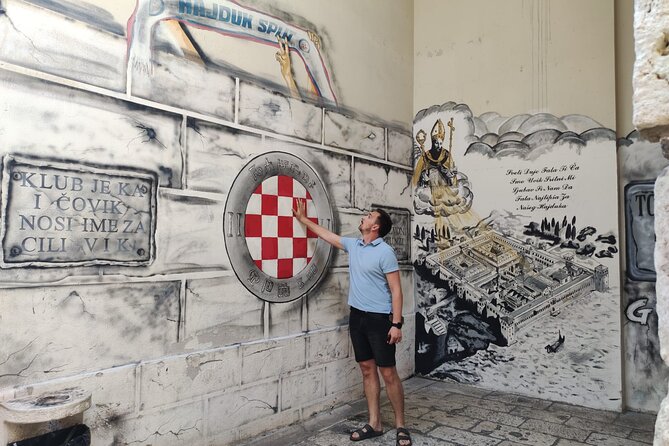
Šperun ulica is about 15 minutes, also free. The area is described as one of Split’s famous neighborhoods, the kind many visitors stay near without really learning what sits behind the name and streets.
This is where the tour gets slightly more personal. The guide shifts from broad historical arcs to neighborhood identity, how community life forms in specific streets, and how a place becomes “known” even if the deeper story stays invisible to outsiders.
Drawback to consider: if your idea of a tour is mostly big monuments, this neighborhood stop might feel less dramatic. But if you care about how cities actually work, it will feel refreshing and real.
Trg Franje Tuđmana: history you can still argue about
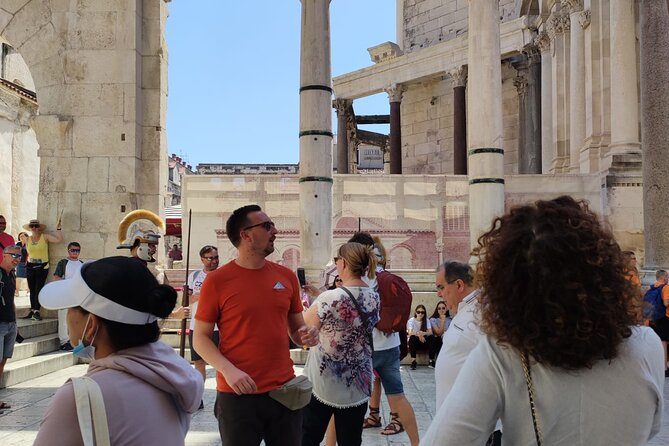
Trg Franje Tuđmana takes about 15 minutes, free. The square is named after Croatia’s first president, and the guide uses the name to move into turbulent times at the end of the 20th century.
This is not treated like an exam question. It’s treated like an ongoing conversation, because the tour points out that issues from that era still divide Croatian society. That is a hard topic, but it’s also why the anthropologist approach fits: identity doesn’t end when a century ends.
You might feel the guide handles this with care by connecting past events to present perceptions. It’s the kind of stop that makes the city feel current, not just old.
Matejuška to close: the view, the modern take, and the final thread
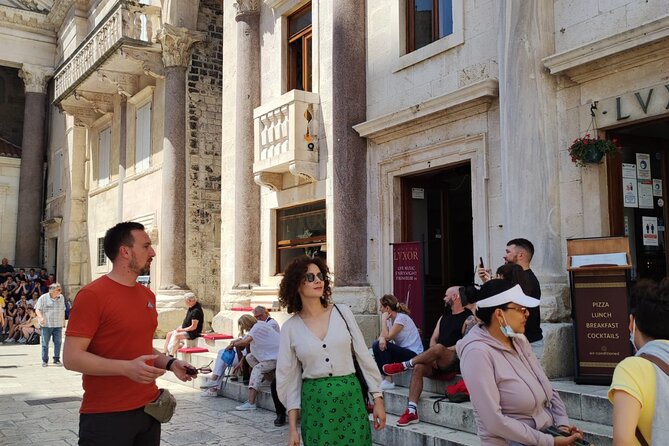
The last stop is Matejuška, about 10 minutes, with admission included. This is the ending point, and you get a famous view of Split from there. The guide uses it as the moment to pull together the modern insights, then wrap up final words for the route.
What I like about this ending: it gives you a clean visual payoff. After hearing about controversies, memory, and politics, you look out and see the city as a living system, not a set of ruins. The view is the emotional landing pad for the whole walk.
If you catch the right light, this moment is also a great time to take photos that feel earned. You’ll understand more about what you are photographing, not just what’s in front of you.
Price and value: what you get for about $35 in 2 hours
At $35 per person for around 2 hours, the value depends on what you want from a city tour.
You get:
- an English guided walk with a group size capped at 12
- a focused route through multiple central squares and streets
- admission tickets included at key moments (Palazzo di Diocleziano and the ending viewpoint stop)
- a guide who answers questions and uses iPad visuals to keep you oriented
That combination is not just “two hours of facts.” It’s a structured way to understand why Split looks the way it does and why people argue about it.
If you already know Roman history well and you crave only architecture, you might feel you could DIY a similar route. But if you want interpretation, and especially if you like modern links to the past, the $35 price starts to look fair fast.
Also, the tour offers multiple time slots, so you are not forced to pick a single awkward hour.
How to plan your walk: shoes, pacing, and smart questions
This is a city-center walk with multiple short stops, so your main planning needs are simple: comfort and patience. Expect a steady rhythm with some standing while the guide talks.
Bring:
- comfortable walking shoes
- a bottle of water, especially when the weather is warm
- a question list, because the guide is openly inviting questions
Helpful questions to ask Marin during the walk:
- How does the meaning of a place change over different eras?
- Why do certain historical narratives still create division today?
- What should I look for next when I visit other sites in Split?
The iPad maps and visuals help a lot here. When you can match the spoken story to what you see around you, the city stops feeling like random streets and starts feeling like a connected argument.
Who this tour is best for in Split
This works best for you if:
- you like history, but you prefer it explained through people and society
- you want the “why” behind famous sites, including uncomfortable parts
- you enjoy guides who keep things lively and interactive, not robotic
It may not be the right fit if:
- you want only quick photo stops and minimal talking
- you strongly dislike standing during explanations
- you prefer history kept strictly in chronological order with no modern political links
It’s a good match for solo travelers too, because the small group format makes it easier to join the conversation without feeling lost.
Should you book this anthropological Split walking tour?
Yes, if you’re the type who gets more satisfaction from understanding a place than just ticking off landmarks. The route connects Roman power, Venetian-era frontier stories, and modern identity debates into a single walk, and Marin’s teaching style makes it easy to follow.
Book it especially if you care about controversies behind well-known places, because this tour is built around that idea. If you’re traveling with limited time but still want real context, the 2-hour format hits a sweet spot.
Before you go, do one small thing: wear comfy shoes. You’ll earn the view at the end, and you’ll hear the city in a way that sticks.
FAQ
How long is the tour?
The tour lasts about 2 hours.
What does it cost?
It costs $35.00 per person.
Is the tour in English?
Yes, it is offered in English.
How large is the group?
The maximum group size is 12 people.
What ticket do I need for the tour?
You get a mobile ticket.
Are admission tickets included?
Admission tickets are included at Palazzo di Diocleziano and at the ending stop at Matejuška. The other stops listed are free.
Where does the tour start and where does it end?
You start at Ul. kralja Tomislava 12, 21000, Split, Croatia, and you end at Trumbićeva obala 2, 21000, Split, Croatia.
Can I bring a service animal?
Yes, service animals are allowed.
What if I need to change my plans?
You can cancel for a full refund up to 24 hours in advance.
What happens if the weather is poor?
This tour requires good weather. If it is canceled due to poor weather, you will be offered a different date or a full refund.
More Guided Tours in Split


More Tour Reviews in Split

Not for you? Here's more nearby things to do in Split we have reviewed




More Split City & Day Tours to consider.
 ★ 4.8Krka Waterfalls Trip with Boat Cruise and SwimmingFrom $3110,519 reviews
 ★ 5.0Krka Waterfalls, Food & Wine Tasting TourFrom $459,326 reviews
★ 4.9Krka Waterfalls, Food & Wine Tasting TourFrom $446,598 reviews
★ 5.0Krka Waterfalls, Food & Wine Tasting TourFrom $459,326 reviews
★ 4.9Krka Waterfalls, Food & Wine Tasting TourFrom $446,598 reviews
 ★ 4.6Split/Trogir: Blue Cave, Mamma Mia, Hvar and 5 Island TourFrom $1096,320 reviews
 ★ 4.5Blue Lagoon & 3 Islands Cruise with Lunch from SplitFrom $785,756 reviews
 ★ 4.9Old Town and Diocletian Palace Walking TourFrom $174,727 reviews
 ★ 4.9Blue Lagoon Boat Party with DJs, Shots & After PartyFrom $474,610 reviews
 ★ 5.0Krka Waterfalls Tour, Boat Cruise & SwimmingFrom $324,489 reviews