REVIEW · SPLIT
Back to the Roots – Ancient Island Interactive Experience
Bread and wine lessons, served warm. This interactive visit at Terra Arhaica Experience in Vrisnik turns traditional Croatian life into something you can touch, from bread baked under a peka to tools used for wine, nets, and fish. You also get tastings that feel like a rural kitchen meal, not a scripted show.
What I really like is the hands-on mix of cooking, crafts, and everyday survival skills, like grinding your own wheat and salting fish. I also like meeting the family in traditional clothing, including hosts such as Magdalena, Lana, and Jacob, who explain how their home worked and fed people. One drawback to consider: the session is active and practical, so if you want a mostly passive, sit-and-watch tour, this one may feel like too much work.
Quick reasons this Hvar experience earns its 5-star buzz
- Peka-style bread plus olive oil tasting, using the stone-vessel style you rarely see
- Working tools and real tasks, including net mending, grape pressing techniques, and fish salting
- Farm-and-fisher flavors together, with garden vegetables and a traditional lunch feel
- Craft moments like weaving a scarf or bracelet and trying cooper craft skills
- Traditional cookie pay-off, including the paprenjok cookie and its secret recipe
Entering Terra Arhaica: Vrisnik’s Stone Home That Feels Lived-In
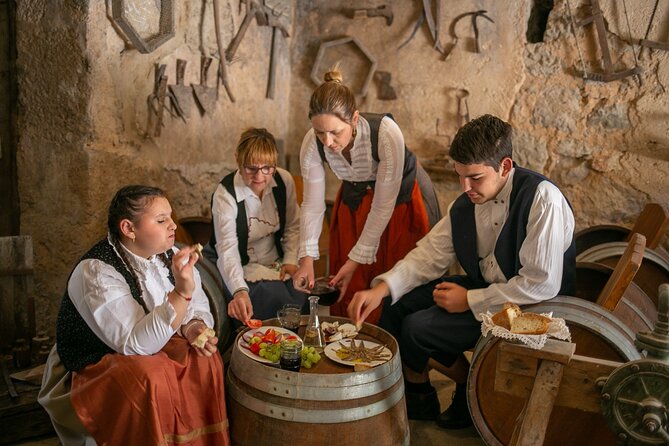
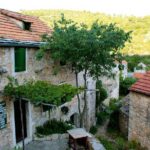
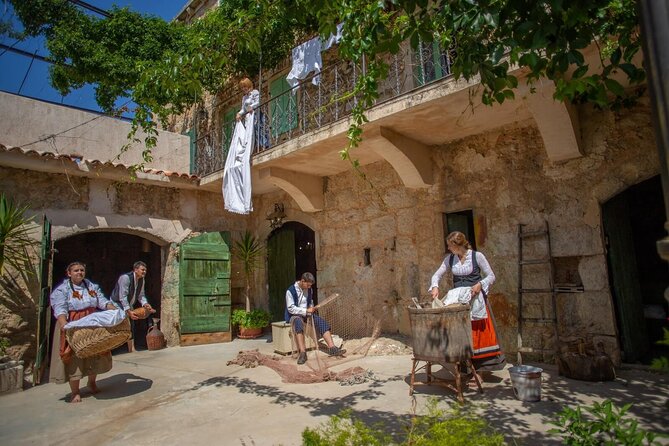
Back to the Roots is built around one idea: rural life on Hvar was practical, hands-on, and tied to the seasons. The family home at Terra Arhaica is made of stone buildings that have served generations, so the setting does more than look historic. It makes the skills you learn feel believable, because you’re learning them in the same kind of space where they would have been used.
You’ll be welcomed into the experience space in traditional clothing, and the hosts use stories to connect food with daily work. In the best moments, it stops feeling like a lesson and starts feeling like visiting someone’s home while they explain what they learned from older relatives. I like that the focus stays on real practices, not vague heritage talk.
You can also read our reviews of more tours and experiences in Hvar.


Your 1 hour 15 minutes in Hvar: the hands-on flow you should expect
This is a private experience, so you’ll go through it as just your group. That matters because the hosts can slow down for questions and adjust pacing if someone wants to watch first, then try. The total time is about 1 hour 15 minutes, so it’s not a half-day event that drags, but it also isn’t a fast tasting.
Within that time, you’ll cover practical skills in the Learn, Taste, and Find out areas. The way it works for your brain is simple: you do a small task, you hear why it mattered, and then you eat what the process creates. If you like cooking classes but get bored with only watching, this format usually lands well.
Learn stations that connect food to work
You’ll get instruction on several classic island jobs, including bread-making under a peka and grinding grain into flour. You also learn grape pressing, how juice turns into wine, and why fire and the fireplace were essential for both cooking and everyday survival.
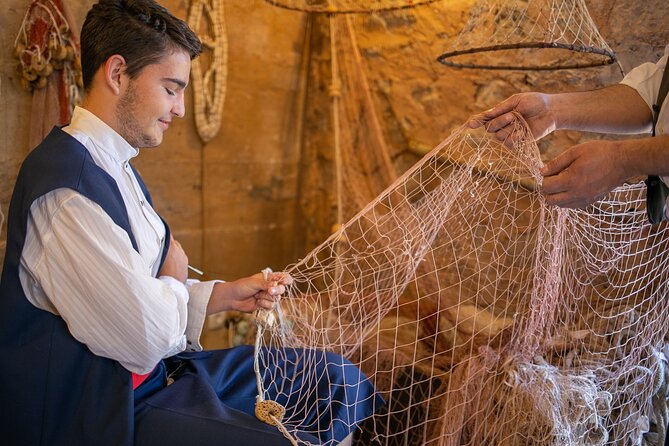
Some of the other skills you’re taught include mending a fisherman’s net so you understand how repairs kept life going at sea, and salting your own fish to preserve it. Even if you don’t keep the exact technique at home, the reason you’ll enjoy it is that it gives you an actual sense of labor, timing, and purpose.
Bread under a peka, wheat grinding, and the oil you scoop from stone
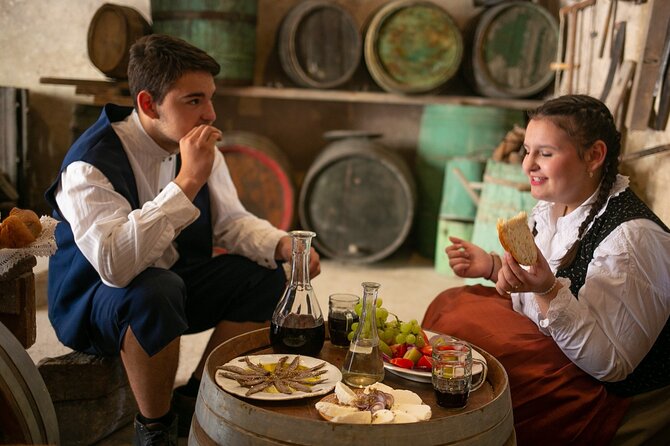
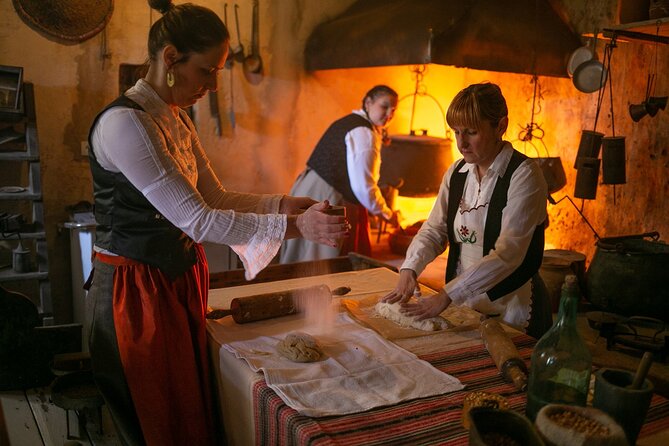
The bread part is one of the most memorable links between history and taste. You’ll learn how ancestors made bread under a peka, then you get to grind your own wheat. That one step changes the flavor story in your mind, because you’re no longer just eating bread, you’re participating in turning grain into something warm.
Then comes the olive oil moment, in the form of a stone-vessel style scoop and taste. Fresh bread plus olive oil can sound simple, but the point here is the sequence: you learn the ritual behind the ingredients, not just the final plate. It’s the kind of tasting that makes you pay attention to warm texture and clean flavor.
If you’re thinking about dietary needs, the tour data doesn’t list allergen options. For peace of mind, I’d treat it as a meal experience where you should ask ahead if you have serious allergies.
The lunch-style tasting: salted sardines, tomatoes, zucchini, and garden produce
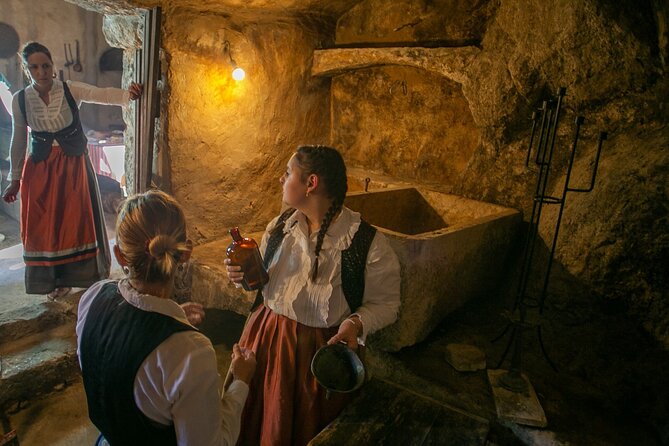
After the skills, the tasting shifts to food you can build a mental map around. You’ll mix salted sardines with fresh tomatoes and zucchini that you handpicked from the garden. That detail is more than a cute activity, it connects the meal to a real source and makes the vegetables taste like the island version of themselves.
The session also includes what’s described as a combination of a farmer’s and fisherman’s lunch. In plain terms, you’re eating from both worlds, which is exactly how island life worked when people had to make use of whatever the land and sea provided. It helps you understand why certain flavors repeated across seasons.
Finally, you’ll treat yourself to paprenjok, including learning its secret recipe. This is one of those desserts that feels like a local calling card, and it’s a nice closer because it’s tied to a specific tradition, not generic pastry.


Tools and crafts you may actually try: nets, figs, weaving, and cooper work
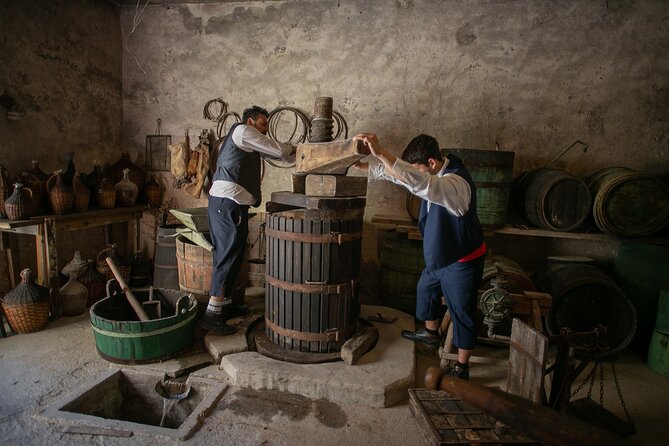
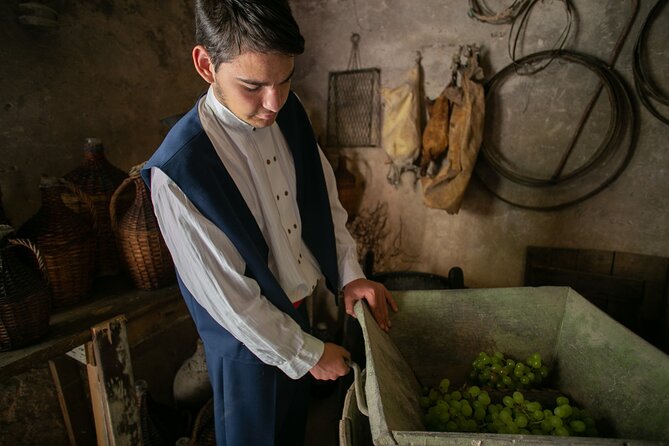
One of the reasons this experience gets strong reviews is that it doesn’t stop at kitchen tasks. You also learn about practical life around the home and farm, including how figs were dried. Dried fruit matters because it’s shelf-life in a hot climate, and the explanation makes that everyday logic feel real.
You’ll also experience weaving a scarf or bracelet. If you’ve ever wanted to understand how a simple object takes skill and patience, this is the right kind of hands-on moment, especially because it’s done alongside the food education. It’s not about producing something perfect, it’s about understanding how craft supported daily needs.
Another craft moment involves the cooper’s craft. The data doesn’t spell out exactly what you’ll do, but it does say you’ll experience the skill of the cooper’s craft for a moment. That’s a fascinating pairing with wine pressing and grape juice work, because barrels and storage are part of how fermented food survives and matures.
There’s also an element of ironing clothes with embers. Again, details aren’t fully described, but the idea is clear: you’re learning how heat and technique used to replace machines. I’d expect this to be more instructional than a full ironing session at home, but it’s still an attention-getter in the schedule.
Fire, fireplaces, and why the hearth is the center of the story
In most modern kitchens, a stove is just a convenience. Here, the experience repeatedly returns to fire and the fireplace because that’s what made everything else possible. When someone explains why the fireplace mattered, you start to connect cooking, warmth, and daily routines into one system.
This is also where the experience feels most grounded. Instead of treating tradition like a costume, it treats it like infrastructure. The hearth is the device that turns ingredients into meals and keeps daily life moving.
Meeting Point in Vrisnik: what it means for your day
The activity starts at 5M32+9F Vrisnik, Croatia and ends back at the meeting point. That back-to-the-same-place structure makes planning easier if you’re building a Hvar day with limited time. Also, the tour data lists it as English offered, and the format includes a mobile ticket, so you’re not stuck with paperwork.
The experience is also described as a private tour/activity, meaning only your group participates. In practice, that often leads to a better pace for questions, and it cuts down the awkwardness of being one person in a large group when you’re asked to try hands-on tasks.
One more practical note from the details you can plan around: the experience is meant for an afternoon style visit, and you may be coming from Hvar’s main port area. The property is described as about 30 minutes by car from the port, which helps you estimate how to stitch it into the rest of your itinerary.
Price and value: what $155.33 gets you in real terms
At $155.33 per person for about 1 hour 15 minutes, this is not a budget stop. But it also isn’t just a guided walk through a house.
You’re paying for several things at once: a private setting, a hands-on sequence (grinding wheat, grape-related tool work, net mending practice, fish salting), and a meal-style tasting that includes fresh garden produce and traditional cookies. When an experience bundles education plus food plus craft in one session, the value is usually strongest for people who want more than photo ops.
If you compare it to other meal-focused classes, the main difference is that the content is built around island survival skills, not only modern cooking technique. That’s why it tends to feel “worth it” rather than “nice.”
Who should book Back to the Roots, and who might pass
This experience suits you if you like:
- Food that comes with context, like why people salted fish and dried figs
- Hands-on travel, where you try tasks instead of only watching
- Small-group learning with hosts who share stories in a personal way
It may be less ideal if you:
- Want a mostly relaxed, observation-only tour
- Don’t like getting involved in practical tasks, including things like embers or sticky dough moments
From the review details included here, the family hosts such as Magdalena, Lana, Jacob, and Jaksa-style name references create a warm tone. That kind of hospitality tends to work well for families too, especially when kids are curious about how old work became modern food.
Tips so you enjoy it more than you expect
Plan to dress for hands-on time. Even when you’re only partly participating, you’re likely to be near flour, warm food, and craft materials like weaving items.
Come hungry. The experience includes bread, olive oil tasting, a lunch-style meal, and paprenjok cookie. If you arrive after a late lunch, you may miss the point of why each step leads into the next.
If you care about pacing, it helps that it’s private. Still, set expectations for movement and participation, because the session is designed around doing.
Also, since it’s English offered and includes a mobile ticket, do take a screenshot of your ticket. That saves time when you’re meeting at the Vrisnik coordinate point.
Should you book this in Hvar?
Book it if you want a memorable, practical way to understand Croatian island life, not just a pretty meal. Back to the Roots delivers hands-on bread and wine-adjacent work, plus island food flavors like salted sardines with tomatoes and zucchini, and a clear traditional cookie finish with paprenjok.
Skip it if you prefer museums, long lectures, or a low-effort cultural stop. This is interactive and skill-based, and that’s exactly why it works.
If you’re choosing one “experience” in Hvar that mixes cooking, tools, and taste into one tight 1 hour 15 minutes, this is a strong candidate. It’s the kind of stop that leaves you thinking about everyday survival skills the next time you eat bread, olives, or something preserved.
FAQ
How long is the Back to the Roots experience in Hvar?
It lasts about 1 hour 15 minutes.
What does it cost per person?
The price is listed as $155.33 per person.
What language is the experience offered in?
It is offered in English.
Is this a private tour or shared with others?
It is private, so only your group will participate.
Do I need a paper ticket?
You’ll have a mobile ticket.
What will I learn during the interactive session?
You learn how ancestors made bread under the peka and grind your own wheat, press grapes to turn juice into wine, mend a fisherman’s net and familiarize with their tools, salt your own fish, and understand the importance of fire and the fireplace.
What will I taste during the experience?
You’ll scoop and taste olive oil from a stone vessel with warm bread, mix salted sardines with tomatoes and zucchini you handpicked from the garden, enjoy a farmer’s and fisherman’s lunch combination, and try the traditional paprenjok cookie and learn its secret recipe.
Where is the meeting point, and does it end there?
It starts at 5M32+9F Vrisnik, Croatia, and it ends back at the meeting point.
Are service animals allowed?
Yes, service animals are allowed.
When do I get confirmation, and how does cancellation work?
Confirmation is received within 48 hours of booking, subject to availability. Free cancellation is available, and you can cancel up to 24 hours in advance for a full refund.